

Getting ‘Out of Your Head’ Rather Than Staying ‘In Your Head’
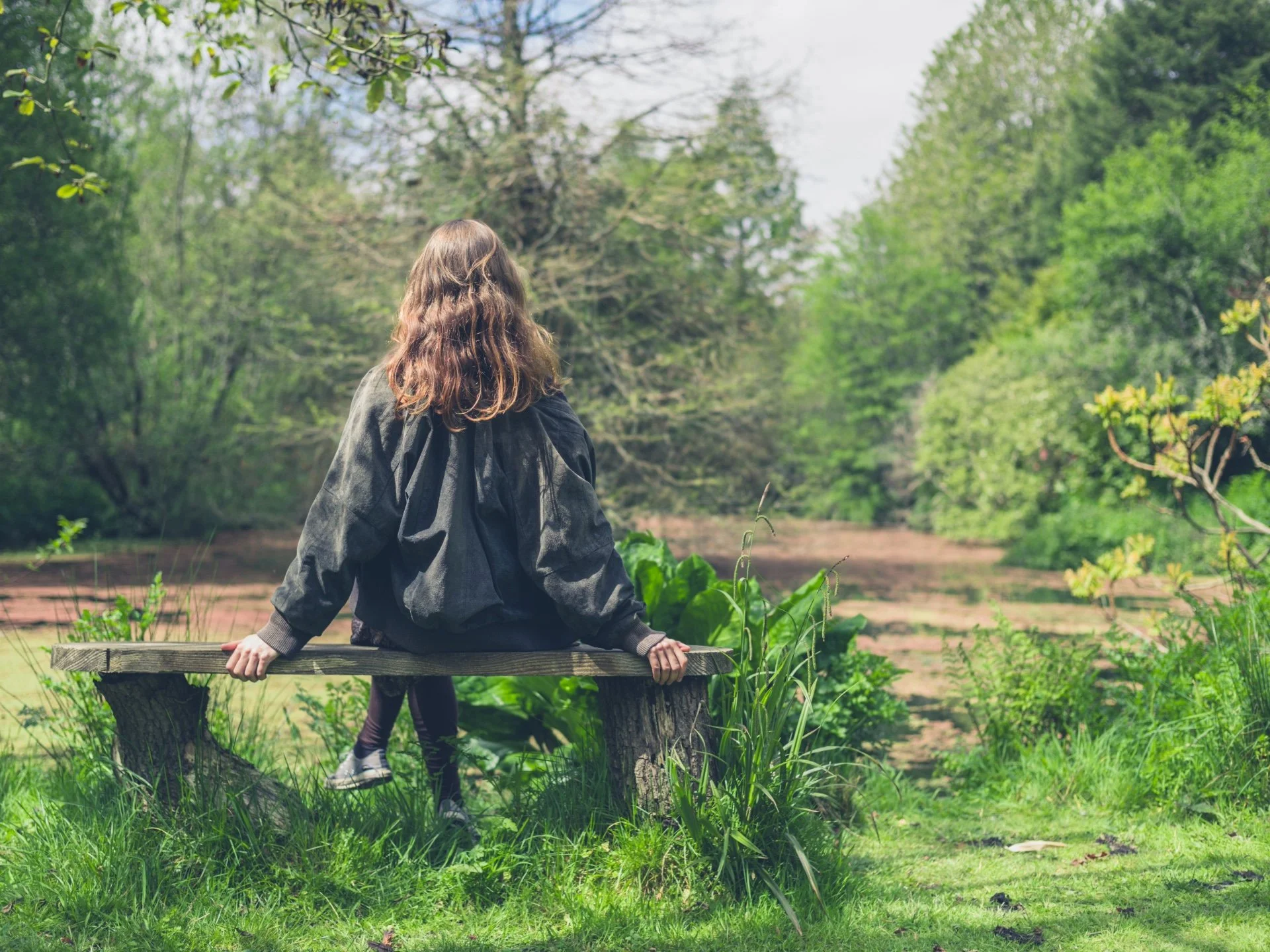
It is entirely possible to be standing in a wood, walking beside a stream, or sitting beneath a tree and yet still not really be there at all.
The body may be in nature, but the mind may be elsewhere — revisiting this morning’s conversation, planning the week ahead, replaying worries, or quietly spiralling through old hurts and familiar stories. This is a very human habit. Our minds are often busy, vigilant, and drawn towards thought. But when this happens, we can miss the simple, beneficial presence of the natural world around us.
To be “In your head” is to live mostly through thoughts and your inner dialogue, especially when these becomes repetitive, tangled, or self-critical. Nature can still be a place of relief in these moments, but the deeper gift of nature connection often begins when we move from thinking about our experience to actually feeling it. This is where the practice of getting “Out of your head” becomes so important.
Rather than being pulled inwards by mental chatter, we can gently return to the senses. What do you hear right now? The rustle of leaves, the call of a bird, the hush of wind moving through branches. What do you see? The shifting light, the bark of a tree, the shape of moss, the changing sky. What can you smell, touch, or even taste in the air?
These simple sensory moments do not force the mind to go quiet. They offer something kinder than that. They give the mind another place to rest.
When we are truly present in nature, we are not trying to achieve anything. We are not performing mindfulness perfectly. We are simply allowing attention to soften and settle into the living world around us. In that state, we may notice that our breathing changes, our shoulders drop, and our sense of time begins to loosen. We may feel less caught up in ourselves and more connected to something wider, steadier, and more alive.
This does not mean that thoughts are unwelcome. Thoughts will come and go. Worries may still arise. But the difference is that we need not follow every thought wherever it leads. Nature offers countless anchors back into the present moment: the sound of water, the feel of earth beneath our feet, the pattern of lichens on stone, the movement of clouds overhead. Each one is an invitation to return.
In this sense, nature becomes more than a backdrop for reflection. It becomes a companion in presence.
Getting out of your head is not about escaping yourself. It is about coming home to the whole of your experience — body, breath, senses, and surroundings together. It is about remembering that you are not only your thoughts, you are also the one who notices the wind, feels the rain, and sees the light shifting through the trees.
And sometimes, that gentle shift is enough to ease the weight we have been carrying.

Find guidance, resilience, and wellbeing through the wisdom of nature.
This practical 64-page workbook combines nature connection activities, mindfulness practices, and reflective exercises to help you improve your mental and emotional wellbeing. Discover how the lessons found in trees, seasons, landscapes, and natural processes can support personal growth, resilience, and positive change. Includes access to more than 30 additional nature connection activities, articles, and downloadable resources.
Nature has been guiding and supporting human wellbeing for countless generations. This workbook is an invitation to step outside, slow down, and rediscover the wisdom that has been waiting for you all along.
Nature as a Guide: A Pathway to Mental and Emotional Health and Wellbeing
In a world that often encourages us to move faster, achieve more, and spend less time outdoors, nature offers a different invitation. It invites us to slow down, notice, reflect, and reconnect with what truly matters.
Nature as a Guide is a practical and inspiring workbook designed to support your mental and emotional wellbeing through nature connection, mindfulness, and gentle self-reflection. Drawing upon the wisdom found in woodlands, landscapes, seasons, and natural processes, this workbook encourages you to discover how the natural world can become a trusted companion on your journey towards greater resilience, balance, and wellbeing.
Across its pages, you will find thought-provoking exercises, reflective questions, and nature-based activities that help you explore where you are in life, where you would like to be, and how nature's patterns and metaphors can illuminate the way forward. From learning resilience through the changing seasons to finding inspiration in the quiet strength of trees, the workbook helps translate nature's lessons into meaningful insights for everyday life.
Whether you are experiencing stress, navigating change, seeking greater self-understanding, or simply longing to deepen your relationship with the natural world, this workbook offers practical tools and gentle guidance to support your journey.
As an added resource, the book includes access to more than 30 additional nature connection activities, articles, and downloadable materials, enabling you to continue exploring and developing your own relationship with nature long after you have completed the workbook.