

Forest Bathing and Nature-Connection Benefits
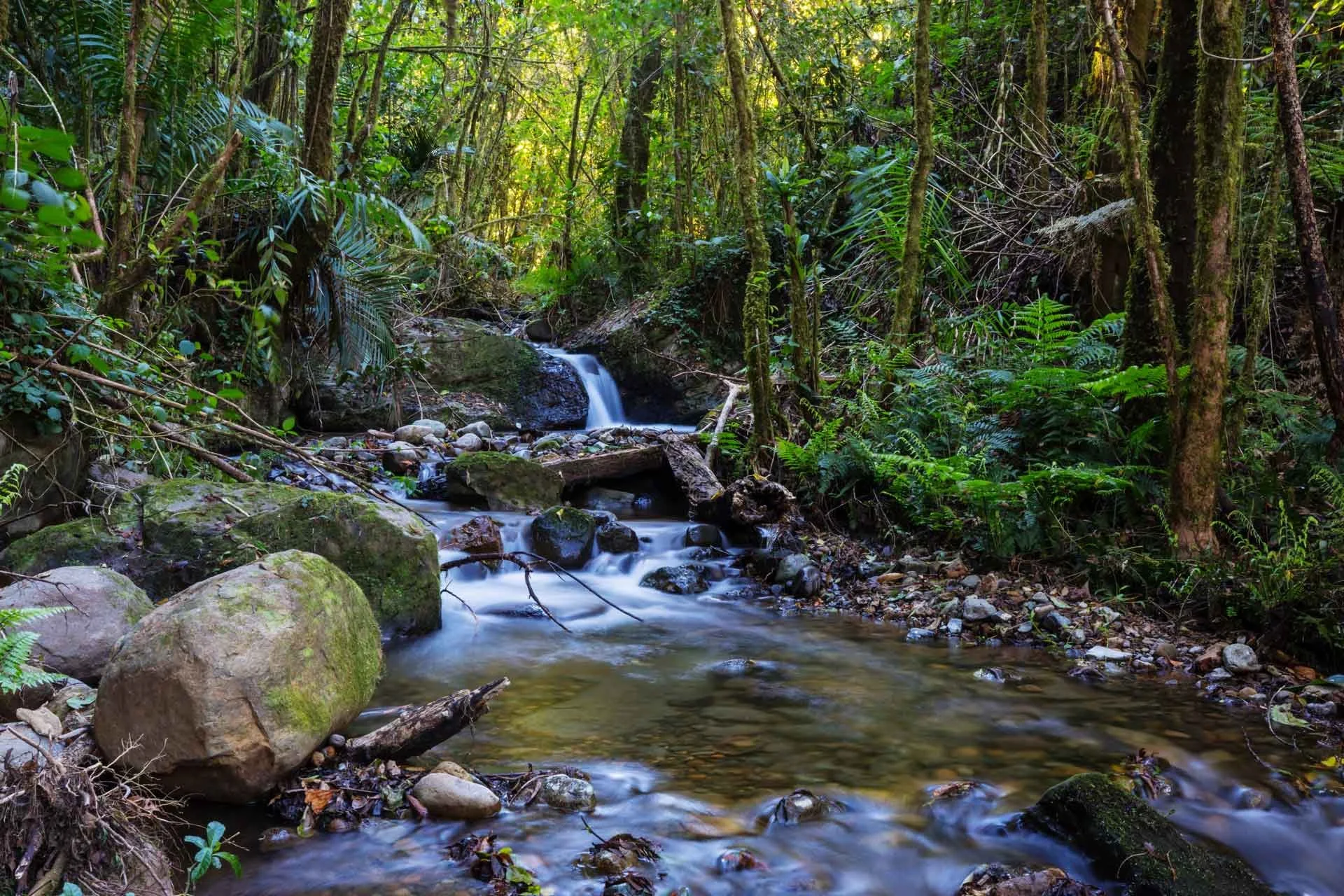
When we spend unhurried time in a forest – listening to the birds, examining the trees and rocks, or just sitting quietly under an old tree or by a crystal clear stream – good things happen to our mind, body and relationships, both with each other and with the planet.
Rather than ask what makes us ill,
is it not better to ask what makes us well?
Health, Wellbeing and Environmental Benefits of Nature-Connection
Nature-connectedness is much more than just being in nature or exposed to nature, it is about actively engaging (and connecting) with the natural world. There have been shown to be significant correlations between nature-connectedness and both psychological and social well-being. Nature-connectedness has been shown to be associated with greater feelings of autonomy, personal growth, and purpose in life; lower levels of anxiety, depression and stress; and increased attention span and cognitive functioning. Just as individual benefits to health and wellbeing are important, nature-connectedness can also be beneficial to the wider natural environment, as it can lead to more pro-environmental attitudes and subsequent positive behaviours.

Mental and Emotional Benefits
-
Research shows that there is a strong relationship between Forest Bathing and a decrease in chronic stress. If the body experiences chronic stress for too long a period of time, the parasympathetic nervous system can start to malfunction and the actions of the sympathetic nervous system become the norm. Forest Bathing has been shown to contribute to reversing this.
For 99% of human existence, we have spent most of our time in the natural environment. Most of our physiological functions have evolved in, and designed for, a natural environment. It is only in the last couple of hundred years, since the Industrial Revolution, that we have become predominantly urban dwellers. However, the human race has not adapted fast enough to keep up, and many people find that urban living puts them in a permanent state of stress.
The autonomic nervous system functions to regulate the human body's unconscious actions and comprises the Sympathetic and Parasympathetic nervous systems. The sympathetic nervous system directs the body's rapid involuntary response to dangerous or stressful situations. A flash flood of hormones boosts the body's alertness and heart rate, sending extra blood to the muscles and pumping adrenaline around the body. The sympathetic nervous system prepares the body for intense physical activity and is often referred to as the ‘Fight or Flight’ response. The parasympathetic nervous system has almost the exact opposite effect and relaxes the body and inhibits or slows many high energy functions, and sometimes referred to as the ‘Rest and Digest’ response.
Fight or Flight
When we are under artificial lighting, sitting in a traffic jam, working long hours or experiencing ‘technostress’ (the negative psychological link between people and the introduction of new technologies), the constant bombardment of stimuli activates the ‘fight or flight’ response, even though there is not a Sabre-Tooth Tiger in sight. The body often reacts to these stresses as if they are potentially life-threatening, even when they are not. This is because the sympathetic nervous system is not only triggered by physically dangerous situations (coming face-to-face with a Sabre-Tooth Tiger) but also by emotionally dangerous situations such as rush hour traffic, demanding jobs and bosses and social media.
Rest and Digest
The Parasympathetic Nervous System regulates the functioning of the body that allows it to rest and digest. It is in this restored state of calm during the body performs various tasks of repair. The more time that you spend in nature, the more the rest and digest function is activated.
-
Research has reported that Forest Bathing and similar nature-connection activities can have a significant positive effect on mental health, especially in those experiencing depression. For some people, Nature Therapies such as Forest Bathing have been shown to be more effective in relieving symptoms of depression than hospital-based psychotherapy.
-
People often say that they are ‘just going outside for a few minutes to clear their head’ but there is evidence that there is a lot of truth in this too.
A 2008 University of Michigan study explored the cognitive benefits of interacting with nature and found that walking in a park or amongst trees can help improve memory and attention.
Participants were divided into two groups in which the first group took a one-hour walk around the University’s Botanical Gardens and Arboretum, whilst the second group took a one-hour walk around urban streets. When participants walked in the Arboretum, they improved their short-term memory by 20 percent, but they showed no improvements after walking down city streets.
The researchers reported that “Interacting with nature can have similar effects as meditating” and that “People don’t have to enjoy the walk to get the benefits” reporting that they the same benefits when it was sunny over the summer as when the temperatures dropped in January, “The only difference was that participants enjoyed the walks more in the spring and summer than in the dead of winter.”
An explanation of why this might occur is provided by Rachel and Stephen Kaplan in the next section on ‘Improved Concentration, Attention and Focus’.
-
By regularly and mindfully focusing on your surroundings whilst in nature, the brain becomes better able to focus and concentrate for prolonged periods of time in other areas of your life.
Attention Deficit Disorder
The effects of Forest Bathing have been shown to benefit the attention span of both those with an attention deficit disorder and those without. It has been found that children diagnosed with an attention deficit disorder had milder symptoms in proportion to how ‘natural’ their environment was. Research shows that children and adults with Attention Deficit Hyperactivity Disorder (ADHD) who spend time in nature have improved attention span, cognitive functioning, and impulse control.
Attention Restoration Theory
The ‘Attention Restoration Theory’ was first described by Rachel and Stephen Kaplan in their 1989 book published in ‘The experience of nature: A psychological perspective’. It is the theory that spending time in nature has a uniquely restorative effect on us, both cognitively and mentally. It suggests that the mere action of spending time in the countryside, walking in a forest, sitting in a park, watching the sunset or even just looking out the window at a green space provides us with the opportunity to rest, reflect and restore the resources that we require to cope with everyday life.
Attention Restoration Theory (or ART) proposes that in addition to exposure to nature being enjoyable, that it also has restorative effects, especially in terms of our ability to focus and concentrate. Kaplan & Kaplan propose that there are four stages along the path to restoration:
Clearing the mind, where concerns, worries and negative thoughts are allowed to pass through the mind and fade away, not by pushing them away, but by letting them flow through and out;
Recovery from mental fatigue, where, following any activity that requires focused and directed attention, the mind is allowed to recover to normal levels;
Soft fascination, where the individual can spend time in an environment that attracts us and is stimulating in a gentle way, where they can relax such as the natural environment (as opposed to ‘hard’ fascination like watching television or sports that require a higher level of attention that usually precludes time for reflection);
and ‘Reflection and Restoration’, where the most impactful restoration occurs, most commonly from spending an extended period of time in an environment that has four key components or meets four critical requirements.
The Four Components of Restorative Experiences or Environments:
According to Kaplan and Kaplan, there are four key components that they believed were necessary for a restorative environment or restorative experience:
1. Being Away
2. Soft Fascination
3. Extent
4. Compatibility
Being Away
Being away refers to the sense of being separate and apart from one’s usual thoughts and concerns; becoming psychologically detached from your present worries and experiencing a feeling of escape from everyday life.
Soft Fascination
Fascination involves something holding your attention without any effort expended. Restorative environments hold your attention without you having to focus or direct it a certain way, and in a natural environment this might include listening to birdsong or the wind in the trees; watching clouds move by or water flow; being absorbed in the beauty of a sunset or sunrise. As previously discussed, environments that involve ‘soft fascination’, such as nature, are usually perceived to be more restorative than those that involve ‘hard fascination’, such as motor racing, although the latter can provide entertainment and reduce boredom.
Extent
Extent refers to the quality of the restorative environment that encourages you to feel totally immersed and engaged and as if you are in a whole other world.
Compatibility
Compatibility is all about feeling enjoyment in and an affinity to your environment. To be restorative, an environment must be one in which the individual chooses to be out of intrinsic motivation (they are doing it for themselves) and personal preference, otherwise they are unlikely to experience restoration.
Kaplan and Kaplan suggest that people are far more likely to be satisfied with their lives when their environment supports three basic needs: the ability to understand and explore; to feel they make a difference; and to feel competent and effective.
Physical Benefits
-
Nature-connection activities such as Forest Bathing have been shown in clinical trials to reduce blood pressure and heart rate, whilst increasing heart rate variability (the variation in time between each heart beat) all of which can lead to improvements in heart health.
-
It has been demonstrated that time spent in the woods can also increase the levels of adiponectin in the blood which has been shown to reduce the risk of obesity, diabetes and cardiovascular disease
-
Natural Killer (NK) cells are a type of lymphocyte that serves a variety of function in the immune system, such as destroying infected and abnormal cells in the body. They can even target a viral infection inside cells, without destroying the entire cell.
Research has shown that Forest Bathing enhances NK activity in humans by increasing the number of NK cells and intracellular levels of anticancer proteins. The increased NK activity was shown to last for more than 30 days after a Forest Bathing trip, and this has very important implications for preventive medicine. Conversely, taking an urban trip has not been shown to increase human NK activity or numbers of NK cells, indicating that increased NK activity during Forest Bathing is not due to the trip itself but due to the forest environment.
When you experience stress, your body releases a hormone called cortisol and one of the consequences of prolonged exposure to cortisol is that it decreases the effectiveness of your immune system. Studies have shown that there is a decrease in the levels of cortisol after spending time in nature. Forest Bathing is considered to be one of the most accessible ways to get in touch with the natural world and to lower excessive stress to levels that are commensurate with what our bodies are designed to cope with.
Japan has 48 official ‘Forest Therapy’ trails, however, these are only certified as such after blood sampling shows a specific increase in Natural Killer cells.
Studies have also shown that the common and harmless Mycobacterium vaccae, often found in forests, also has a positive effect on our immune system, and our mood.
-
Inflammation is the body’s response to threats such as physical damage or pathogens, but when it goes into overdrive, it can cause a wide range of mental and physical issues.
Inflammation can also become a bigger problem when it causes chronic stress or anxiety, as higher levels of the stress hormones cortisol in the body can lead to greater inflammation that can make inflammatory conditions such as arthritis more painful. Forest Bathing reduces cortisol levels and so can contribute to reducing inflammation.
Other research has reported that participants in their Forest Therapy group reported significant decreases in pain and depression, and a significant improvement in health-related quality of life following the Forest Bathing activities.
-
Dr Qing Li describes in Forest Medicine: The Secret Power of Shinrin Yoku. The Art and Science of Japanese Forest Bathing how being in forests can restore our mood, give us back our energy and vitality, and refresh and rejuvenate us. Whilst other studies have shown that walking anywhere outdoors reduces depression, anxiety, and anger, Li found that only the experience of walking in a forest improved people’s vigor and reduced fatigue.
-
In a study with male office workers in Tokyo subjects undertook a three-day trip to three different Forest Bathing locations and significant increases of the sleep time during and after the forest bathing trip were reported, as compared with that noted before the trip.
Further research by Dr Qing Li published in Forest Bathing: How Trees Can Help You Find Health and Happiness build on this. In one of his studies he looked at whether Forest Bathing could improve sleep patterns among Tokyo office workers who tended to suffer sleep deficiency due to high levels of stress. During the study, participants walked the same amount of time in a forest that they usually did in a non-forest setting on a normal working day. After a walk in the forest, participants were significantly less anxious, slept better, and slept longer. In addition, researchers found that afternoon walks were even more beneficial than morning walks.
“You sleep better when you spend time in a forest, even when you don’t increase the amount of physical activity you do,” reported Dr. Li.
-
Nature can be a powerful force in the process of recovering from illness or surgery. The most well-known study in this area is by Dr Roger Ulrich, an architect specialising in healthcare building design, who showed that just a natural view from a window reduced convalescence time.
In his hospital study, Dr. Ulrich looked at the case notes of 46 patients who had received gall bladder surgery, and divided them into two groups of 23 matched for age, sex, health and weight, and smoking status. One group had recuperated in a hospital room with a window overlooking an outdoor space, the other in an identically sized room, but that overlooked a brick wall. Only records from when the trees would have had full leaf coverage were used. It was found that those who recuperated in rooms with windows looking out on a natural scene had shorter postoperative hospital stays, received fewer negative evaluative comments in nurses' notes, and took fewer painkillers than the 23 matched patients in similar rooms with windows facing a brick wall.
The experiment was repeated using printed images of nature, and again it was found to have beneficial results on those recovering from their surgery. To prove also that it is not just the sight of nature that can promote recuperation, the experiment was repeated once more, but using both real and recorded birdsong and once again it was found that healing times were increased and physical discomfort was decreased by its use.
This isn’t a new concept though. It is reported that in 35 AD Pliny the Elder recommended that people recovering from illness or injury could benefit from spending time in the forest and inhaling the chemicals that they emit (the naturally occurring phytoncides).
Environmental Benefits
-
Increasing your connection with nature can also lead to greater environmental impact.
People with higher levels of nature-connection often do more for nature, both in terms of reducing their impact on the environment through using fewer resources and through taking positive actions to help wildlife.