

The Ariundle Oakwoods
27th April 2022
Darach Croft is on the edge of the Ariundle Oakwoods (‘Darach’ is Scots Gaelic for ‘Oak’) and it is one of my favourite places to go Forest Bathing. The Ariundle Oakwoods is classed as a temperate rainforest, and Forest Bathing first developed in the temperate forests of Japan so this seems quite appropriate.
About the Ariundle Oakwoods
The Ariundle Oakwoods are in the glen above Strontian. The name ‘Ariundle’ comes from the Gaelic Àirigh Fhionndail which means ‘shieling of the white meadow’ - a shieling was hill pasture - but maybe more appropriately the Norse name for the glen that the Oakwood is situated in was Egadale or ‘Oak Valley’.
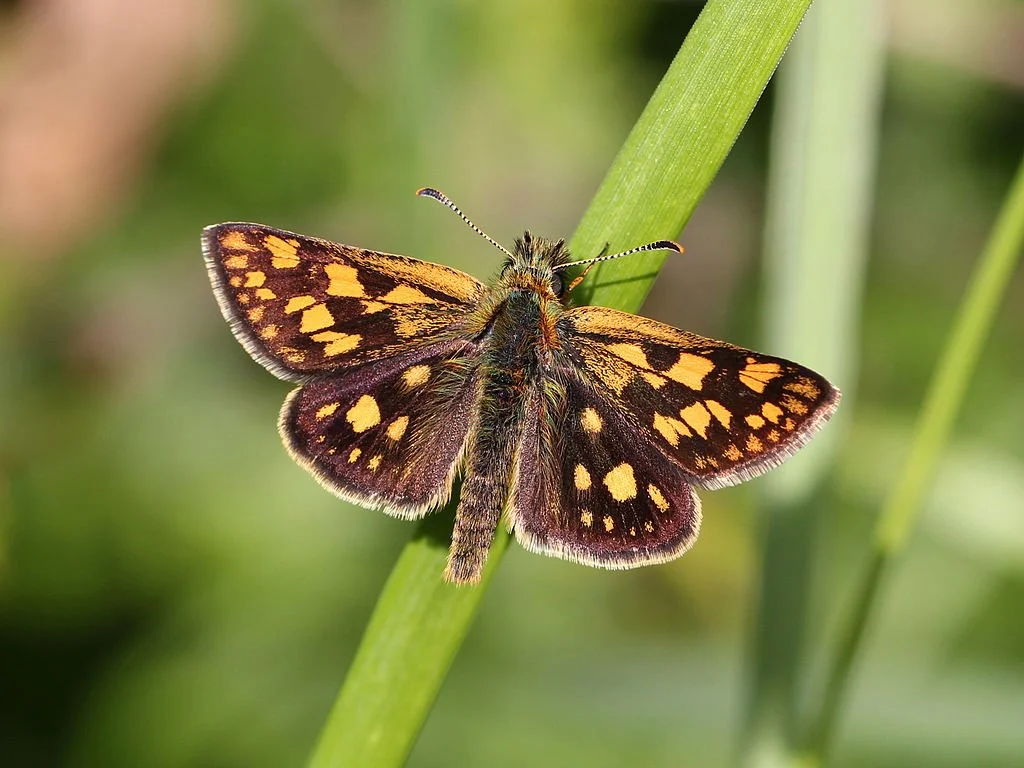
The Ariundle Oakwoods are a remnant of the ancient Atlantic Oakwoods that once stretched down the West coasts of Norway, Britain, Ireland, Spain and Portugal. Although it is referred to as an Oakwood, as well as the ancient Oaks the woods are also home to Ash, Birch, Hazel and Scots pine. It is also full of rare and fascinating mosses and liverworts, lichens, fungi and ferns, and in spring, the woodland is rich in wildflowers with amazing birdsong in the early mornings, and is home to a variety of rare and beautiful butterflies and dragonflies including the rare Chequered Skipper butterfly that thrives in these damp glades and abundant growth of purple moor grass that the young caterpillars thrive on, and the marsh thistle and bluebells that provide nectar for the adults.
Upon entering the Ariundle Oakwoods you get a feeling of openness and space between the trees, but also the abundance of lichens and mosses. The tree branches are festooned in a variety of shades of green by a wide variety of lichens including Usnea, or ‘Old Man’s Beard’. Usnea is very sensitive to air pollution, and as such is often used as a bioindicator, showing that the air across Sunart and the surrounding area is clean and of high quality. The mosses blanket the forest floor, smoother the boulders, climb the trees and play an important role in making the Oakwood what it is. This carpet of moss absorbs huge amounts of rainwater and then evaporates slowly during dry spells, maintaining the levels of humidity and the growth of the other lower plants such as the liverworts, ferns, and lichens.
A Temperate Rainforest
The Ariundle woodlands are part of the ancient ‘Celtic Rainforest’. People are often surprised when we talk about rainforests in Scotland, but the Atlantic Oakwoods are recognised as a temperate rainforest with sufficient rainfall - the average for here in Strontian, on the edge of the Ariundle Oakwoods is 2197 mm or 86.5 inches of rain a year. The climate in the West coast of Scotland is affected by its proximity to the Gulf Stream that results in a combination of high humidity, frequent rain and cloud cover and a mild climate which means that mosses and lichen grow very well. The carpet of mosses in theses temperate rainforests absorb a large amount of the frequent rainfall, and this slowly evaporates during the dryer spells and maintains the levels of humidity and supports the growth of liverworts and ferns. Many of these ferns can be seen growing in where the branches and the trunks of the trees join, all the way up to the tops of the trees, another indication that these are temperate rainforests.
Human Influence
There is evidence of human habitation in the Ariundle Woods dating back to the Bronze Age when some of the woods were most likely cleared for grazing animals. The arrival of the Celts in Britain around 600 BC would have brought more advances in agriculture that could have impacted on the woodland, however the Celts had an affinity and reverence for trees that meant that they usually had a fairly harmonious existence.
Between a hundred and two hundred years ago, like with the other Oakwoods of Argyll, the Ariundle Oakwoods were intensively managed through coppicing to produce charcoal for iron and lead smelting. Iron ore would be brought up from Cumbria in England for smelting in Argyll due to the proximity of plentiful Oakwoods for charcoal production.
Coppicing is an ancient form of woodland management used for thousands of years that utilises the ability of trees to grow new stems from their bases. The the thicker of the new stems would also have been used in tool making and house building and the thinner rods used for making wattle fences and fishing creels. More intensive forestry was also possible in the Ariundle woods, due to its proximity to Loch Sunart which helped to alleviate the common problems getting cut timber across the highland terrain. Oak bark from the Ariundle Oakwoods was also used in tanning leather. Oak bark is considered the best bark for leather tanning as it has the higher tannin content, and was usually harvested in Spring when the sap was rising and the bark was easiest to remove.


Trees have long stood as silent witnesses to the passage of time, weaving their roots deep into the cultures of our planet. Across such cultures and across continents, they have been revered, worshipped, and seen as symbols of life, wisdom, and interconnectedness. For many Indigenous communities around the world, individual trees hold profound spiritual, cultural, and ecological significance. This article examines some of these beliefs, exploring the deep connections that Indigenous peoples have with individual trees and the ways these connections shape their worldviews and lifestyles.