

What is Nature Connection?
First Published on 12th December 2021
Last Updated on 16th December 2023
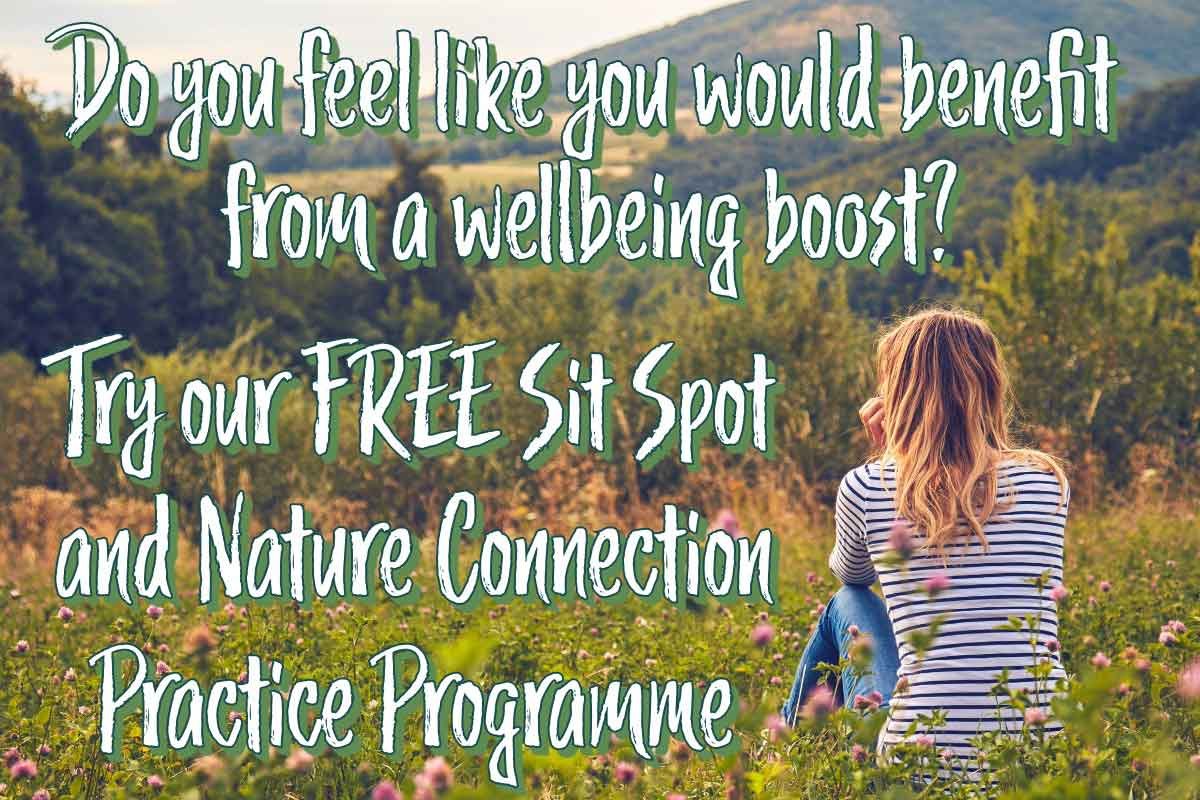
Many of us instinctively know that being in nature is good for us, and research backs this up, showing that people who are more ‘connected’ with nature often report greater life satisfaction; lower levels of stress, anxiety and depression; and greater levels of emotional and mental wellbeing.
Forest Bathing is often described as a ‘nature-connection activity’, but what exactly is Nature Connection?
The Concept of Connection with Nature

‘Nature-connection’, ‘nature affinity’ or ‘connection with nature’ can be seen as representing several concepts:
Nature connection can be viewed as an individual’s sense of their relationship with the natural world that goes beyond mere contact or exposure to nature and involves a sense of meaningful involvement in something larger than oneself. Contemporary urbanisation and increased use of technology have reached a point where many people now feel separate from nature.
Nature connection can be viewed in terms of engaging with nature through our senses and immersing ourselves in our natural surroundings.
Nature connection can also be seen as the mental, physical and emotional benefits that can be felt as a consequence of spending time in nature.
Three Key Elements of Nature-Connection Activities
Nature-Connection activities can take many forms and involve various components, although they almost always incorporate three key elements: noticing; feeling; and reflecting.
Noticing Nature
Connection with nature is about much more than just being in nature or exposed to nature. You can be hiking outside trying to reach the top of a mountain or jogging through the woods whilst listening to your MP3 player, focusing on a geographic goal or thinking about what you’re going to make your post-run smoothie from without connecting with nature.
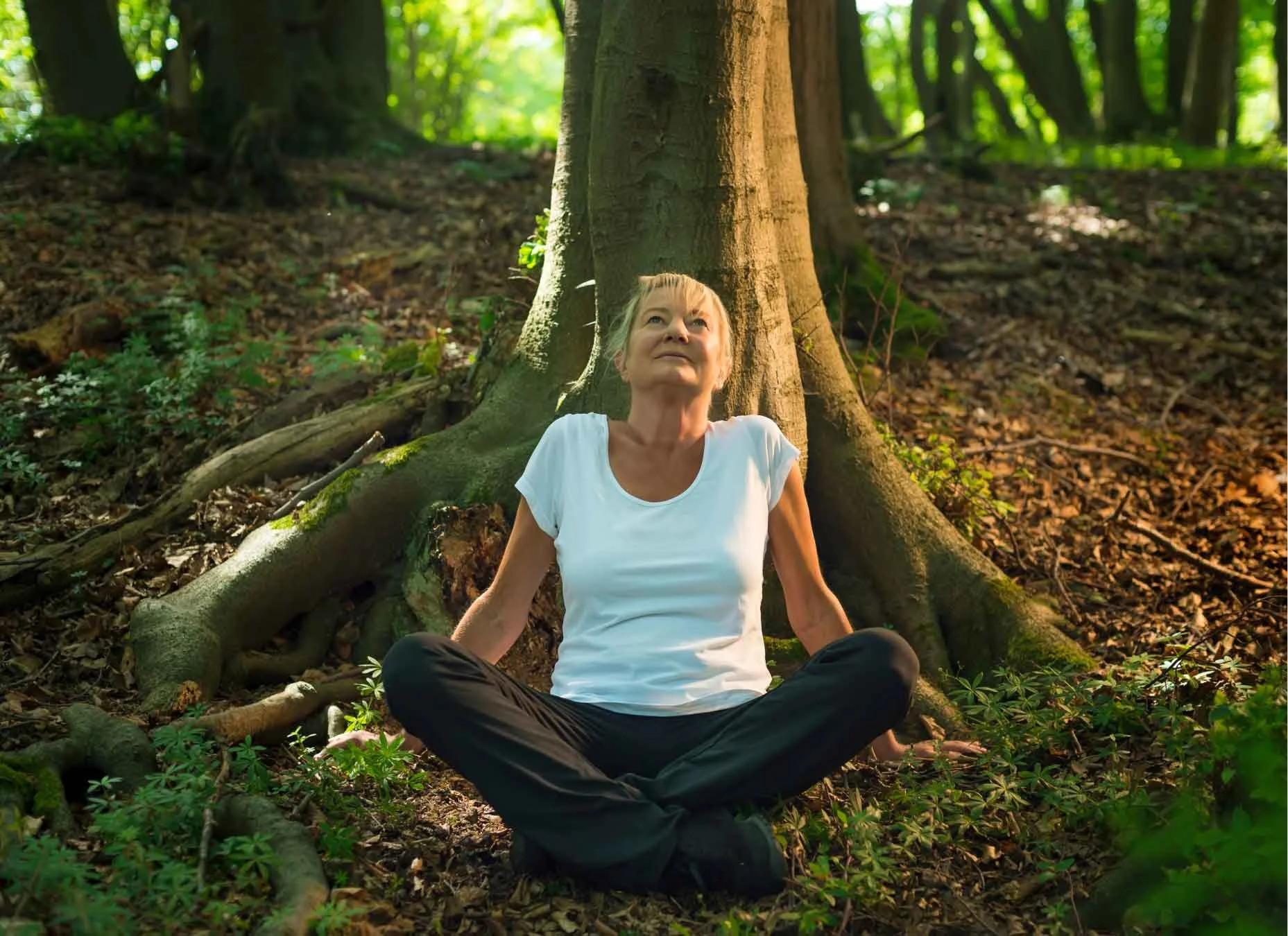
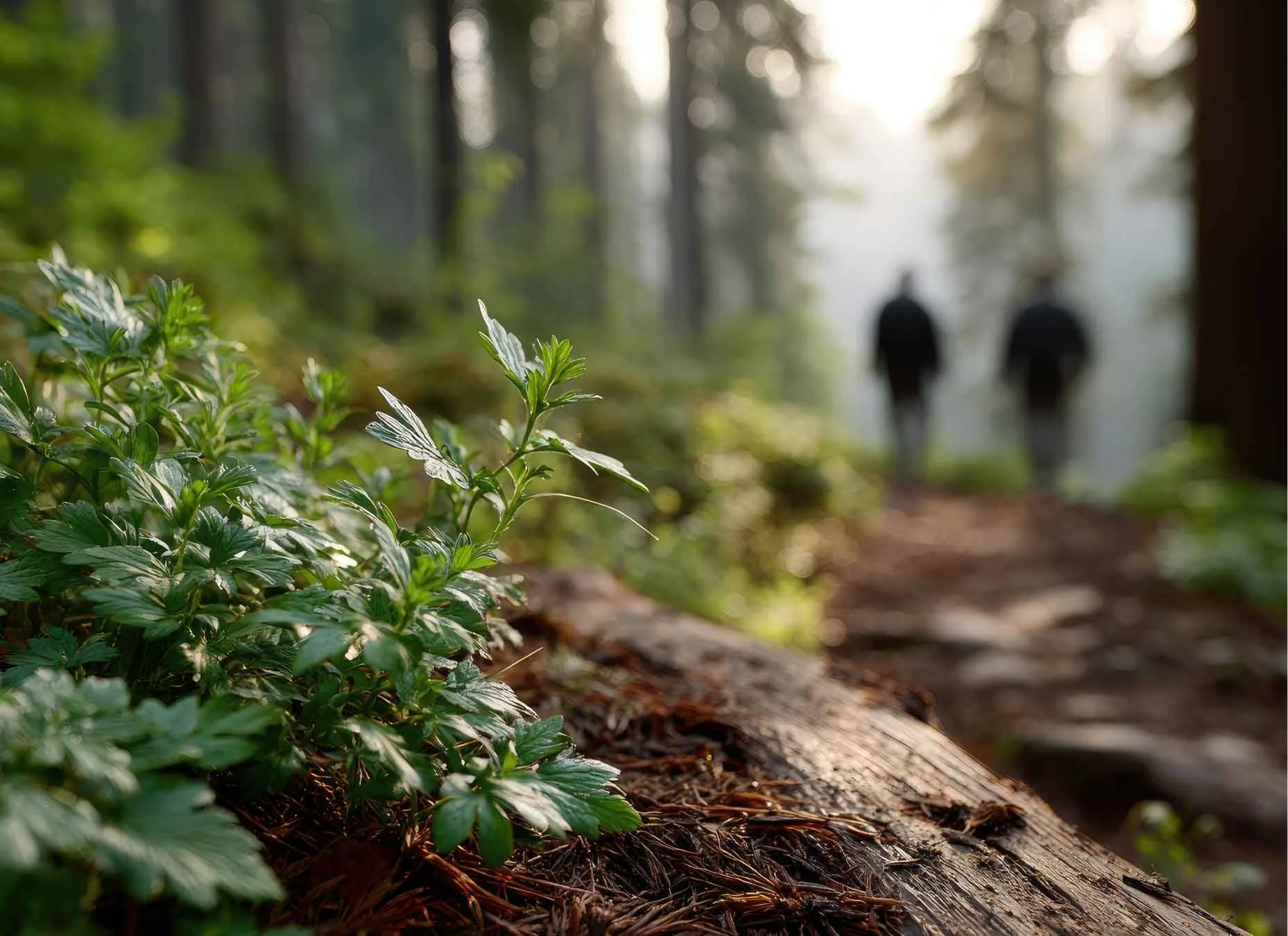
Connection with nature is about really tuning in to your surroundings and noticing what is happening around you through all your senses - sight, sound, smell, touch and even taste. And you don’t necessarily need to move at all, in fact the slower you go, the better you tend to connect. This is why the Forest Bathing practice of Sit Spot is seen as such an effective way to increase your nature-connectedness.
Feeling Connected with Nature
Nature-connection activities should help you to feel more in tune with nature and a part of nature rather than apart from nature. It is all about appreciating the wonder and beauty in nature and the natural environment, rather than about ‘knowledge’. Nature-connection is not about wildlife or tree-identification, it involves shifting your attention and focus from learning about what something in nature is to how things in nature make you feel.
Reflecting on Nature Connection
Nature connection activities usually involve some reflection on what you have experienced. This might be in the form of writing and keeping a journal, or it might be talking about what you have experienced with others, either in online groups (such as our Sit Spot and Nature-Connection Practice group on Facebook) or in ‘Sharing Circles’ following Forest Bathing activities or invitations.
Why is Connection with Nature Important?
Nature-connectedness is important for two primary reasons:
There are mental, physical and emotional benefits of connecting with nature
There are environmental benefits of people experiencing greater nature-connectedness
The mental, physical and emotional benefits of connecting with nature
There have been shown to be significant correlations between connection with nature and both psychological and social well-being. Nature-connectedness has been shown to be associated with greater feelings of autonomy, personal growth, and purpose in life; lower levels of anxiety, depression and stress; and increased attention span and cognitive functioning. In this way connection with nature can bring greater balance to our emotion regulation system and can contribute to fostering two different dimensions of happiness, both joy and calm.
Importantly, the stronger a person’s connection to nature, the more likely they are to spend time in nature, and experience more of the benefits of exposure to it.
The environmental benefits of people experiencing greater nature-connectedness
Just as individual benefits to health and wellbeing are important, nature-connectedness can also be beneficial to the wider natural environment, as it is can lead to more pro-environmental attitudes and subsequent positive behaviours. As the report Home to Us All: How Connecting with Nature Helps Us Care for Ourselves and the Earth describes, there is a growing body of evidence that people’s relationship with nature profoundly influences their behaviours toward the environment. At a time when the world is confronted with growing environmental threats, better understanding the critical connection between people and nature is key to informing effective decision making, stimulating positive action, and optimising the benefits people and communities receive from nature.
Levels of Connection with Nature
We can look at ‘Levels of Connection with Nature’ in a variety of ways. Let’s examine some of these levels and explore how an understanding of them can amplify our nature connection for a healthier and more balanced life.
Visiting Nature
The first level involves simply being in natural settings like forests, parks, or green spaces. This passive engagement none-the-less still offer the opportunity for you to unwind, relax, and begin to experience some of the sensory benefits of nature, such as the sight of lush greenery, the sound of rustling leaves, and the fresh scent of trees. This level of engagement is fundamental in initiating the connection with nature.
Active Engagement and Connection with Nature
This level requires more active participation and mindful connection with nature. This is where you actively endeavour to notice and engage with the sights, sounds, and sensations around you to the exclusion of other thought processes. This can lead to a heightened sense of connectedness with the natural world.
Immersive Engagement and Connectedness
The highest level involves a profound immersion in nature, where you may experience a deep sense of connectedness and oneness with the natural world, perhaps reaching the Flow State, a mental state in which you become fully immersed in an activity, and experience a feeling of energised focus, full involvement, and enjoyment. This level goes beyond mere physical presence or outdoor activities - it entails a deeper emotional and spiritual connection with nature, fostering a sense of belonging and interdependence with the environment.
We can explore these more fully through a framework of Cognitive Engagement, Affective Engagement and Behavioural Engagement:
Cognitive Engagement
Cognitive engagement involves observing and understanding nature. It's about immersing ourselves in the sights, sounds, and intricate details of the natural world. Studies suggest that mindful observation of nature can reduce stress, anxiety, and improve cognitive functioning and enhance concentration and creativity.
You can practice cognitive engagement by practicing ‘Sit Spot’ or taking mindful walks in natural settings. Focus on the smaller details of nature – the rustling leaves, chirping birds, and earthy scents. Embrace the present moment and let nature's beauty captivate your senses.
Affective Engagement
Affective engagement refers to the emotional connection with nature. This level involves experiencing feelings of joy, awe, and serenity when surrounded by natural environments. It's this emotional bond that enhances psychological wellbeing and fosters a sense of belonging.
Behavioural Engagement
Behavioural engagement encompasses active participation in nature-connection activities. Practices such as Forest Bathing or Silvotherapy involve immersing yourself in nature intentionally, bringing mental and physical health and wellbeing benefits, reducing cortisol levels (the stress biomarker), and elevating mood.
Levels of Engagement Influencing the Impact of the Forest Environment
Yu Chia-Pin, an Associate Professor in the School of Forestry & Resource Conservation at the National Taiwan University, has defined three levels of engagement influencing the impact of the forest environment (and wider nature and natural resources) on human health and wellbeing, and also the positive impact that humans can have on forests and nature.
Level One
The first level is where people enjoy the trees, plants, trails and natural landscape experienced during a Forest Bathing walk or other nature-connection activities, and consequently experience relaxation, stress-reduction and health and wellbeing benefits.
Level Two
The second level is where people learn more about nature-based interventions and nature connection activities that can support and enhance their health and wellbeing in their daily lives.
Level Three
At Level Three, people have gained a greater recognition of the mental, emotional, physical and spiritual health and wellbeing effects of increased nature-connection and consequently seek to become better stewards of the natural world and engage in activities that mutually beneficial for themselves and the environment and for planetary health.
‘Planetary Health’ refers to the health of the planet and its inhabitants, including humans. This incoporates issues related to climate change, pollution, loss of biodiversity, and other environmental problems. It is a holistic approach that considers the interactions between human and natural systems and is supported by the many studies that have shown that protecting natural environments like forests can have positive effects on both human and planetary health.
Five Pathways to Nature-Connectedness
According to the Nature Connectedness Research Group there are a variety of pathways to nature-connectedness providing a route for people to develop a new relationship with the natural world. A new closer, healthier and more sustainable relationship with nature comes through noticing, feeling, beauty, celebration and care and the five pathways they identify are:
Senses - tuning in to nature through the senses
Emotion - feeling alive through the emotions and feelings nature brings
Beauty - noticing nature’s beauty
Meaning - nature bringing meaning to our lives
Compassion - caring and taking action for nature
You can read more about The Five Pathways to Nature Connection here.
Connecting with nature therefore helps to bring us improved mental, physical and emotional health, and provides the foundation for resilient, healthy ecosystems, communities, and economies to thrive and remain for generations to come.
A good place to start on increasing your connection with nature is our FREE 28 Day Sit Spot and Nature Connection Programme or through our Nature-Based Wellbeing Plans.
If you have enjoyed this article and would like to support what we do by donating £2 or more to buy saplings, please follow the link below:









An earlier version of this article was first published on on our Darach Social Croft website.
A small collection designed to gently open the door into deeper relationship with the natural world.
This complete set of four Forest Healing booklets brings together practical guidance, reflective ideas, and simple nature connection practices that can be used anywhere — from ancient woodland to a nearby park, garden, or even a single Sit Spot outdoors.
Written to be accessible, grounding, and easy to follow, these booklets offer a pathway into the core practices of Forest Bathing (Shinrin-yoku), Silvotherapy, and everyday nature connection. Rather than asking you to achieve anything, they simply invite you to slow down, notice more deeply, and allow nature to become an active presence in your wellbeing.
Across the four booklets you will explore:
• What Forest Bathing, Silvotherapy, and Nature Connection actually are
• The key benefits of spending mindful time in natural environments
• The practice of the “Sit Spot” and how to develop your own relationship with a chosen place
• Simple, practical Forest Bathing invitations you can try alone or with others
• Ways to bring nature connection into everyday life, even in small moments
Together, they form a gentle introduction to practices that have been shown to support reduced stress, improved mood, greater clarity of thought, and a deeper sense of belonging within the natural world.
These are not academic texts or rigid instruction manuals. They are invitations — encouraging you to step outside, slow your pace, and rediscover the quiet intelligence of trees, weather, and landscape.
Whether you are completely new to nature connection or looking to deepen an existing practice, this collection offers a simple, supportive starting point for building a more intentional and restorative relationship with the living world around you.
A small set of booklets that can change the way you experience even the most familiar patch of nature.
Buy all Four Forest Bathing and Nature-Connection Booklets for £11.00 including FREE P&P within the UK.
Postage to the Rest of the World is £4.