

Sit Spot and Nature Connection
31st August 2024
Improved connection with nature has been shown to lead to lower levels of anxiety, depression and stress; increased creativity, attention span and cognitive functioning; and improvements in psychological and social well-being. People who are seeking the benefits of increasing their connection with nature, and naturalists who wish to gain a better understanding of the environment and native wildlife around, them often practice something called ‘Sit Spot’.
What is ‘Sit Spot’?
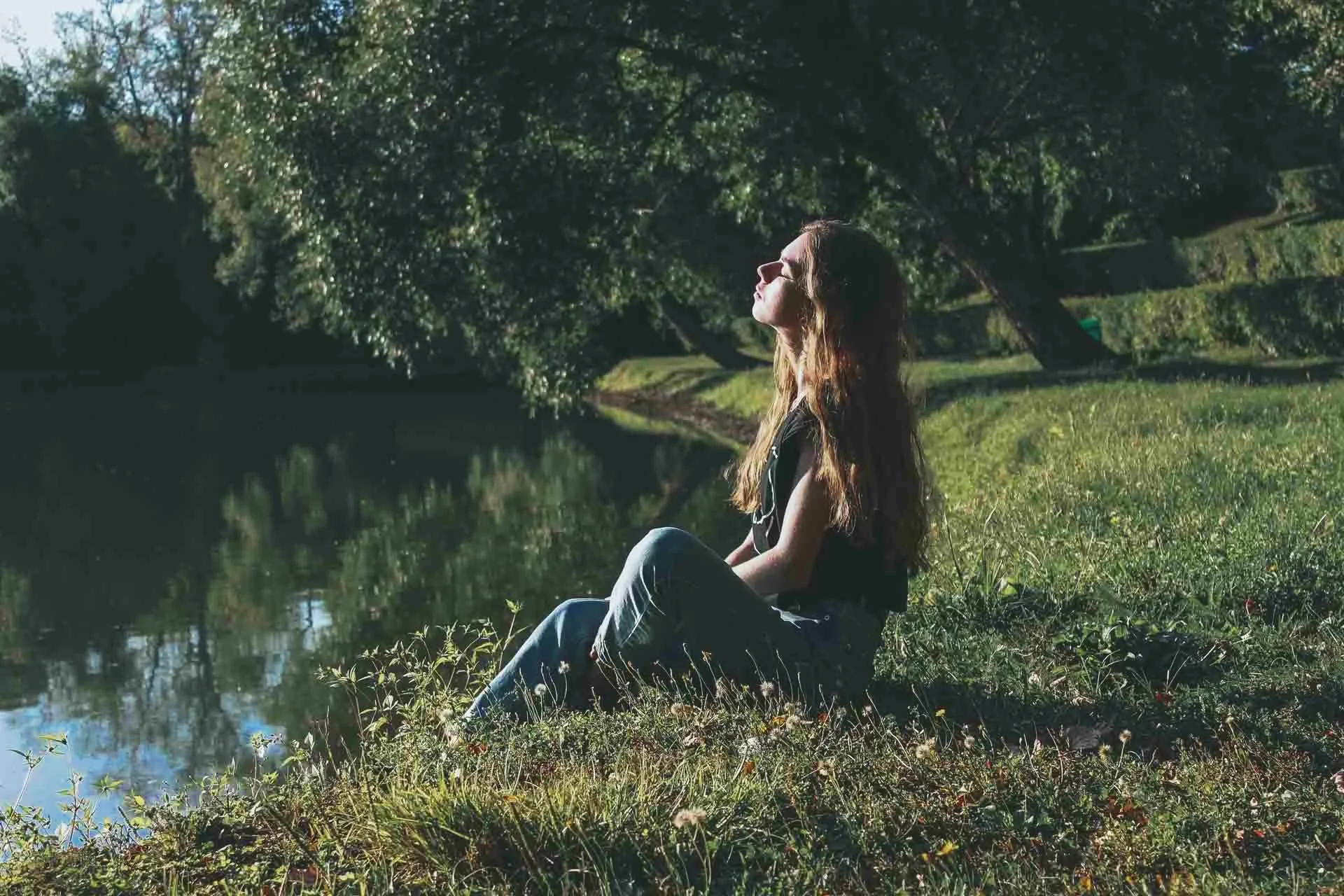
Sit Spot is a mindfulness practice where you select a specific location in nature and spend time sitting, observing and connecting with the natural surroundings in a mindful and intentional way.
It involves taking a moment to sit in one spot in nature, usually for at least 20 minutes, giving wildlife time to become accustomed to your presence and resume their own behaviour. Through staying still in your chosen spot you can cultivate a deeper comprehension of yourself, others, and the wider natural world.
The practice of Sit Spot can have a number of benefits, including:
Stress reduction
Sitting quietly in nature can help you to reduce stress and promote relaxation.Improved focus and attention
Taking the time to focus on a specific task or activity, such as observing your surroundings, can improve your ability to pay attention and stay present in the moment.Connection with nature
Spending time in nature and observing the environment can increase your appreciation and connection to the natural world.Increased awareness
Observing your surroundings can help you to increase your awareness of your surroundings and the world around you.Improved mental and emotional health
Studies have shown that spending time in nature can have a positive impact on your mental health and wellbeing.
Above all, Sit Spot can be a simple and effective way to find relaxation and improve your wellbeing through mindfulness and connection with nature, and the more that you practice Sit Spot, the more benefit you will get. Nature connection is like a muscle - the more you use it the better developed it becomes.
A Dose of Nature (or ‘How Long Should You Spend’?)
Research undertaken by Exeter University, Uppsala University and University of Michigan Medical School that was published in the journal Nature, shows that people who spend at least 120 minutes in nature each week are significantly more likely to report higher psychological wellbeing than those who don't visit nature at all during an average week. If you practice Sit Spot for 20 minutes three times a week then, that's already 60 minutes! Add a couple of self-guided Forest Bathing walks lasting at least 30 minutes, or one longer walk lasting at least an hour, and you have your 120 minutes.
A Guide to Finding a Good Sit Spot Location
If you can, choose a Sit Spot location that is easy to reach and will be the same one that you use most days, although you can also incorporate spontaneous Sit Spots into your life whenever and wherever you wish! The benefit of having a regular Sit Spot location is that you gain a greater appreciation of the effects that time and the changing seasons have if viewed from the same place. There is nothing wrong with having two or three different preferred Sit Spots if this is something that you decide to incorporate into your life though.
Three important factors to consider when choosing your Sit Spot:
First, it is best to find somewhere fairly quiet and away from other people with relatively little distraction if you can, although you should also feel safe in this place.
Second, there should be some components of nature present, so ideally you should at least be outdoors if you can. However, if this is not an option but you can sit inside by a window with a view of nature, then go with that. If you can open the window even better!
Finally, the convenience of your spot is really important as the closer your Sit Spot is to your home, the more likely you are to visit it regularly. It should ideally be less than a five-minute walk from your front door (or place of work if you are doing your Sit Spot during lunchtime). It may seem a good idea to find the Sit Spot location with the best view, but it is the activity that is most important and I have found from experience that if my chosen Sit Spot is somewhere outside that is easy and convenient to get to, then I visit it far more often and get the most benefit from it.
What Does ‘Sit Spot’ Involve?
Very simply, find yourself a place in nature where you can comfortably sit and just ‘be’, immersing yourself in the world around you, engaging with it through all your senses and reconnecting with the rhythms of the natural world. Give yourself permission to simply sit, observe and be present. Start by taking a few deep breathes and then turn your attention to each of your sense individually. Notice what you can see, what you can hear, what you can smell, what you can feel and what you can taste. When thoughts arise, gently bring yourself back to your senses; to the sounds, sights, smells, and feel of your surroundings. Notice the specific qualities of the place in which you are and your place within it. What seems to be drawing your curiosity the most?

Sight
Even if your Sit Spot is somewhere that is quite familiar to you, take some time to really look around and allow yourself the space to notice things that you might not have noticed before.
Sound

Many people find it easier to concentrate on their other senses when they close their eyes, so feel free to do this if you want to and if itt feels comfortable to do so, whilst you listen to what you can hear around you. Do you hear animals or birds? Do you hear the wind rustling the leaves? Notice the closest sounds and the sounds furthest away? What is the faintest sound that you can hear? Try slowly moving your head from one side to the other and back again and see if this changes the sounds that you can hear.
Smell
Either with your eyes open or closed, or your gaze lowered, take a couple of deep breaths in through your nose and out through your mouth and really take in the scents all around you. Perhaps turn your head from side to side to see can you pick up any subtle smells in the air. What does the air feel like in your nostrils? Can you identify any particular smells? If there is anything natural nearby your Sit Spot that you can pick up and smell that appeals to you, such as leaf litter that you can scrunch up, then do so, but ideally try not to disturb or pick anything living. Smells are one of the senses most closely related to memory. What feelings or emotions do these smells create?

Touch and Feeling
Focus for a little while on how what you are sitting on feels. Is it hard or soft? How does the breeze feel if there is one? What does the ground feel like under your feet? Do the parts of your body that are covered in clothes feel different to those exposed to the air?
As you sit, as well as taking notice of the things that you experience through your senses, also take notice of how these experiences interact with each other and how they affect you emotionally. As well as noticing the colours, textures and patterns in nature, also notice how these make you feel. Can you find things that simply feel good to look at? What emotions do you notice in yourself as you sit in your Sit Spot? Are you happy or sad? Contented? Nostalgic? How does the practice of sitting quietly and mindfully change your mood? When you sit quietly, you might be surprised at what you notice around you and the wildlife that reveals itself to you when you pose no threat.
Most people practice Sit Spot as an activity on their own, but you can also practice Sit Spot as a small group. Try to resist the urge to talk to each other for at least 10 to 15 minutes and then afterwards discuss with each other what you noticed and experienced, or perhaps have your own Sharing Circle.
It is a good idea to turn off your phone or at least turn it onto ‘Flight Mode’ so that you don’t get disturbed. I use Flight Mode because I like to set a timer for how long I want to sit for, and then I’m not looking at my phone or my watch to see what the time is. Once you have mastered sitting still and mindfully focusing on your surroundings, you will often find that this becomes easier to do for short periods of time when the need arises, or when you are engaged in other activities such as walking in nature.
One of the Five Pathways to Connection with Nature is about exploring and expressing the meaning that nature brings to our lives, and so you might consider keeping a reflective journal.
How Long Should You Practice Sit Spot For?
An ideal length of time to practice Sit Spot is 20 to 30 minutes, but you may find that starting with 10 minutes and building up to half an hour is easiest. 20 minutes is also about the length of time that it often takes wildlife to become accustomed to your presence. So if you try sitting quietly for about 20 minutes you might be surprised at the wildlife that revels itself to you when you pose no threat.
How Often Should You Practice Sit Spot?
Whilst Sit Spot can be practiced anywhere and anytime, if you have a regular Sit Spot that you can go to a few times a week, then you will gain a real insight into, and greater appreciation of, the changes that occur over time as the seasons change.
If you aim to practice your Sit Spot three or four times a week, for 15 to 20 minutes each time, you will soon feel the benefits and will be well on your way to your 120 minutes in nature each week.
What Other Benefits of Practicing Sit Spot Are There?
Increased nature connection has been shown to decrease feelings of social isolation as well as improving mood; improving concentration and short-term memory; increasing the body’s immune response; reducing feelings of stress and anxiety and encouraging a deeper level of relaxation. There are a number of theories that support the proposal that Forest Bathing and Nature Connection activities have beneficial effects on psychological and physical wellbeing. These theories include the Biophilia Hypothesis, Attention Restoration Theory, and Psychophysiological Stress Recovery Theory.
Many people have also reported increases in creativity, critical thinking and problem solving skills through Sit Spot practice. I quite often practice Sit Spot for 10 minutes as a micro-break to restore my concentration and attention span.
Why is Nature Connection so Important?
As Yoshufumi Miyazaki writes in his book ‘Shinrin Yoku: The Japanese Art of Forest Bathing’, for almost all of human history, we have lived in rural areas and worked predominantly outdoors in the natural environment. Most of our physiological functions have evolved in, and are designed for, this kind of natural environment. It is only in the last couple of hundred years, since the Industrial Revolution, that we have become predominantly urban dwellers. About 200 years ago, only 3% of the world’s population lived in urban areas. It is now over half the world’s population and by 2050 it is predicted that two thirds of the world’s population will live in urban areas. However, the human race has not evolved and adapted fast enough to keep up with this transition, and many people find that urban living puts them in a permanent state of stress.

When we are spending the majority of our time under artificial lighting, sitting in a traffic jam, working long hours or experiencing ‘technostress’ (the negative psychological link between people and the introduction of new technologies), the constant bombardment of stimuli activates the ‘fight or flight’ response, even though there is not a Sabre-Tooth Tiger in sight. The body often reacts to these stresses as if they are potentially life-threatening, even when they are not. This is because the sympathetic nervous system (the body's rapid involuntary response to dangerous or stressful situations) is not only triggered by physically dangerous situations (coming face-to-face with a Sabre-Tooth Tiger) but also by emotionally dangerous situations such as rush hour traffic, demanding jobs and bosses and social media. Regularly practicing Sit Spot and other nature-connection activities such as Forest Bathing and Silvotherapy can help to alleviate some of these negative consequences of modern life and help us to reconnect with the natural environment around us much more in the way that out ancestors would have connected with nature.
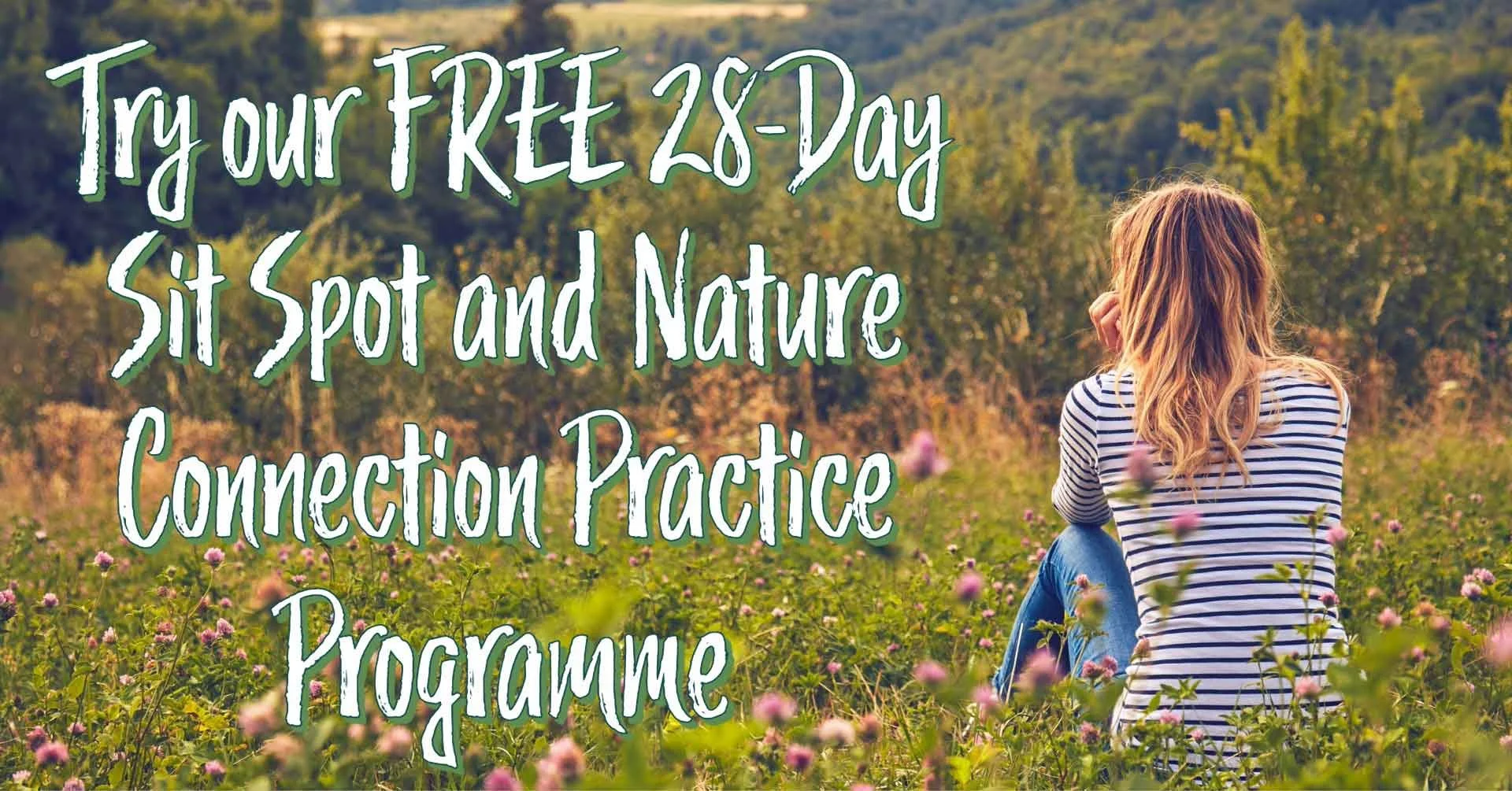
A good place to start increasing your connection with nature and learn more about Sit Spot is our FREE 28 Day Sit Spot and Nature Connection Programme.
I have written this booklet for sale with eight suggested Sit Spot Invitations, designed to increase your nature connection and provide variety and interest whilst you discover the benefits of Sit Spot as a regular practice.
It is A6 in size (pocket-sized), 24 pages long and costs £3. Postage and packing is free within the UK (£3 overseas).


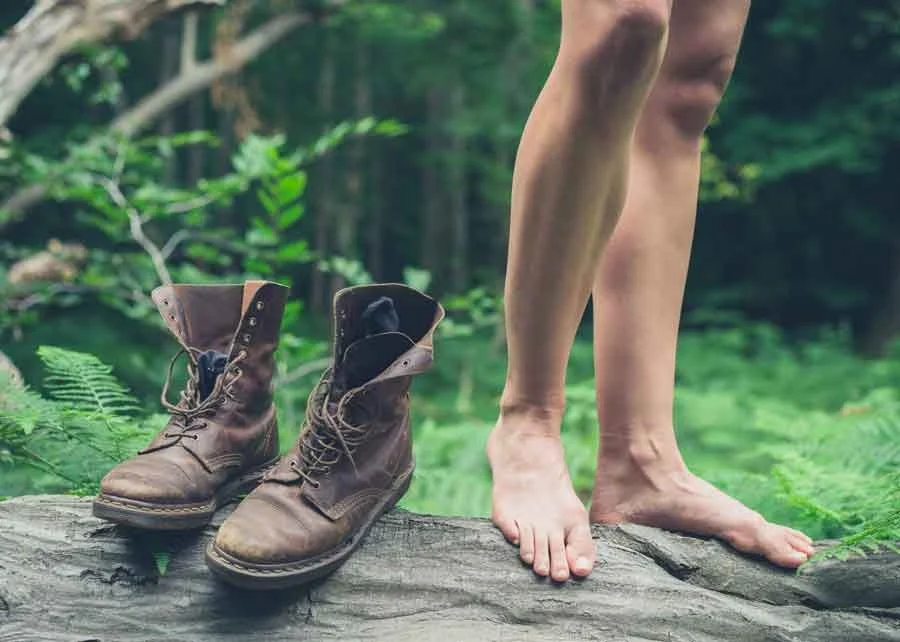





When therapeutic interactions move outside of the ‘consulting room’ and into nature, something interesting seems to happen. Nature can create a shared space where we walk alongside one another, notice the world together, and sometimes discover that healing becomes less about what one person does to another and more about how two people can explore things together.