

An A to Z of Forest Bathing
7th August 2022
‘Forest Bathing’ is a nature-connection practice that almost everyone can take part in, that will benefit your physical, emotional and cognitive functioning. It is increasingly recognised as a preventative approach to healthcare - a kind of ‘forest medicine’ that utilises the restorative power of trees and nature to improve health and wellbeing.
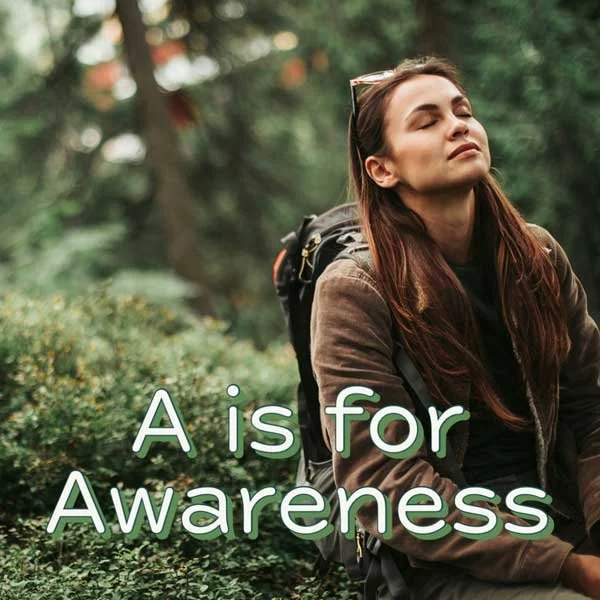
A is for Awareness
The practice of Forest Bathing is about becoming more aware of, and appreciative of the beauty in the things that surround us, and also becoming more aware of the effect that this has on us personally.
One of the key things that differentiates a Forest Bathing walk from ‘just a walk in the woods’ is this intention to engage with the woodland environment and increase our awareness, both of what is happening around us and of ourselves.

B is for Biophilia
Biophilia is defined as the innate human instinct to connect with nature and other living beings and proposes that humans feel an emotional, but subconscious connection to environments inhabited by plants and animals that is rooted in biology and evolution.
The Biophilia hypothesis explains why being nature is therapeutic and conversely why separation from nature can be psychologically and emotionally damaging. It also proposes that the beneficial effects on health that forests and nature bring can also lead to more ecological human consciousness and increase pro-environmental behaviours and counter the effects that humans are having on the planet.
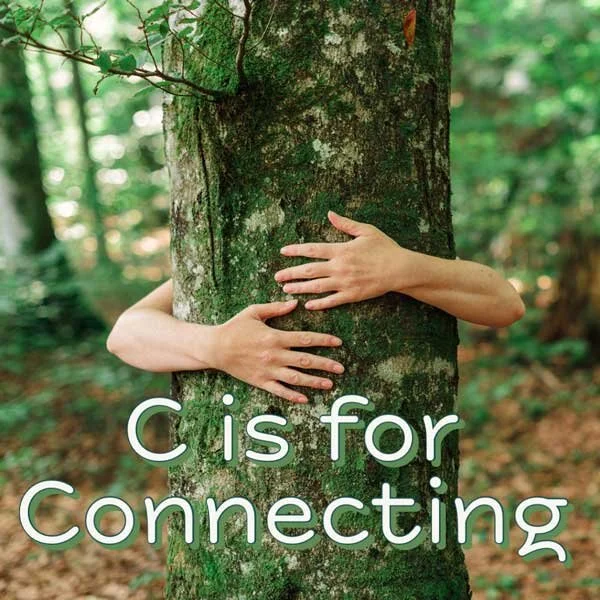
C is for Connecting (with Nature)
Many people instinctively know that being in nature is good for us, and research backs this up, showing that people who are more ‘connected’ with nature often report greater life satisfaction; lower levels of stress, anxiety and depression; and greater levels of emotional and mental wellbeing. But nature-connection is much more than just being in nature or exposed to nature - nature connection is about really tuning in to your surroundings, noticing what is happening around you, engaging with nature through all your senses and immersing yourself in the natural environment.
Importantly, there is also evidence that people’s relationship with nature profoundly influences their behaviours towards the environment, so just as individual benefits to health and wellbeing are important, nature-connectedness can also be beneficial to the wider natural environment, as it is can lead to more pro-environmental attitudes and subsequent positive behaviours.

D is for Depression
Depression is one of the leading causes of disability and absence from work. Research has shown that Forest Bathing and Forest Therapy can significantly improve adults’ mental health by decreasing depression, as well as stress, anxiety, and anger levels.
Forest Therapy has been shown to have a positive effect in reducing rumination, where negative thoughts or problems go round in peoples’ head without resolution, and has been shown to reduce the ‘fight, flight or freeze response’, that can keep people experiencing anxiety feeling ‘on edge’.
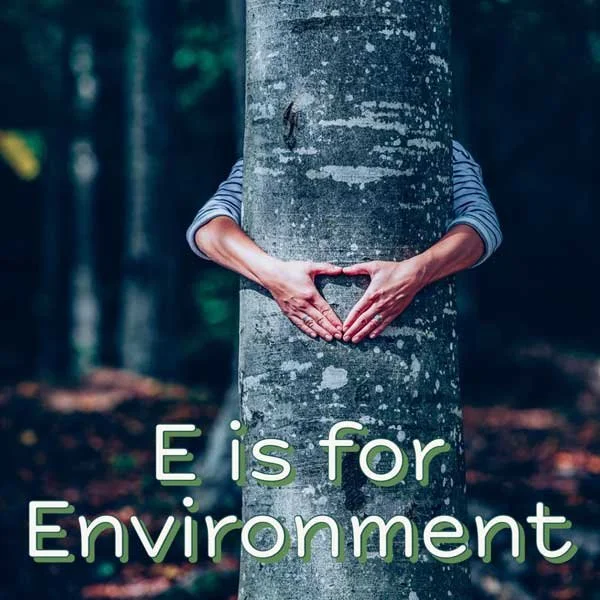
E is for Environment
Just as individual benefits to health and wellbeing are important, Forest Bathing and other activities that increase connection with nature can also be beneficial to the wider natural environment, as this can lead to more pro-environmental attitudes and subsequent positive behaviours. There is a growing body of evidence that people’s relationship with nature profoundly influences their behaviours toward the environment. At a time when the world is confronted with growing environmental threats, better understanding the critical connection between people and nature is key to informing effective decision making, stimulating positive action, and optimising the benefits people and communities receive from nature.
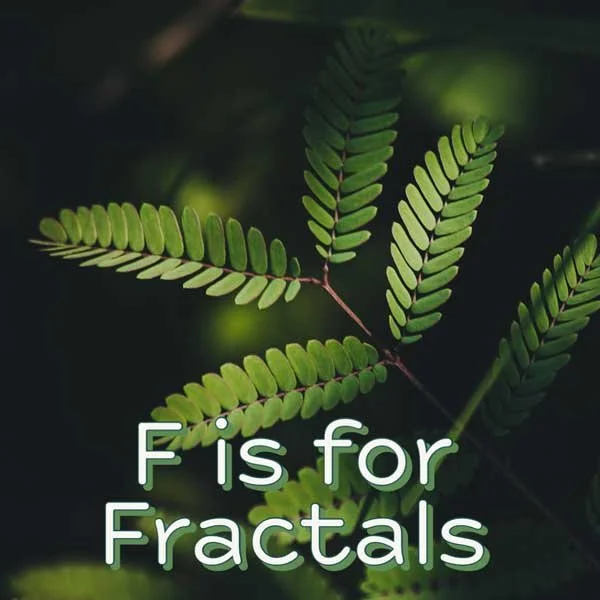
F is for Fractals
A fractal is a pattern that nature repeats at different scales. Examples are everywhere in nature. Bracken is an example of a fractal pattern, where the smaller leaves replicate each larger stem. Trees are often natural fractals too, where the patterns of the smaller twig branches often repeat the patterns of the thicker bough branches.
Other examples include:
Snowflakes and frost crystals
Lightening
Romanesco broccoli
Research shows that we have a physiological response to fractal patterns in nature that has the potential to lower stress, as they are easier for the brain to process and this perceptual fluency results in positive affect, stress reduction and the restoration of attention and concentration.
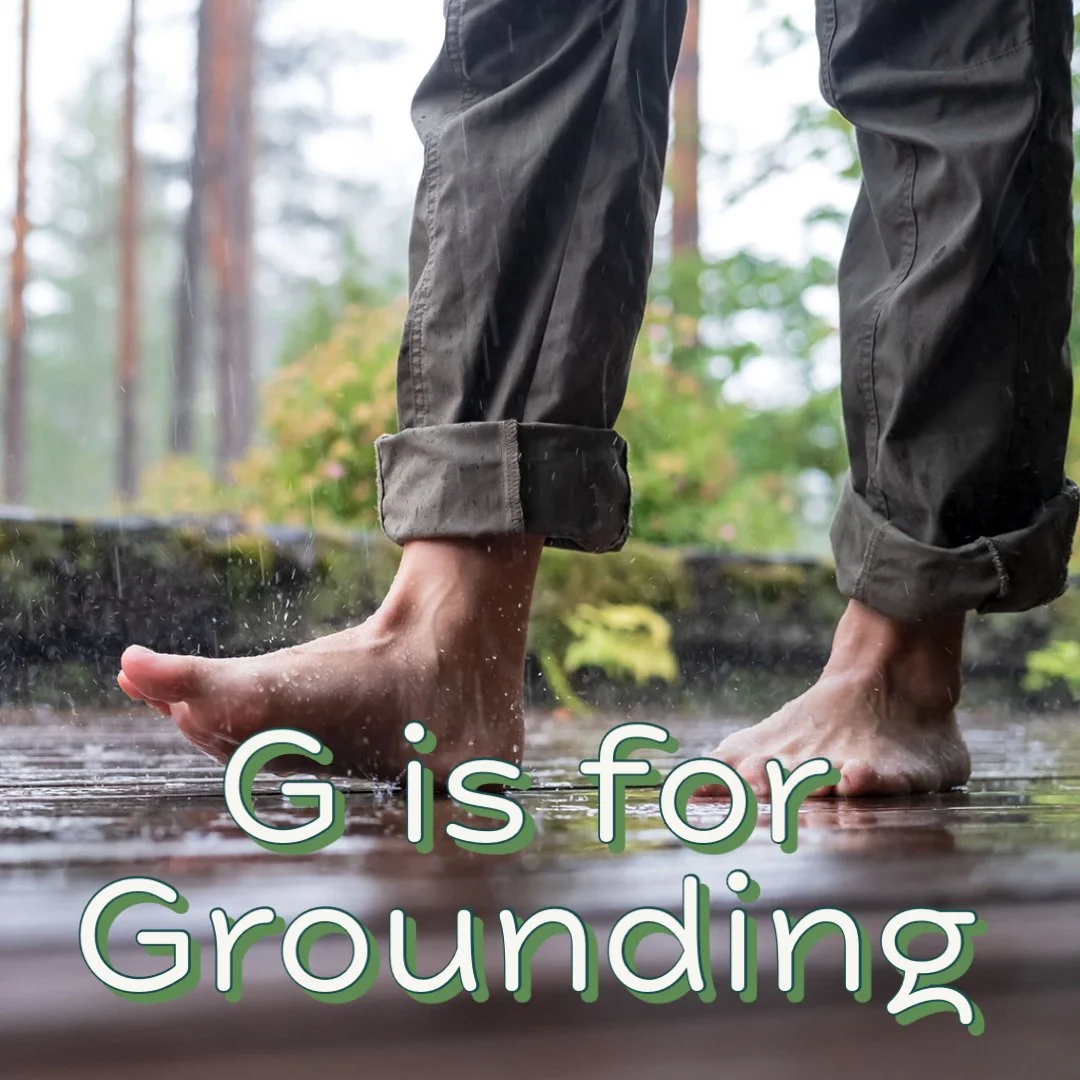
G is for Grounding
Grounding in mindfulness often refers to the ability to return your thoughts and focus to the present moment with sustained attention, or activities that help you to focus on the present.
Grounding can also refer to Barefooting and Connecting with the Earth - Grounding as in barefooting or ‘earthing’ is a slightly different activity in which you take your shoes and socks off and walk barefooted. Research suggests that direct physical contact with the vast supply of electrons on the Earth’s surface can be beneficial to health and wellness, in that bodily contact with the Earth's natural electric charge stabilises physiology at the deepest levels, reducing inflammation, pain, and stress, and improving blood flow, energy, and sleep - and that conversely many of today’s problems are caused by a lack of this type of connection.

H is for Health
Forest Bathing provides benefits to both physical and mental wellbeing. It has been shown to reduce stress and anxiety, and increase feelings of happiness, as well as lower heart rate and blood pressure, boost the immune system and accelerate recovery from illness.

I is for Invitations
A Forest Bathing ‘invitation’ is an activity intended to encourage you to connect with the natural world around you through your different senses, heightening your sensory awareness and increasing your nature connection.
This invitation may be offered by a Forest Bathing Guide, might be a suggested activity that you have read or might be a spontaneous idea that you receive from nature itself.

J is for Japan
Spending time in forested areas for the purpose of enhancing health, wellbeing and happiness has been practiced in Japan for centuries where it is now referred to in Japan as ‘Shinrin-yoku’. It has its origins in Buddhist nature-connection practices and the beliefs within the Shinto religion about the healing powers of forests, and the trees spirits which live within them.
The word Shinrin-yoku was first used by Tomohide Akiyama, the Director General of the Japanese Ministry for Agriculture, Forestry & Fisheries in 1982 and translates as ‘Forest Bath’. The creation of this forest therapy practice was a response to a growing public health crisis in Japan in the early 1980s as a result of increases in anxiety and stress-related illness.
Japan is one of the most heavily wooded countries in the world and now has 62 ‘Forest Therapy Bases’ - areas located in a forest where the relaxing effects have been observed based on scientific analysis conducted by a forest medicine expert.

K is for Karoshi
The creation of forest therapy or ’Shinrin Yoku’ was a response in Japan to a growing public health crisis in the early 1980s. This crisis occurred in part, as a result of significant increases in anxiety and stress-related illness, and this was attributed to increased urbanisation and working long overtime hours.
The Japanese have now coined the term ‘Karoshi’ (過労死) which can be translated literally as ‘overwork death’, to describe this type of sudden occupational mortality. This can be a sudden stress-induced heart attack or stroke, but also refers to any suicides resulting from overwork. The development of Shinrin Yoku or Forest Bathing is designed to protect people against Karoshi.

L is for Listening
Forest Bathing is all about immersing yourself in the natural environment and mindfully using all your senses, and this includes your hearing.
The next time that you are outside in nature, find somewhere that you are comfortable to sit or stand for 5 to 10 minutes, put down anything that you are carrying and either close your eyes if you are able to, or soften and lower your gaze. It can be surprising what you notice when you close your eyes, in part because you tend to stay still when you do this, allowing you to concentrate and focus on your other senses.
Notice the sounds that you can hear, both natural and man-made. What are the nearest sounds you notice and the most distant sounds? Can you hear animals or birds? Can you hear the wind rustling the leaves? It is very rare to experience complete silence, there are usually a whole variety of sounds and noises, even when things appear quiet.

M is for Mindfulness
Forest Bathing is often referred to as a ‘nature-mindfulness’ practice in which people are encouraged to ‘mindfully take in their environment using their different senses’. However, there are a few important differences between traditional mindfulness practices, such as Mindfulness of Breathing, and Forest Bathing.
The most apparent difference is probably that Mindfulness (in it’s truest sense) is about removing oneself from emotion and reaction to one’s surroundings, whereas in Forest Bathing there is a celebration of the experience of awe and wonder of time spent in nature. Forest Bathing has much more of an outward or external attentional focus, whereas Mindfulness more commonly has a primarily inward or internal attentional focus.
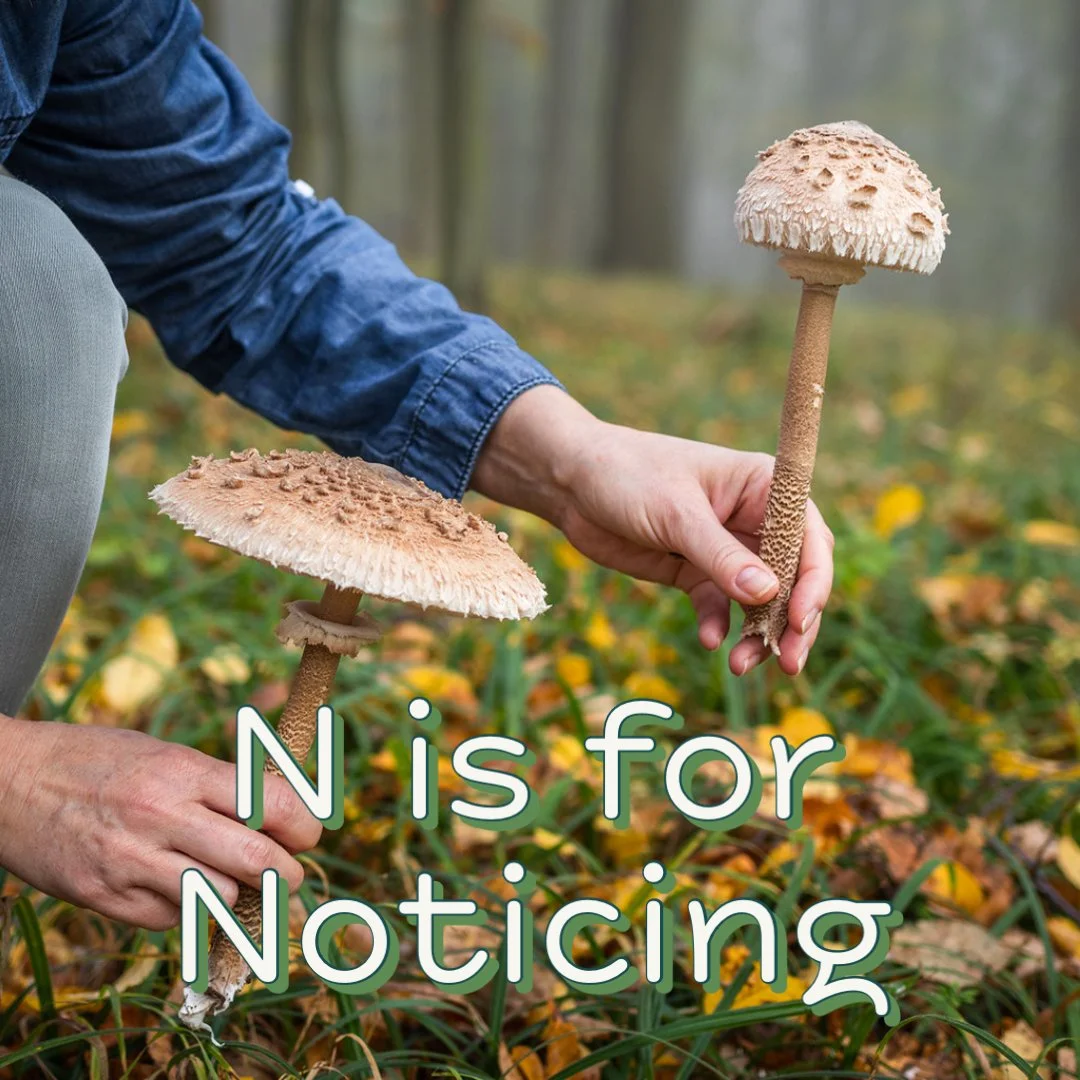
N is for Noticing
One of the most important parts of Forest Bathing is noticing the things that you would not usually acknowledge, in terms of things that you see, hear, smell, touch or taste whilst you are outside in nature (or indeed inside, looking at nature).
Many Forest Bathing invitations invite to notice things: ‘Notice how your body feels, supported by the earth below your feet’, ‘Notice the clouds in the sky’; ‘Notice the smell of the forest floor’; ‘Notice the patterns on the leaves’; ’Notice the different shades of green’ for example.
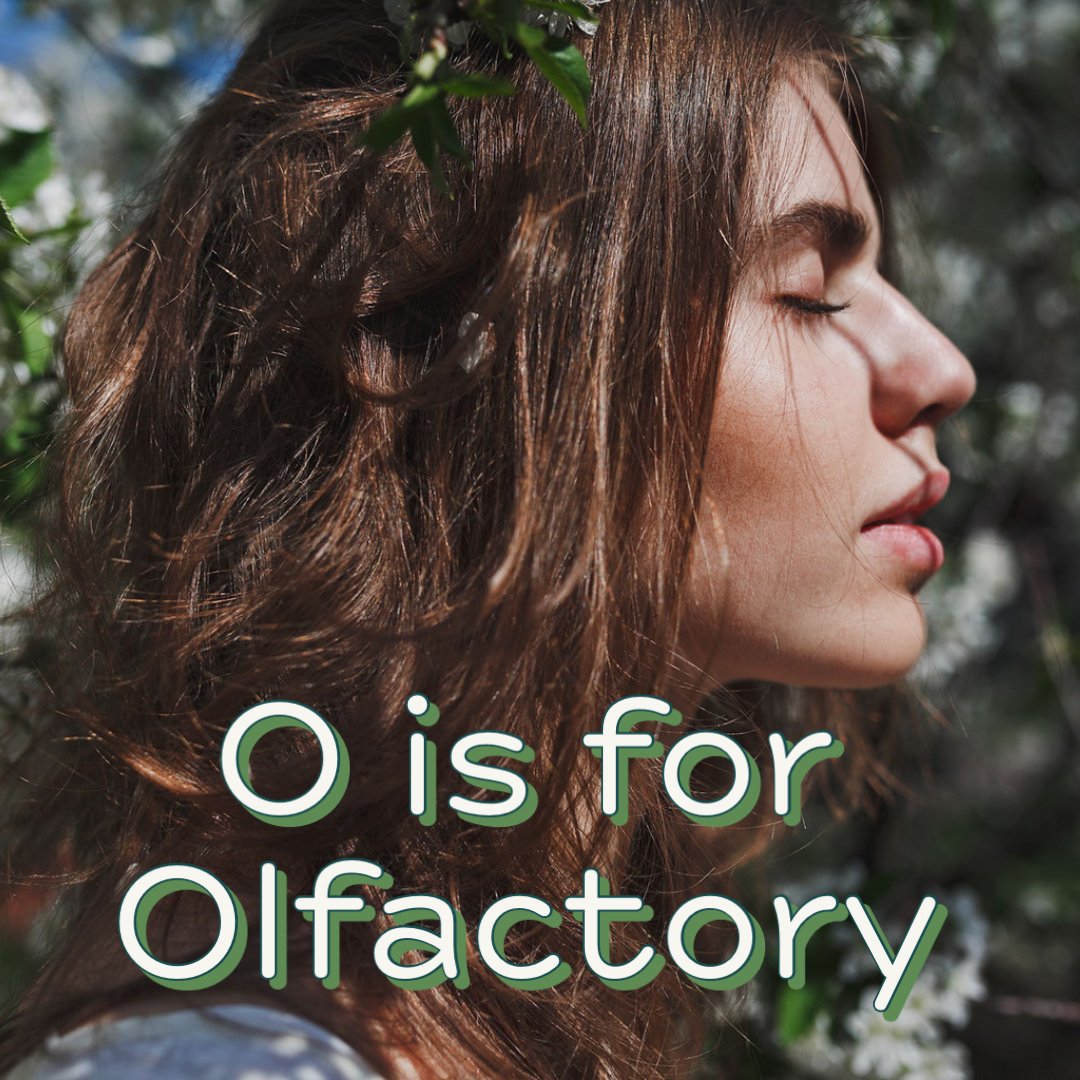
O is for Olfactory
Forest bathing is about taking in your surrounding using all your senses, and the olfactory system is the process that underpins our sense of smell.
The next time that you are out in nature, take a few deep breaths in through your nose and out through your mouth. Perhaps turn your head from side to side to see can you pick up any subtle smells in the air or see if you can pick up something in nature that you can smell, perhaps scrunching up some leaves to enhance the aroma.
Smell and memory are closely linked and scientists believe that this is because the anatomy of the brain allows olfactory signals get to the limbic system very quickly, and that the memories associated with smells tend to be older and thought about less often, meaning the recollection is very vivid when it happens.
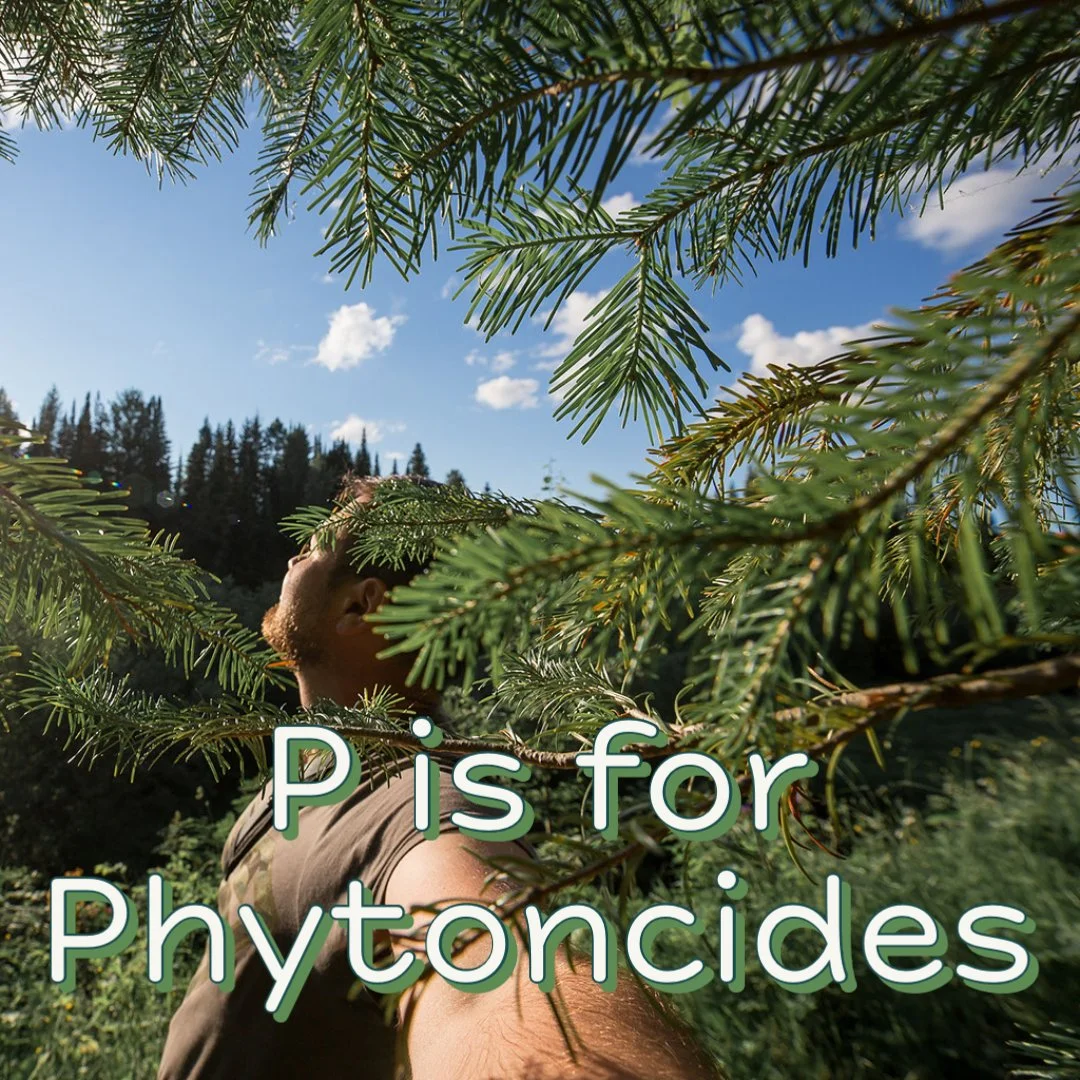
P is for Phytoncides
Many trees contain natural oils comprised of volatile antimicrobial and insecticidal compounds that they emit to protect themselves from bacteria, fungi and being eaten by insects and animals. Phytoncides also form part of the system through which trees communicate with each other. When a tree gets attacked by herbivores, insects or other dangers it can start to emit an increased amount of phytoncides, warning other trees to secrete more phytoncides into their bark (where the highest concentrations of phytoncides are usually found) to protect their outer layer against dangers. In this way the tree can make itself less appetising!
These bioactive molecules are not only beneficial for the trees, they have also been shown to have benefits for humans, as breathing in phytoncides has been shown to increase the numbers of Natural Killer (NK) cells in the body’s circulatory system.
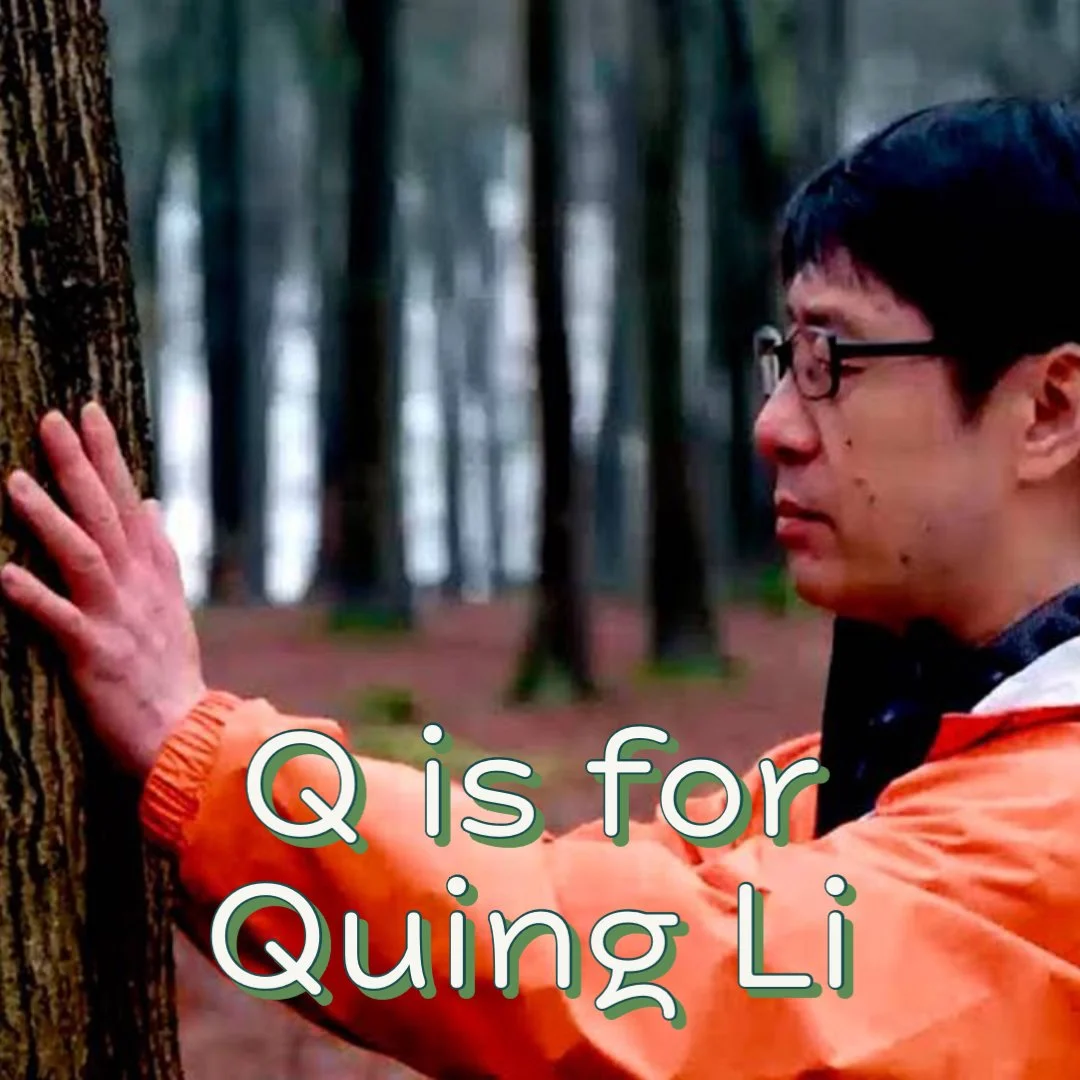
Q is for Quing Li
Dr Qing Li is Associate Professor at the Nippon Medical School in Tokyo and President of the Japanese Society of Forest Therapy. He is the world's foremost expert in Forest Medicine, a branch of medical science that he began to develop in 2012. Few people have undertaken as much research or written more about the benefits of Forest Bathing and Shinrin Yoku than he has. He is a true expert and pioneer of the practice of Forest Therapy.
R is for Restorative
Attention Restoration Theory (or ART) proposes that being in nature has restorative effects, especially in terms of our ability to focus and concentrate. Kaplan & Kaplan propose that there are four stages along the path to restoration:
Clearing the mind, where concerns, worries and negative thoughts are allowed to pass through the mind and fade away, not by pushing them away, but by letting them flow through and out;
Recovery from mental fatigue, where, following any activity that requires focused and directed attention, the mind is allowed to recover to normal levels;
Soft fascination, where the individual can spend time in an environment that attracts us and is stimulating in a gentle way, where they can relax such as the natural environment (as opposed to ‘hard’ fascination like watching television or sports that require a higher level of attention that usually precludes time for reflection);
and ‘Reflection and Restoration’, where the most impactful restoration occurs, most commonly from spending an extended period of time in a natural environment.
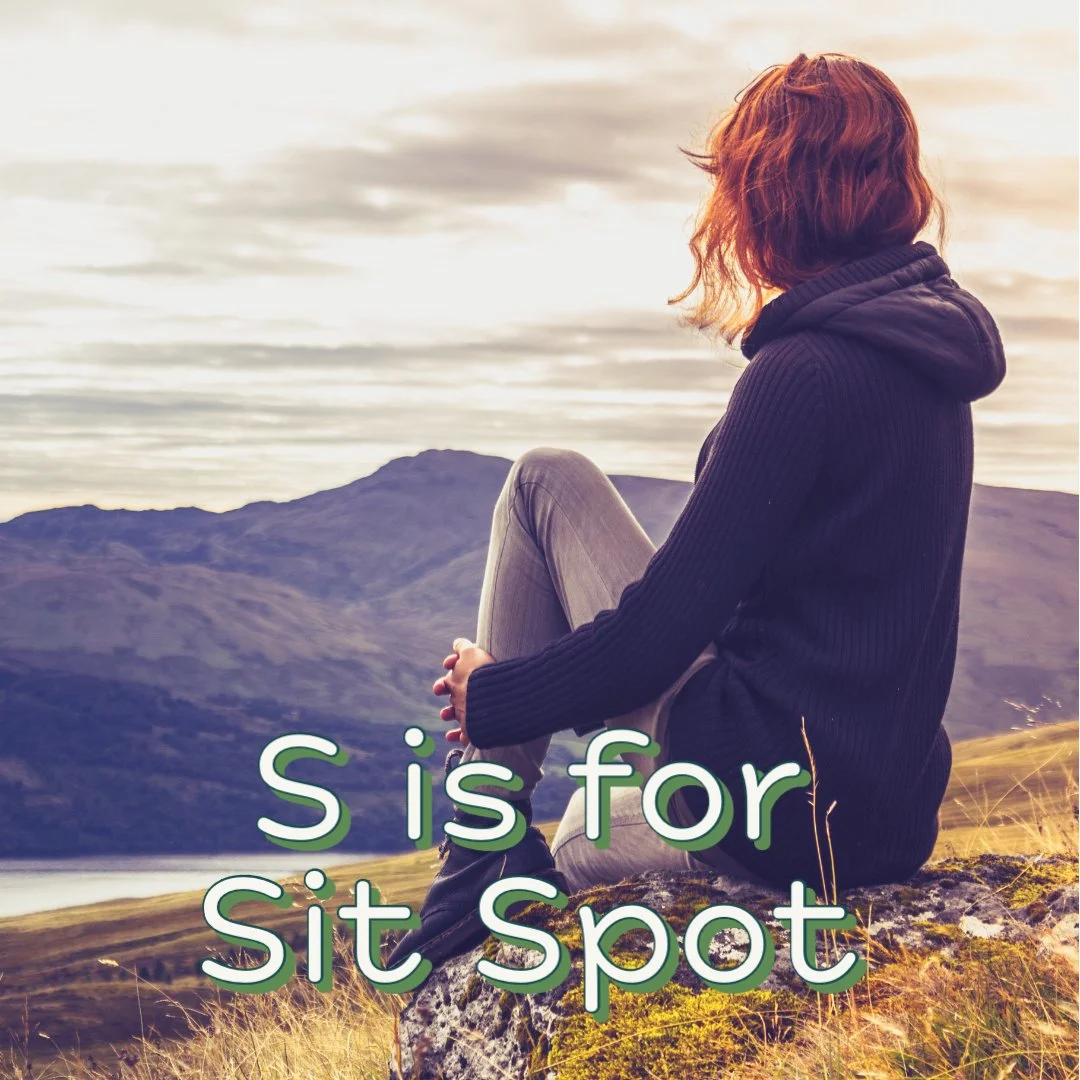
S is for Sit Spot
Sit Spot is a simple but powerful Forest Bathing practice that encourages you to become more mindful; to connect with nature; to cultivate a deeper understanding of yourself and others; and most importantly to cultivate a deeper understanding of the symbiotic relationship that you have with the natural world.
Very simply, find yourself a place in nature where you can sit comfortably, and just ‘be’, allowing you to immerse yourself in the world around you. Try to focus on each of your senses in turn. Think about what you can see, what you can hear, what you smell and what you can feel. When thoughts arise, gently bring yourself back to your senses; to the sounds, sights, smells, and feel of your surroundings. When you sit quietly, you might be surprised not only at what you notice around you, but also about the wildlife that reveals itself to you when pose no threat.
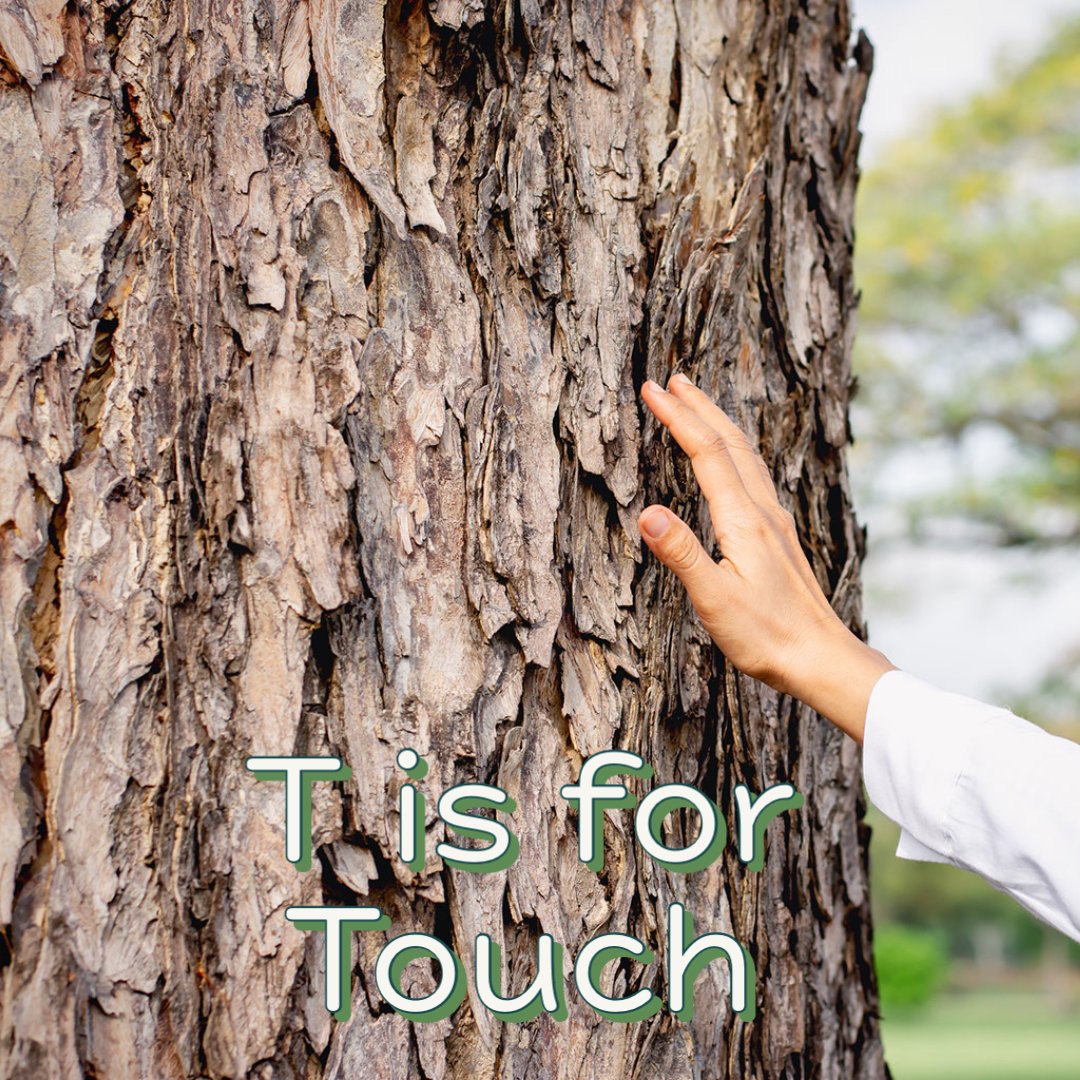
T is for Touch
As you wander through the forest, notice the textures around you and see which ones ‘invite’ you to focus on them. Collect a few items that have different textures. Explore these textures with your fingers and think about how the different textures feel to you.
If there is a stream, dip your fingers in and focus on the cooling effect of the water and think about how it moves around your fingers.
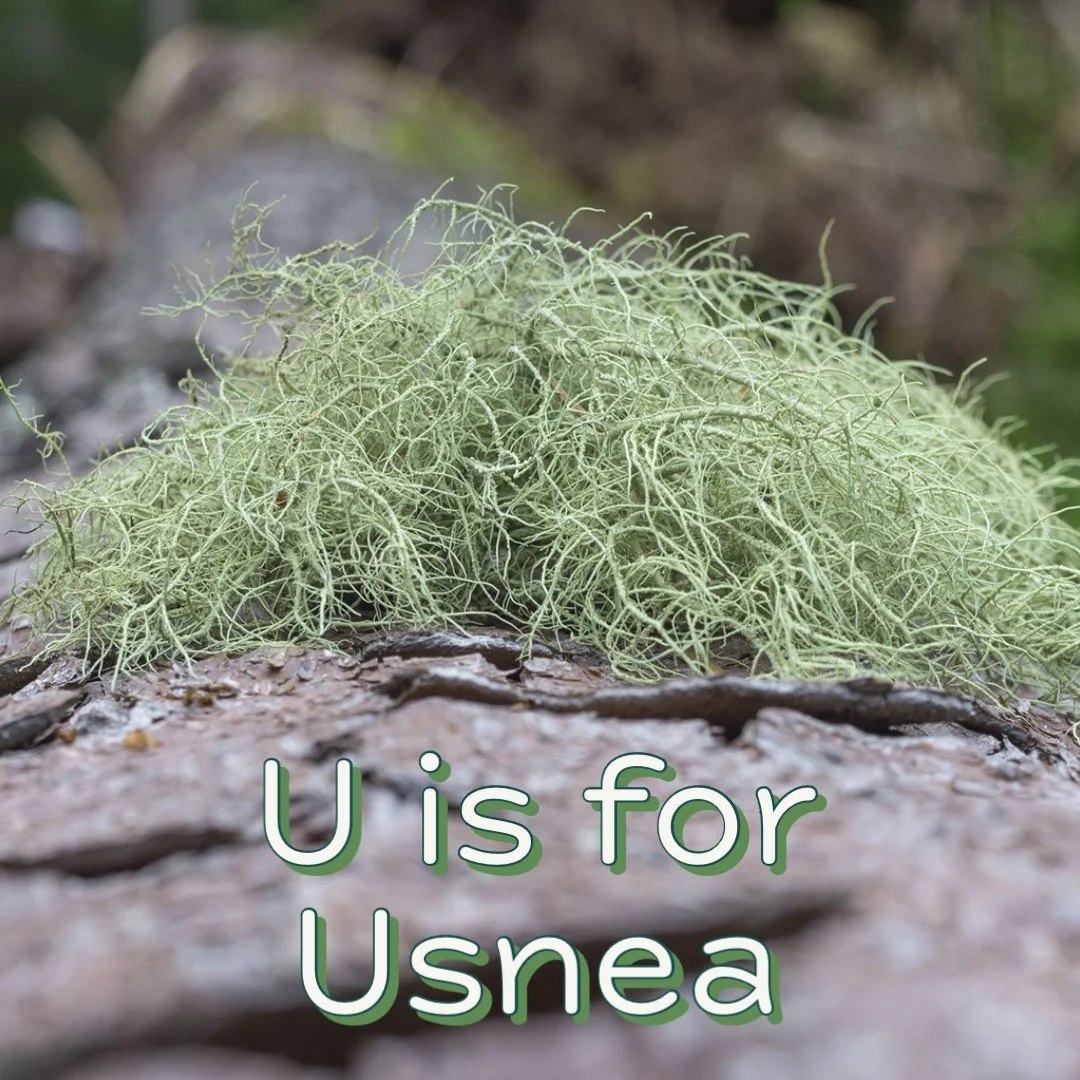
U is for Usnea
Usnea, or ‘Old Man’s Beard’ is a lichen that grows on trees, but only grows in places with very low air pollution. I like to seek out places where there is a lot of usnea and breath deeply in the clean air.

V is for Vitamin D
The human body produces Vitamin D as a response to exposure to the sun, although you can also boost your Vitamin D intake through certain foods or supplements (and Vitamin D is not technically a vitamin as vitamins are nutrients that the body cannot create, and so a person must consume them in the diet, and the body can produce Vitamin D). Vitamin D is essential for several reasons, including maintaining healthy bones and teeth and it may also protect against a range of diseases and conditions, such as Type 1 Diabetes.
There is also evidence that the synthesis of Vitamin D influences the production of serotonin, a neurotransmitter that plays an important role in mood and emotional regulation.
Being outside in nature increases exposure to sunshine and increases Vitamin D production and is another way that nature-connection can boost mood and wellbeing.

W is for Wellbeing
The is a wealth of evidence that support the benefits to mental, physical and emotional wellbeing that Forest Bathing can bring, and it is often described as ‘a health promoting, salutogenic, nature connection practice that aims to enhance wellbeing, relieve stress, and encourage relaxation’.
Salutogenic approaches to health promotion focus on factors that support good health and wellbeing, and this sits in opposition to the dominant ‘pathogenesis approach’ in healthcare that focuses on the causes of disease. Salutogenic approaches to enhancing wellbeing are therefore seen as primarily preventative. Forest Bathing and Forest Therapy activities are also a natural way to improve and maintain wellbeing.
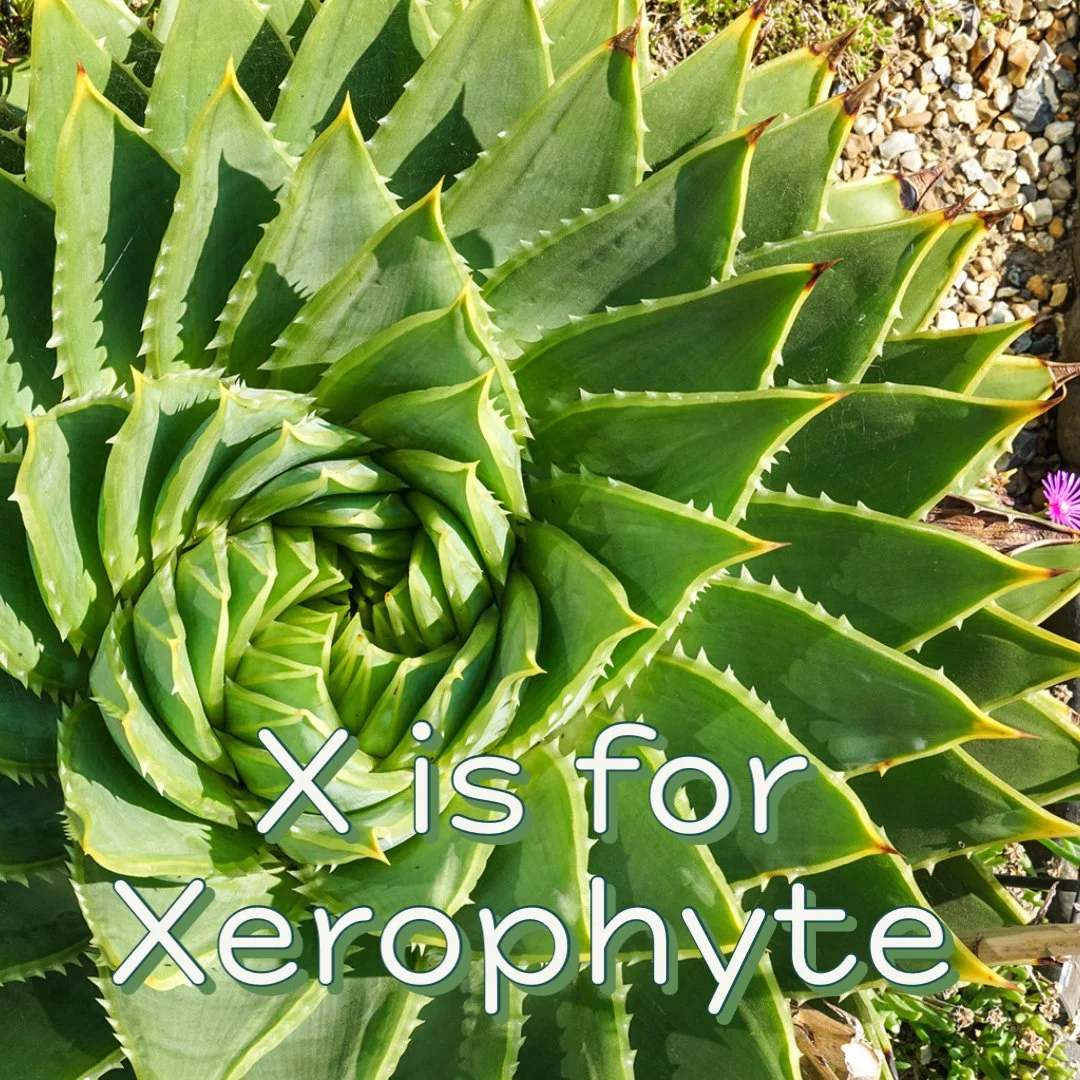
X is for Xerophyte
An important aspect of nature-connection is seeing and appreciating the wonder in nature (X is also a very difficult letter to find a post for!).
A Xerophyte is a plant adapted to surviving with little water in a dry or physiologically dry habitat such as a desert, salt marsh, saline soil, acid bog or ice- or snow-covered regions in the Alps or the Arctic. They achieve this through mechanisms to prevent water loss or to store available water. For example, succulents (plants that store water) such as cacti and agaves have thick, fleshy stems or leaves and deep-spreading roots making them capable of withstanding extended periods of dry conditions. Their waxy, thorny leaves prevent loss of moisture and even their fleshy stems can store water.

Y is for Yoga
Yoga is an ancient form of exercise that involves adopting postures designed to increase strength, flexibility, focusing on breathing to boost physical and mental wellbeing. Breathing is also an important feature of Forest Bathing, helping us to relax and deeply inhale the phytoncides that the trees release. Yoga can be practiced almost anywhere, and so combining yoga and Forest Bathing by practicing yoga in the woods can enhance the benefits of each.

Z is for Zen
Zen Buddhism plays a key role in Japan, the birth place of modern Forest Bathing in the form of Shinrin Yoku, and immersion in nature is considered a very important part of the practice of Zen Buddhism. Zen Buddhism encourages us to learn to gather our thoughts and focus our attention so that it can be easier to see things more clearly and with a new perspective. People often find Forest Bathing easier to practice though, and less intimidating. Meditation often requires you to sit still with your thoughts and allow them to pass through your mind without engagement, while Forest Bathing has an acknowledgment of how you feel in the moment, and in the woods, mindfulness often comes naturally when you allow your senses to focus on what is around you.

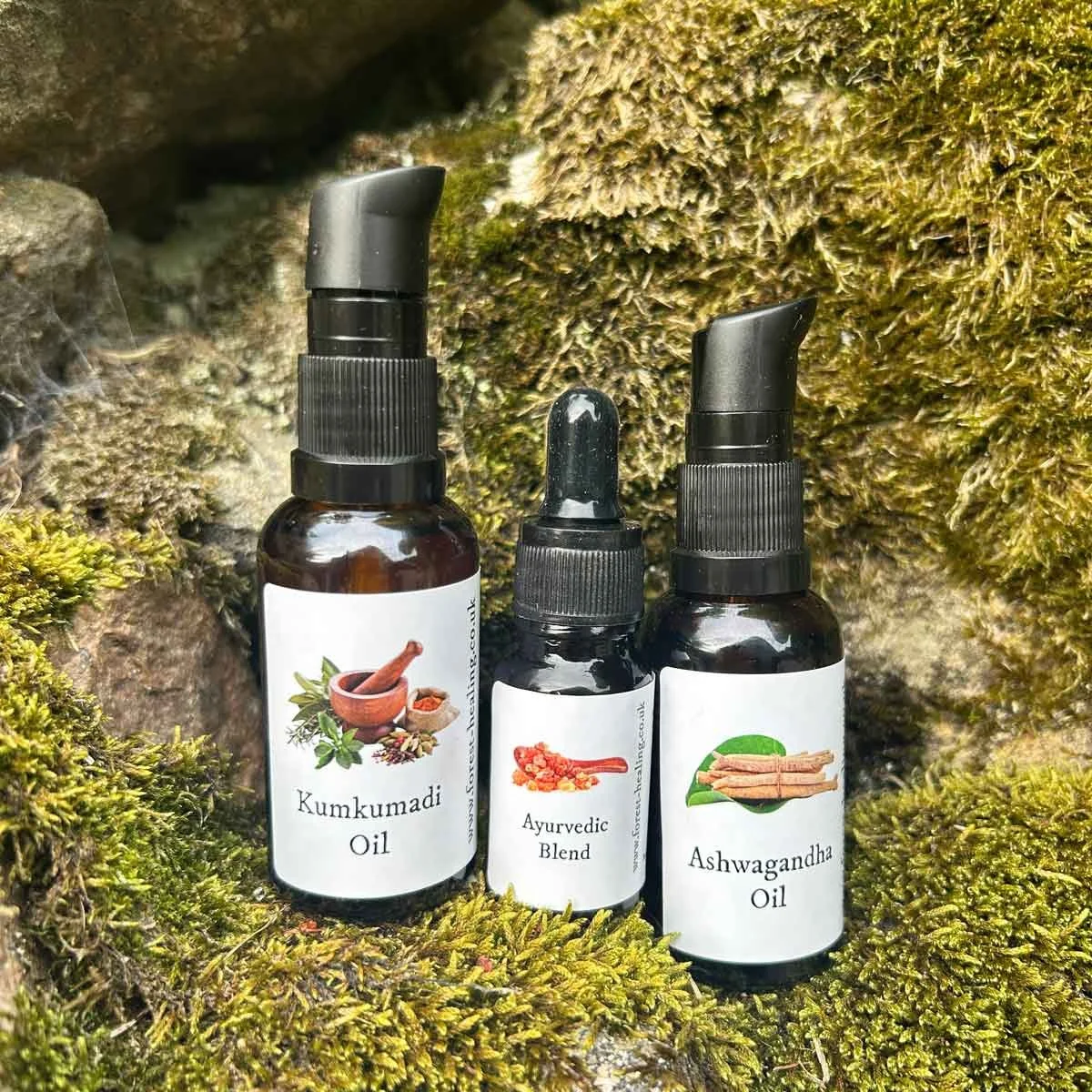
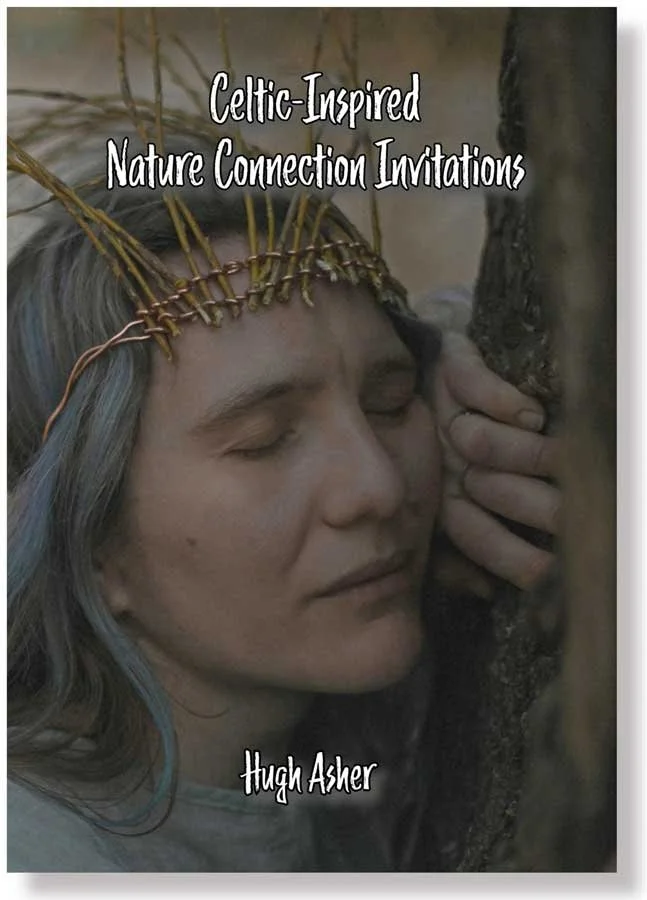

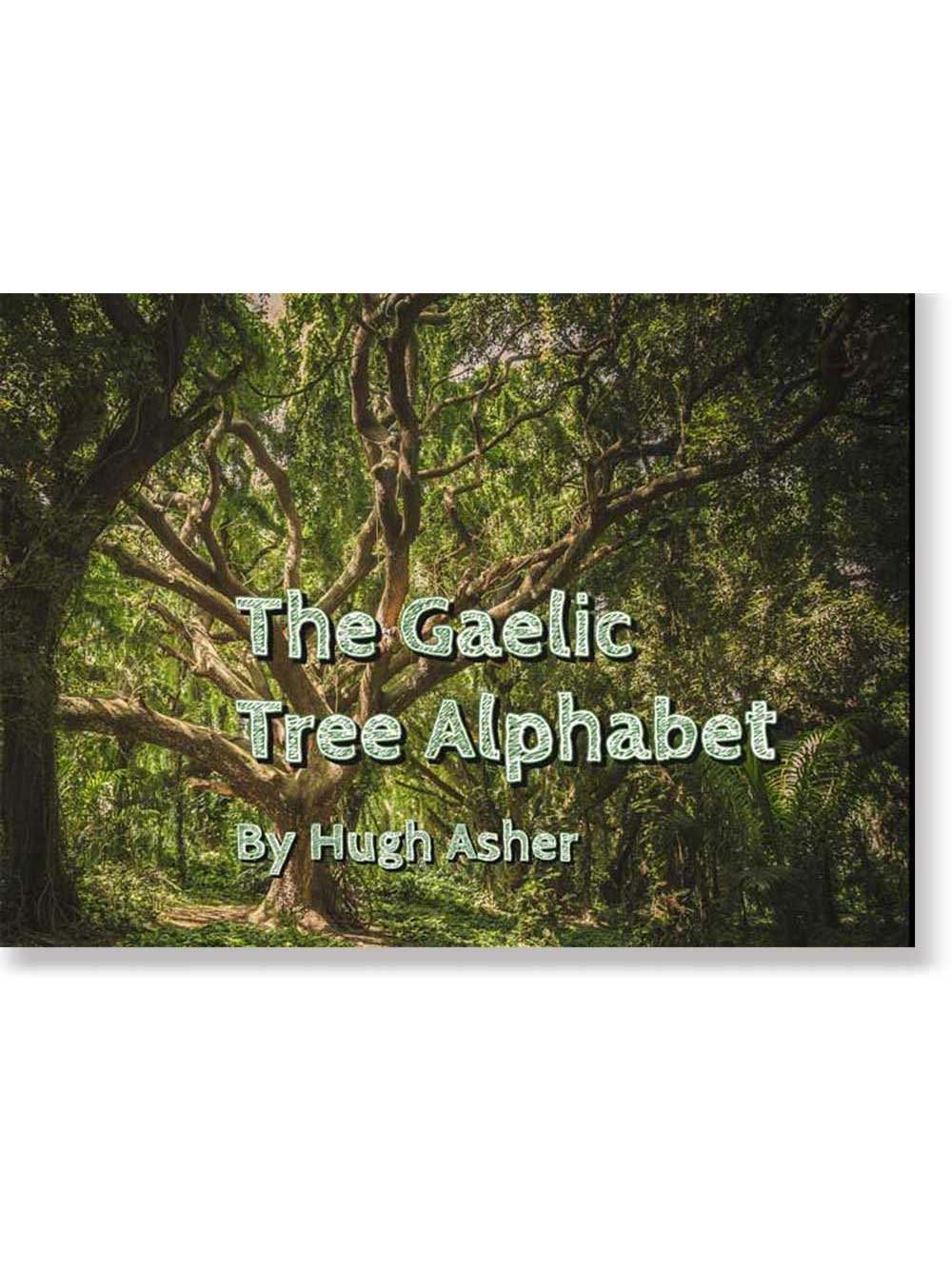
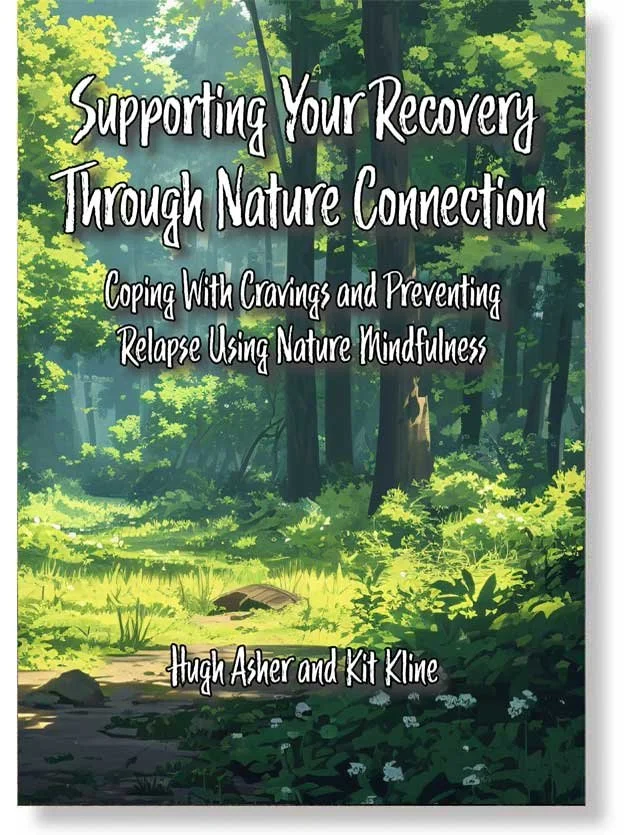







A small collection designed to gently open the door into deeper relationship with the natural world.
This complete set of four Forest Healing booklets brings together practical guidance, reflective ideas, and simple nature connection practices that can be used anywhere — from ancient woodland to a nearby park, garden, or even a single Sit Spot outdoors.
Written to be accessible, grounding, and easy to follow, these booklets offer a pathway into the core practices of Forest Bathing (Shinrin-yoku), Silvotherapy, and everyday nature connection. Rather than asking you to achieve anything, they simply invite you to slow down, notice more deeply, and allow nature to become an active presence in your wellbeing.
Across the four booklets you will explore:
• What Forest Bathing, Silvotherapy, and Nature Connection actually are
• The key benefits of spending mindful time in natural environments
• The practice of the “Sit Spot” and how to develop your own relationship with a chosen place
• Simple, practical Forest Bathing invitations you can try alone or with others
• Ways to bring nature connection into everyday life, even in small moments
Together, they form a gentle introduction to practices that have been shown to support reduced stress, improved mood, greater clarity of thought, and a deeper sense of belonging within the natural world.
These are not academic texts or rigid instruction manuals. They are invitations — encouraging you to step outside, slow your pace, and rediscover the quiet intelligence of trees, weather, and landscape.
Whether you are completely new to nature connection or looking to deepen an existing practice, this collection offers a simple, supportive starting point for building a more intentional and restorative relationship with the living world around you.
A small set of booklets that can change the way you experience even the most familiar patch of nature.
Buy all Four Forest Bathing and Nature-Connection Booklets for £11.00 including FREE P&P within the UK.
Postage to the Rest of the World is £4.