

Forest Bathing and Mindfulness
9th January 2022
Before I discovered Forest Bathing, I had tried a variety of mindfulness practices such as mindfulness of breathing, a kind of breathing meditation designed to help you deal with stress, anxiety, and negative emotions, but had not found that they really ‘worked’ for me. Two problems that I experienced with what might be viewed as ‘traditional’ mindfulness practices were that I found it could increase, rather than decrease my rumination (repetitively going over a negative thought or a problem in my without any positive resolution), and I have tinnitus (a permanent ringing sound in my ears) that I found I became more aware of when trying to practice breathing mindfulness. Perhaps I’m one of the many people who struggle to achieve that kind of mindful state? I then discovered walking mindfulness, a kind of nature-mindfulness that had the benefit of not having to sit still (although I have since learned the benefits of the Forest Bathing practice ‘Sit Spot)’ and from this, I became fascinated with Forest Bathing. I often refer to Forest Bathing as a ‘nature-mindfulness’ practice, and encourage people to ‘mindfully take in their environment using their different senses’ but there are a number of characteristics that differentiate Forest Bathing from Mindfulness, as described here.
The Differences between Forest Bathing & Mindfulness
There are differences between mindfully being in nature and practicing mindfulness. Mindfulness is often described as the basic human ability to be fully present, aware of where we are and what we’re doing, and not overly reactive or overwhelmed by what’s going on around us. As the founder of Mindfulness-Based Stress Reduction, Jon Kabat-Zinn suggests, mindfulness is: “paying attention, on purpose, and without judgement to what is happening right here, right now.” It is also most commonly practiced while stationary, although activities such as mindful running are also practiced. The wellbeing benefits of mindfulness are commonly reported as including reduced stress and anxiety; improved self-control over (especially negative) thoughts and emotions; increased concentration, focus and improved memory; increased emotional intelligence; improved social relationships; and increased life satisfaction. Many of these benefits can also support improvements in physical, as well as psychological health, in common with Forest Bathing.
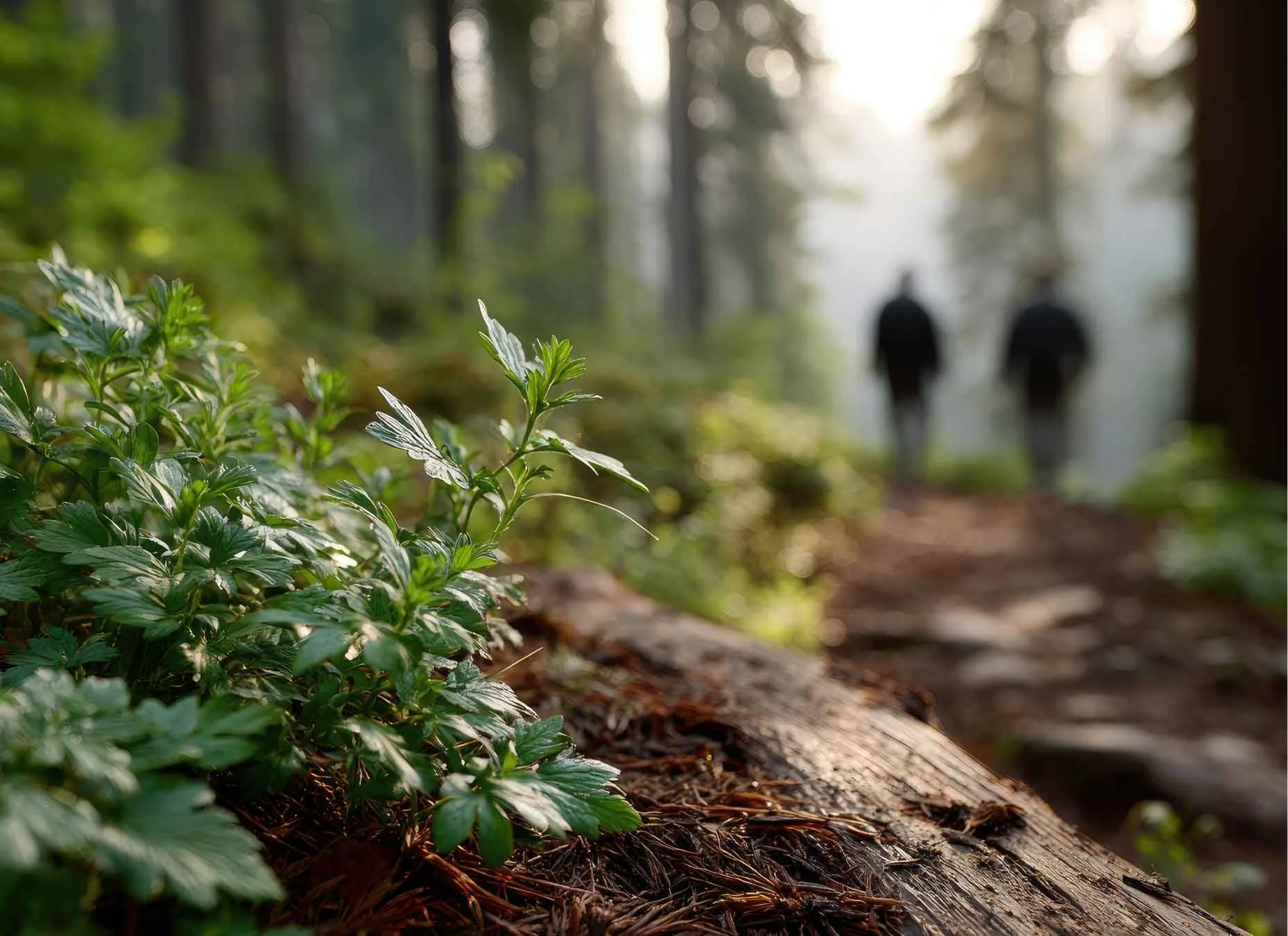
Forest Bathing is the practice of walking slowly and leisurely through the woods or forest, inhaling the forest air, immersing yourself in the natural environment and mindfully using all your senses, opening them to the forest atmosphere and fostering an emotional connection to the landscape and environment. It has many of the same benefits as conventional mindfulness practices, but with the additional advantage of harnessing the positive effects on wellbeing of increasing nature-connectedness. Unless you experience anxiety directly-related to being outside or in a wooded environment, then forests can provide a safe and supportive environment in which to experience these therapeutic benefits. Forest bathing is more commonly a group experience than traditional mindfulness practices, which can also bring added reassurance. Forest Bathing is often seen as
Both Forest Bathing and mindfulness are seen as providing protection against mental and physical ill-health and as such are seen as a ‘salutogenic’ approaches - an approach to health promotion that focuses on factors that support good health and wellbeing rather than on the often dominant ‘pathogenic approach’ in healthcare that focuses on the causes of disease. Both practices also focus on slowing down, breathing deeply and actively connecting with the world around you through your senses. However, they differ considerably in duration and frequency. Forest Bathing sessions usually last between two and three hours and people may only engage in Forest Bathing once or twice a month, whereas mindfulness is commonly practiced daily, but for just 20 minutes to half an hour. However, there is a core Forest bathing practice called ‘Sit Spot’ that blends Forest Bathing with more traditional mindfulness practices and is usually practiced for 20-30 minutes each day.
Internal versus External Attentional Focus

The most apparent difference between Mindfulness and Forest Bathing is probably that Mindfulness (in it’s truest sense) is about removing oneself from emotion and reaction to one’s surroundings, whereas in Forest Bathing there is a celebration of the experience of awe and wonder of time spent in nature. Forest Bathing has much more of an outward or external attentional focus, whereas Mindfulness more commonly has a primarily inward or internal attentional focus. This difference can influence the practice and the benefits in several different ways. Firstly, in mindfulness practice, there is an emphasis on non-judgemental awareness and acceptance of your thoughts and emotions, and as such the participant is more commonly affected by internal cues, such as thoughts, feelings and emotions, whereas in Forest Bathing, the individual is more responsive to the changes around them or the ‘dynamic nature of the forest’.
This difference in the attentional focus can also have implications for the beneficial or detrimental effects that each practice can have on people with certain negative emotional experience, such as symptoms of trauma. Trauma-informed approaches often advise people who have experienced trauma to be cautious about how they engage in mindfulness activities. Some people who have experienced traumatic stress can find that traumatic thoughts or memories can arise when practicing mindfulness, especially where there is an inward focus, and that paying attention to ‘what is happening right here, right now’ can cause their fight-or-flight reflex to kick in, leaving them feeling even more overwhelmed. Forest bathing on the other hand, having this more outward attentional focus, can guide focus and attention away from thoughts about the past and towards a safer focus on the present.
Ease of Practice
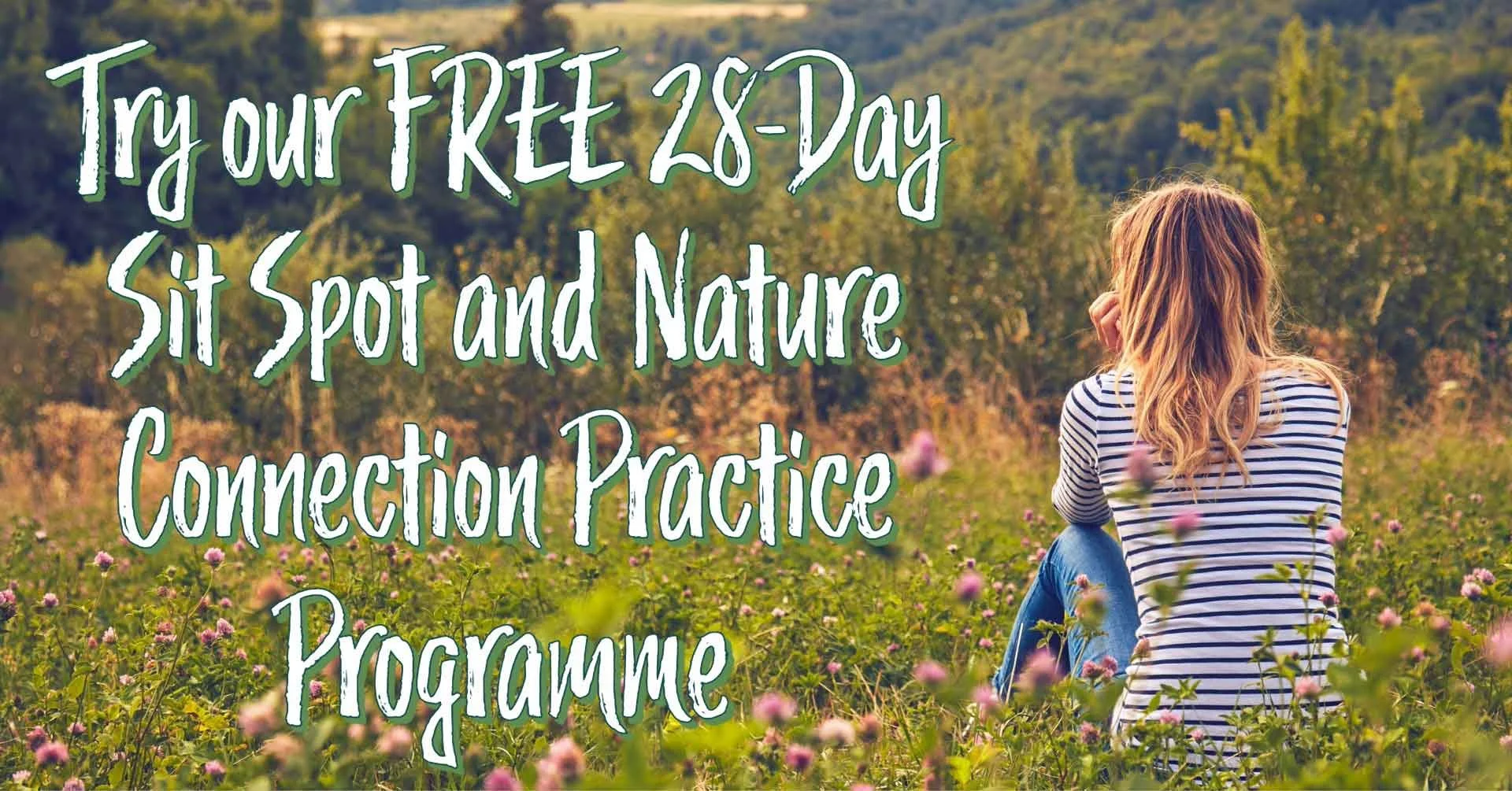
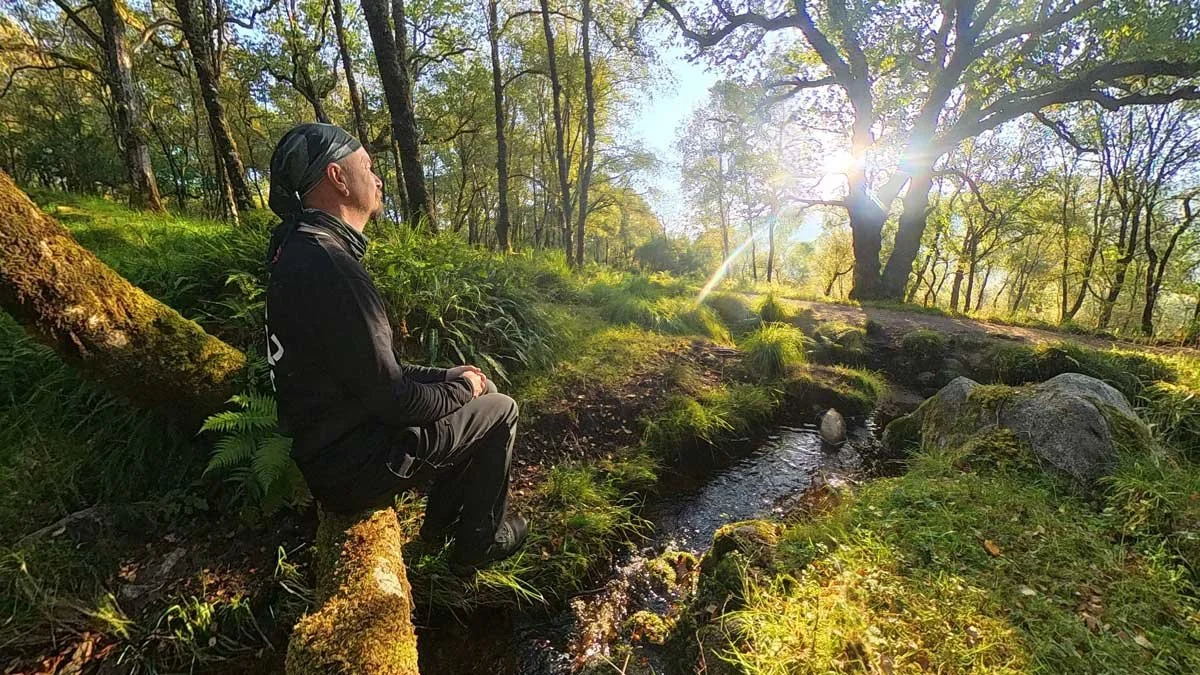
I certainly find practicing Forest Bathing easier than more conventional mindfulness practices. Maybe it’s the difference between sitting ‘being mindful’ and sitting ‘mindfully being’ in nature. With the former you more often ‘try to be mindful’, whereas with Forest Bathing, such as in the practice of Sit Spot, you give yourself permission the ‘just be’ (something that I find harder than it sounds) and simply sit and observe what is around you, trying to focus on each of your senses in turn, and when thoughts arise, you just gently bring yourself back to your senses; to the sounds, sights, smells, and feel of your surroundings. Perhaps this is what make Forest Bathing easier for me, as there are no expectations of achieving anything in particular and why I have practiced it so much more.
We have three booklets for sale providing information about Forest Bathing Invitations, Sit Spot Practice and Nature-Connection Ideas that can be purchased in our store. They are A6 in size (pocket-sized) and 24 pages long.
They cost £3 each or all three for £8 and postage and packing is free within the UK (£3 overseas).


An article entitled ‘A Qualitative Study Comparing Mindfulness and Shinrin-Yoku (Forest Bathing): Practitioners’ Perspectives’ was useful when writing this article.


















We are accustomed to thinking about time in terms of hours, days and years. We remember birthdays, anniversaries and seasons. We think about what happened last week, what we might do next month, perhaps what we hope to achieve over the next few years.
But standing beside a Neolithic monument can stretch the imagination in a completely different direction. Suddenly, fifty years seems very small. A hundred years is barely a moment. A thousand years feels strangely close.