

Sit and Just ‘Be’?
7th September 2024
“You should sit in meditation for twenty minutes everyday - unless you’re too busy; then you should sit for an hour.”
Zen Buddhist Proverb
The meaning of this is quite apparent - that the time when you feel most stressed and anxious about the amount that you have to do, is often the time that you most need to set some time aside to relax, de-stress a little and recharge. This is because when we feel that we have a lot (or too much) to do, the result is often the reverse of actually getting things done. Stress, anxiety and being overly busy often reduces our ability to concentrate and reduces our attention span. Nature connection and mindfulness on the other hand have been shown to improve concentration and short-term memory, restore mental energy and reduce stress.
‘Sit Spot’ is a practice that can help here.
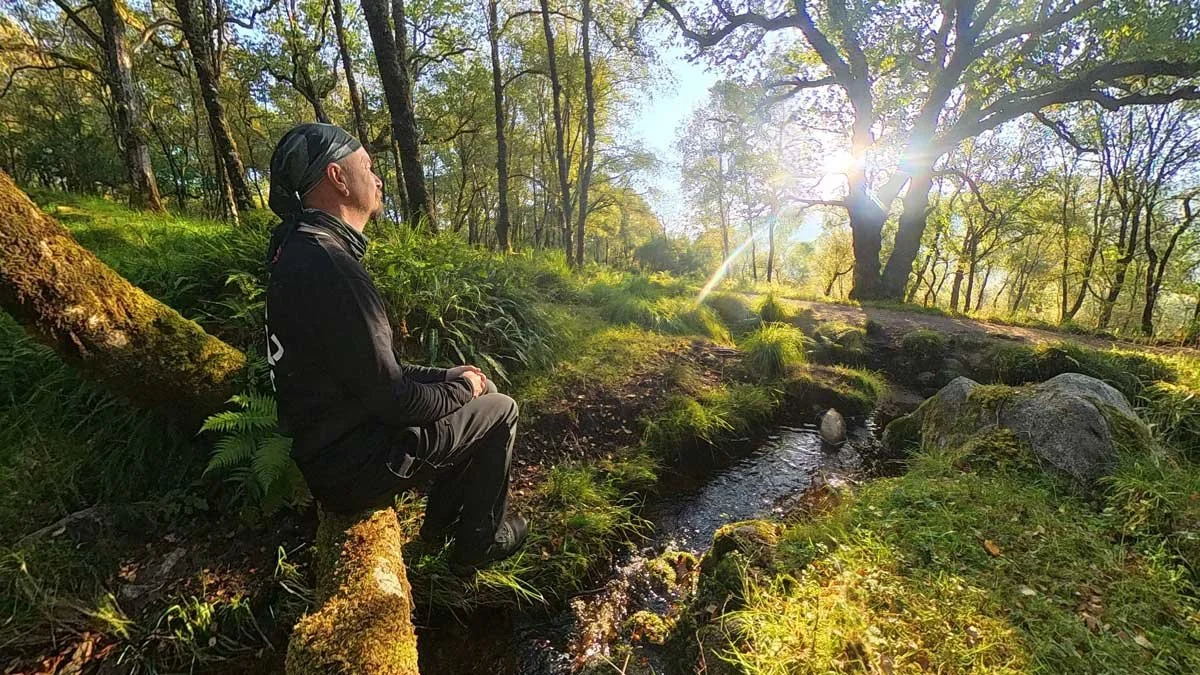
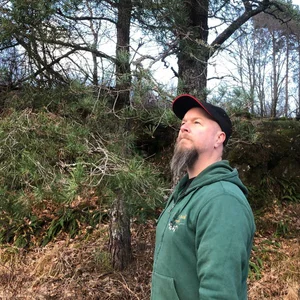
Sit Spot in the Ariundle Oakwoods
What is ‘Sit Spot’?
Sit Spot is a simple but powerful Forest Bathing practice that encourages you to become more mindful; to connect with nature; to cultivate a deeper understanding of yourself and others; and most importantly to cultivate a deeper understanding of the symbiotic relationship that you have with the natural world.
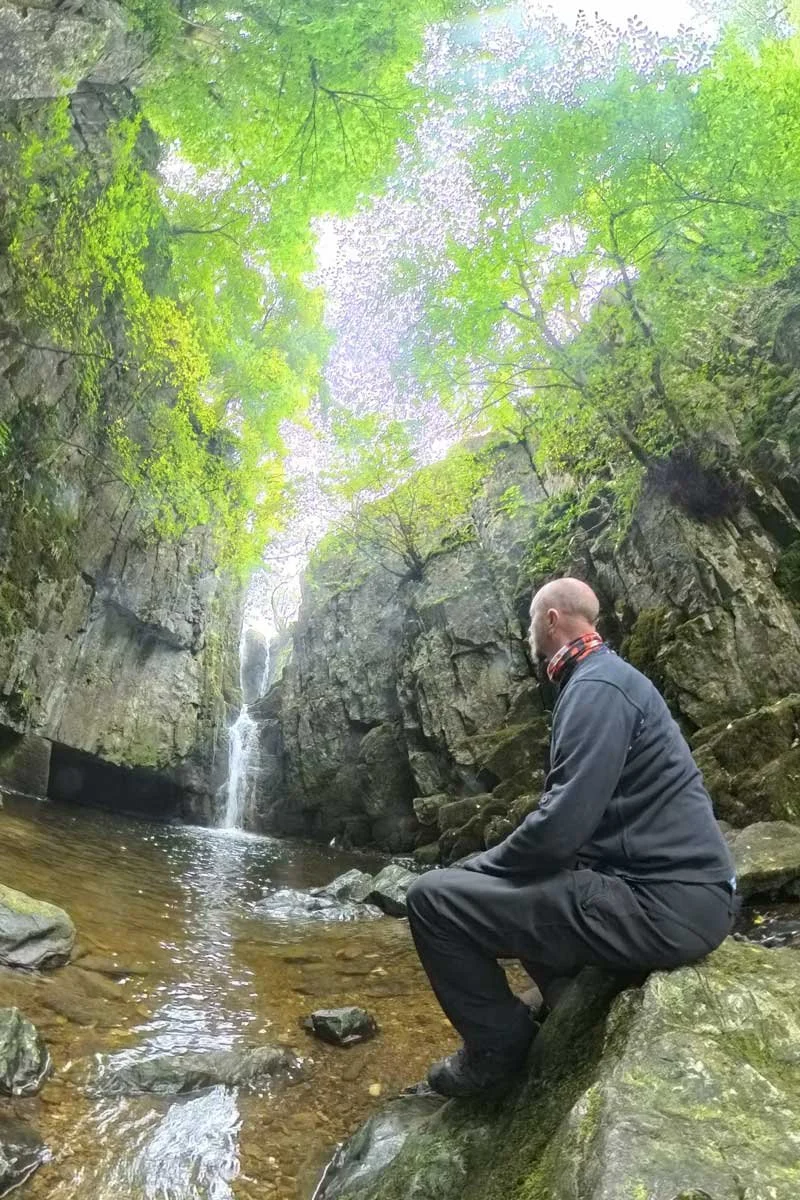
Very simply, find yourself a place in nature where you can sit comfortably, and just ‘be’, allowing you to immerse yourself in the world around you. Try to focus on each of your senses in turn. Notice what you can see, what you can hear, what you smell and what you can feel. When other thoughts arise, gently bring yourself back to your senses; to the sounds, sights, smells, and feel of your surroundings. When you sit quietly, you might be surprised not only at what you notice around you, but also about the wildlife that reveals itself to you when pose no threat.
An ideal length of time to practice Sit Spot is 20-30 minutes, but you may find that starting with 10 minutes and building up to half an hour is easiest. Whilst Sit Spot can be practiced anywhere, if you have a regular Sit Spot that you can go to a few times each week, you gain a real insight into, and greater appreciation of, the changing seasons. For this reason, it is helpful to identify somewhere for your Sit Spot that is easily accessible and close to your home. As with any Forest Bathing activity, wearing layers of suitable clothing helps you maintain a comfortable body temperature. It is also worth taking something easy to carry if your chosen Sit Spot might be damp! If you need to take your mobile phone with you for safety reasons, think about turning it off or silencing it during your Sit Spot so that it doesn’t distract you.
Sit Spot and Learning To Be Alone With Yourself
Whilst it may seem simple, a significant number of people find it very difficult to sit quietly and ‘alone with themselves’. Modern society places a premium on busyness and productivity, with technology enabling us to be constantly connected to work, social media, and an array of distractions. Such external stimulation often comes with a quick dopamine hit too. The constant stimulation can also make the idea of sitting still and being alone with just your thoughts seem uncomfortable. Many people have become accustomed to filling every moment with external stimuli, leaving little room for introspection. The constant barrage of digital communication, social media, and the expectation of constant availability has also created a paradoxical situation where genuine solitude is rare. When people do find themselves alone, the absence of external stimuli itself can trigger anxiety, leading to a variety of psychological challenges.
The Challenge of Solitude
For some people, the idea of sitting still and being alone with their thoughts can be daunting or intimidating. People often find that the modern world has conditioned them to seek constant stimulation, whether through social media, streaming services, or other forms of entertainment. The fear of boredom or the discomfort of facing their thoughts without distraction can also contribute to an aversion to stillness. For a significant number of people, the fear of solitude is rooted in a discomfort with their own thoughts and emotions, as unaddressed fears, insecurities, or unresolved issues can surface when the distractions of daily life are stripped away. This discomfort can be overwhelming, leading people to avoid moments of stillness and seek refuge in external stimuli as a means of escaping from their inner selves* and avoiding self-reflection.
*I am currently reading Eckhart Tolle’s ‘The Power of Now’, in which he recalls a time he had the thought “I cannot live with myself any longer” and then, on reflection decided it was a very peculiar thought, and asked himself “Am I one or two? If I cannot live with myself then there must be two of me: the ‘I’ and the ‘self’ that I cannot live with. Maybe only one of them is real”.
Rumination and Anxiety
One of the primary reasons people can find it challenging to be alone with themselves is the tendency to engage in rumination, a process of repetitive and intrusive thinking about their problems or distressing situations. Rumination can intensify during moments of solitude. When people are left alone with their thoughts, unresolved concerns, regrets and anxieties can dominate their inner landscape, and this constant mental chatter can lead to heightened anxiety levels, as they become entangled in negative thought patterns from which they find it difficult to break free. This rumination can be overwhelming, leading people to avoid spending time alone altogether. Moreover, the fear of confronting these unresolved issues or buried emotions can further intensify anxiety when attempting to sit still in solitude.
Last year in particular, my mental health became so bad that I could not lie in bed, either when I first went to bed, or when I woke up, without listening to an audio book. I averaged over 3 hours a day and went for about 9 months without a day when I didn’t listen to an audio book at some point. The problem with this approach is that if you just block out the negative thoughts, rather than dealing with them, the problem often escalates. I’m much better now though, but it involved actually dealing with the things that were causing the problems. This prompted me to write a separate article about how these kind of distraction can be a form of ‘numbing activity’.
Being able to control anxiety and rumination without resorting to external stimuli to distract you and block it out is important for several reasons. Rumination and anxiety can be a self-perpetuating cycle, and they often distract us from our goals. We need to clear our minds of negative thoughts as much as we can because to make progress towards our goals in life, we need to direct our mental energies towards what we want to achieve. We often fail to do that because our mental capacity can be overwhelmed by all the negative thoughts that are holding us back from progressing forward, rather than filled with more positive thoughts supporting us to make positive changes.
The Importance of Self-Awareness
Learning to sit still and be alone with yourself is an essential step toward developing improved self-awareness. In the silence of solitude, you have the opportunity to observe your thoughts and emotions without judgment. A better understanding of your thoughts, emotions, and behaviours provides a strong foundation for personal growth and a more fulfilling life. Through introspection, you can identify patterns of thought and behaviours that may be hindering your wellbeing, allowing you to make conscious choices for positive change, and allowing for a deeper understanding of your core values, beliefs, and motivations.
Self-awareness is also a key component of emotional intelligence, enabling you to navigate your inner landscape with greater clarity. By acknowledging and accepting your thoughts and feelings, you can make conscious choices about how you respond to various situations, leading to improved mental and emotional wellbeing. This can also help you to make better decisions about your life, and improve your relationships. Being comfortable with spending time alone means you are less likely to spend time with others just to fill your time or avoid your own thoughts. This can help you to appreciate other people for who they are, rather than what they can do for you.
Giving Yourself Permission to ‘Do Nothing’
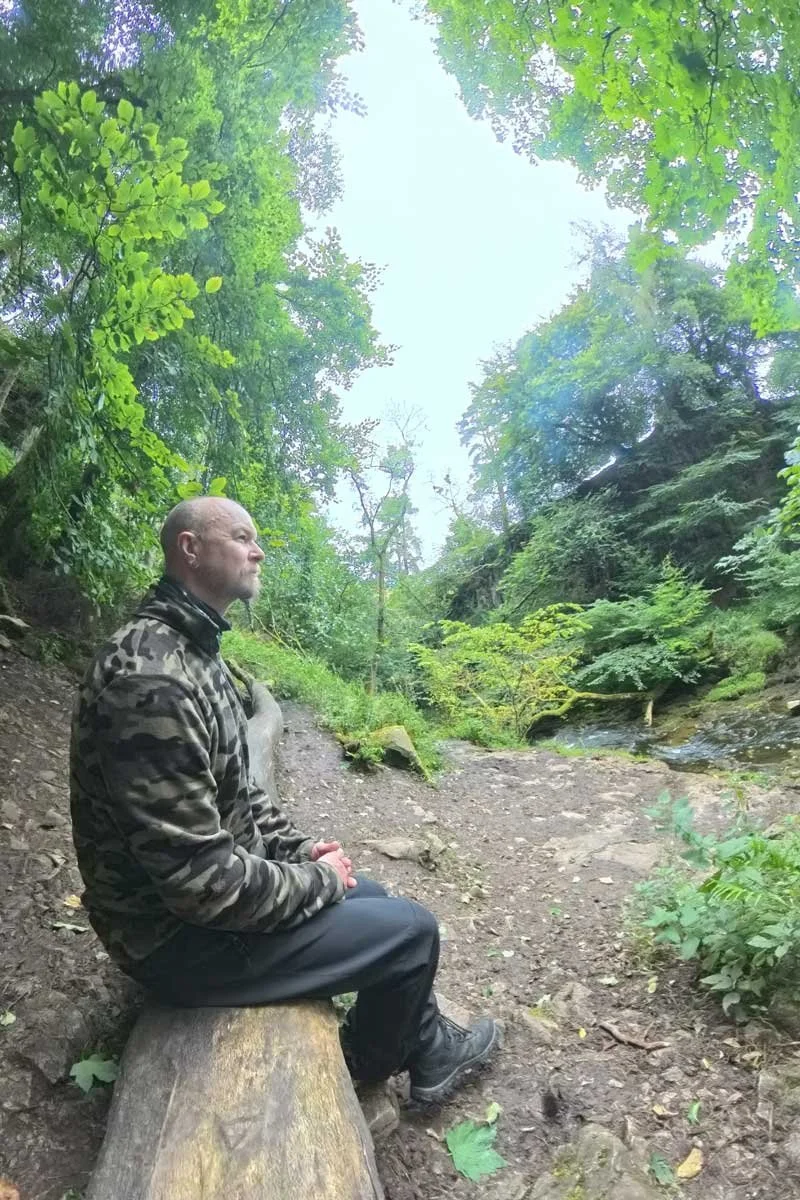
One of the benefits for me of Sit Spot is that it gives me half an hour where I can give myself permission to ‘just do nothing’. Another of the benefits is that I learn a lot about what goes on around me everyday that I no longer notice. However, the biggest problem that I have with it, is actually ‘finding’ the time to do it, even though I know deep down that it will be really beneficial for me. I have always experienced quite high levels of anxiety, usually related to what I feel that I have to do and most probably because I often take too much on. My default response has always been to get stuck into the things that I have on my never-ending ‘To Do’ list as this usually appears to reduce my anxiety (or at least distracts me from it) as I feel that I’m doing something (even if I probably don’t actually do any of it as well as I could if didn't feel so much pressure on myself). Hence for me, the idea of ‘doing nothing’ can in itself be very anxiety provoking. However, I also know from my experiences of training in Life Coaching that if you tell someone that you are going to do such (such as losing weight, or in this case regularly taking time out of my day for my Sit Spot practice), rather than just promise yourself, that you are more likely to do it. The more people that you tell, the more committed you become to doing it, so I thought that I would go one step further and commit to a daily Sit Spot practice for 28 days and support other people to do the same at the same time.
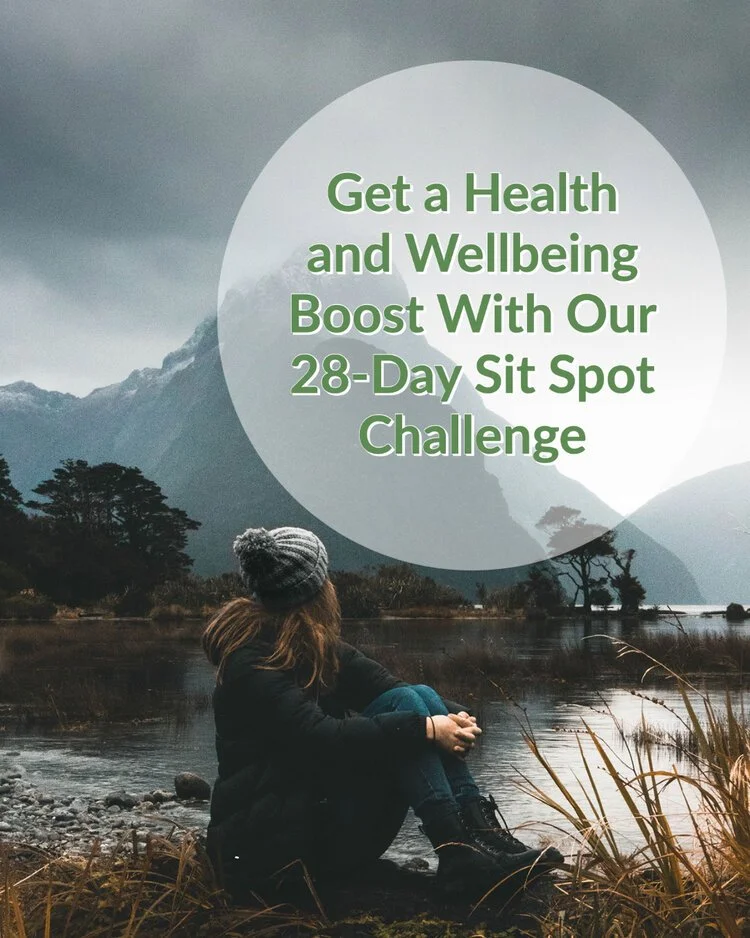
For this reasons, and in order to provide a well needed boost to peoples’ mental and emotional wellbeing, and to support people to develop stronger nature connectedness, we offer our FREE 28-Day Sit Spot Challenge and you can share your experiences in our friendly Facebook Group Sit Spot & Nature Connection Practice.
Follow the link below to sign up, and we will automatically send you instructions on how to select a ‘Sit Spot’ and links to 28 suggested ‘Sit Spot Invitations’ (as well an extra ‘Wildcard’ invitation that you can substitute for another at any time if you want). We will also send you a link to twenty-eight days worth of journal pages for you to help reflect on your experiences and record your thoughts if you want to.
P.S. You can sign up for our Sit Spot and Nature-Connection Programme any time using the button below!
〰️
P.S. You can sign up for our Sit Spot and Nature-Connection Programme any time using the button below! 〰️
There is NO PRESSURE to get out everyday and do it, nor is there anything that says that you can’t do it in the way that most appeals to you.
Just do that parts that resonate with you.



Recent research has shown that increased nature connection has been shown to lead to an increase in creativity as well as increased attention capacity and concentration and a reduction in mental fatigue. Kaplan and Kaplan’s Attention Restoration Theory proposes that natural environments in particular are restorative when they engage your attention effortlessly through ‘soft fascination’ and offer a sense of ‘being away' from everyday concerns.