

What can we learn about Nature-Connection from the Māori?
10th December 2022
This is the second in a series of articles looking at what we can learn about connection with nature and nature-connection practices from Indigenous peoples that started by looking at Native American and First Nation Cultures.
There is a component of Forest Bathing practice, especially in North America, Australia and New Zealand, that promotes recognition of ancestral lands, acknowledges historical wrongdoings, and recognises that the indigenous people had a different relationship with nature that may have made them better custodians of the land, and can set examples that we would be wise to learn from. Many Forest Bathing Guides and Forest Therapists in once Colonial countries start and introduce their guiding with a statement such as, “I acknowledge that we are standing upon the traditional lands of the Cherokee (USA) / the Sioux (USA) / the Cree (mainly Canada) / the Blackfoot (mainly Canada) / the Te Arawa (New Zealand) / The Wiradjuri Nation (Australia). I would like to thank them for their stewardship of the land.”
Many Forest Bathing and Nature-Connection Guides also feel that this connection to nature that many indigenous people have is increasingly been lost in modern Western society. Forest Bathing is seen as a salutogenic approach (an approach to health promotion that focuses on factors that support good health and wellbeing) that can be beneficial for mental and emotional health as well as physical wellbeing. Studies have shown that people with a high level of nature-connectedness are more likely to act in environmentally-friendly ways as well as enjoying better mental health. Many people also believe that there has been a decrease in perceptions of connection with nature, particularly over the last 30 to 40 years and that this has contributed to the increase in the global prevalence of mental ill-health.
Disclaimer – Each of the Indigenous Peoples discussed here will have their own customs, practices, beliefs, traditions and values. They may represent a geographically and culturally diverse group of people and this will affect the way that they live and lived in different landscapes.
I recognise that they are far from one homogenous group and I accept that some generalisations may be made that apply to the majority of them, but accept that they may not apply to all of them, and I will exercise caution and attribute particular beliefs to particular tribes and peoples where possible.
This article will also try, where possible, to restrict itself to beliefs and customs that there is evidence that they still apply today, rather than risk confusing them with those that were only evident in Colonial times when both the native people and the settlers may have had different beliefs and values to those that are held now.
I also do not speak with the cultural experience of an indigenous person so lack the cultural context within which those with lived experience may talk and may lack this innate understanding for which I apologise in advance.

The Māori World View
The Māori are the indigenous people of mainland New Zealand (Aotearoa) who are descended from East Polynesian settlers that arrived in New Zealand in a number of large ocean-going canoes (waka) between around 1320 and 1350. The word māori means ‘normal’, ‘natural’, or ‘ordinary’ in the Māori language and is used to describe themselves as a cultural group, with different names for different tribal groups. Māori people often use the term ‘tangata whenua’ (literally, ‘people of the land’) to identify in a way that expresses their relationship with a particular area of tribal land, even if that is the village of their ancestors, rather than where they currently live. It includes the shared recognition, with the other members of the group, of distinctly Māori ways of thinking and behaving.
Traditionally, Māori believe there is a deep connection between humans, the land and the natural world. This connection is expressed through ‘kaitiakitanga’, a way of managing the environment based on the Māori world view that humans are an integral and equal part of nature. This belief system, this intimate relationship with the land, and this understanding of their place in nature means that they usually have a very deep respect for nature and practice systems that support conservation and sustainable use of resources.
Kaitiakitanga
‘Tiaki’ means to guard, or to preserve, foster, protect and shelter. The prefix ‘kai’ means someone who carries out an action.
Kaitiakitanga means protecting, preserving, or guardianship of something, especially things in the environment. A ‘kaitiaki’ is a person or group recognised by the tribal group (the tangata whenua) in an area as the carer, protector or guardian of a thing or a place, such as a lake or a forest. The gods of the natural world were seen as the original kaitiaki, such as Tāne, God of the Forest, who was the kaitiaki of the forest and Tangaroa the God and kaitiaki of the Sea, Lakes, Waterways and All Creatures Within. In modern times, many hapū (sub-tribes) and whānau (families) still have responsibility for caring for and protecting a place such as a lake or forest, working to conserve them, address environmental problems and continue to pass down traditional knowledge.
Kaitiakitanga can also apply to valuable or treasured items, such as family heirlooms that might be cared for by a kaitiaki on behalf of the wider family or group. It is also seen as the wider responsibility that all people have towards the ecosystem and the environment and grows out of increased connection with nature. The intimate relationship between people and the environment is reflected in the belief that the health of a community is dependent on and mirrored by the health of the natural environment – if the environment is polluted then something is amiss with the local population.
In today’s world, Kaitiakitanga allows Māori to feel they are meeting the responsibilities and hopes of their ancestors, and allows non-Māori to reflect on the notion of kinship with nature, and how this might be useful and beneficial in an environmentally threatened world.
Tangata Whenua
The term ‘Tangata whenua’ literally translates as ‘the people of the land’ and refers to tribes or groups of people with authority in a particular area as a consequence of their ancestors’ relationship to it. As a part of this, humans and the land are seen as one, and people are not superior to nature. Humans can learn knowledge and gain understanding from nature and life is about aligning yourself with the natural world.
Traditional Sustainable Practices
Traditional Māori practice when hunting or fishing, and foraging for or growing food, are often based on sustainability and care for the environment. This included only hunting and fishing to provide food, and never purely as sport; limiting the amount of animals or fish that were hunted; only taking or harvesting what was needed; and the practice of ‘rāhui’ – temporary restrictions on taking certain kinds of foods, such as fish, birds or fruit from a particular area at a particular time.
Rāhui
In Māori culture, a rāhui is a sacred practice that follows the basic philosophy of protecting through prohibition. It is imposed by a local tribe (iwi) to temporarily ban the harvesting of essential resources in the forest, land or sea so that the area in question can naturally restore itself.
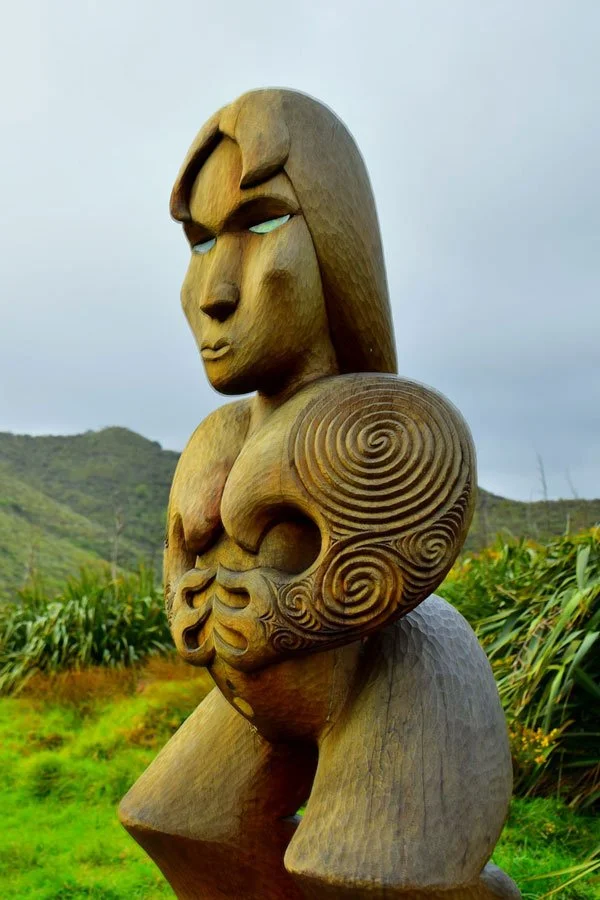
Usually, a physical symbol is placed in the area that needs protection, such as a carved or decorated wooden post that is placed in the ground, the marking of specific land features to show that the area is currently off limits or signs announcing the restrictions.
According to the Te Aka Māori Dictionary, rāhui means “to put in place a temporary ritual prohibition, closed season, ban, reserve - traditionally a rāhui was placed on an area, resource or stretch of water as a conservation measure or as a means of social and political control for a variety of reasons which can be grouped into three main categories: pollution by tapu, conservation and politics. Death pollutes land, water and people through tapu. A rāhui is a device for separating people from tapu things. After an agreed lapse of time, the rāhui is lifted. A rāhui is marked by a visible sign, such as the erection of a pou rāhui, a post. It is initiated by someone of rank and placed and lifted with appropriate karakia by a tohunga.”
Traditionally, rāhui is used to safeguard the tapu, the sacred qualities of the place in which the rāhui is being held. It directly ties into the Māori notion of mana, or authority and status in relation to land and resources, used to legitimise the spiritual meaning of the practice.
Rāhui have also been imposed by the New Zealand government, particularly in relation to marine conservation. In the South Island town of Kaikoura, for instance, the government body used this traditional Māori custom to protect the local coastlines from over-fishing. The rāhui was closed off parts of the coastline from all fishing for a two-year period.
Creation and the Māori World View
The stories of Creation have influenced many aspects of the Māori view of the world. For instance, the gods who shaped the natural world are seen as role models for human behaviour.
In Māori traditions of Creation, the World began with Te Kore (nothingness) where there was no life, only the potential of moving first to Te Pō (darkness) and then to Te Ao (light). In the beginning, Earth (Papatuanuku, the Earth Mother) and Sky (Ranginui, the Sky Father) were clasped together, and their children were born between them. Their children, desperate for light, devised a plan where they would separate there parents. Tāne lay on his back and pushed upwards with his legs with all his strength and thrust his father (Sky) apart from his mother (Earth). His father grieved for his love Papatūānuku, so Tāne turned his mother downwards so that she would not see Ranginui’s sadness. Tāne then clothed her in trees and plants and clothed his father in the sweat of his brow to become the stars that adorn the sky. Although Ranguini still grieved and the Māori proverb (whakatauki) “Kei te heke ngā roimata o Ranginui” (The tears of Ranginui are falling) is said when it is raining, as these are the tear Ranginui cried about their separation.
If you have enjoyed this article and would like to support what we do by donating £2 or more to buy saplings to plant, please follow the link below:







A small collection designed to gently open the door into deeper relationship with the natural world.
This complete set of four Forest Healing booklets brings together practical guidance, reflective ideas, and simple nature connection practices that can be used anywhere — from ancient woodland to a nearby park, garden, or even a single Sit Spot outdoors.
Written to be accessible, grounding, and easy to follow, these booklets offer a pathway into the core practices of Forest Bathing (Shinrin-yoku), Silvotherapy, and everyday nature connection. Rather than asking you to achieve anything, they simply invite you to slow down, notice more deeply, and allow nature to become an active presence in your wellbeing.
Across the four booklets you will explore:
• What Forest Bathing, Silvotherapy, and Nature Connection actually are
• The key benefits of spending mindful time in natural environments
• The practice of the “Sit Spot” and how to develop your own relationship with a chosen place
• Simple, practical Forest Bathing invitations you can try alone or with others
• Ways to bring nature connection into everyday life, even in small moments
Together, they form a gentle introduction to practices that have been shown to support reduced stress, improved mood, greater clarity of thought, and a deeper sense of belonging within the natural world.
These are not academic texts or rigid instruction manuals. They are invitations — encouraging you to step outside, slow your pace, and rediscover the quiet intelligence of trees, weather, and landscape.
Whether you are completely new to nature connection or looking to deepen an existing practice, this collection offers a simple, supportive starting point for building a more intentional and restorative relationship with the living world around you.
A small set of booklets that can change the way you experience even the most familiar patch of nature.
Buy all Four Forest Bathing and Nature-Connection Booklets for £11.00 including FREE P&P within the UK.
Postage to the Rest of the World is £4.