

Lughnasadh: The Celtic First Harvest Festival and the Wisdom of Nature
Saturday 1st August 2026
Today, August 1st, marks the date of the ancient Celtic Festival of Lughnasadh, celebrating the start of the harvest season. In this article we explore the Celtic celebration of Lughnasadh, the festival of Lugh and the importance of the first harvest to the Celts, its connections with Lammas and the Welsh Gŵyl Awst, and learn how this beautiful seasonal festival can deepen your relationship with nature.
The Threshold of the First Harvest
There is a particular beauty to the turning of the year at Lughnasadh. The light is still generous, the hedgerows become heavy with fruit, and the land begins to show us that abundance is never static — it ripens, is gathered, is shared, and then slowly yields to rest. Lughnasadh is the old Celtic festival that marks the beginning of the harvest season, traditionally celebrated on or around 1 August, halfway between the Summer Solstice and the Autumn Equinox. It is one of the four great Celtic seasonal festivals, alongside Imbolc, Beltane and Samhain.
For those of us drawn to nature connection, who find meaning in forests, fields, and the subtle languages of the natural world, Lughnasadh can offer a particularly beautiful threshold. The land is no longer in the bright, expansive fullness of midsummer, yet neither has it fully crossed into the inwardness of Autumn. The days still carry plenty of light, but the air has begun to change. Fruits swell, grains ripen, berries darken, and the first serious gathering of the year’s crops begins. It is a festival of paying close attention, of noticing what is ready, and of understanding that timing matters. The Earth does not deliver all its gifts at once. It ripens in sequence. That alone is a lesson worth receiving.
The festival takes its name from Lugh, a major Celtic deity and cultural hero, especially in the Irish tradition. Lugh is often described as a god of skill, craft, brilliance and many talents, often associated with light and the sun. His epithets include Lugh Lámfada, “of the long hand”, and Lugh Samildánach, “skilled in many arts and crafts”. In the traditional stories, he is not a ‘one-note god’, but instead is portrayed as a richly gifted presence who embodies versatility, intelligence and creative mastery.
That matters, because Lughnasadh is not only a harvest festival in the agricultural sense. It is also a celebration of human skill meeting the generosity of the land. Grain must be cut, berries gathered, bread baked, food preserved, and communities brought together. Lugh’s presence in the festival reminds us that the harvest is not simply “found” — it is made possible by knowledge, labour, weather, timing and care. In this sense, Lughnasadh honours both the Earth’s abundance and the hands that work with it. Lugh belongs to that story because he reminds us that human life, like the land itself, is made of many talents working together. In some traditions and retellings, Lughnasadh is also linked to Tailtiu, Lugh’s foster-mother, whose labour in clearing the plains of Ireland is remembered through the festival.
This is one of the reasons Lughnasadh can feel so moving. It is a festival that holds both abundance and sacrifice. The land gives, but the giving has a history. The loaf on the table, the berries in the bowl, the grain in the barn, all carry the invisible story of labour, weather, patience, and care. That makes Lughnasadh a beautiful time for gratitude that is specific rather than vague. Not just “thank you for everything”, but “thank you for the exact thing that is ready now”.
The Story at the Heart of Lughnasadh
Behind Lughnasadh lies a powerful mythical construct — the idea that the festival was established by Lugh in memory of his foster-mother Tailtiu, who had died after clearing the plains of Ireland for agriculture. In later traditions, the festival is linked to games, gatherings and commemorative rites held in her honour.
This is a deeply moving story when read through the lens of nature connection. Tailtiu is not just a figure from the past — she represents the hidden cost of cultivation. Fields do not appear by magic. Land is cleared, worked, tended and transformed. Food systems always involve relationships, and those relationships include gratitude as well as effort. Lughnasadh therefore invites us to ask not only, “What have I harvested?” but also, “Who and what made this harvest possible?” The answer may include farmers, soil organisms, pollinators, rainfall, sunlight, ancestral skills, and countless quiet acts of persistence.
There is something especially fitting about a festival that remembers loss while celebrating abundance. The harvest itself contains this paradox. To reap a crop is to bring something to fullness, but it also marks the beginning of its ending. Once cut, the grain will not stand in the field forever. Once picked, the berries will not remain on the bramble. Lughnasadh teaches us that gratitude and impermanence belong together.
The First Fruits of the Harvest
One of the most important themes of Lughnasadh is the offering of first fruits. It is the first significant harvest festival of the year, and in many traditions the emphasis falls on the earliest gifts of grain, berries, fruit and garden produce. In the Christian calendar, the English festival of Lammas or “Loaf-mass” is observed on 1 August as a thanksgiving for the first fruits of the wheat harvest.
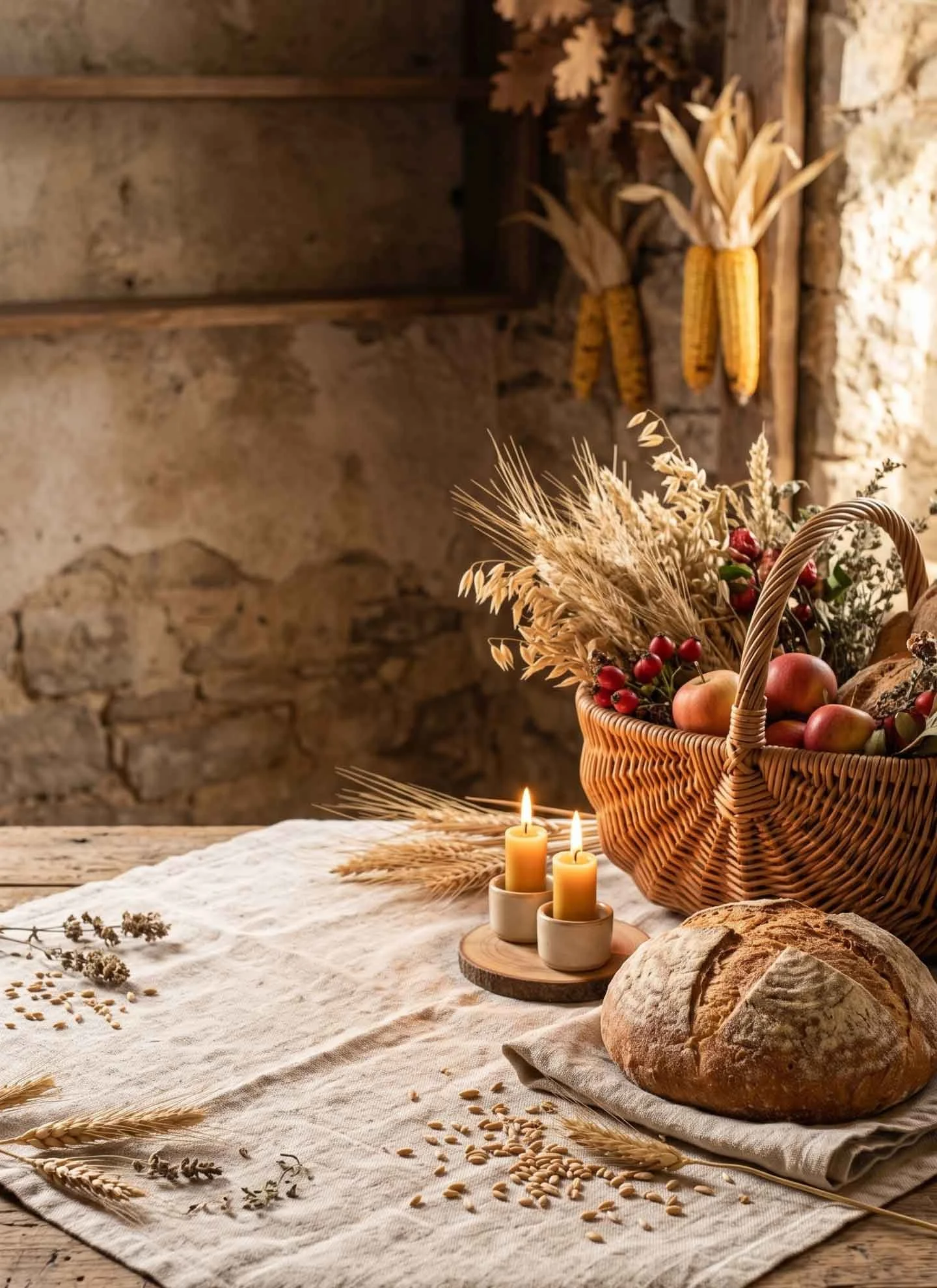
This close relationship between Lughnasadh and Lammas is one of the more fascinating threads in the seasonal year. Lammas takes its name from the Old English hlāfmæsse, or “loaf-mass”, and the Church of England still describes it as an English feast held on the 1st of August in thanksgiving for the first fruits of the wheat harvest.
Although Lughnasadh and Lammas come from different cultural and religious contexts, they share a striking resonance. Both mark the start of the first harvest. Both speak of bread, grain, and gratitude. Both recognise that the act of receiving food is inseparable from the act of honouring its source. Whether we approach the day from Celtic spirituality, a Christian tradition, or a more general seasonal consciousness, the message is similar — give thanks early, notice what is coming in, and do not take abundance for granted.
In the hedgerows and fields of Britain and Ireland, this is also the season of berries. Blackberries, in particular, have become strongly associated with Lughnasadh in modern seasonal practice, partly because their ripening often coincides with the festival and partly because they so vividly capture the taste of late summer. There is also a strong association between blackberries and Lughnasadh in the Irish tradition, linking them to the festival’s harvest character and to the memory of Tailtiu and Lugh.
For nature connection, this is a lovely moment to slow down and ask a simple question: what is ripe enough to be gathered, and what still needs time? That question applies as much to our inner lives as it does to the land. Not every hope is ready in August. Not every project is ready to be cut and carried home. Lughnasadh gently reminds us that ripening cannot be rushed.
Lughnasadh and the Welsh Gŵyl Awst
Lughnasadh also has close parallels in other neighbouring traditions. In Welsh, the day is commonly known as Calan Awst, the August day or August calends, and the broader Welsh seasonal celebration is often referred to as Gŵyl Awst, the August feast. The date and meaning align closely with the Gaelic harvest festival, and there is a long-standing cultural conversation between these traditions.
Welsh food traditions capture this beautifully. Museum Wales records Cawl Awst as a feast or broth associated with 1 August, made when the garden and field have begun to offer a wide variety of fresh produce. According to the museum’s collection, this August broth was regarded as one of the best of the year precisely because so many ingredients had come into season.
That is a perfect image for the spirit of the festival. A summer broth is not just food; it is a bowl full of place, time and community. It gathers together what is ready, what is local, what is generous, and what can be shared. In that sense, Gŵyl Awst echoes Lughnasadh’s deeper message. The harvest is not only a pile of crops. It is a relationship made edible.
For people who feel most alive in the land itself, the connection between these traditions can be a powerful one. Whether you call the day Lughnasadh, Lammas, Gŵyl Awst or Calan Awst, the invitation is similar: step outside, notice what the land is offering, and meet it with gratitude.
A Festival of Gathering and Relationship
Traditionally, Lughnasadh has been associated with fairs, gatherings, games, athletic contests, trading, storytelling, and social assembly. The medieval festival at Tailtin, for example, was linked to competition, law, matchmaking, and communal celebration.
That communal element is easy to overlook if we think of seasonal festivals only as symbolic dates. But Lughnasadh was, and is, about people coming together. It is about the harvest becoming a social event rather than a private one. Food is gathered not only for storage, but for sharing. Work is not only completed, but witnessed. Success is not only personal, but communal.
That makes Lughnasadh especially resonant in a Forest Healing context, because the heart of nature connection is not simply “being in nature” in a passive sense. It is relationship. It is participation. It is learning to belong more honestly to the living world. At Lughnasadh, the question becomes: how do I take part in the abundance around me without forgetting where it comes from?
The answer, perhaps, is to slow down enough to notice that the land is speaking in every direction. Through colour, scent, ripeness, weather, soil, and the behaviour of birds and insects. Through what is ready now, and what is not yet ready. Through what falls into the hand easily, and what resists being taken.
The Living Meaning of Grain
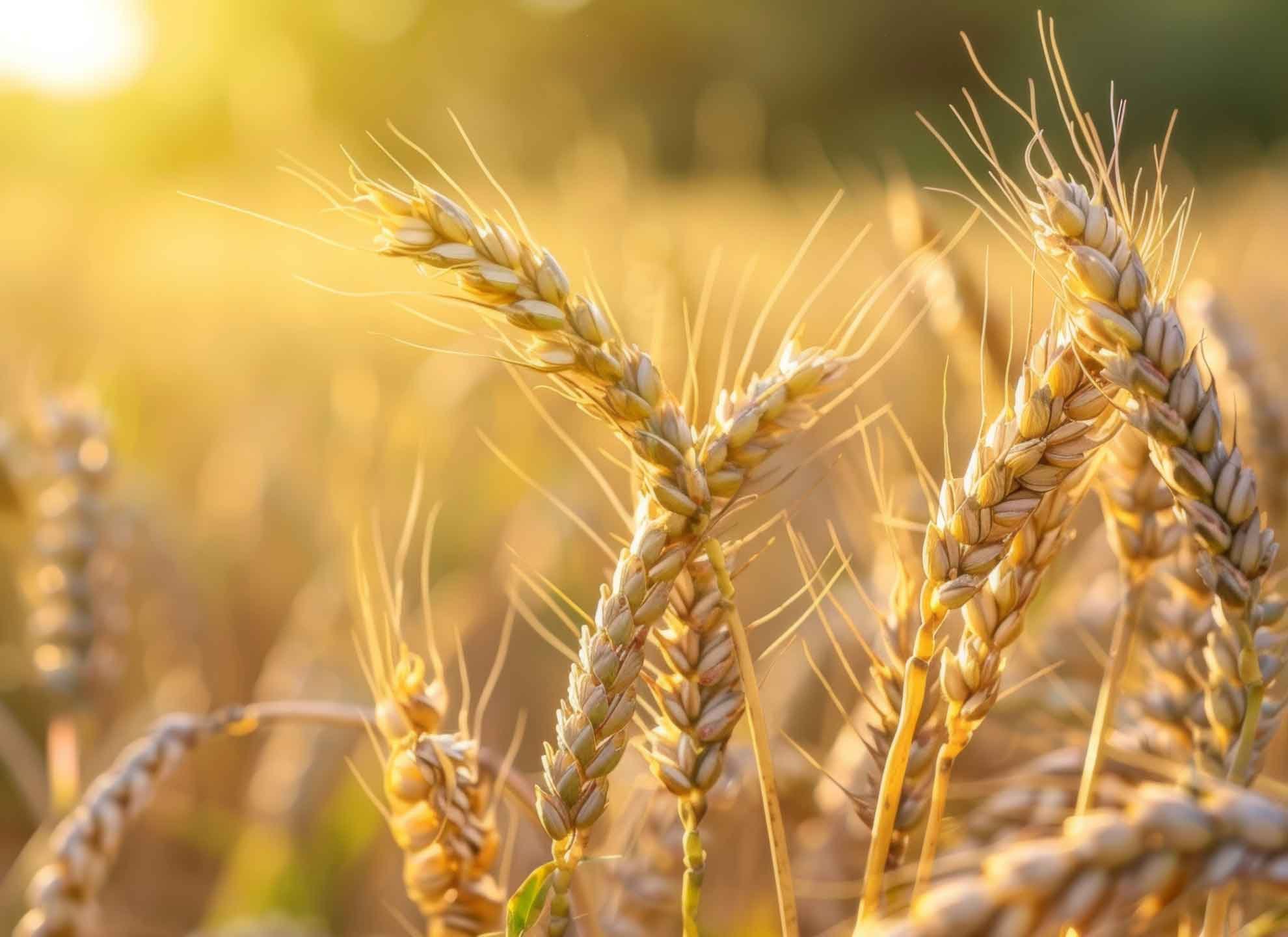
Grain lies at the heart of many harvest celebrations, and for good reason. Grain is both humble and miraculous. A field of wheat or barley may appear ordinary from a distance, but it contains the story of food security, human cooperation and seasonal patience. Lammas, with its loaf of bread, and Lughnasadh, with its first cutting of the harvest, both bring grain to the centre of the festival.
There is also a wonderfully symbolic dimension to grain. Grain must die in order to feed. It must be cut, ground, mixed and baked. The harvest is therefore a lesson in transformation. What stood golden in the field becomes bread on the table. What was once invisible in the seed becomes sustenance for body and community. This is one reason harvest festivals speak so deeply to the human condition. They remind us that change is not loss alone. Sometimes change is the form in which life becomes shareable.
From a Forest Healing perspective, this can be translated into a simple reflection: what in me is ready to be gathered, and what in me is ready to become nourishment for others? Perhaps it is a skill, a story, a piece of kindness, a way of being present, or the willingness to rest so that future growth becomes possible. Not everything we “harvest” is material. Some of the richest gifts are invisible.
The Blackberries, Bilberries and Late-Summer Gifts
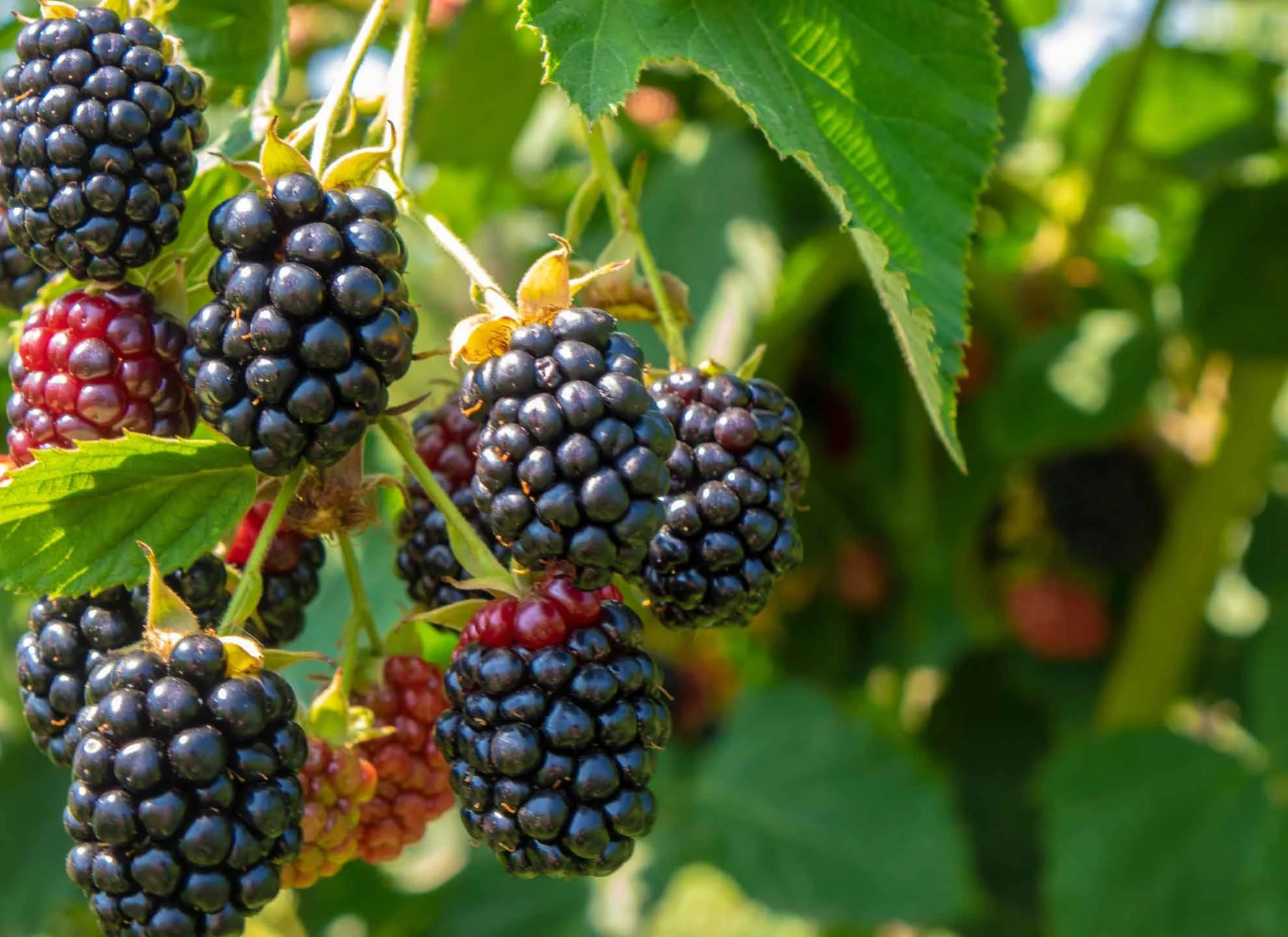
Late summer is a time of wild fruit, and this is one of the reasons Lughnasadh feels so intimate to those spending time in the countryside. Blackberries are especially associated with the season in the Irish tradition, but bilberries, raspberries, wild apples and other fruits also hold their place in the late-summer table. Bilberries and blackberries feature strongly in Lughnasadh celebrations and in the seasonal foods linked to the festival.
There is something deeply satisfying about gathering fruit at this time of year. It takes time. It takes attention. It can be sticky, prickly, and beautifully slow. You have to bend, reach, look again, and sometimes wait for the right fruit to reveal itself. In a world that often rewards speed, berry-picking is a small act of re-attunement. It brings us back to the pace of the land.
Try this as a Lughnasadh practice: find a bramble patch or hedgerow and stand quietly beside it for a moment before picking anything. Notice the insects, the leaves, the thorns, the scent, the warmth of the air. Then pick only what is abundant and what you will use or share. This is one of the most direct ways to turn seasonal awareness into ethical relationship. The wild offers generously, but not without context.
The Quiet Lesson of Ripening
One of the most beautiful things about the early harvest is that it cannot be rushed. Berries ripen one by one. Grain waves in the wind until it is ready to cut. Apples hang until the branch is ready to let them go. The land teaches timing more elegantly than most of us do.
Lughnasadh invites us to ask a similar question of our own lives: what is ripe now? Not in theory. Not in the future. Now. What needs picking, and what needs a little longer in the sun?
This is one of the ways the festival can become practical and personal. A person might discover that one project is ready to be shared while another still needs time. One relationship may be ready for honesty. One habit may be ready to be released. One dream may need to stay in the dark a little longer, like grain beneath the soil waiting for the right season. The wisdom of the harvest is that not everything should be taken at once.
A nature-connection practice at this time of year can begin with exactly that: standing still and noticing the signs of ripening. A hedgerow. A field edge. A fruit tree. A patch of wild herbs. A seedhead. A loaf cooling on a table. Let the senses do the work. Let the body learn that abundance is something to be met, not managed.
Lugh as a Guide for the Modern Season
Lugh is often understood not merely as a god of light, but as a figure who embodies many forms of excellence and skill. He is not narrow, and that is one of the reasons he matters so much at this time of year. His titles suggest versatility, brilliance and masterful ability across many arts.
In modern life, skill is sometimes treated as if it were only technical or professional. Lughnasadh offers a wider understanding. There is skill in baking bread, yes, but also in listening, gathering, preserving, reading the weather, walking steadily, tending a garden, and knowing when enough is enough. There is skill in sharing a meal. There is skill in harvesting with respect. There is skill in resting when the work is done.
That broader sense of skill feels very close to our Forest Healing ethos. The forest is not asking us to perform. It is asking us to enter relationship. We do not need to be perfect to belong to the land. We need to be present, responsive, and willing to learn. Lugh, in this sense, becomes a helpful guide: not a god of self-importance, but a symbol of human capacities offered in service to life. This is where the festival becomes especially relevant to contemporary wellbeing. Many people live in a state of perpetual incompletion. There is always one more task, one more job, one more demand. Lughnasadh offers another model. It says: look at what has already been brought in. Honour it. Feed yourself with it. Share it. And then, perhaps, allow the rest to remain for another season.
Nature Connection at Lughnasadh
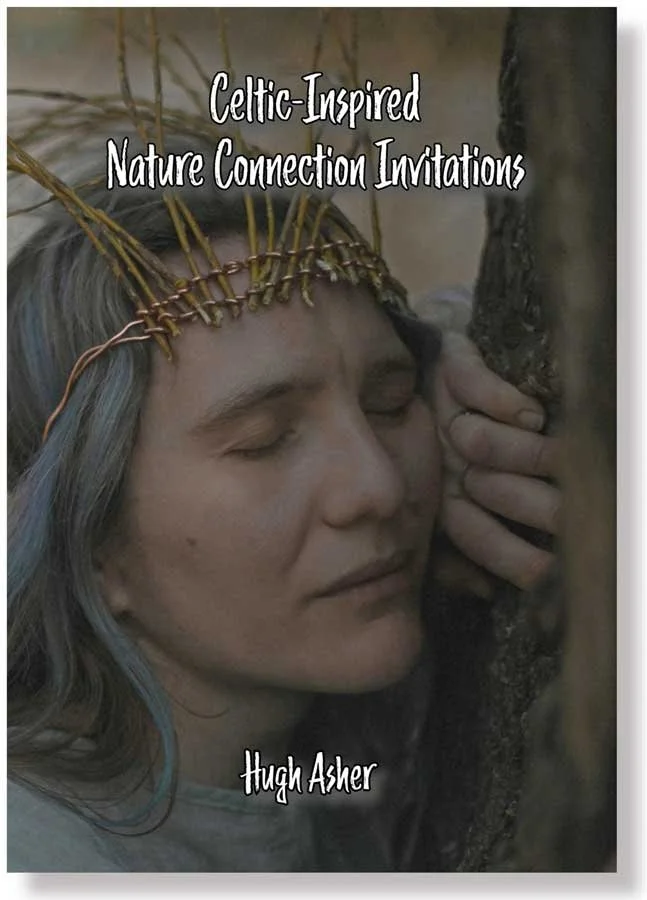
As the seasons change may we pause to meet the turning of the year with wonder.
Celtic-Inspired Nature Connection Ideas offers gentle, creative ways to deepen your relationship with the living world around you — through seasonal reflection, simple rituals, and nature-based practices inspired by Celtic tradition.
Whether you are looking for a meaningful gift, a companion for your own practice, or a way to mark the longest day with more intention, this book invites you to slow down, step outside, and listen.
Celebrate the light. Honour the land. Reconnect with the natural world.
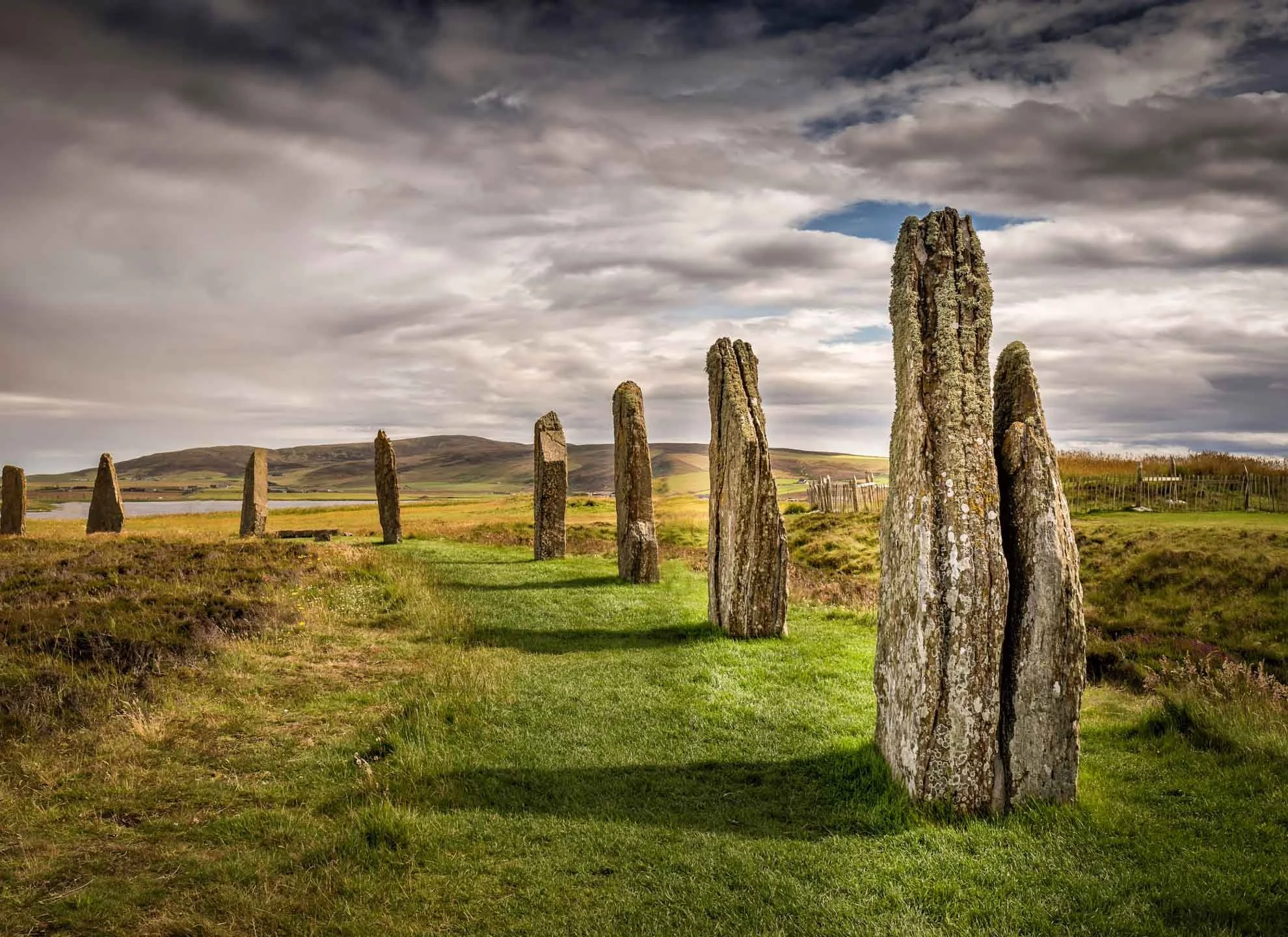
This 40 page perfect-bound book is A5 in size and contains 16 Celtic-Inspired nature connection invitations including: Spiritually Engaging with a Tree; Becoming One with the Earth; The Cailleach’s Stone; Thin Places; Appeasing the Sídhe; and one for each of the four ‘Cross-Quarter’ days - Samhain, Imbolc, Beltane, and Lughnasadh.
There is also an overview of ‘The Celtic Calendar’ and how and why nature played such an important role in Celtic culture.
Lughnasadh is a wonderful time to bring seasonal awareness into the body. You do not need elaborate ritual to make contact with its meaning. The land itself is already speaking. The first thing to do is notice. Notice the ripening of brambles, the swelling of hips, the first yellowing leaves, the heavier scent of grasses, the movement of swifts and swallows, and the way the light begins to soften at the edges of the day. Seasonal change often arrives quietly before it arrives dramatically. That is part of its beauty.
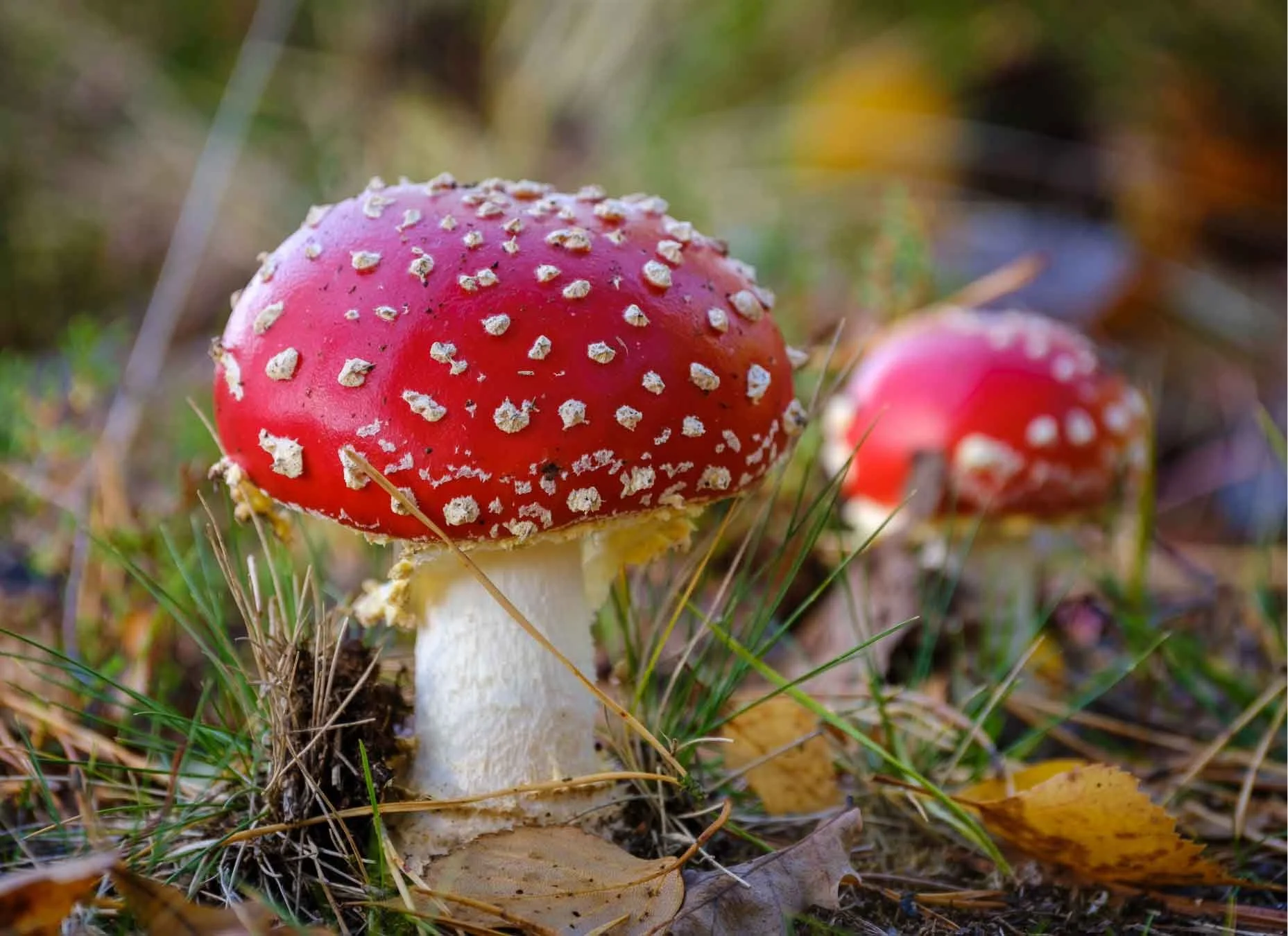
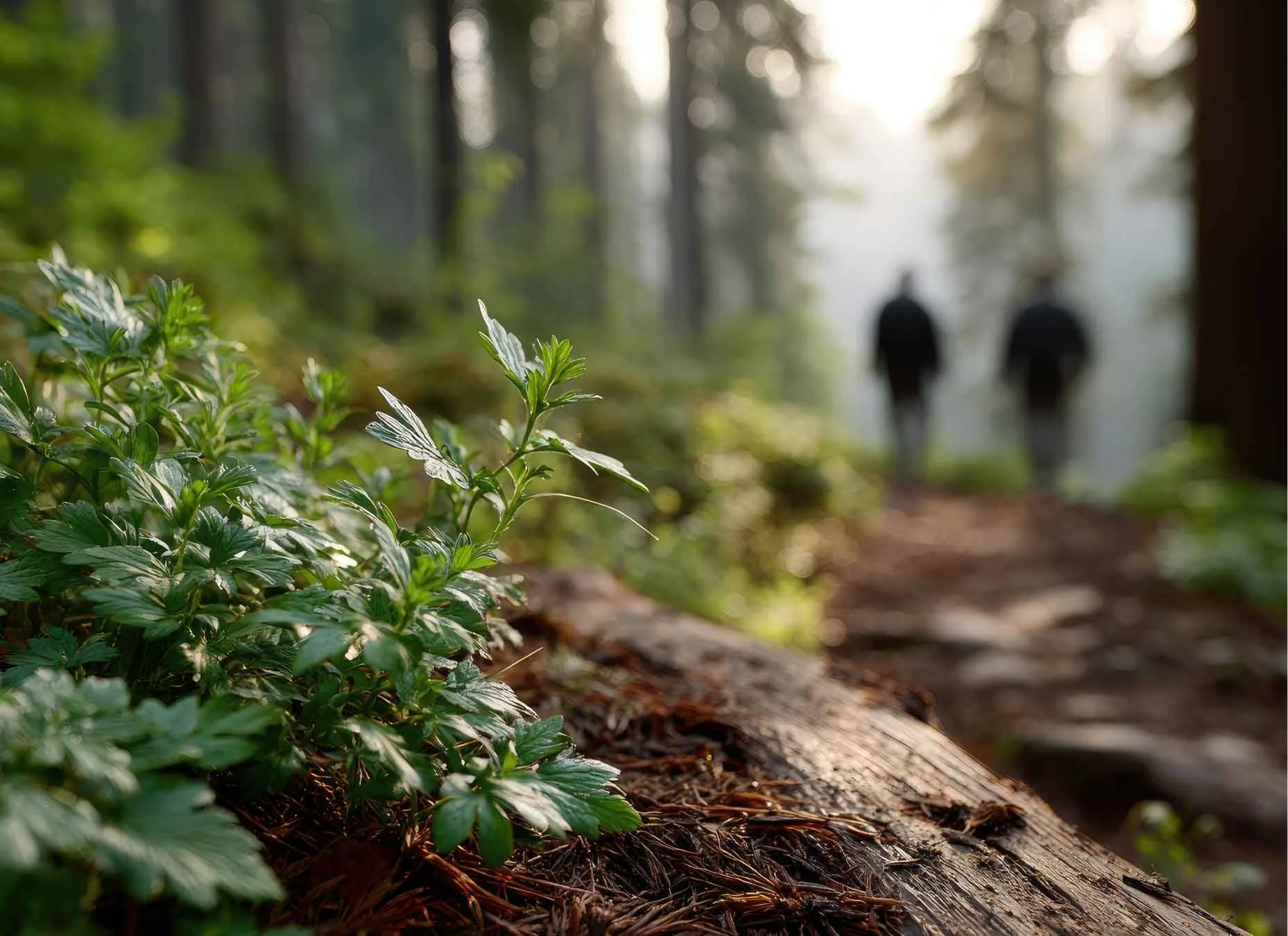
One simple practice is to take a “first fruits walk”. Walk slowly through a field margin, woodland edge, riverbank or garden. Look for what is ripe, what is ready, and what is being eaten or transformed. You might notice mushrooms, berries, seedheads, wild herbs, fallen fruit, or the first signs of a crop being brought in. As you walk, ask yourself: what is the first gift of this season that I can receive with gratitude? What does the land want me to taste, not just see?
Another practice is to create a small seasonal offering from what is responsibly gathered or already given. This could be a bowl of berries, a freshly baked loaf, a little cup of water, or a few grains of oats placed on a stone or at the roots of a tree. The point is not performance. The point is acknowledgement. To offer something back is to remember that nourishment is reciprocal. We are not only consumers of the land. We are participants in a relationship.
A third practice is to find a high place. It does not have to be a mountain. A hill, a rise, a ridge, even a high point in a local park can serve. Stand there and look outward. Let the landscape remind you that abundance is always larger than one moment, one household or one mood. In the wide view, you may feel how much of life is beyond control, and also how much is still given. That combination of humility and gratitude is very Lughnasadh.
This Nature-Connection Activity can be downloaded as a PDF here.
Bread, Fruit and the Sacred Ordinary
One of the reasons Lammas and Lughnasadh speak so beautifully to each other is that both make the ordinary sacred. Bread is ordinary. Berries are ordinary. Grain is ordinary. And yet all of them are miraculous when we attend to them fully.
A loaf of bread holds the work of many days. It begins with seed, then soil, then weather, then harvest, then milling, then mixing, then heat, then patience. A blackberry holds the architecture of a whole summer. Sunlight becomes sweetness. Rain becomes pulp. Hedge and thorn become protection. The miracle is not dramatic. It is quiet.
That quiet miracle is where a great deal of Forest Healing rests. When we slow down enough to really receive the world, the world becomes more than scenery. It becomes relationship, teacher, companion and source. Lughnasadh invites that kind of attention. It asks us to bless the loaf not because bread is exotic, but because bread is life made tangible.
A Gentle Reflection on Gratitude and ‘Enoughness’
There is also a psychological grace in Lughnasadh. It arrives at a time of year when it is easy to think only in terms of productivity. There is still work to do, still things to cut, gather, preserve, and complete. But the festival invites a different pace. It says: pause long enough to acknowledge what already exists.
That matters because many of us are skilled at looking for what is missing. The harvest teaches a different discipline: seeing what is here. The first fruits. The first successes. The first signs of change. The first evidence that the season is giving. Gratitude is not denial. It is accurate seeing.
Enoughness is one of the deepest lessons of the harvest. Not because there is never scarcity, but because the season itself reminds us that life arrives in cycles. There are times of plenty and times of leaner nourishment. There are times of outward work and times of inward restoration. Lughnasadh gives us permission to notice that we are being fed now, here, in this moment.
Holding the Festival in a Forest Healing Spirit
Lughnasadh fits beautifully with the idea of reciprocal relationship between humans and the natural world. The festival is not only about using the land. It is about reading it, respecting it and responding to it. Trees help us learn patience. Brambles teach us careful harvesting. Grain teaches us transformation. Hills invite perspective. The whole season asks us to notice the generosity of the world while we are still standing in it.
That reciprocal thread is perhaps the deepest gift of Lughnasadh. We are not separate from the harvest. We are part of it. We depend on the Earth, but the Earth also depends on how we treat it. What we gather, we must gather with respect. What we receive, we must receive with gratitude. What we eat, we must honour. What we remember, we must carry forward.
Carrying the Festival into Daily Life
The beauty of Lughnasadh is that it does not belong only to ritual specialists or folklore enthusiasts. It can be carried into ordinary life quite naturally.
You might mark it by baking bread, picking berries, cooking with seasonal produce, or sharing a meal with someone else. You might walk to a hilltop and look out over the landscape. You might spend ten minutes in silence beside a tree. You might write down what feels ripe in your life and what still needs time. You might simply pause and say thank you.
That is enough.
In a world that often asks for more and more, harvest festivals remind us that reverence can be simple. The land does not need us to be impressive. It asks us to be awake. Lughnasadh gives us a way to practise that awakening through the senses, through food, through story, and through gratitude.
Final Thoughts
Lughnasadh is the festival of the first harvest, the first gathering, the first bread, and the first deep thank you of late summer. It is connected with Lugh, the brilliant and many-skilled Celtic god of light and craft; with Tailtiu and the memory of labour that made the land fruitful; with the English Lammas or Loaf-mass, a thanksgiving for the first fruits of the wheat harvest; and with the Welsh Gŵyl Awst or Calan Awst, the August feast that speaks in a different language, but of the same seasonal turning.
For those who love to meet the land in a gentle, embodied way, Lughnasadh is an invitation to slow down and listen. The first harvest is not only something to be picked. It is something to be received. The blackberry on the bramble, the loaf on the table, the grain in the field, the hill in the distance, the warmth in the air, the first hint of autumn in the evening light — all of these are part of the same conversation.
And perhaps that is the deepest gift of the festival — it reminds us that the Earth is always teaching us how to belong.
A Simple Lughnasadh Nature-Connection Invitation
Take a slow walk somewhere green or growing. Bring your attention to what is ripening around you. Notice a berry, a seedhead, a grain, a leaf, or a fruit that feels like the first sign of harvest. Pause and breathe. Ask yourself what in your life is ready to be gathered, and what still needs the warmth of summer a little longer. If it feels right, offer a quiet thank you to the land for what it has given, and carry that gratitude home like a loaf of bread.
If you have enjoyed this article and would like to support what we do by donating £2 or more to buy saplings to plant, please follow the link below:






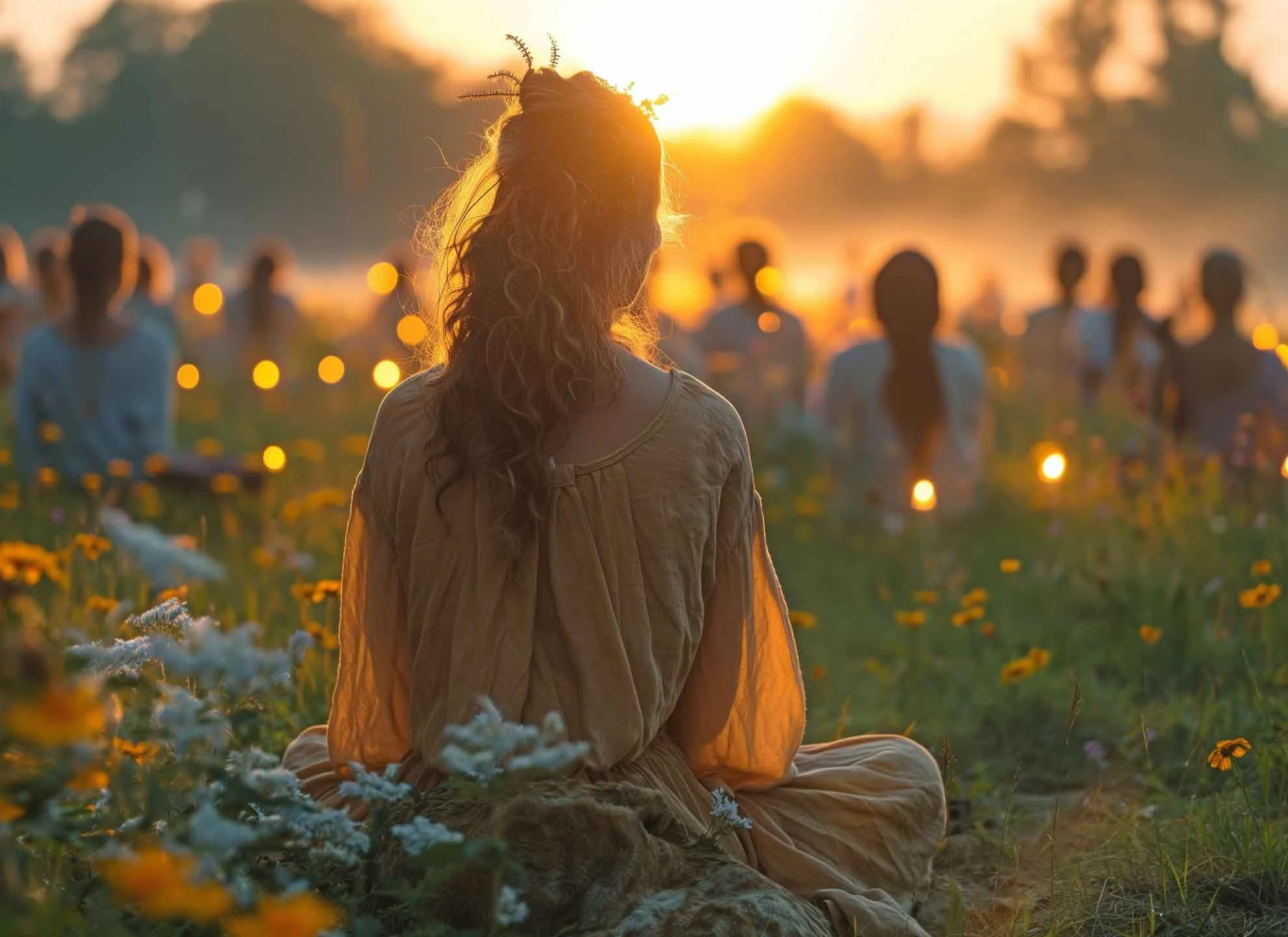





A small collection designed to gently open the door into deeper relationship with the natural world.
This complete set of four Forest Healing booklets brings together practical guidance, reflective ideas, and simple nature connection practices that can be used anywhere — from ancient woodland to a nearby park, garden, or even a single Sit Spot outdoors.
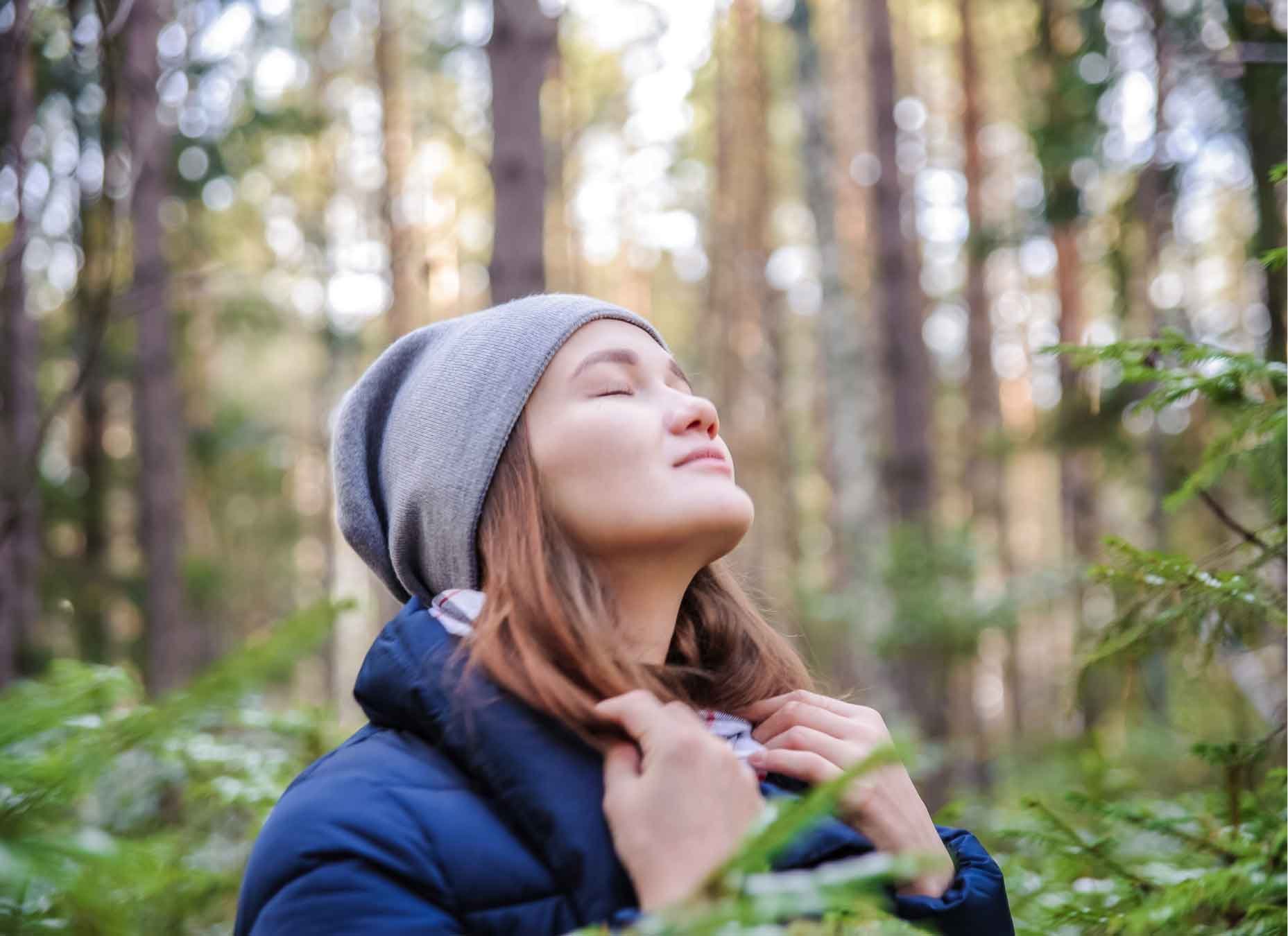
Written to be accessible, grounding, and easy to follow, these booklets offer a pathway into the core practices of Forest Bathing (Shinrin-yoku), Silvotherapy, and everyday nature connection. Rather than asking you to achieve anything, they simply invite you to slow down, notice more deeply, and allow nature to become an active presence in your wellbeing.
Across the four booklets you will explore:
• What Forest Bathing, Silvotherapy, and Nature Connection actually are
• The key benefits of spending mindful time in natural environments
• The practice of the “Sit Spot” and how to develop your own relationship with a chosen place
• Simple, practical Forest Bathing invitations you can try alone or with others
• Ways to bring nature connection into everyday life, even in small moments
Together, they form a gentle introduction to practices that have been shown to support reduced stress, improved mood, greater clarity of thought, and a deeper sense of belonging within the natural world.
These are not academic texts or rigid instruction manuals. They are invitations — encouraging you to step outside, slow your pace, and rediscover the quiet intelligence of trees, weather, and landscape.
Whether you are completely new to nature connection or looking to deepen an existing practice, this collection offers a simple, supportive starting point for building a more intentional and restorative relationship with the living world around you.
A small set of booklets that can change the way you experience even the most familiar patch of nature.
Buy all Four Forest Bathing and Nature-Connection Booklets for £11.00 including FREE P&P within the UK.
Postage to the Rest of the World is £4.