

Recovery Through Nature Concepts and Principles
Wednesday 5th August 2026
For a long time I have been a great fan of Laurie Davidson’s ‘Principles of Recovery’, which were initially applied to ‘Recovery’ within the field of mental health. Here I have decided to expand on them to develop my own ‘Recovery Through Nature Concepts and Principles’.
For each of the 10 original principles I will present the original ‘Recovery Principle’ and ‘What it Can Mean in Practice’ and then provide my own reflection on how this is applied in ‘Recovery Through Nature’.
Recovery is about building a meaningful and satisfying life, as defined by the person themselves, whether or not there are ongoing or recurring symptoms and problems.
What it can mean in practice
A move away from a focus on the removal of symptoms as the prime purpose of mental health services, e.g. learning to live with voices may be the focus rather than eradication. A focus on the positive aspects of each person’s life. The role of mental health workers becomes ‘recovery guide’ to help the individual reach their goals in a way of their choosing. Social inclusion becomes increasingly important.
Recovery Through Nature Application
Recovery Through Nature is about supporting each person to build a meaningful and satisfying life, in their own way and on their own terms, whether or not difficulties, symptoms, or setbacks still remain. Rather than placing the main emphasis on fixing or removing problems, a nature-based approach invites people to discover what helps them feel more grounded, connected, and alive. The role of the nature-based practitioner is not to direct recovery, but to open the door to the therapeutic powers of nature and support the person in finding their own path. In this way, nature can become a companion in recovery, helping to nurture hope, belonging, self-understanding, and a deeper sense of purpose.
Recovery represents a movement away from pathology, illness and symptoms to health strengths and wellness.
What it can mean in practice
The past emphasis on illness has led to a neglect of what it is that keeps people well and gives their life value and meaning. Staying well and building support structures become important. Contingency plans, joint crisis plans, negotiated safety plan and advanced directives which honour people’s preferences become increasingly important.
Recovery Through Nature Application
Recovery through nature represents a shift away from an exclusive focus on illness, symptoms, and deficits towards a more salutogenic approach that seeks to understand and strengthen the factors that support health, resilience, and wellbeing. Rather than asking only "What is wrong?", a nature-based approach also asks "What helps this person to flourish?" Time in nature can help people to identify the places, practices, relationships, and experiences that sustain them, while fostering a sense of coherence, belonging, and hope. Nature-based practitioners work alongside people to develop personalised wellbeing practices, supportive routines, and plans that honour their preferences, helping to build lasting foundations for Recovery rather than simply responding to periods of crisis.
Hope is central to recovery and can be enhanced by seeing how we can have more active control over our lives and by seeing how others have found a way through.
What it can mean in practice
Having people with lived experience of mental health problems as workers and trainers makes training more real and can lead to culture change. Some stories are heroic examples of people who have refused to accept dire predictions of outcome.
Training service users in self management and setting their own agendas when working with professionals becomes important in achieving a partnership way of working.
Recovery Through Nature Application
Recovery Through Nature recognises that hope is both a catalyst for recovery and something that can be gently nurtured through meaningful experiences in the natural world. Rather than encouraging dependence on a therapist or practitioner, the ‘Forest Healing’ ethos is to help people help themselves by supporting their discovery of practices, places, and relationships with nature that they can continue to access independently. As confidence and self-efficacy grow, people begin to see that they have an active role in shaping their own Recovery. Hearing the stories of others who have found hope through nature, alongside experiencing the restorative and renewing qualities of the natural world firsthand, can inspire the belief that ‘Recovery is possible’ and that a meaningful future can be created, one step at a time.
Self management is encouraged and facilitated. The processes of self management are very similar though what works may be very different for all of us. There is no ‘one size fits all’.

Find guidance, resilience, and wellbeing through the wisdom of nature.
This practical 64-page workbook combines nature connection activities, mindfulness practices, and reflective exercises to help you improve your mental and emotional wellbeing. Discover how the lessons found in trees, seasons, landscapes, and natural processes can support personal growth, resilience, and positive change. Includes access to more than 30 additional nature connection activities, articles, and downloadable resources.
Nature has been guiding and supporting human wellbeing for countless generations. This workbook is an invitation to step outside, slow down, and rediscover the wisdom that has been waiting for you all along.
Nature as a Guide: A Pathway to Mental and Emotional Health and Wellbeing
In a world that often encourages us to move faster, achieve more, and spend less time outdoors, nature offers a different invitation. It invites us to slow down, notice, reflect, and reconnect with what truly matters.
Nature as a Guide is a practical and inspiring workbook designed to support your mental and emotional wellbeing through nature connection, mindfulness, and gentle self-reflection. Drawing upon the wisdom found in woodlands, landscapes, seasons, and natural processes, this workbook encourages you to discover how the natural world can become a trusted companion on your journey towards greater resilience, balance, and wellbeing.
Across its pages, you will find thought-provoking exercises, reflective questions, and nature-based activities that help you explore where you are in life, where you would like to be, and how nature's patterns and metaphors can illuminate the way forward. From learning resilience through the changing seasons to finding inspiration in the quiet strength of trees, the workbook helps translate nature's lessons into meaningful insights for everyday life.
Whether you are experiencing stress, navigating change, seeking greater self-understanding, or simply longing to deepen your relationship with the natural world, this workbook offers practical tools and gentle guidance to support your journey.
As an added resource, the book includes access to more than 30 additional nature connection activities, articles, and downloadable materials, enabling you to continue exploring and developing your own relationship with nature long after you have completed the workbook.
What it can mean in practice
Individuals define their own goals and agenda. The role of workers is to help them achieve it in ways and settings which are meaningful and acceptable. A move away from providing ‘group solutions’ which are defined by professionals without reference to actual service user need. Empowering approaches such as the Wellness Recovery Action Plan (WRAP) are offered.
Recovery Through Nature Application
Recovery Through Nature encourages and supports self-management by recognising that every person's relationship with nature is unique. There is no single path to Recovery and no universal prescription for how people should engage with the natural world. Instead, people are supported to explore and discover the places, activities, and practices that best nurture their wellbeing, whether through walking in forests, gardening, observing wildlife, caring for green spaces, or simply spending quiet time outdoors. The role of the practitioner is to facilitate curiosity, confidence, and autonomy, helping people develop a personalised toolkit of nature-based practices that they can draw upon throughout their recovery journey and adapt as their needs change.
The helping relationship between clinicians and patients moves away from being expert ‐ patient to being closer to peer support; as coaches or partners on a journey of discovery. Clinicians are ‘on tap, not on top’.
What it can mean in practice
Therapies and treatments are seen through recovery glasses to see whether they give or take away power from people. Working in partnership as equals replaces ‘service user involvement’ as an ideal. The qualities and attitudes of staff become at least, if not more, important than skills and knowledge.
Recovery Through Nature Application
Recovery Through Nature is founded on a collaborative relationship in which practitioner and participant work together as partners in discovery rather than as expert and patient. The role of the practitioner is not to prescribe how Recovery Through Nature should be acheived, but to walk alongside the person, helping to open the door to the wisdom and therapeutic qualities of the natural world. In this approach, nature itself often becomes the teacher, offering experiences that encourage reflection, growth, and self-discovery. The practitioner's compassion, authenticity, curiosity, and ability to create a safe, respectful space are just as important as their knowledge, empowering people to develop confidence, agency, and an enduring relationship with nature that supports their ongoing recovery.
People do not usually recover in isolation. Recovery is closely associated with social inclusion and being able to take on meaningful and satisfying social roles in society and within local communities rather than in segregated services.
What it can mean in practice
Recovery for many people is about social inclusion and restoring meaningful roles and responsibilities within a community. Inter‐dependence is encouraged as much as independence. Recovery coaching is a process of getting alongside the service user in a relationship which is characterised by respect, the giving of time, persistence and continuity. The intention is to support the individual to use the same resources as the general population rather than create a parallel universe of segregated activities.
Recovery Through Nature Application
Recovery Through Nature recognises that lasting recovery is rarely achieved in isolation. Meaningful connections with other people, with local communities, and with the natural world all contribute to a sense of belonging and purpose. Nature-based recovery encourages people to reconnect with everyday community life through shared experiences such as conservation projects, community gardens, walking groups, volunteering, and other inclusive outdoor activities that are available to everyone. The practitioner's role is to walk alongside the individual with respect, patience, and continuity, supporting them to develop confidence, meaningful relationships, and valued roles within both their human and ecological communities. In this way, recovery becomes not simply a return to society, but a rediscovery of one's place within the wider web of life.
Recovery is about discovering (or re‐discovering) a positive sense of personal identity, separate from illness or disability.
What it can mean in practice
Helping people to retell their stories in the language of empowerment rather than in language imposed by others. Integration and commonality become the ways in which people can step out of their role as a ‘psychiatric patient’ back into normal interactions. Discrimination and stigmatisation are tackled directly and assertively.
Recovery Through Nature Application
Recovery Through Nature is about discovering, or rediscovering, a positive sense of identity that is not defined by illness, addiction, disability, or adversity. Immersion in the natural world offers a space where labels can begin to fall away, allowing people to reconnect with their strengths, values, interests, and aspirations. Through meaningful experiences in nature, people are supported to re-author their life stories in ways that emphasise resilience, growth, and possibility rather than deficit and limitation. As confidence grows, people increasingly see themselves not through the lens of what has happened to them, but as valued individuals with unique gifts who have an important place within both their communities and the wider living world.
The language used and the stories and meanings that are constructed around personal experience, conveyed in letters, reports and conversations, have great significance as mediators of recovery processes. These shared meanings either support a sense of hope and possibility or carry an additional weight of morbidity, inviting pessimism and chronicity.
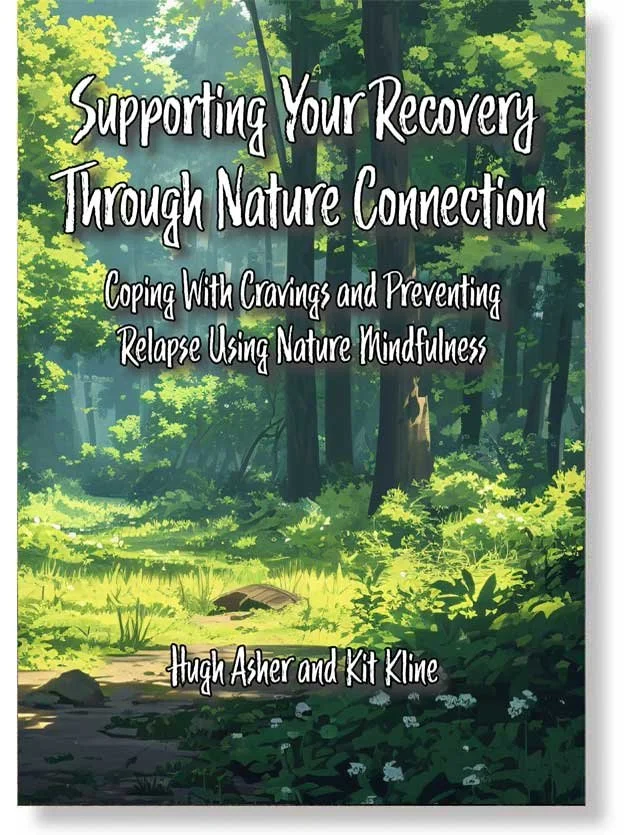
A practical nature-based workbook for people in recovery.
Develop skills to cope with cravings, manage stress, build resilience, and reduce the risk of relapse through nature connection and nature mindfulness practices. Created from real-world experience supporting people in recovery, this 64-page workbook combines practical exercises, reflective activities, and mindfulness techniques inspired by the natural world. The workbook also contains a link to register for access to over 30 further nature connection activities, as well as articles and additional downloads.
Supporting Your Recovery Through Nature Connection
Coping with Cravings and Preventing Relapse Using Nature Mindfulness
Recovery is not simply about leaving something behind. It is about rediscovering yourself, rebuilding resilience, and finding healthier ways to navigate life's challenges. Nature can be a powerful companion on that journey.
Supporting Your Recovery Through Nature Connection is a practical and compassionate workbook designed to help people recovering from alcohol and other drug use develop new skills for managing cravings, reducing stress, and preventing relapse through nature connection and nature mindfulness practices.
Drawing on the restorative qualities of the natural world, this workbook offers a range of accessible exercises, reflective activities, and mindfulness practices that can help you reconnect with yourself, your surroundings, and your sense of purpose. Through engaging with trees, landscapes, seasons, wildlife, and natural processes, you will discover how nature can provide inspiration, perspective, calm, and strength during the recovery journey.
The workbook explores practical ways to use nature as a source of grounding during difficult moments, helping you to recognise triggers, develop healthier coping strategies, and build greater emotional resilience. Rather than focusing solely on what you are recovering from, it encourages you to explore what you are recovering towards: a life with greater wellbeing, meaning, connection, and hope.
Written by Hugh Asher and developed through years of experience supporting people affected by problematic substance use, this workbook is also informed by the successful delivery of a Nature Mindfulness programme within the Scottish prison system. The activities have been designed to be simple, practical, and accessible, whether you live in a rural area, a town, or a city.
Nature teaches us that growth is rarely linear. Forests recover after storms. Trees adapt to changing conditions. New life emerges from what once seemed barren. This workbook invites you to discover how these same lessons can support your own journey of recovery, resilience, and renewal.
What it can mean in practice
Challenges to the way we talk, write and communicate about people become an important focus of recovery orientated services. The messages of hope or despair mental health workers give to people are often pivotal to their recovery.
Diagnoses can be helpful or very unhelpful.
Therapies can empower or disempower. All aspects of services need to be looked at including supervision, induction, workload management, appraisal, ‘ward rounds’ and partnership working.
Recovery Through Nature Application
Recovery Through Nature recognises that the language we use, the stories we tell, and the meanings we attach to our experiences can either support recovery or unintentionally limit it. Nature offers a rich source of hopeful metaphors that encourage people to view themselves through the lens of growth, resilience, adaptation, and renewal rather than illness or deficit. Practitioners seek to use language that is empowering, strengths-based, and person-centred, helping people to reframe their experiences in ways that foster hope and possibility. By focusing on capacities rather than limitations, and on people's relationship with the natural world rather than labels or diagnoses, Recovery Through Nature supports the development of new narratives in which individuals see themselves as capable of continued growth, whatever challenges they may face.
The development of recovery‐based services emphasizes the personal qualities of staff as much as their formal qualifications, and seeks to cultivate their capacity for hope, creativity, care and compassion, imagination, acceptance, realism and resilience.
What it can mean in practice
Training for staff in a recovery focussed service would train people in ways of relating that service users say helps their recovery e.g. active listening, rapid response to need, safety plans which are negotiated, respect for individual choice, cultural awareness etc.
Recovery Through Nature Application
Recovery Through Nature recognises that the effectiveness of a practitioner depends as much on their personal qualities as on their technical knowledge or qualifications. While an understanding of nature-based practice is important, it is the practitioner's capacity for empathy, authenticity, hope, curiosity, compassion, and attentive presence that creates the conditions in which Recovery can flourish. Nature-based practitioners strive to build trusting relationships through active listening, shared exploration, respect for individual choice, cultural sensitivity, and a willingness to learn alongside the person they support. By modelling a respectful and reciprocal relationship with the natural world, they encourage others to develop the confidence, resilience, and self-belief needed to continue their recovery journey long after formal support has ended.
Family and other supporters are often crucial to Recovery and should be included as partners in Recovery. Peer support is of prime importance for many people in their Recovery.
What it can mean in practice
Peer support is encouraged in both voluntary settings and as paid workers with service user experience working with current service users.
Families and other supporters are seen as full partners in both the development and the delivery of services. Supporters are often key in maintaining wellness for those they support, but also are encouraged to spend time on their own wellness.
Recovery Through Nature Application
Recovery Through Nature recognises that Recovery is often strengthened by the support of family, friends, peers, and the wider community. Shared experiences in the natural world can deepen relationships, reduce isolation, and create opportunities for mutual encouragement, understanding, and hope. Nature-based activities provide an inclusive environment in which people can support one another as equals, learning from shared experiences and celebrating one another's progress. Families, carers, and peer supporters are encouraged to become partners in the Recovery journey while also recognising the importance of their own wellbeing. By nurturing healthy relationships with both people and the natural world, Recovery Through Nature creates supportive communities in which everyone has the opportunity to flourish.
Further Resources

A small collection designed to gently open the door into deeper relationship with the natural world.
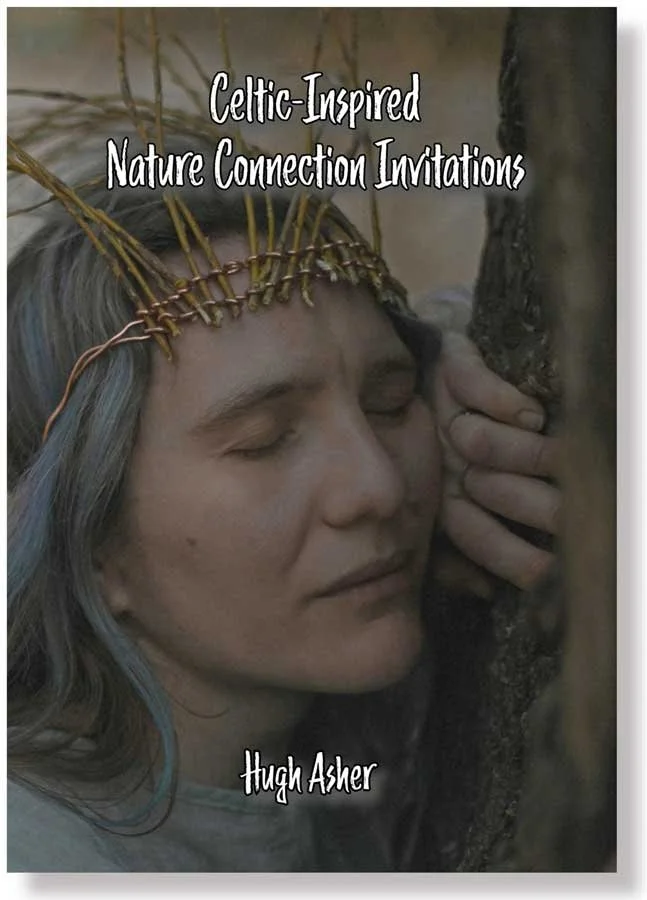
This complete set of four Forest Healing booklets brings together practical guidance, reflective ideas, and simple nature connection practices that can be used anywhere — from ancient woodland to a nearby park, garden, or even a single Sit Spot outdoors.
Written to be accessible, grounding, and easy to follow, these booklets offer a pathway into the core practices of Forest Bathing (Shinrin-yoku), Silvotherapy, and everyday nature connection. Rather than asking you to achieve anything, they simply invite you to slow down, notice more deeply, and allow nature to become an active presence in your wellbeing.
Across the four booklets you will explore:
• What Forest Bathing, Silvotherapy, and Nature Connection actually are
• The key benefits of spending mindful time in natural environments
• The practice of the “Sit Spot” and how to develop your own relationship with a chosen place
• Simple, practical Forest Bathing invitations you can try alone or with others
• Ways to bring nature connection into everyday life, even in small moments
Together, they form a gentle introduction to practices that have been shown to support reduced stress, improved mood, greater clarity of thought, and a deeper sense of belonging within the natural world.
These are not academic texts or rigid instruction manuals. They are invitations — encouraging you to step outside, slow your pace, and rediscover the quiet intelligence of trees, weather, and landscape.
Whether you are completely new to nature connection or looking to deepen an existing practice, this collection offers a simple, supportive starting point for building a more intentional and restorative relationship with the living world around you.
A small set of booklets that can change the way you experience even the most familiar patch of nature.
Buy all Four Forest Bathing and Nature-Connection Booklets for £11.00 including FREE P&P within the UK.
Postage to the Rest of the World is £4.

A beautiful journal for deepening your relationship with nature.
Designed by Forest Healing, this A5 journal provides 28 opportunities to reflect on your nature connection experiences through writing, drawing, and guided reflection. Record what you notice in nature, what you notice in yourself, and the insights that emerge along the way. With inspiring quotations, high-quality uncoated pages, and a luxurious velvet-laminated cover, it is the perfect companion for Forest Bathing, Sit Spots, mindful walks, and everyday moments of connection with the natural world.
P&P is FREE within the UK.
Postage to the Rest of the World is £4.
The more time we spend paying attention to the natural world, the more we begin to notice. A familiar tree that changes through the seasons. The return of birdsong after Winter. The scent of rain on the earth. The subtle shifts in our own thoughts, feelings, and wellbeing when we slow down and take time to connect.
This Nature Connection Journal has been created as a companion for your nature connection journey, helping you to capture experiences, deepen your reflections, and develop a richer relationship with the natural world around you.
Each spread combines a page for writing, sketching, or creative expression with a structured reflection page that invites you to consider what you noticed in nature, what you noticed in yourself, and what you learned from the experience. The journal also includes inspiring quotations that encourage curiosity, mindfulness, and deeper engagement with the living world.
Whether you use it after a Forest Bathing session, a mindful walk, time spent at your sit spot, or simply a few minutes in a local park or garden, the journal helps transform fleeting moments of connection into lasting memories and meaningful insights.
Over time, your journal becomes more than a record of places visited and things observed. It becomes a record of your own journey; a reflection of how your relationship with nature evolves and how nature, in turn, influences your wellbeing, perspective, and sense of belonging.
With high-quality uncoated pages suitable for writing and drawing, and a beautifully soft velvet-laminated cover that feels as inviting as the experiences it contains, this is a journal designed to accompany you into woods, parks, gardens, and wild places for years to come.
Begin where you are. Notice what is around you. Record what matters. Allow nature to tell its story alongside your own.




If you have enjoyed this article and would like to support what we do by donating £2 or more to buy saplings to plant,
please follow the link below:

When therapeutic interactions move outside of the ‘consulting room’ and into nature, something interesting seems to happen. Nature can create a shared space where we walk alongside one another, notice the world together, and sometimes discover that healing becomes less about what one person does to another and more about how two people can explore things together.