Samhain: Walking Between the Worlds — A Celtic Celebration of Liminality, Nature, and Renewal
Saturday 25th October 2025
As the wheel of the year turns towards darkness and stillness, the ancient Celtic festival of Samhain offers a profound invitation — to step into the liminal space where the seen and unseen meet, where the Summer’s abundance gives way to Winter’s rest, and where nature itself teaches us about endings, thresholds and connection.
When the Veil Grows Thin
As the golden leaves drift to the forest floor and the last fruits of Autumn ripen in the hedgerows, the Celtic year turns toward Samhain (pronounced Sow-in). This ancient festival, marking the transition from the light half of the year to the dark, is one of the most profound thresholds in the natural and spiritual calendar. Celebrated from sunset on 31st October to sunset on 1st November, Samhain is more than the Celtic ancestor of Halloween — for many it is a sacred time of reflection, honouring, and renewal.
In Celtic tradition, Samhain represents a liminal space, a time when the boundaries between worlds blur. The physical and the spiritual, the living and the dead, the human and the more-than-human realms coexist in rare intimacy. The Celts recognised such thresholds as “thin spaces”—places or times where the veil between realms grows transparent and the unseen becomes more perceptible.
This concept of thinness, both temporal and spatial, offers deep relevance for modern nature connection practice. In the quiet of Autumn’s decay and the lengthening nights, we can learn from the land itself about the beauty of endings, the necessity of rest, and the wisdom found in stillness. Samhain invites us to enter the forest, not as conquerors of nature or even as mere observers, but as kin — walking gently between worlds, listening to what the Earth, the ancestors, and the unseen Sidhe (the faery folk) might whisper to us through the mists.
The Turning of the Year: Samhain and the Celtic Wheel
Samhain is one of the four fire festivals of the Celtic year, alongside Imbolc (early February), Beltane (early May), and Lughnasadh (early August). These celebrations divide the year into quarters and mark significant agricultural and spiritual transitions.
Where Beltane celebrates fertility and abundance, Samhain acknowledges decline and descent. It is the Celtic New Year — a time of death and a rebirth. The harvest has been gathered, the cattle are brought in from the Summer pastures, and the hearth becomes the centre of life once again.
In the old agrarian world, this was not a morbid time but a practical and spiritual one. The Celts understood that life depended on the cyclical dance of birth, death, and renewal. The year’s final harvest was a time for gratitude and for preparing both body and spirit for the long Winter ahead.
This seasonal shift mirrors a psychological and ecological truth — nature’s cycles are our own. Just as trees withdraw energy from their leaves into their roots, we too can turn inward — reviewing, releasing, and nourishing what lies unseen within. The festival of Samhain is therefore both an external and internal event — a time to witness nature’s descent into darkness and to reflect on our own thresholds and transformations.

Liminality and the Celtic Sense of Time
The Celts viewed time not as linear but as cyclical — a spiralling dance between light and dark, growth and decay, form and formlessness. The anthropologist Victor Turner used the term liminality to describe those states of in-betweenness found in ritual and initiation, where ordinary rules are suspended and transformation becomes possible.
Samhain embodies this liminal quality. It is the dusk between day and night, the hinge between seasons, the threshold between years. During this time, the Celts believed the veil between the worlds grew thin, allowing spirits, ancestors, and otherworldly beings to cross freely. Fires were lit on hilltops to ward off harmful spirits and to guide beloved ancestors home.
To dwell in liminality is to resist the comfort of certainty. It is to stand consciously in the “between”, trusting that darkness has its own wisdom. In the forest, this might mean walking without a destination, listening to the wind, or sitting in quiet contemplation as the last light fades.
Modern culture tends to rush from one season to the next, often fearing the stillness and shadow that Samhain represents. Yet the Celts knew that transformation is impossible without dissolution. The liminal moment is not to be escaped but embraced — it is where the soul grows more open to embracing mystery.
Thin Spaces: Sacred Geography and the Ecology of the Unseen
The Celtic imagination is deeply rooted in the land. Certain places were revered as especially thin spaces — locations where the boundaries between this world (Saoghal) and the Otherworld (Tír na nÓg) seemed to dissolve. These were often hilltops, river fords, caves, ancient oak groves, wells, and stone circles.
In such thin spaces, you might experience heightened perception — a sense of presence, stillness, or awe that transcends ordinary consciousness. The air itself feels charged. Such experiences are familiar to anyone who has stood in a misty glen at dawn, or by the sea as dusk deepens, and felt something vast and numinous stir within and around them.
From a modern ecological perspective, these places may evoke biophilia, the innate human affinity with living systems. They remind us that spiritual connection arises not from detachment from the world, but from our deep immersion in it. Thin spaces are a powerful invitation to greater intimacy with the living Earth.
The concept of thinness can also be applied inwardly. Meditation, Forest Bathing, and mindful immersion in nature can create states of psychological thinness — moments when the ego softens and a sense of oneness emerges. These are modern echoes of ancient Celtic experiences of communion between worlds.
The Sidhe — Keepers of the Otherworld
Among the beings said to cross the threshold at Samhain are the Sidhe (pronounced “Shee”)—the faery folk or the Shining Ones. In Celtic mythology, the Sidhe are not diminutive sprites but powerful beings connected to the ancient deities of the land. After the coming of humans, they were said to retreat into the hollow hills and mounds (sídhe), becoming guardians of the unseen realms.
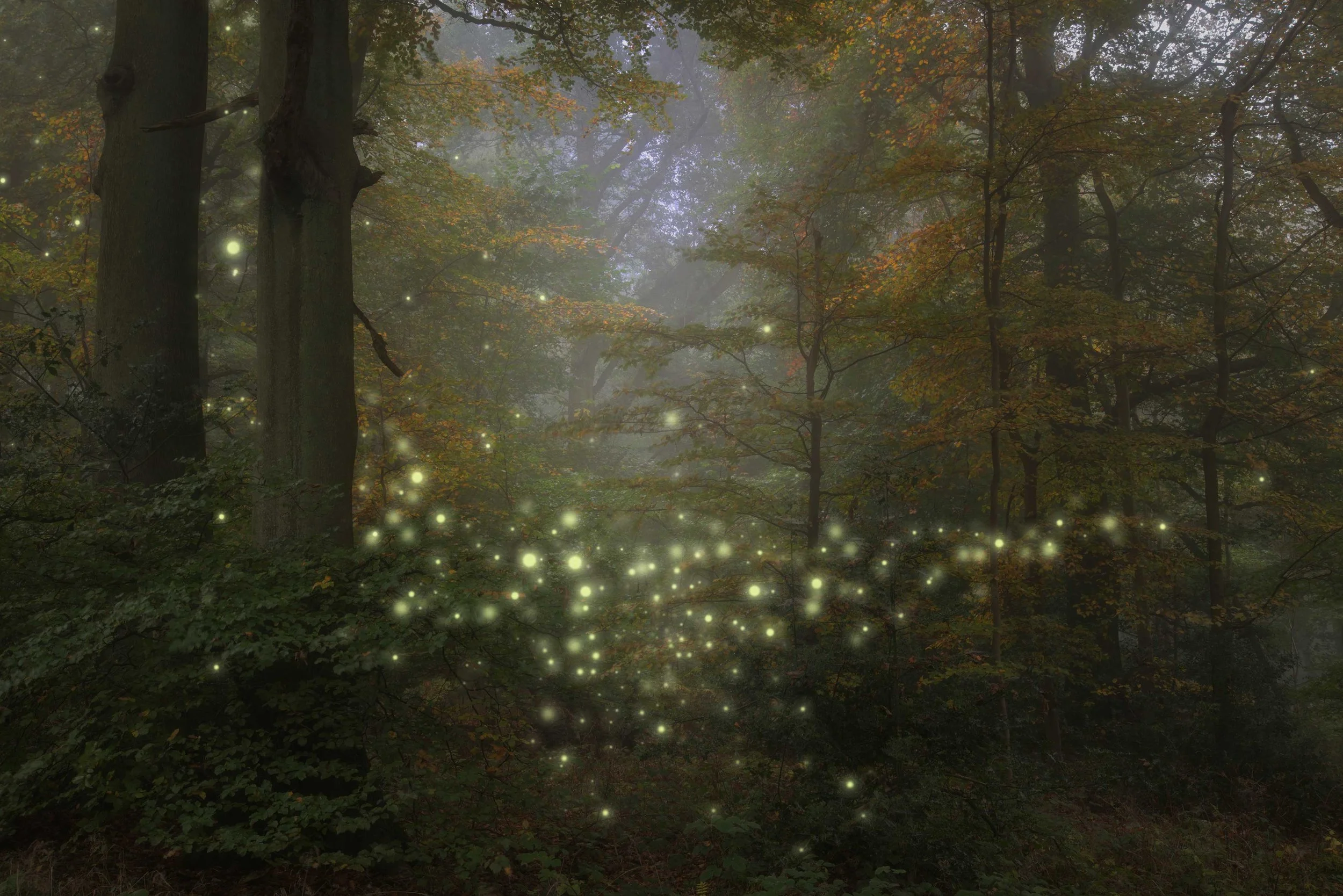
At Samhain, the Sidhe are particularly active. Folklore tells of mysterious lights, music in the hills, and strange encounters on lonely paths. Offerings of milk, honey, or bread were traditionally left at doorways and crossroads to appease them.
Modern interpreters of Celtic spirituality often view the Sidhe symbolically — as personifications of nature’s intelligence, representing the vitality and consciousness that permeate all living things. They remind us that the land is alive, ensouled, and deserving of respect.
When we walk with reverence in wild places, when we pause to listen rather than dominate, we honour this older worldview. In doing so, we rekindle the reciprocal relationship that the Celts held with their landscape — a partnership rather than possession.
Fire and Hearth — The Heart of Samhain
In Celtic tradition, Samhain fires were lit on high hills, their flames visible for miles. Families would extinguish their hearths and then rekindle them from the communal fire, symbolising renewal and shared kinship.
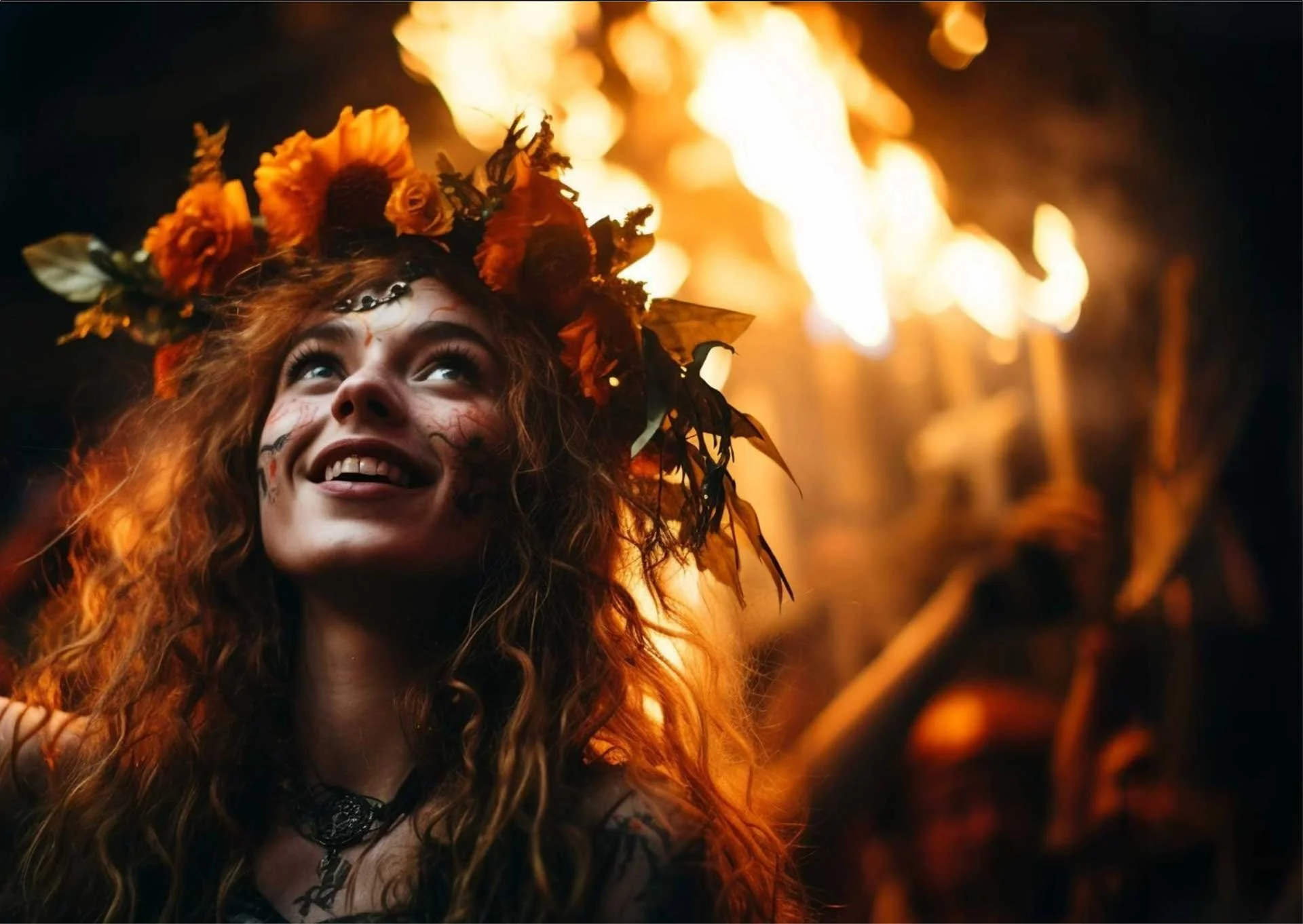
Fire holds both practical and spiritual significance. It provides warmth and protection in the growing cold, but it also represents illumination amid darkness. Gathering around a fire also fosters community, storytelling, and reflection — the essential ingredients of human continuity.
Modern celebrations might include a bonfire, candle ritual, or shared meal. These acts echo the ancient understanding that light is born from darkness, that warmth arises from shared presence. In rekindling our connection to the land and to one another, we keep the flame of life alive through the Winter’s darker days.
Ecological Liminality — Lessons from Decay and Darkness
Samhain coincides with the season of decomposition. Fungi erupt from fallen logs; leaves become soil; creatures retreat into burrows. Life feeds on death in a cycle of exquisite interdependence.
Modern ecological science confirms what the Celts intuited — there is no waste in nature. Every ending nourishes a new beginning. Decomposition is creation by another name.
From a psychological or spiritual standpoint, this understanding can transform our fear of loss. When we let go of things we no longer need and allow parts of ourselves to die — old stories, roles, identities — we create fertile ground for new growth. Forests teach us that the dark is not the opposite of life, but its foundation. Walking through aAutumn woods, you can sense this truth viscerally. The smell of earth and decay is also the smell of renewal. Each breath becomes an act of communion with the endless cycle of transformation.
The Wisdom of Stillness
After Samhain, the world grows quieter. The natural world contracts into dormancy, and the Celtic year enters its introspective half. For humans, this can be a time of gestation rather than growth.
Nature connection practices during this period might focus on stillness and observation rather than activity. Watching the slow decay of leaves, or the mist rolling through bare branches, can teach us the value of waiting.
Stillness is not absence; it is potential. Within the dark soil, seeds rest and prepare. Within the silence of winter woods, the pulse of life continues unseen. Samhain reminds us to trust this unseen process in ourselves and in the world.
Nature Connection at Samhain — Practices for the Threshold
Samhain offers a great opportunity for deep nature connection. Below are several activities inspired by Celtic tradition and contemporary eco-therapy practice, designed to help you experience the season’s liminality firsthand.
Walking Between Worlds: A Twilight Forest Bathing Practice
Find a natural place — preferably a woodland, moorland, or near a river — and visit at twilight, that in-between time of day. Walk slowly and silently, noticing the shift in light and sound as day slips into night.
Allow your eyes to soften; take in the full field of vision.
Listen for the smallest sounds — the rustle of leaves, distant owl calls, your own breath.
As darkness deepens, sense the presence of the unseen: roots beneath your feet, hidden creatures, the pulse of the earth itself.
This practice mirrors the Celtic sense of walking between worlds. It awakens a felt understanding of what it means to inhabit a thin space—not to fear the dark, but to welcome its mystery.
Honouring the Ancestors With A Forest Altar
In Celtic culture, Samhain was a time to honour ancestors and loved ones who had passed. You can create a simple forest altar using natural materials: a stone, a leaf, a candle, and perhaps a photo or symbol of an ancestor.
Sit quietly with your altar, breathing gratitude for the lineage — human and more-than-human — that supports your life.
Reflect on what wisdom you have inherited and what you wish to pass on.
Offer a small gift to the land: a song, a few drops of water, or a handful of grain.
In acknowledging the ancestors, we also honour the ecological lineage of our existence—the countless generations of life that have shaped the world we inhabit.
Releasing and Renewal — A Leaf Offering
As trees shed their leaves, nature models the art of letting go. Choose a fallen leaf that catches your eye. Hold it and consider what you are ready to release — habits, fears, or attachments that no longer serve your growth.
Whisper your intention to the leaf.
Place it gently in a stream, the wind, or at the base of a tree.
Watch as it drifts away or returns to the earth.
This simple act aligns personal transformation with natural cycles. It embodies the essence of Samhain — the surrender that precedes renewal.
Listening to the Sidhe — Dreamwork and Intuition
In the days around Samhain, dreams and intuitions may feel more vivid or symbolic. Before going to sleep, set an intention to listen for the Sidhe or the deeper voice of nature. Keep a notebook beside your bed and record any dreams or insights upon waking.
This is not about seeking supernatural encounters but cultivating receptivity — a willingness to hear the subtle language of the psyche and the land. Such listening refines our relationship with the unseen dimensions of existence.
The Celtic Imagination and the Modern Soul
In reconnecting with Samhain, we recover a worldview that modernity has largely forgotten — that spirit and matter are not separate. The Celtic mind perceived nature as alive and communicative, and the natural world as a web of kinship rather than a collection of resources.
Such a worldview is deeply healing in our time of ecological crisis. To perceive the land as sacred, to feel the presence of ancestors and other-than-human beings, is to act with reverence. Nature connection then becomes not only a personal practice but a moral and ecological act.
By entering the forest with awareness, by marking the turning of the year, by listening to the whisper of the Sidhe in the wind, we participate in the great conversation between human and earth. This is the essence of the reciprocal relationship that we need to foster and develop, and that lies at the heart of both Celtic spirituality and forest therapy.
Final Thoughts – Entering the Darkness with Grace
Samhain is not a festival of fear, but of reverence. It invites us to embrace mystery, to honour endings, and to walk gently in the company of ancestors and unseen allies.
In a world that fears darkness — both literal and metaphorical — Samhain offers an alternative viewpoint — that darkness is not the enemy of life but its companion. Similarly the forest does not resist Winter — it yields to it, trusting in the wisdom of cycles.
When we enter the woods at this time of year, the fallen leaves soft beneath our feet, the air rich with the scent of earth, we too can sense the thinness of the veil — not as something supernatural, but as a reminder of our own permeability. We belong to both worlds: the visible and the unseen, the temporal and the eternal.
To celebrate Samhain is to remember that the boundaries we perceive — between self and nature, life and death, matter and spirit — are porous. In truth, there is only relationship, and it is endlessly transforming.
And so, as the old year dies and the new one is conceived in darkness, may we walk softly between worlds, guided by the whispering trees and the wisdom of the Sidhe. May our fires burn bright, our hearts remain open, and our spirits rest in the knowledge that the turning of the wheel is both ending and beginning, decay and renewal, silence and song.
As the seasons change may we pause to meet the turning of the year with wonder.
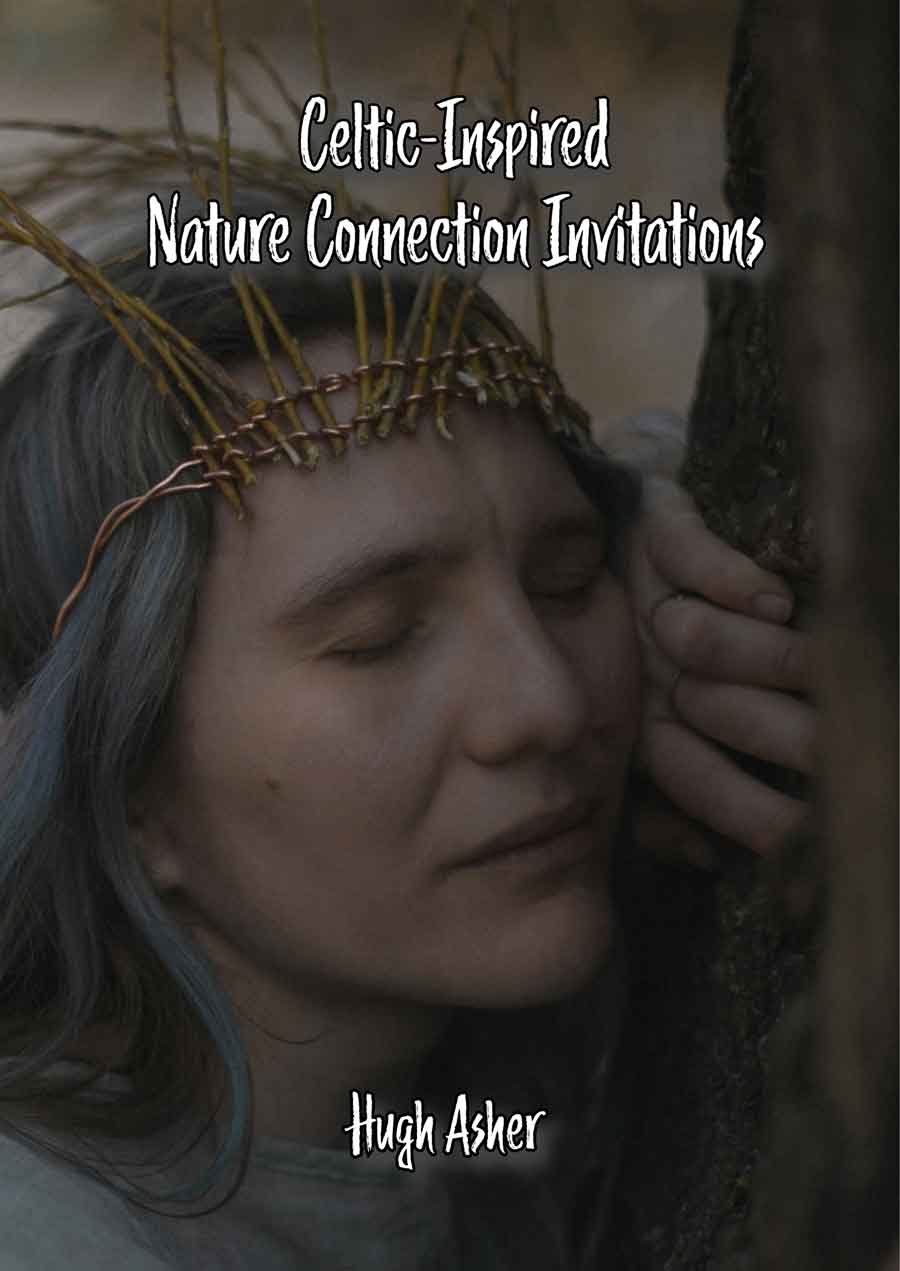
Celtic-Inspired Nature Connection Ideas offers gentle, creative ways to deepen your relationship with the living world around you — through seasonal reflection, simple rituals, and nature-based practices inspired by Celtic tradition.
Whether you are looking for a meaningful gift, a companion for your own practice, or a way to mark the longest day with more intention, this book invites you to slow down, step outside, and listen.
Celebrate the light. Honour the land. Reconnect with the natural world.
This 40 page perfect-bound book is A5 in size and contains 16 Celtic-Inspired nature connection invitations including: Spiritually Engaging with a Tree; Becoming One with the Earth; The Cailleach’s Stone; Thin Places; Appeasing the Sídhe; and one for each of the four ‘Cross-Quarter’ days - Samhain, Imbolc, Beltane, and Lughnasadh.
There is also an overview of ‘The Celtic Calendar’ and how and why nature played such an important role in Celtic culture.