

The Symbolism of White Heather in Scotland
Saturday 1st November 2025
On the windswept moors and rocky braes of Scotland, heather is more than a plant — it is a living shorthand for the wild landscape, of memory and myth. Among the swathes of purple heather that colour the uplands each late summer, the pale, ghostly patches of white heather have always drawn special attention. Rarer than its purple cousins and striking where it appears, white heather has developed varied meanings over centuries — a talisman of luck and protection; a bridge to the Otherworld; a token for lovers and brides; and a quiet emblem of purity and renewal. Literally rooted in the moorlands of the Highlands yet drawing on the wider Celtic beliefs about liminality and sacred places, white heather occupies a curious space between botany and belief combined with myth and magic.
A Note on the Plant Itself
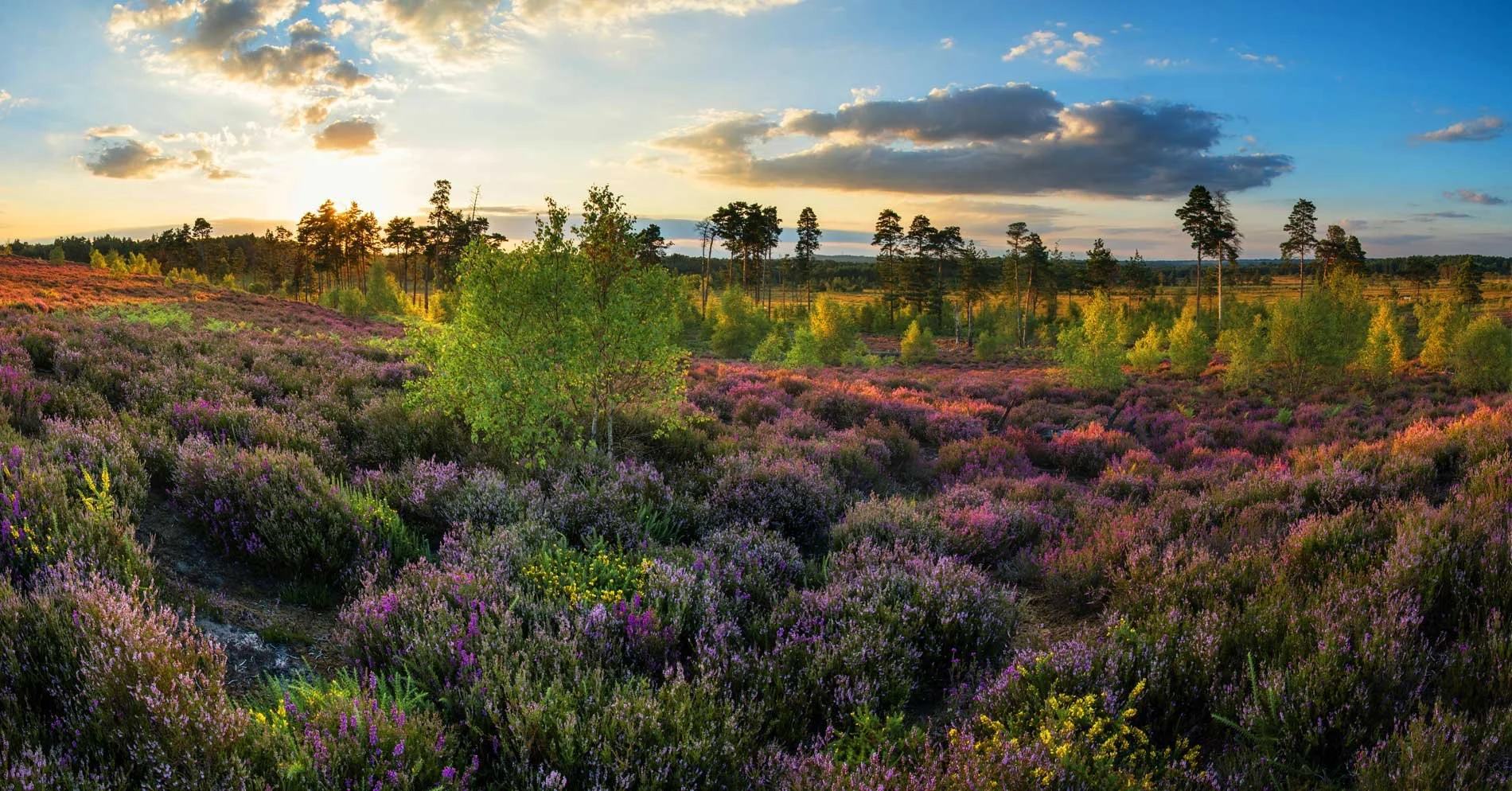
“Heather” is a common name that refers to several low-growing, woody plants of heath and moorland, most familiar among them being Calluna vulgaris (often called ling) and various species of Erica. In most of Scotland the rolling purple vista of summer is made up of these species — hardy shrubs that can withstand the wind, rain and thin soils of the Highlands. White heather is not a separate species of heather but rather a less-common colour form — a genetic variation or sometimes a different species of Erica that produces paler flowers. Because white blooms are naturally scarcer on the moorland, they stand out when they occur — and scarcity breeds meaning.
From a practical point of view white heather grows in the same places as purple heather: heathland, acid soils, the margins of bog and moorland. It is a plant of edge-places — where land meets sky, where human paths cross wild ground — and that geography of margins feeds directly into its symbolic life in Scottish tradition.
There are a number of traditional legends as to why some heather grows white.
Faeries and Heather

One legend related to white Heather is that it grows upon the resting place of a faerie, and it is said that you can attract the faeries by making an offering of Heather to them on Belthane (1st of May). It has also been said that the faerie folk live in the heather bells and honey from heather is their favourite food. They are said like Heather so much as it is said not to grow in the Faerie Realm.
Pictish Myth and Heather
A Pictish legend is that the purple Heather was stained by the blood of the Picts when they were defeated by the Gaels, and that white Heather grows where no Pictish blood was spilled. According to The Legend of Heather Ale (by Robert Louis Stevenson) the Picts were said to have made a fine ale from Heather alone, without the addition of malt, hops (which don’t grow in Scotland) or any other sweetener, relying exclusively on the heather blooms and their nectar for the flavour.
Malvina, Daughter of Ossian

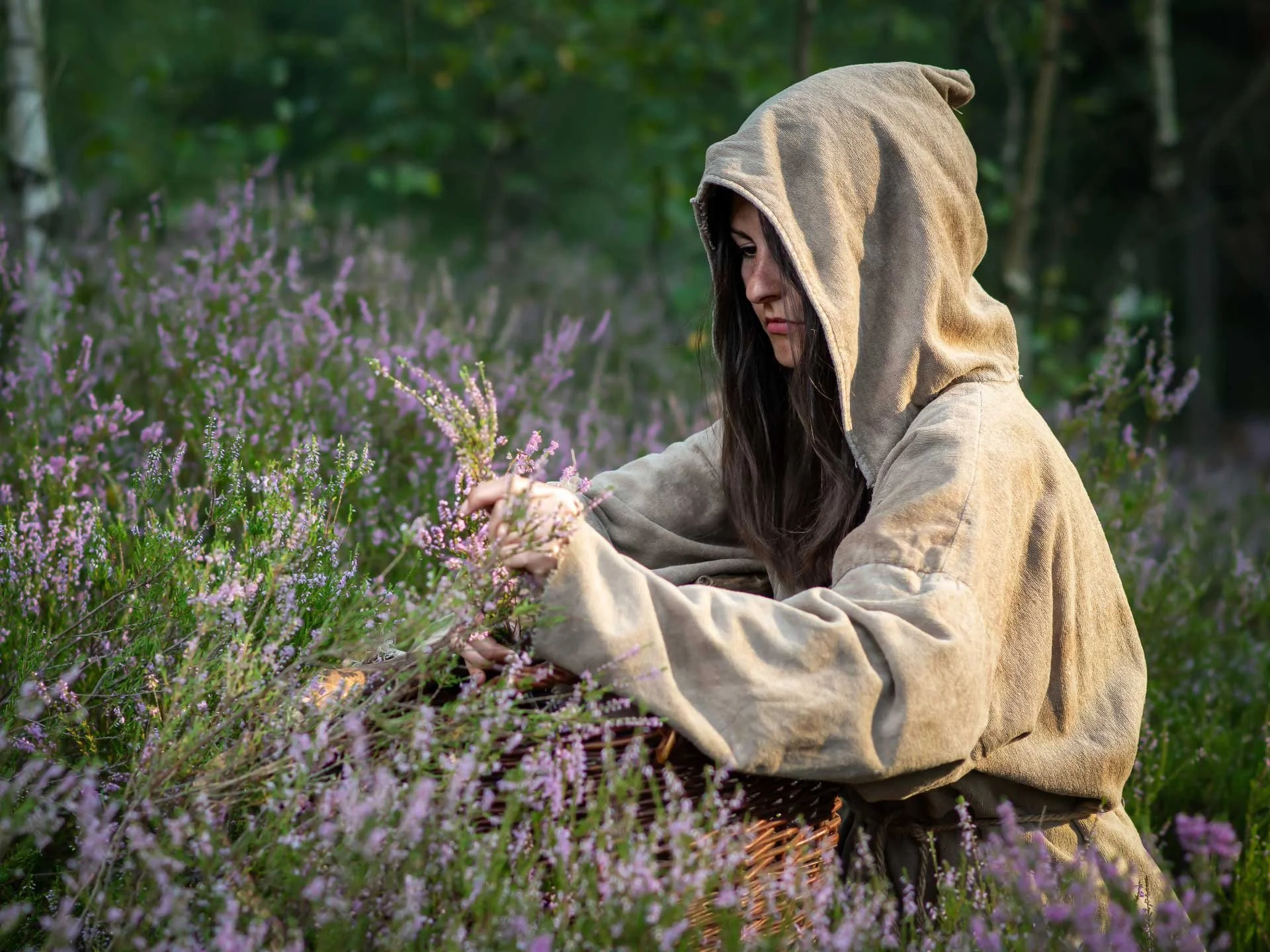
Another common Scottish legend relates to Malvina, the daughter of the Celtic bard Ossian (or Oisín, son of Fionn mac Cumhaill). It was said that Ossian had a beautiful daughter called Malvina, who was “as good as she was lovely … fair as the dawn and gentle as the dew”. She was engaged to be married to Oscar, bravest of all the warriors in their town, however Oscar was killed in battle on the day before their wedding. The messenger who brought his sad news is said to have knelt before Malvina and given her a sprig of purple Heather that Oscar had requested, as he died, be given to Malvina as a token of his eternal love. Grasping this sprig of Heather from her true love, her tears fell onto the purple heather and turned it white.
Ossian is said to have composed music for his daughter's lost love, and that as father and daughter wandered over the moors, her tears fell upon the purple heather turning this white too. Malvina, although sorrowful, but not wishing others to experience similar pain is said to have pronounced that "Although it is the symbol of my sorrow, may the white heather bring good fortune to all who find it." This is supposedly the origin of the tradition for brides to carry a sprig of white heather to bring them good luck in their marriage.
Rarity and Luck
Indeed, the most persistent and widespread belief about white heather is also the simplest — that it brings good luck. A sprig tucked into a buttonhole or bundle carried in a pocket is a common Scottish talisman. The explanation is straightforward: a plant you rarely see feels precious. In societies where the natural world was read for signs and omens, the unusual blossom became shorthand for exception, favour and blessing.
This association with luck is typically explained in two complementary ways in folklore. First, because white heather is unusual, finding it is taken as an auspicious event — a rare good that promises good fortune to the finder. Second, the pale colour has its own cultural connotations: white suggests purity, protection from ill, and an almost otherworldly light, which made it an apt symbol for safeguarding on journeys, battles and life’s thresholds.
From weddings to war, the sprig of white heather is thus doubled — a rare beauty and a portable charm. Brides wear it for fertility and fortune; soldiers slip it into their kits for courage and protection; travellers keep it to ward off bad luck.
Weddings, Brides and Bouquets
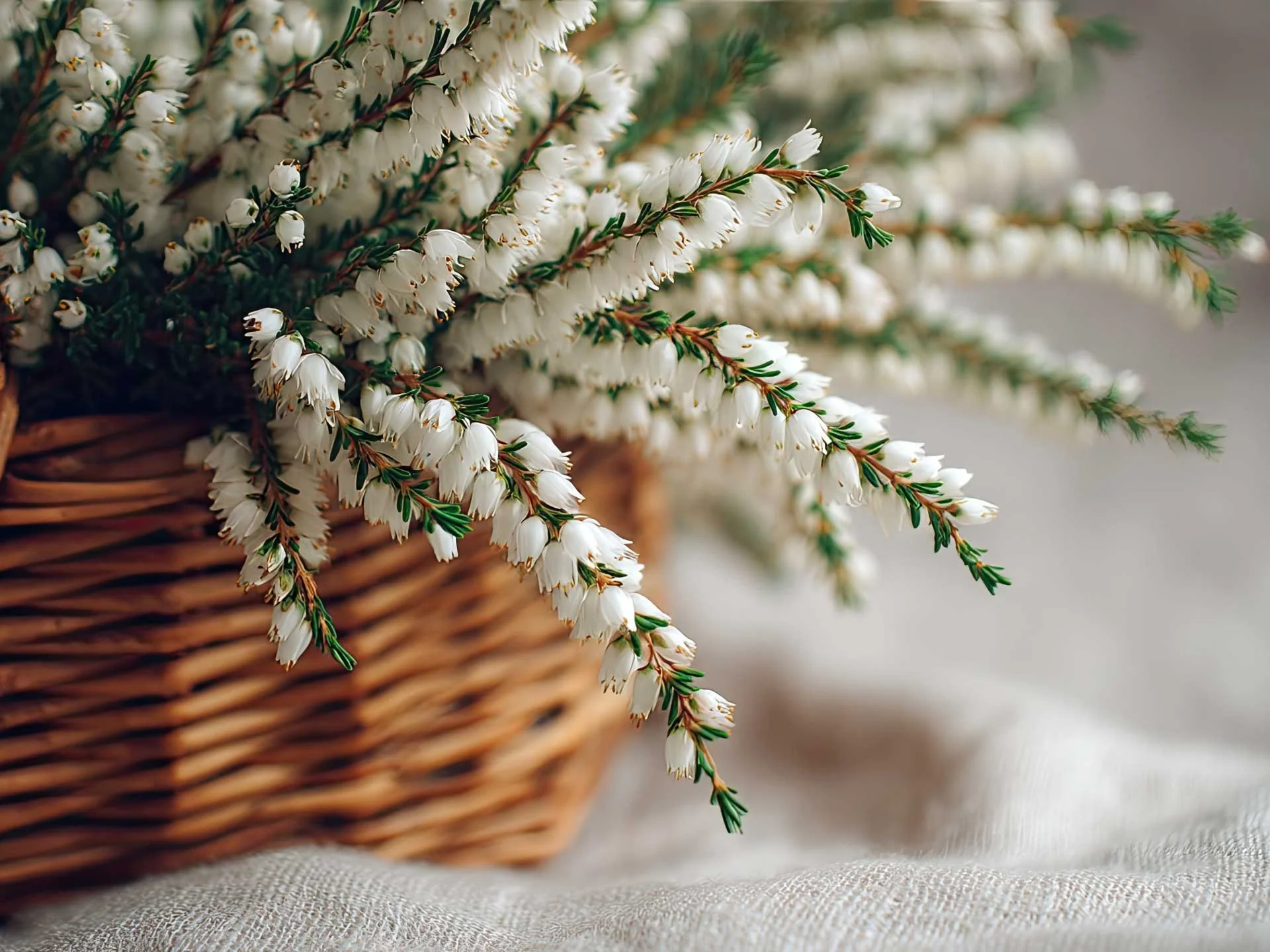
White heather’s strong modern association with weddings is deeply rooted in folklore. Traditionally, marrying into a household — especially in a small community or clan environment — put a woman at a crucial threshold. To navigate that threshold well required blessing — fertility, good fortune, protection from jealousy or the evil eye. Flowers have long been portable symbols in such rites, and the heather’s hardy, evergreen aspect (its ability to weather harsh weather) made it a suitable emblem of constancy.
A sprig of white heather in a bride’s bouquet or sewn into her dress is supposed to bring luck and security to the marriage. Sometimes it was also carried as an emblem of chastity or purity, not just in moral terms but as a sign of the fresh start a marriage represents — a life given to shared purpose and mutual care. In some accounts, white heather was given as a wedding gift instead of money, a token that signalled communal investment in the future of the marriage.
Because the plant is robust, it preserves well in dried form. For families that treasured continuity, a sprig might be kept and re-used — an heirloom of married life that linked generations. This cultural recycling of the plant perpetuated its symbolism across time — a grandmother’s white heather had the luck she had been wished, and she could pass that luck on to future generations.
Courage and Protection On the Battlefield

There are many accounts — some folkloric, some recollected as family history — of soldiers carrying sprigs of white heather into battle, especially during the eighteenth and nineteenth centuries, when Highland regiments were built on a romanticised Highland identity. In the field, a personal charm could ease fears, offer a sense of connection to home, and reinforce courage.
Here the heather functions like many other battlefield amulets worldwide: it is a small, emotionally resonant and portable proof that someone cared enough to place good fortune in your palm. The belief is not that a plant repels musket balls, but that the symbolic presence of home, blessing and luck could steady and fortify a soldier’s nerves and link him to a feeling of wider communal protection.
The Otherworld and the Fae Folk
Celtic culture and folklore have a deep and complicated sense of “thin places” — locations where the boundaries between this world and the Otherworld is particularly permeable and allow passage between ordinary time and the sacred, enchanted world. Hills, ancient trees, standing stones, mists on the loch: these are places where the sidhe, the faerie folk, the old gods and the spirits are considered closer to hand. Plants that grow in these locations often acquire special status. In this way heather, a plant of wild uplands and windswept ridges, naturally became associated with the same energies that live in those liminal spaces and places.
There are countless local legends in which white heather appears at the edges of fairy tales — a bride who leaves a sprig on a fairy hill, a hunter who follows the gleam of white heather only to find himself lost in a world where time runs differently, or a lonely soldier who is given white heather by an old woman who is more than she seems. These stories are not identical across the landscape; they are variations on a theme, each reflecting common anxieties about liminality, fate and hospitality from the supernatural.
White heather specifically carries a double association here. Its white colour has long been read as liminal or otherworldly in Celtic and other European folk traditions — white animals, white stones and white flowers often mark sites of fairy activity or other supernatural significance. A white blossom in a purple sea can look like a pale doorway, a focal point for attention. As mentioned previously, folklore sometimes ascribes white heather to the handiwork of the fae folk themselves — either they planted it as a secret sign, or it grows where their presence has marked the land. To find white heather, then, could be a blessing from the sidhe; it might also be a reminder that one is near a thin place and should behave with care and respect.
Stories that connect white heather to offerings and fairies therefore often carry a cautionary edge. Treat the place with courtesy, do not take more than you are offered, and never boast about having been favoured by the otherworld. In these tales the flower’s goodness is not a commodity to be mined; it is a gift that calls for humility in return.
Symbolic Threads in Celtic Myth and Practice
Celtic myth and legend is not a single, monolithic repository of doctrine but a living lattice of stories, motifs and practices that vary across time and place. Nevertheless, several recurring themes make the white heather motif noteworthy within broader Celtic ways of thinking.
First, the interplay of colour and meaning. In Celtic art and symbol, contrasts — light and dark, earth and sky — are constantly significant. White is not merely the “absence of colour” — it often suggests purity, the sacred, and the unworldly. When a white flower appears in the natural palette, it can be read as not entirely belonging to the ordinary order. This helps explain why white heather became associated with rites of passage — such as marriage or childbirth — with protection on journeys, and with the favour of invisible powers.
Second, there is the principle of reciprocity. Many Celtic practices emphasise the give-and-take necessary between the human and non-human worlds. To treat the land and its spirits with respect, to leave offerings, to acknowledge dependence on other-than-human life — these are central values. White heather’s role as a protective charm or an offering fits this ethic perfectly — it is both a token of appeal and a marker of relationship.
Third, there is liminality itself. Celtic festivals — such as Samhain, Beltane, and Imbolc — are moments when boundaries blur and a different moral logic holds sway. Because white heather often features in rites around thresholds, it fits neatly into this sacramental sensibility — a small, portable liminal object that makes the crossing safer and more blessed.
Wards, Charms and Household Practices
Folklore contains many pragmatic strands. Beyond weddings and military luck, white heather has been used in domestic and household contexts — tucked into a cradle to protect an infant, placed in a pocket when travelling, or kept in the home to keep ill luck at bay. In some regions sprigs were put into the rafters or pressed into bibles and hymnbooks, linking the old ways and newer Christian practices in a syncretic domestic ritual.
Part of white heather’s symbolic economy is its modesty. Unlike an elaborate carved amulet, a sprig of heather is small, ephemeral and natural — it can be refreshed each year and replaced without ceremony. That accessibility made it a most democratic charm — available both to lairds and crofters — and reinforced its place in private rituals of protection and hope.
Places, People and Personal Meaning
One of the pleasures of folklore is how localised it can be. In one glen white heather might be a token of bridal luck; in another it might be associated with a particular saint, a holy well or a story about a clan’s founding. In certain locales, elders would point to a patch of white heather as the place where a hero had fallen, or where a fairy king had left his mark. These localities convert the general symbolism into a narrative geography — the plant becomes a signpost for a particular story.
Personal meanings also accumulate. Someone who found white heather as a child and then later escaped a storm might thereafter read the plant as a personal guardian. A poet or artist who marries beneath a bush of pale flowers might always associate the plant with creativity and partnership. These idiosyncratic attachments are part of why the symbolism of white heather remains alive: it is constantly reanimated by individual experience.
Victorian Romance and the Commodification of the Heather
The 19th century’s romantic reimagining of Scotland — kilts, tartans, clan histories and Highland charm — played a role in popularising many Highland symbols. Heather, already beloved for its pastoral beauty, thus became a motif in jewellery, embroidery and trinkets sold to visitors. White heather, with its romantic connotations of luck and purity, made a natural emblem for keepsakes — sprigs preserved in lockets, brooches that mimic the shape of heather sprays, and pressed-silk bouquets.
While this commercialisation sometimes flattened deeper folk meanings into souvenirs, it also helped spread and preserve the symbolism. A visitor who bought a charm from a Highland shop might carry the image of white heather into cities far from the moorland, and along with it perpetuate a cultural story about Scotland as a place of mystery and gentle blessing. The commercialisation is thus ambivalent — it neatly packages folklore, but also ensures that stories live on.
Poetry, Song and the Language of The Landscape
White heather has long been a poetic image for authors, writers and song-makers who find in the upland scenery a language for love and emotion. In ballads and local verse, the white spray can be a marker for memory — of a lost lover, a home that has changed, or a moment when luck shifted. Because the flower is both ordinary and rare, it lends itself to metaphor — a small beauty that appears against expectations, a sign of favour or of mourning depending on the tale.
The image works precisely because it is rooted in place. For communities whose identity is shaped by land — crofting, shepherding, fishing — the flora of the hills is not decorative; it is the vocabulary through which meaning is communicated. The presence of white heather in song and verse therefore reads as a way of naming beloved landscapes while also investing them with human feeling.
Contested Meanings — Superstition, Sacredness and Scepticism
As with any symbol that travels between folk practice and popular imagination, there are tensions. To some, white heather is sentimental folklore, an appealing superstition that looks lovely in a buttonhole. To others, its continuing place in weddings and traditions is evidence of a living cultural inheritance that connects modern life to older ways of seeing the world.
This tension is not a problem to be resolved but a fact to be acknowledged. Symbols are not authoritative in themselves; they are useful insofar as they carry meaning for people. White heather’s persistence suggests it meets many such needs: it comforts, it marks, it anchors. Whether one interprets its blessing as supernatural or as psychological ritual, the social function remains similar — an act of hope and continuity in an uncertain world.
Ethical and Ecological Notes
A short practical note is worth making here. Because white heather is rarer than its purple cousins, in contemporary times there are concerns about overharvesting for commercial use — sprigs for weddings, tourist souvenirs, or mass-produced jewellery. Many naturalists and land managers encourage sustainable practices: admire and photograph instead of plucking; source heather from cultivated suppliers if you want physical sprigs for a ceremony; and respect local rules about removing plant material from protected moorlands. Treating the land with care is in keeping with the very Celtic ethic of reciprocity that made white heather meaningful in the first place.
Modern Usages and Living Traditions
Today white heather continues to appear in ceremonies, art, and as personal tokens. Some brides maintain the custom of including a small sprig in bouquets; some craft-makers press sprigs into pendants; and many Scots continue to inherit family stories about white heather that get told at weddings and wakes alike. The flower has moved comfortably from myth to modern memory, not as a relic but as a symbol that adapts.
In contemporary spiritual and nature-connection circles — groups who practice mindful walking, forest bathing or seasonal ritual — white heather is often used as a prompt for reflection. Finding a pale spray on a hike can become an invitation to pause, to acknowledge the land’s hidden offerings, and to practise gratitude. In that way the flower returns, gently, to its original role: a small, natural signpost that a world larger than our immediate concerns is present and alive.
Final Thoughts — A Little White Kindness on the Moor
White heather is a study in the power of small things. It carries luck because people have chosen to see it as lucky; it mediates between human needs and the moods of the land because stories and rituals have given it that role. Rooted in the Celtic sensibility of place, reciprocity and liminality, white heather moves easily from bridal blessing to battlefield talisman, from fairy lore to tourist trinket. Its symbolism is not fixed, and that is part of its beauty — like the moor itself, it can hold multiple meanings without losing its quiet presence.
In an age that prizes the spectacular, white heather is a reminder that significance often comes in modest measures: a single pale spray amid a purple sea, a small token tucked into a pocket, a story passed from parent to child. It calls us to notice, to be respectful, and to understand that the countryside is not just a backdrop but a companion. To find white heather is, in the old language of the hills, to be given a little white kindness — an emblem of hope, protection, and the fragile, luminous thread that connects human lives to the rhythms of the land.
If you have enjoyed this article and would like to support what we do by donating £2 or more to buy saplings to plant, please follow the link below:


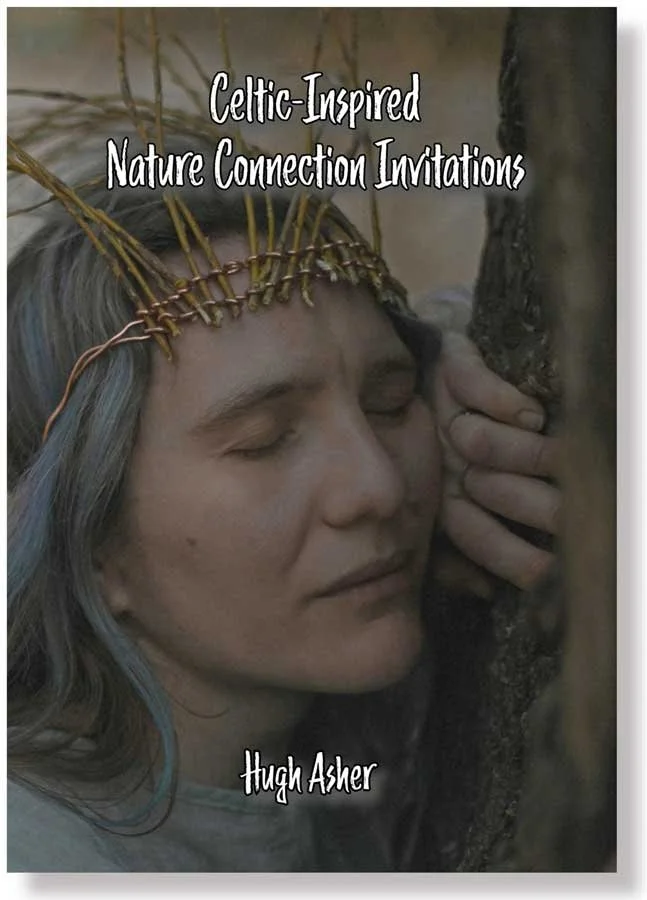

























A small collection designed to gently open the door into deeper relationship with the natural world.
This complete set of four Forest Healing booklets brings together practical guidance, reflective ideas, and simple nature connection practices that can be used anywhere — from ancient woodland to a nearby park, garden, or even a single Sit Spot outdoors.
Written to be accessible, grounding, and easy to follow, these booklets offer a pathway into the core practices of Forest Bathing (Shinrin-yoku), Silvotherapy, and everyday nature connection. Rather than asking you to achieve anything, they simply invite you to slow down, notice more deeply, and allow nature to become an active presence in your wellbeing.
Across the four booklets you will explore:
• What Forest Bathing, Silvotherapy, and Nature Connection actually are
• The key benefits of spending mindful time in natural environments
• The practice of the “Sit Spot” and how to develop your own relationship with a chosen place
• Simple, practical Forest Bathing invitations you can try alone or with others
• Ways to bring nature connection into everyday life, even in small moments
Together, they form a gentle introduction to practices that have been shown to support reduced stress, improved mood, greater clarity of thought, and a deeper sense of belonging within the natural world.
These are not academic texts or rigid instruction manuals. They are invitations — encouraging you to step outside, slow your pace, and rediscover the quiet intelligence of trees, weather, and landscape.
Whether you are completely new to nature connection or looking to deepen an existing practice, this collection offers a simple, supportive starting point for building a more intentional and restorative relationship with the living world around you.
A small set of booklets that can change the way you experience even the most familiar patch of nature.
Buy all Four Forest Bathing and Nature-Connection Booklets for £11.00 including FREE P&P within the UK.
Postage to the Rest of the World is £4.