

Exploring Liminality in Forest Bathing — A Journey Through the In-Between
Sunday 27th October 2024
This is the second of two articles on ‘liminality’ and ‘liminal spaces’ that began with yesterday’s article on ‘Thin Places and Liminal Spaces in Celtic Culture’. Today’s article explores the concept of liminality in Forest Bathing and Forest Therapy Practices.
Forest Bathing, or Shinrin-yoku, is the Japanese practice of immersing yourself in nature to foster wellbeing and inner peace. Whilst the immediate health benefits — such as stress reduction, improved mood, and a boost to the immune system — are well-documented, the deeper psychological and existential elements of these practices are also worth exploring. One such dimension is the concept of liminality, a threshold state that allows for profound transformation, reflection, and growth.

Understanding Liminality
The term liminality originates from the Latin word limen, meaning ‘threshold’. It describes the space between two stages, statuses, or places, where we leave behind the familiar but have yet to reach the new. Anthropologists like Victor Turner have discussed liminality as a critical phase in rites of passage, where the person undergoing the transition experiences a temporary suspension of the ordinary, stepping into a world where established norms are dissolved. This ‘in-between’ space allows people to question, reflect, and ultimately, to potentially reinvent themselves.
When applied to Forest Bathing and nature immersion, liminality is more than just a fleeting experience; it is a powerful state of self-awareness, recalibration, and reconnection with nature, allowing people to feel unbound by time and social roles. During Forest Therapy activities, liminality emerges as participants step away from their daily environments and routines, crossing the ‘threshold’ into the forest. Here, time may slow down, expectations are left behind, and people open up to new ways of being, feeling, and perceiving.
Forest Bathing as a Liminal Space
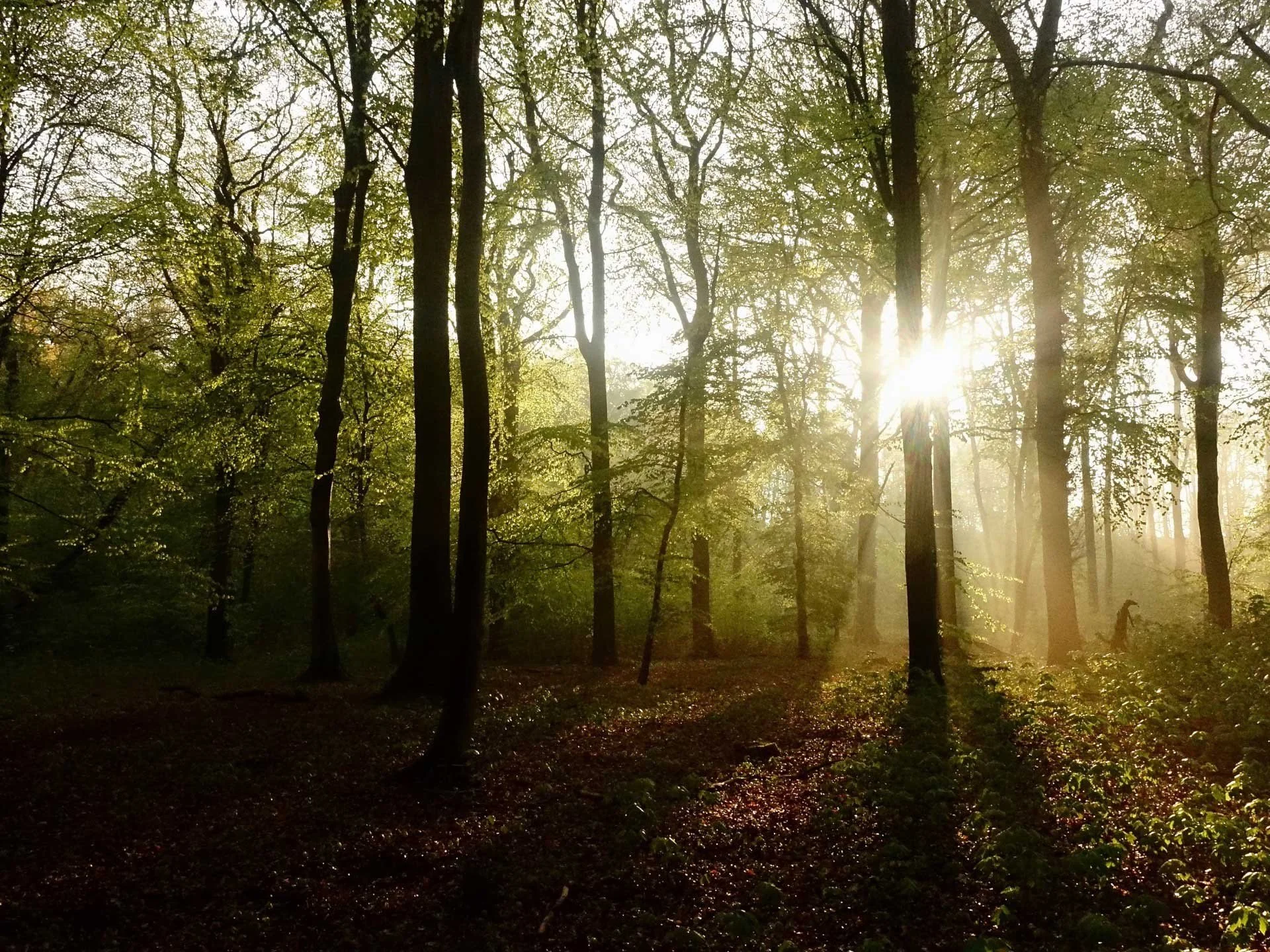
In this way, Forest Therapy practitioners and Forest Bathing guides often view the forest as a liminal space. Forests are inherently liminal environments. With their shifting light, complex textures, and rich biodiversity, they exist in a state of constant change that mirrors life’s natural cycles. Unlike urban landscapes, which commonly prioritise order and control, forests are dynamic, flowing ecosystems that invite exploration and surrender. They become spaces where the mind can unburden itself, where thoughts soften, and where the boundaries between self and surroundings begin to blur. This is the threshold where personal growth and healing begin to take shape. When we enter the forest with mindful intent, we leave behind the structured rhythms of everyday life. This creates a pause, a break from routines, responsibilities, and concerns. The forest can act as a buffer, a gateway where time feels suspended and everyday worries melt away.
The practice of Forest Bathing involves slow, mindful immersion in nature, often with the guidance of a trained Nature and Forest Therapy practitioner who helps participants to deepen their sensory awareness. By encouraging activities that awaken all senses, such as listening to the rustling leaves, feeling the texture of tree bark, or observing intricate details in plants and insects, Forest Bathing creates a mindful, embodied experience. This sensory immersion is itself a kind of threshold crossing, a point where participants shift their focus from external pressures to the present moment and their immediate surroundings. And in this liminal forest space, we become more open to sensory experiences and new perspectives. The leaves rustling, the scent of pine trees, the moss and soil beneath our feet — all these sensations engage our senses, anchoring us in the present moment. In this state, boundaries can dissolve, and we can become more receptive to both internal and external cues.
This sense of ‘in-between-ness allows for contemplation of life's bigger questions, perhaps even questions we don’t typically have space to ask. For many, the forest becomes a sanctuary to reflect on personal challenges, seek insights, or simply reconnect with the present. These moments of introspection can provide profound healing and clarity, marking the liminal space as a realm of potential transformation.
Elements of Liminality in Nature Connection Practices
Liminality in Forest Therapy is not just confined to the forest itself but encompasses the rituals, movements, and mindful awareness practiced within it. Key elements of this include:
Slowing Down and Letting Go
Forest Bathing often centres around the simple act of slowing down. By releasing the rush of daily life, we enter a mental state that is open to new, subtle experiences.
Invitations and Guided Transitions
In Forest Therapy or Forest Bathing sessions, guides usually structure the experience with ‘invitations’, such as focusing on each sense in turn, noticing how different aspects of nature make us feel, or communing with a specific aspect of the forest. In part these invitations serve as liminal thresholds, ushering participants from one state of mind to another.
Sensory Engagement
Through mindful walking, touching the trees and leaves, smelling the earth, or listening to birds, we activate senses that are often dulled in urban environments. This sensory re-engagement shifts us into a more liminal mindset where the external and internal worlds blend.
Silent Observation
Silence is another powerful component. By observing without the need for words, we step out of the normal mental chatter, letting go of the need to label, categorise, or analyse. This silence fosters a space where ideas, memories, and new insights can emerge.
Embracing Uncertainty and Growth
In the forest’s embrace, participants may feel safe enough to confront uncertainties or unresolved emotions. This aspect of liminality, where a person stands on the threshold of the known and unknown, encourages growth and healing. Research shows that being in nature reduces cortisol levels, a stress hormone, allowing for a more balanced emotional state. This calming effect can enable deeper self-inquiry, as the forest provides both a metaphorical and literal environment for individuals to let go and trust the journey within.
Connection and Belonging
The liminal state fostered by Forest Bathing also facilitates a deepened connection to the natural world. For many, this feeling of connection is spiritual, a reminder of humanity’s place within a larger ecological web. People often emerge from a Forest Bathing experience with a renewed sense of stewardship for the environment, understanding that they are part of something greater. This sense of connection and belonging is a vital component of liminality, which fosters a sense of unity and interconnectedness.
How Liminality Transforms Us in Forest Therapy
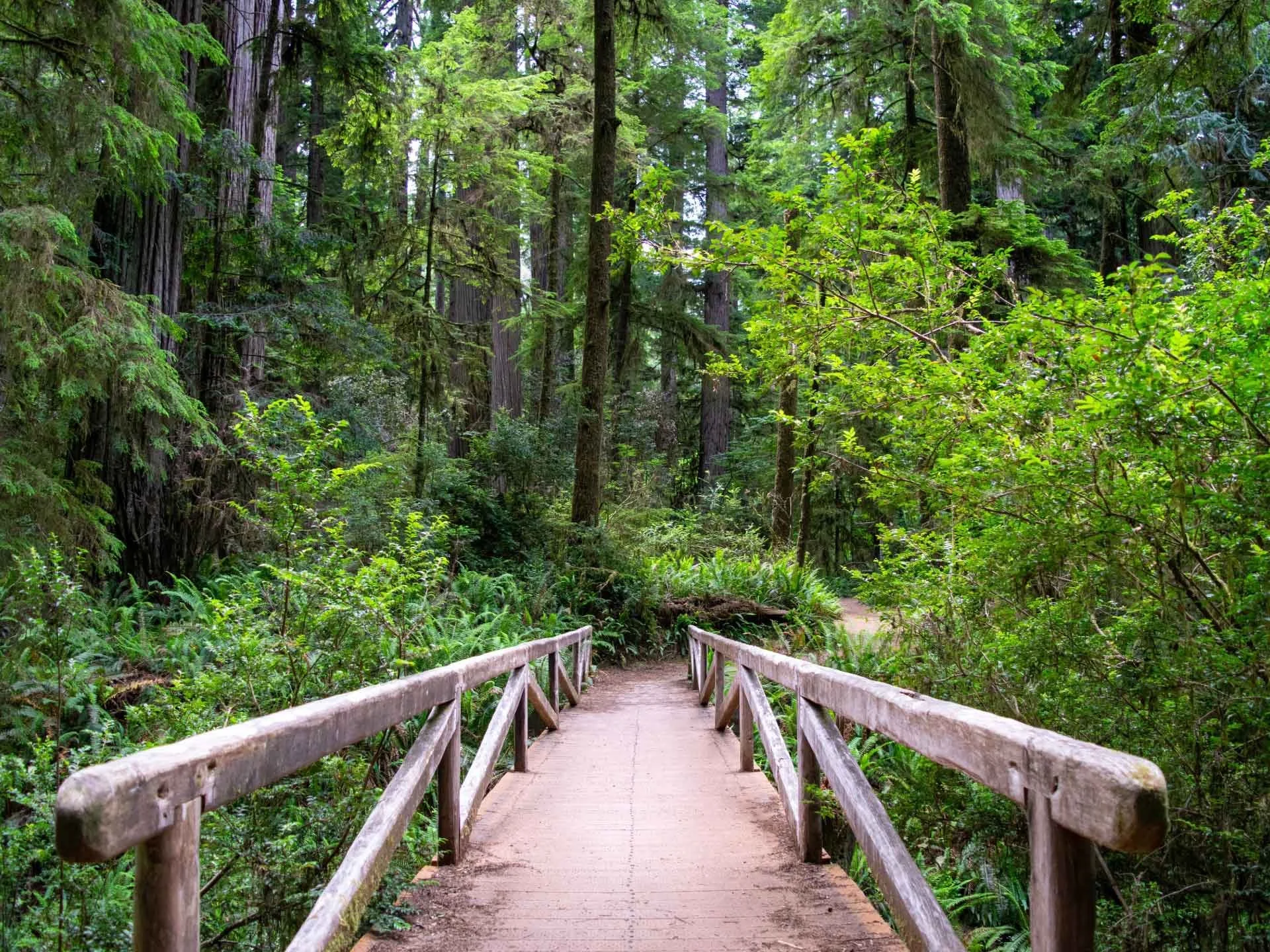
Liminality in Forest Bathing therefore does more than just offer relaxation; it offers an opportunity for transformation. When we cross from our daily world into this mindful space, we engage in a journey of release and renewal. People report feeling ‘reborn’ or ‘reconnected’ after nature therapy sessions because the liminal space has allowed them to shed old thoughts, rediscover forgotten feelings, or even make peace with unresolved aspects of their lives.
Research also shows that time spent in natural environments helps improve mental resilience and creative problem-solving. Liminal experiences in nature can foster new ways of thinking and being, as people return to their daily lives with fresh perspectives and insights. By accessing this mental and emotional state, we become better equipped to face life’s complexities, carrying with us a newfound sense of peace and purpose.
Final Thoughts
In a world that often values speed, productivity, and tangible results, Forest Bathing invites us to enter the timeless, the in-between. In such a liminal space, we do not need to achieve, conquer, or analyse. Instead, we are free to simply be. As more people turn to nature for healing, reflection, and connection, the role of liminality in Forest Therapy will only become more apparent. By stepping into these in-between spaces, we invite growth, cultivate a deeper bond with the natural world, and open ourselves to the restorative power of both nature and self-awareness. Ultimately Forest Bathing and similar nature-based practices offer a powerful, accessible form of liminal healing. They remind us that in between the borders of our lives, we can find solace, transformation, and a profound sense of belonging to something greater than ourselves.
If you have enjoyed this article and would like to support what we do by donating £2 or more to buy saplings to plant, please follow the link below:
























A small collection designed to gently open the door into deeper relationship with the natural world.
This complete set of four Forest Healing booklets brings together practical guidance, reflective ideas, and simple nature connection practices that can be used anywhere — from ancient woodland to a nearby park, garden, or even a single Sit Spot outdoors.
Written to be accessible, grounding, and easy to follow, these booklets offer a pathway into the core practices of Forest Bathing (Shinrin-yoku), Silvotherapy, and everyday nature connection. Rather than asking you to achieve anything, they simply invite you to slow down, notice more deeply, and allow nature to become an active presence in your wellbeing.
Across the four booklets you will explore:
• What Forest Bathing, Silvotherapy, and Nature Connection actually are
• The key benefits of spending mindful time in natural environments
• The practice of the “Sit Spot” and how to develop your own relationship with a chosen place
• Simple, practical Forest Bathing invitations you can try alone or with others
• Ways to bring nature connection into everyday life, even in small moments
Together, they form a gentle introduction to practices that have been shown to support reduced stress, improved mood, greater clarity of thought, and a deeper sense of belonging within the natural world.
These are not academic texts or rigid instruction manuals. They are invitations — encouraging you to step outside, slow your pace, and rediscover the quiet intelligence of trees, weather, and landscape.
Whether you are completely new to nature connection or looking to deepen an existing practice, this collection offers a simple, supportive starting point for building a more intentional and restorative relationship with the living world around you.
A small set of booklets that can change the way you experience even the most familiar patch of nature.
Buy all Four Forest Bathing and Nature-Connection Booklets for £11.00 including FREE P&P within the UK.
Postage to the Rest of the World is £4.