

What is Meant by ‘Recovery’ in Wellbeing Services?
14th February 2024
Increasingly I am combining my skills as a Forest Therapy Practitioner, and my knowledge gained in previous work with people experiencing problems with their drug or alcohol use or experiencing mental health challenges. Forest Therapy and nature-connection practices have been shown to be very effective, both as an alternative to, and in addition to more mainstream medication or psychosocial interventions used to address these issues. Contemporary approaches to both mental health and substance use problems increasingly take a ‘Recovery Approach’, and this article will explore the ‘Recovery Model’ or ‘Recovery Approach’ and the fundamental components that these comprise.
The Recovery Model or Recovery Approach
The ‘Recovery Model’ or ‘Recovery Approach’ is an holistic, person-centred and strengths-based approach originally used in mental health care and support. Its introduction marked a paradigm shift that increased the focus towards empowering people with mental health conditions to lead meaningful lives and achieve their full potential, rather than focusing on the more negative aspects of what they are experiencing. It emphasises the person's ability to recover and live well despite the presence of mental ill health. Similarly when applied to the support of people experiencing substance use issues, the recovery approach emphasises the process required to enable improved health, wellness, and quality of life despite problems with substance use.
Key characteristics of the Recovery Approach in both the substance use and mental health fields include:
Being Person-Centred
Recovery-oriented interventions recognise the uniqueness of each person's individual experiences, preferences, strengths, and goals. The person-centred approaches prioritises listening to and respecting the person's voice and their choices in their treatment and recovery journey, and emphasise personalised treatment plans tailored to the specific needs, preferences, and strengths of each person seeking help. Person-centred support means just that, that the person using the service is at centre. It is where services work with the person to help them live the life they want. It is not about that individual fitting or being fitted into the existing service and having to just accept what is on offer because there is nothing else available. The framework within which I work as a therapeutic practitioner is focused on supporting people to identify how they wish to change aspects of their lives, breaking the process down into smaller steps and defining incremental targets (or goals) for achieving these in ways that are meaningful and acceptable to them.
Empowerment
Empowerment is central to the recovery approach. ‘Recovery Models’ focus on empowering people to take control of their own recovery process, make informed decisions about their treatment and support, and actively participate in setting their own goals. Fundamentally, the recovery approach encourages a move away from solutions defined and imposed by professionals without reference to the needs or desires of those they are supporting, and proposes that the primary principles should be about client choice and empowerment.
In this way self-management becomes not only about users of services taking more responsibility for their treatment, but also about a change in the dynamics of the relationship between practitioners and those that they work with. It moves away from being expert - patient to the practitioner being a 'coach' or 'partner' on the recovery journey. In recovery-based services, this relationship between the practitioner and their clients should be regularly evaluated to see whether it empowers people or takes power away from them. Historically many support services have often only offered one type of treatment, often poorly defined in terms of goals and outcomes; and where users of that service have failed to engage with treatment, this has traditionally been ascribed to client characteristics rather than a failure on the part of the service to provide a service that is a 'good fit' with the clients' needs.
Being Strengths-Based

Rather than focusing solely on deficits or problems, the recovery approach emphasises identifying and leveraging each person’s strengths and resources. It actively encourages them to build on their existing skills and assets to support their recovery journey. Approaches that concentrate on the flaws and troubles of the person, or serve to merely list their shortcomings, consequently lead to an unhelpful focus on the 'illness' and commonly promote feelings of failure and powerlessness. The strengths-based approach has its origins in the field of 'Positive Psychology'. It focuses on people's strengths and potentials, rather than on the more traditional psychological problem-focused 'fixing' framework, and seeks not only the alleviation of immediate symptoms but to build strengths and promote longer-term satisfaction.
Self-Determination and Autonomy
In these ways people are encouraged to take an active role in their recovery process, expressing their preferences, setting goals, and making choices about their treatment and support services. The recovery approach respects their autonomy and right to self-determination.
Social Inclusion and Community Integration
Recovery-oriented interventions recognise the importance of social connections and community support in promoting wellbeing. Conscious efforts are made to reduce stigma, facilitate social inclusion, and create opportunities for individuals to participate fully in their communities.
Peer Support
Peer support is considered a valuable component of the recovery process, especially in relation to drug and alcohol use. Connecting with others who have shared similar experiences can provide validation, encouragement, and practical guidance. Peer support groups, such as SMART Recovery, Alcoholics Anonymous or other 12-Step programmes, are often integral to the recovery approach.
A Long-Term Perspective
Recovery is viewed as a lifelong journey rather than a one-time event. The recovery approach emphasises the importance of ongoing support, self-care practices, and personal growth beyond the initial stages of treatment.
Hope and Optimism
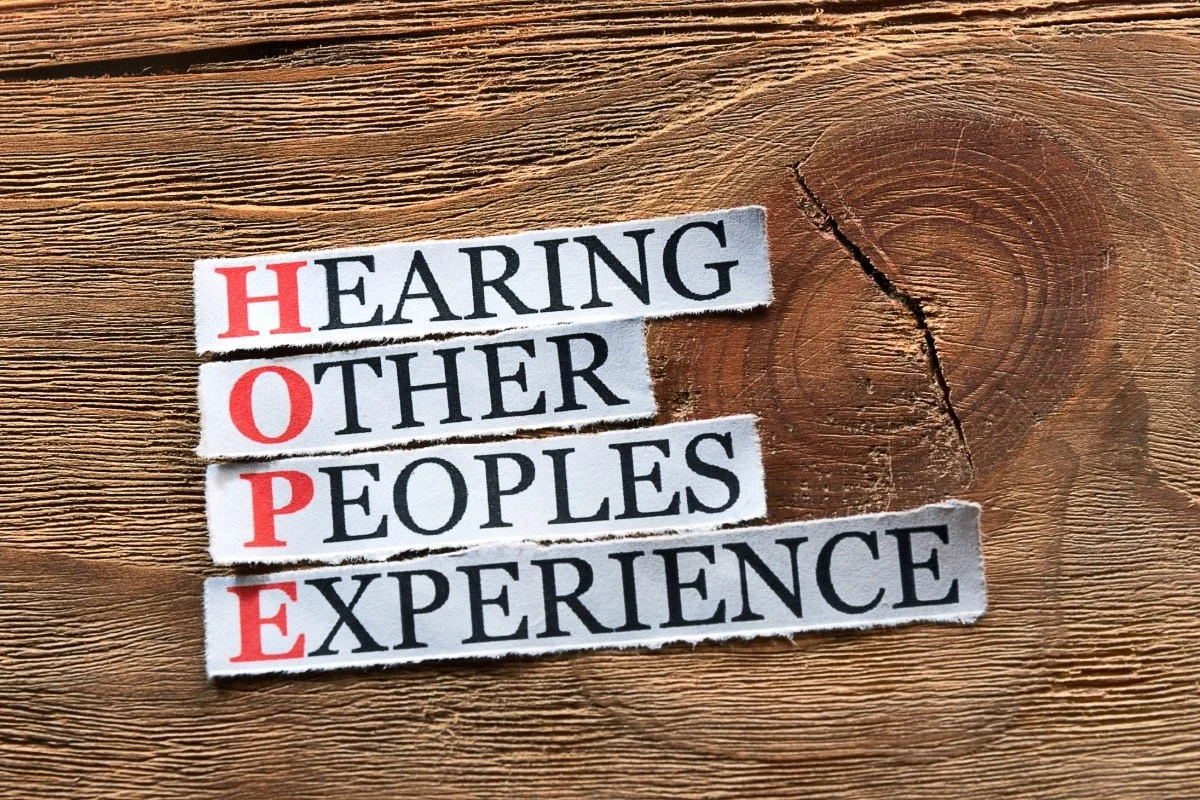
Central to the recovery approach is instilling hope and fostering optimism in people with mental health conditions or experiencing problems with drugs or alcohol. This involves supporting them to believe in their capacity to overcome challenges, set achievable goals, and envision a fulfilling future. Indeed as one of the original recovery principles described in the Recovery Devon Group's 'Recovery - Concepts and Application' by Laurie Davidson suggests:
Hope is central to recovery and can be enhanced by each person seeing how they can have more active control over their lives ('agency') and by seeing how others have found a way forward.
Hope is often seen as an attitude or way of thinking rooted in the expectation that the future will be positive and a self-belief that change is possible. We discuss 'Hope' in more depth below in the section below on ‘The Four Components of Psychological Capital’. It is a cognitive process that motivates us to find willpower (determination to achieve our goals) and ‘way power’ (planning of ways to meet goals) that leads to positive emotions (the expectation of meeting desired goals). ‘Agency’ is the belief that a person can positively influence their own future and the degree to which they feel that they have control over their lives. The concept of seeing others succeed in making and maintaining change and achieving the things that a person wants in their own lives is often known as ‘visible recovery’.
Recovery Capital
The concept of ‘Capital’ is often used in Recovery-oriented services to refer to the things that people have working to their advantage in maintaining their recovery. It can include such things as Social Capital (the resources, networks, and support systems that people can access within their social environment), but here we are going to look at a specific type of ‘Personal Capital’ with its roots in Positive Psychology referred to as Psychological Capital.

The Four Components of Psychological Capital
The concept of Psychological Capital is strongly linked to increased mental wellbeing, and levels of satisfaction with life and work, which in turn is beneficial in recovery from substance use too. Psychological Capital is often defined as “an individual’s positive psychological state of development” which in simple terms, means the combination of psychological resources they can call on and use to help them achieve the things that they want to.
It characterised by:
Having the will to succeed and the ability to identify, clarify and pursue the ways to succeed (Hope)
Having the confidence to take on and put in the necessary effort to succeed at challenging tasks (Efficacy or Self-Efficacy)
Sustaining effort and bouncing back in response to problems and adversity to attain success (Resilience)
Having a positive anticipation about success, both now and in the future (Optimism)
The four components of Psychological Capital - Hope, Efficacy, Resilience and Optimism can be remembered through the acronym HERO:
Hope
Hope is often seen as an attitude or way of thinking rooted in the expectation that the future will be positive and a self-belief that change is possible. People who report higher levels of hope also usually report higher levels of self-esteem, and lower levels of negative self-thoughts.
In regard to overcoming mental health issues or problematic substance use hope is seen as closely related to ‘agency’ or the degree to which a person feels that they have control over their lives. Central to the mechanism seen as most powerful in increasing hope within the ‘Recovery Movements’ is the concept that hope and self-belief can be increased by exposure to people who have been in a similar situation and have subsequently found a way to overcome their problems. This is ‘Visible Recovery’.
Increasing feelings of hope can also improve perceptions of self-efficacy.
Efficacy
Self-efficacy is a kind of self-belief that usually refers to the confidence a person has in their ability to achieve things. Building and increasing self-efficacy is vital in supporting people to make the changes that they seek. The stronger their belief in their ability to complete a task, the greater effort they invest in completing it and the more persistent they will be. People who believe that they are capable of achieving the things they want to are more likely to look for ways to overcome obstacles, whereas people who lack confidence in their own abilities are more likely to believe that further effort is pointless and view obstacles as reinforcing their lack of ability to make changes and exert control over their lives. Unless someone believes they can achieve their desired changes, they have little incentive to persevere in the face of difficulties and will often give up more easily. As Henry Ford said, “Whether you think that you can or you think that you can’t, you’re right”.
Resilience
Resilience is characterised by positive coping and adaptation in the face of significant risk, adversity, uncertainty, conflict, failure or even positive change or increased responsibility. It is the capacity to rebound or bounce back.
People can actually become more resilient to adverse situations each time that they effectively bounce back from a previous setback. Such reactions can have an upward spiralling effect where the interactions with hope, optimism and self-efficacy take the level of resilience to a higher than they were previously.
Optimism
Optimism can be seen as a person’s overall belief of experiencing more positive things than negative ones in the future. It is also concerned with how a person explains the causes and influences of previous positive and negative events to create expectancies about the future. This perspective suggests that optimists attribute causes of negative experiences to external forces, such as bad luck, while pessimists attribute causes of negative experiences to internal forces, such as seeing things that go wrong as being their fault. Conversely pessimistic people see success as being due to luck, whilst optimistic people see as being down to their own abilities.
Final Thoughts
The adoption of a ‘Recovery Approach’ in mental health interventions and support for substance users has marked a paradigm shift that places a greater focus on empowering people to lead meaningful lives and attain their full potential. It emphasises people’s ability to recover and live well despite the presence of mental illness and promotes an approached focused on supporting people to achieve improved health, wellness, and quality of life despite experiencing problems with substance use. Unlike traditional models that focus solely on symptom management or abstinence, the recovery approach views recovery as a holistic journey involving various dimensions of a person's life. Overall, the Recovery approach represents a shift from a focus on illness and pathology to one that emphasises strengths, resilience, and the potential for growth and … recovery. It underscores the importance of treating people with dignity, respect, and compassion as they journey towards reclaiming and rebuilding their lives.
Our next article builds upon the recovery approach and explores ‘Harnessing the Healing Power of Nature: Forest Therapy in Recovery from Substance Use and Mental Health Problems’.
If you have enjoyed this article and would like to support what we do by donating £2 or more to buy saplings to plant, please follow the link below:



































A small collection designed to gently open the door into deeper relationship with the natural world.
This complete set of four Forest Healing booklets brings together practical guidance, reflective ideas, and simple nature connection practices that can be used anywhere — from ancient woodland to a nearby park, garden, or even a single Sit Spot outdoors.
Written to be accessible, grounding, and easy to follow, these booklets offer a pathway into the core practices of Forest Bathing (Shinrin-yoku), Silvotherapy, and everyday nature connection. Rather than asking you to achieve anything, they simply invite you to slow down, notice more deeply, and allow nature to become an active presence in your wellbeing.
Across the four booklets you will explore:
• What Forest Bathing, Silvotherapy, and Nature Connection actually are
• The key benefits of spending mindful time in natural environments
• The practice of the “Sit Spot” and how to develop your own relationship with a chosen place
• Simple, practical Forest Bathing invitations you can try alone or with others
• Ways to bring nature connection into everyday life, even in small moments
Together, they form a gentle introduction to practices that have been shown to support reduced stress, improved mood, greater clarity of thought, and a deeper sense of belonging within the natural world.
These are not academic texts or rigid instruction manuals. They are invitations — encouraging you to step outside, slow your pace, and rediscover the quiet intelligence of trees, weather, and landscape.
Whether you are completely new to nature connection or looking to deepen an existing practice, this collection offers a simple, supportive starting point for building a more intentional and restorative relationship with the living world around you.
A small set of booklets that can change the way you experience even the most familiar patch of nature.
Buy all Four Forest Bathing and Nature-Connection Booklets for £11.00 including FREE P&P within the UK.
Postage to the Rest of the World is £4.