

The Benefits of Hugging Trees
25th May 2022
Trees can provide many benefits for humans including cleaning the air and providing us with oxygen, shade, food, medicines, and beauty. They can help us to relax and destress, lowering our heart rates and blood pressure and improving our mood. But trees also offer something else that we all need: connection with nature and with each other.
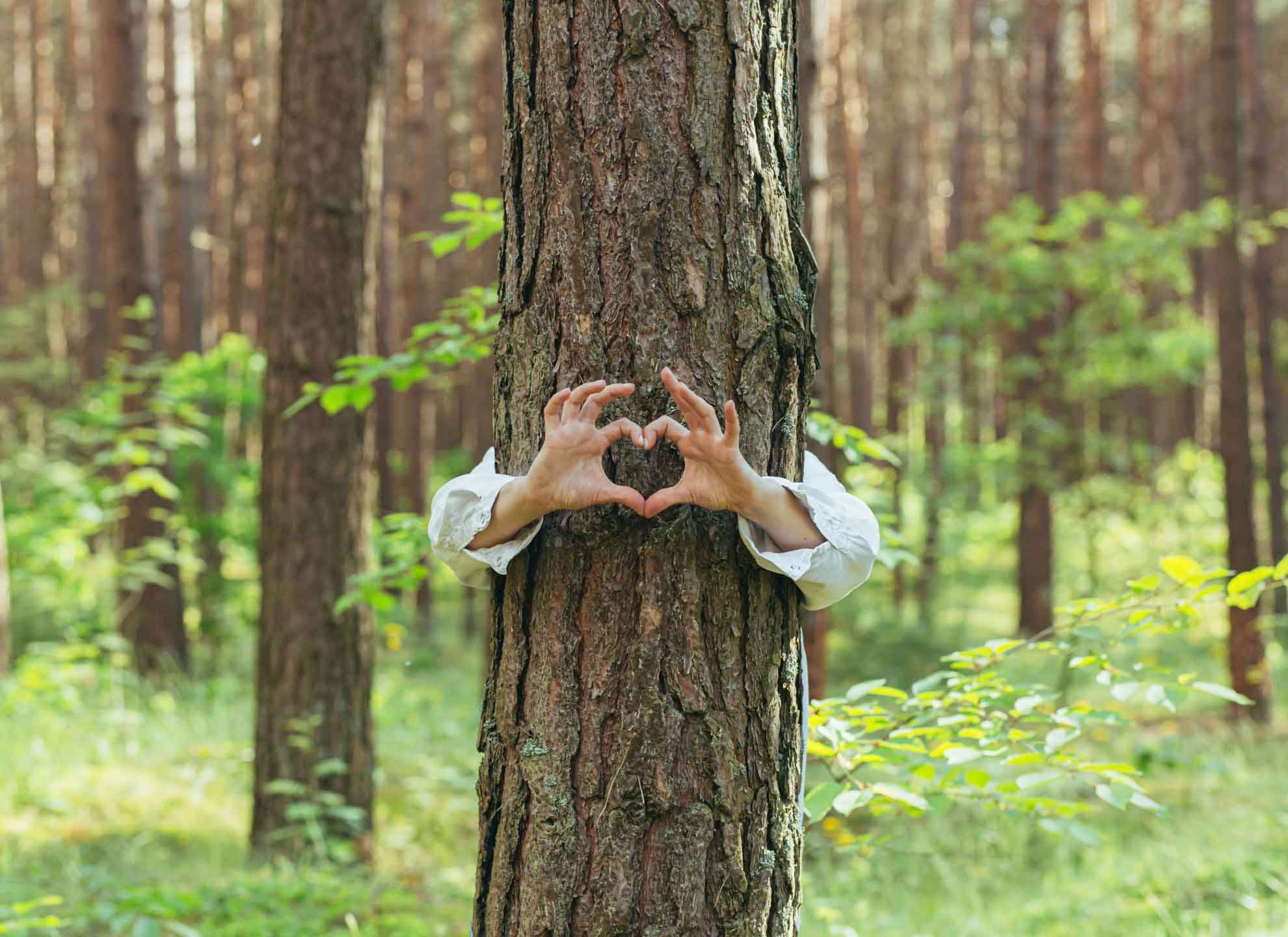
There are emotional, psychological and physical benefits to hugging both people and trees, and hugging a tree may be easier for some people who do not enjoy the experience of hugging other people, or being hugged by them. Hugging trees can increase your nature-connection, which is about the physical, psychological and emotional impact of engaging in nature through our senses and immersing ourselves in our natural surroundings. It is also about our sense of the relationship that we have with the natural world. What is known is that there are numerous benefits to increasing your nature connection.
Why Hugging Trees is Good for your Mental Health
Just being outside in nature has been shown to be good for your mental health. But being outside and connecting with nature, especially hugging a tree, has been shown to be especially good for your mental health. The ‘Biophilia’ Hypothesis or Biophilia Effect is often given as a reason why being in nature is good for us. ‘Biophilia’ is a term first used by Erich Fromm in 1973 to describe the human attraction to other living things. A wider theory based on this was later developed by Edward Wilson in his 1978 book ‘On Human Nature’ and 1984 book ‘Biophilia’ in which he stated that humans felt an emotional, but subconscious connection to environments inhabited by plants and animals that was rooted in biology and evolution.
The ‘Biophilia’ effect is the theory that explains why being nature is therapeutic and conversely why separation from nature can be psychologically and emotionally damaging. Richard Louv coined the phrase ‘Nature Deficit Disorder’ in his 2005 book ‘Last Child in the Woods: Saving Our Children From Nature-Deficit Disorder’. In this book he argues that all of us, especially children, are spending more time indoors, and that this can lead to people feeling alienated from nature and potentially more vulnerable to negative moods or reduced attention span.

Hugging Trees Can Help You Relax
There are many identified mental and emotional benefits to hugging a tree. First, it helps you relax. Studies show that after people hug trees they report feeling calmer and more relaxed than those who do not. It has reported that hugging trees has been shown to increase the levels of the hormone oxytocin, which is the hormone responsible for emotional bonding and feelings of wellbeing, calmness and trust. One of the primary ways that oxytocin productions increased is through touch.
Dr. Stone Kraushaar, Ph.D., a clinical psychologist known as The Hug Doctor suggests that we hug (each other or trees) for a minimum of 21 seconds on order to benefit from the increased release of oxytocin.
Hugging Trees Helps Reduce Stress …
In addition to helping you feel more relaxed, hugging a tree can actually improve your health by helping to reduce stress. Research shows that hugging trees reduces levels of cortisol measurable in saliva (a marker of stress) and reduces blood pressure and heart rate. Hugging trees helps reduce stress levels by reducing cortisol levels in the body. This means that hugging a tree can lower your chances of having a heart attack.
“The results suggest that exposure to nature may reduce cardiovascular reactivity by lowering blood pressure and heart rate,” said lead researcher Dr. David Scholey, an associate professor at the University of Surrey in England. “This effect was observed even after controlling for other known influences on blood pressure such as age, gender, body mass index (BMI), smoking status, alcohol consumption, and exercise levels.”
… And Can Boost Your Mood
Cortisol, the hormone released when we feel stressed out can also cause us to become anxious, angry, or depressed. Researchers have shown that hugging a tree can help with anxiety and depression too. It also helps you feel closer to nature.
But is There a Scientific Health Benefit to Hugging Trees?
Yes, again there is a wealth of evidence that hugging trees can be good for us:
Tree bark is a rich source of terpenes - terpenes are specific kind of phytoncides (such as the monoterpene limonene found in citrus peel) produced by trees. Some terpenes attract pollinators, whilst others help to protect the trees and plants against diseases and being eaten. These compounds are what give trees such as Pines and Spruces and plants such as lavender their distinctive smell and they are commonly the main constituents of essential oils. Exposure to phytoncides and terpenes has been shown to: Improve the functioning of the immune system; have an anti-inflamatory effect; reduce stress and anxiety; and improve mood. The proximity to the tree bark that you get when you embrace a tree means that you maximise your ability to inhale these beneficial molecules.
Hugging Trees Can Be Fun
There are several reasons why hugging trees is fun. First, it’s free. Second, it’s easy. Third, it’s a great way to connect with nature. Fourth, it’s something everyone can do. And fifth, it’s an opportunity to make new friends (it has now become a competitive sport):
You can find out more about this year’s Scottish Tree Hugging Championships here!
How Did Tree Hugging Begin?
The origins of tree hugging as an activity can be traced back to various cultural, spiritual, and environmental practices throughout history. While the specific term "tree hugging" may be relatively recent, the reverence for trees and the belief in their sacredness can be found in ancient traditions around the world. Tree hugging has become a symbolic gesture of environmental activism as well as a nature connection practice. The origins of this practice in modern environmental activism can be traced back to the Chipko Movement, a remarkable environmental movement that took place in Chamoli district, Uttarakhand, India, in the 1970s. The Chipko Movement not only highlighted the significance of trees but also demonstrated the power of grassroots activism in protecting the environment. You can read a more in-depth article about the origins of tree hugging we have written here.
How Else Does Hugging a Tree Help Us?
Trees help us feel good because they remind us of our place in nature. We see them as part of the natural world, not separate from it, and when we connect with nature, we feel more connected to each other. They make our lives better too, so why don't we hug them more often? Here's 10 reasons why we should ...
10 Reasons to Give a Tree a Hug!
There are many reasons to hug trees today.
Trees remove carbon dioxide from the atmosphere and convert it into oxygen so we should appreciate them.
If you've ever been to a forest, you probably noticed that trees also help to make the air cleaner and this process helps keep the planet healthy.
There are some very real health and wellbeing benefits to hugging trees, as studies show that people who regularly hug trees report feeling happier, calmer, and less stressed.
Trees provide us with a sense of connection to nature.
Trees help us appreciate the beauty of life.
Trees help us understand how much we depend on nature.
Trees help us realise that we're part of something bigger than ourselves.
Trees help us feel more connected to each another.
Trees help us feel spiritually more connected.
Trees help us feel better about ourselves.
If you have enjoyed this article and would like to support what we do by donating £2 or more to buy saplings to plant, please follow the link below:






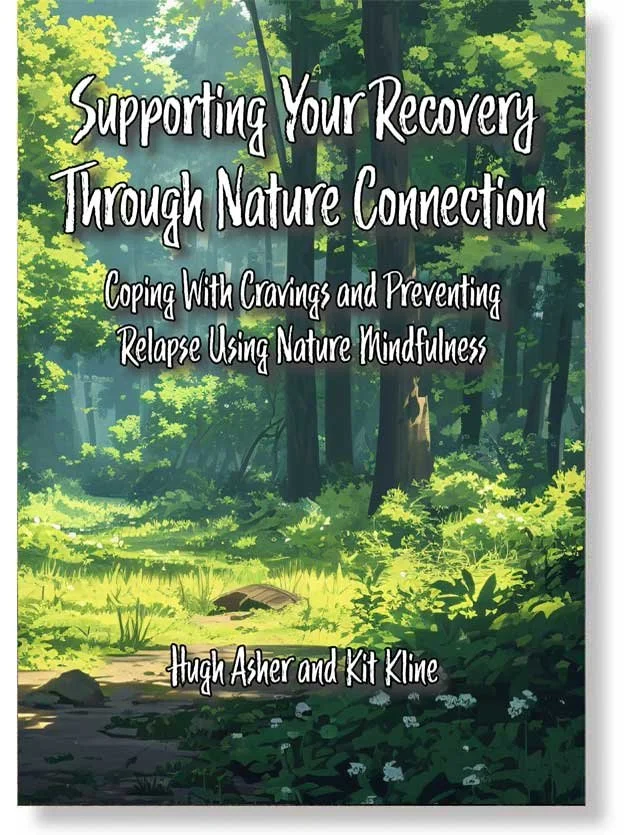


















A small collection designed to gently open the door into deeper relationship with the natural world.
This complete set of four Forest Healing booklets brings together practical guidance, reflective ideas, and simple nature connection practices that can be used anywhere — from ancient woodland to a nearby park, garden, or even a single Sit Spot outdoors.
Written to be accessible, grounding, and easy to follow, these booklets offer a pathway into the core practices of Forest Bathing (Shinrin-yoku), Silvotherapy, and everyday nature connection. Rather than asking you to achieve anything, they simply invite you to slow down, notice more deeply, and allow nature to become an active presence in your wellbeing.
Across the four booklets you will explore:
• What Forest Bathing, Silvotherapy, and Nature Connection actually are
• The key benefits of spending mindful time in natural environments
• The practice of the “Sit Spot” and how to develop your own relationship with a chosen place
• Simple, practical Forest Bathing invitations you can try alone or with others
• Ways to bring nature connection into everyday life, even in small moments
Together, they form a gentle introduction to practices that have been shown to support reduced stress, improved mood, greater clarity of thought, and a deeper sense of belonging within the natural world.
These are not academic texts or rigid instruction manuals. They are invitations — encouraging you to step outside, slow your pace, and rediscover the quiet intelligence of trees, weather, and landscape.
Whether you are completely new to nature connection or looking to deepen an existing practice, this collection offers a simple, supportive starting point for building a more intentional and restorative relationship with the living world around you.
A small set of booklets that can change the way you experience even the most familiar patch of nature.
Buy all Four Forest Bathing and Nature-Connection Booklets for £11.00 including FREE P&P within the UK.
Postage to the Rest of the World is £4.