

The Importance of Smell
Saturday 22nd August 2026
There is something quietly magical about smell. We often notice sight first, then sound, maybe touch, and only later realise that scent has been shaping our experience all along. In Winter a woodland can feel different not only because of what we see, but because of the aroma of damp bark, leaf mould, cold air, moss, pine resin, or the faint sweetness of decay turning into renewal. Recent research suggests that smells experienced in nature are closely linked with relaxation, positive wellbeing, memory, and even the way we make sense of place.
Smell is one of the most intimate senses we have. It can soften the shoulders, stir an old memory, or bring a sudden sense of belonging. A 2022 woodland study that was in part the inspiration for this article, found that smells in nature were associated with multiple wellbeing domains and that the experiences people reported were shaped by season, ecology, memory, and place. In other words, scent is not a small extra. It is part of the living conversation between human beings and the more-than-human world.
Why Smell is So Powerful
Smell is different from the other senses. The olfactory system is situated close to the brain regions involved in emotion and memory, including the amygdala and hippocampus. That is one reason scents can feel so immediate and so personal. We do not just identify a smell — we often feel it. Researchers have long noted that odours are powerful triggers for autobiographical memory and emotional recall, and that this makes smell especially important in the shaping of mood and meaning.
That close link with memory helps explain why a single whiff can carry us back in time. Wet earth may take us back to childhood gardens. Pine may make us think of Winter celebrations. Cut grass may remind us of long Summer afternoons. An article in the journal Nature on smell and memory described this as an area scientists are increasingly able to explain, not just a poetic oddity. The old literary idea that scents can bring back whole worlds is now supported by a growing body of neuroscience and psychology.
This matters because memory is never only about remembering. It is also about feeling. A smell can revive comfort, safety, grief, longing, joy, nostalgia, and tenderness all at once. That is one reason scent is so central in wellbeing work: it does not merely inform the mind — it touches the heart and the body together. Research on odour-evoked emotion has repeatedly linked the olfactory system with emotional experience, emotional memory, and mood.
What the Woodland Study Found
The most relevant modern study for this topic is the 2022 research paper Nature, smells, and human wellbeing, published as open access in Ambio. The researchers explored how people experienced smells in woodland settings across all four seasons, and they found that smells were associated with both positive and negative wellbeing outcomes. Importantly, the study moved beyond the usual idea that smell is mainly about nuisance or unpleasant odours. It showed that nature’s smells are part of a broader sensory ecology of wellbeing.
The study identified 103 unique named smells mentioned by participants. These included earthy, damp, fresh, pine, mud, foliage, decay, and other seasonal and ecological scent impressions. Participants did not simply talk about “the woodland” in general. They described how particular smells affected how they felt physically, emotionally, cognitively, spiritually, and in terms of their overall wellbeing. Physical wellbeing was mentioned most often, especially in relation to relaxation, comfort, rejuvenation, and feeling healthy.
One of the most striking findings was that people often connected smells with memories rather than with the woodland setting itself. A scent of leaf mould might bring back helping a parent with compost. Pine might evoke Christmas. Fresh earth might revive the sense of being outdoors as a child. This suggests that natural smells are not just sensory inputs; they can act as bridges between present experience and remembered life. That emotional bridge is part of why a smell can soothe, uplift, or steady us so quickly.
The study also found that the absence of smell could be meaningful. In some cases, people experienced the relative lack of odour in the woodland as a cleansing, fresh, and restorative experience, especially in contrast to polluted or overpowering urban smells. This is an important nuance. It is not always a strong natural scent that creates wellbeing. Sometimes it is the absence of harsh, artificial, or stale smells that allows the nervous system to settle.
Smell as a Doorway to Relaxation
Relaxation is one of the clearest themes in the research. The University of Kent summary of the Woodland study reported that smells encountered in nature were linked with relaxation, joy, and positive wellbeing, and that they could even make people feel physically healthier. Earth.com reported similarly that the study found nature’s scents helped people feel less anxious and more cheerful. While such online coverage should always be read alongside the original paper, both summaries match the paper’s main conclusion: smells in nature can influence wellbeing in a real and measurable way.
The Ambio paper also explains why this may matter physiologically. Relaxation reduces stress, and stress is linked with a wide range of health problems. The authors are careful not to claim that smells alone will solve complex health issues, but they do suggest that small nature-based interventions, scaled well, could produce public health benefits. That is a hopeful and realistic message. We do not need to turn smell into a miracle cure for it to be valuable.
In practice, this means that a walk through a woodland, park, hedgerow, coastal path, or garden can offer more than exercise or fresh air. It can also offer a subtle shift in state. The scent of damp soil after rain, the resinous note of conifers, the sweetness of blossom, or the clean edge of cold air may all help move us out of mental busyness and into a more receptive, grounded mode. The research does not suggest that everyone will respond in exactly the same way, but it does show that smell is often part of how nature becomes calming.
Seasonal Smells, Seasonal Selves
One of the loveliest aspects of the study was its attention to seasonality. Smell in nature is not fixed. It changes with weather, moisture, temperature, decay, growth, flowering, and the activity of the living world. The researchers found that participants described different scent profiles in Winter, Spring, Summer, and Autumn, and that each season carried its own emotional and sensory character. Autumn, in particular, elicited a high number of smell descriptions, with earthy, damp, fresh, and clean notes often reported.
This seasonal dimension matters because smell is part of how we experience time in the natural world. We often talk about Spring colours, Summer light, Autumn leaves, and Winter stillness, but smell quietly threads through all of these. The woodland study found that participants associated seasonal smells with seasonal memories and seasonal meaning. Pine could feel Christmassy. Earthy smells could suggest hibernation, roots, and the promise of return. Freshness could suggest health, renewal, and breathing more freely.
That has a beautiful implication for nature connection practices — smell can help us notice change. A place is not just seen; it is inhaled. A patch of ground after rain does not smell like that same patch in high heat, during frost, or when everything is blooming. Scent reminds us that ecosystems are alive, shifting, and responsive. It brings us into contact with the reality that landscapes are not static backdrops but seasonal beings in motion.
Smell, Memory, and Belonging
Smell is often most moving when it carries us toward belonging. A scent may belong to a grandparent’s kitchen, a childhood beach, a firelit evening, a kitchen garden, or a walk through wet grass. The research shows that smells in nature frequently awaken memory not because the place itself is being analysed, but because the scent acts as a key. The key opens a door to a time, a feeling, or a relationship that still matters.
That is one reason smell has such value in recovery, grief work, mindfulness, and therapeutic nature practice. Memory can be painful, but it can also be tender and regulating. The scent of pine might reconnect someone to Christmas warmth. The smell of wet leaves might bring back a parent’s garden. The aroma of hay, rain, seaweed, heather, or wood smoke can act as a thread back to a version of ourselves that felt more open, curious, or safe. The olfactory system’s closeness to emotion and memory makes this possible.
This is not just a nostalgic luxury. There is a deep psychological value in being able to experience positive autobiographical memory. Such memory can support comfort, coherence, and emotional self-regulation. That is part of why scent-based experiences are used in therapeutic contexts and why nature-based scent experiences deserve more attention than they often receive. They are not decoration. They are relational cues.
The Smell of Fresh Air
One of the most understated findings in the woodland study was the positive effect of “no smell” or “absence of smell” in contrast to the sensory overload of urban environments. In a city, the nose is often confronted by exhaust, waste, cleaning chemicals, stale indoor air, and a general background of artificiality. In nature, by contrast, the absence of overpowering smell may feel like breathing room for the senses. That absence can be experienced as clean, fresh, and quietly restorative.
This is a useful reminder that nature’s benefits are not always dramatic. Sometimes wellbeing comes from subtraction rather than addition. Not everything needs to be fragrant. The nervous system may simply welcome the release from harsh, crowded, or synthetic smells. The study participants often described this as “fresh” or “healthy” air, and that language is revealing. It suggests that smell is part of how we sense safety, cleanliness, and ease in the body.
At the same time, we should be careful not to romanticise smell too much. Some natural smells can be unpleasant or triggering, and the research acknowledged that smell experiences are not always positive. Pollen, decay, mustiness, and other odours may irritate, alarm, or unsettle some people. That does not make scent less important. It makes it honest. Nature is not scented with only sweetness. It also smells of decomposition, dampness, earthiness, and transformation. Those are part of its truth.
What Smell Loss Teaches Us
We often appreciate a sense most clearly when it is compromised. The Ambio paper notes that lack of smell, known as anosmia, became especially prominent during the COVID-19 pandemic and was shown to impair quality of life and emotional wellbeing. That is an important reminder that smell is not merely pleasant. It contributes to orientation, appetite, memory, social life, and a felt sense of aliveness. When smell is reduced or lost, people can feel disconnected from ordinary pleasures in food, nature, and home life. The world can become emptier. That loss can also affect confidence and emotional texture. Because of this, the importance of smell is not only that it brings us pleasure when it is present, but that it helps us feel fully present in the world. Smell is one of the senses that quietly says, “You are here”.
That makes nature scents especially precious. For some people, the smell of forest air, salt wind, wet grass, or leaf mould may restore a sense of contact that daily life has dulled. Even when scent is subtle, it can help us feel that we are not sealed off from the world, but breathing with it. That sense of participation is one of the deep gifts of nature connection.
Smell and the Wider Ecology of Wellbeing
Another important contribution of the woodland study is that it places smell within a wider ecological picture. The scents people noticed were not random. They related to seasonal processes, ecological characteristics, and the changing life of the woodland. In that sense, smell is also an ecological indicator. It tells us that dampness is present, that decay is at work, that flowers are blooming, that leaves are falling, that soils are breathing, and that life is cycling through its many phases.
This is one reason scent deserves a place in environmental thinking. When we talk about biodiversity, we often focus on visible species counts or habitat types. Yet a healthy living landscape is also a smellscape. It has a sensory identity. The researchers explicitly argued that planners, practitioners, and policymakers should consider the multisensory nature of green spaces if they want to understand wellbeing properly. That is a useful message for anyone designing parks, gardens, woodlands, or therapeutic outdoor spaces.
In nature-connection practices, this can mean inviting people to notice what the land smells like in different places and different seasons. A slope of pine trees may have a dry, resinous atmosphere. A riverbank may smell of water, algae, silt, and movement. A meadow may carry honeyed notes in Summer and earthier tones in Autumn. A woodland floor may smell of leaf litter, fungi, bark, and rain. These are not just descriptions. They are ways of paying attention to life.
How to Work with Smell in Nature Connection

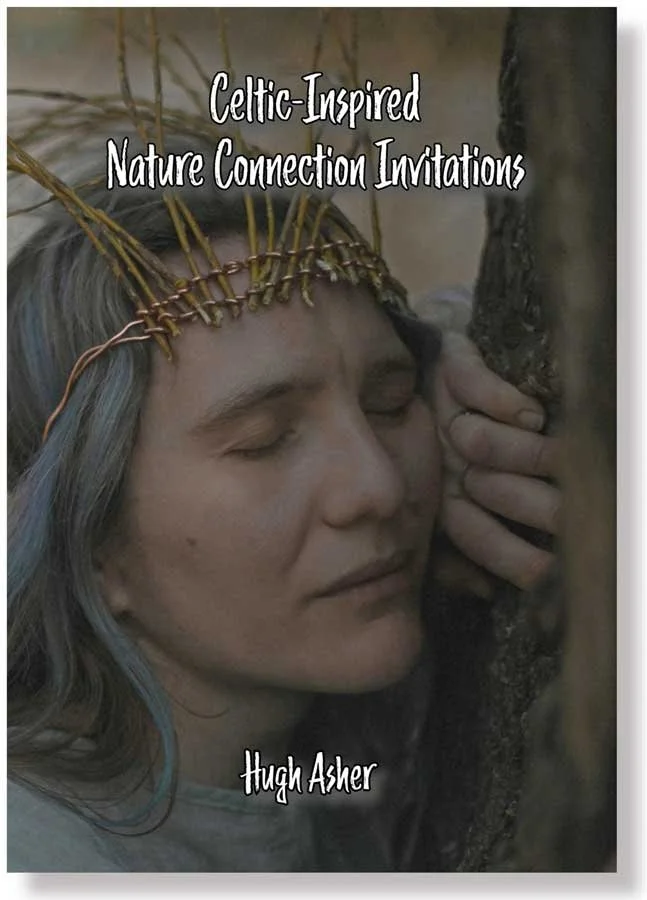
A beautiful journal for deepening your relationship with nature.
Designed by Forest Healing, this A5 journal provides 28 opportunities to reflect on your nature connection experiences through writing, drawing, and guided reflection. Record what you notice in nature, what you notice in yourself, and the insights that emerge along the way. With inspiring quotations, high-quality uncoated pages, and a luxurious velvet-laminated cover, it is the perfect companion for Forest Bathing, Sit Spots, mindful walks, and everyday moments of connection with the natural world.
P&P is FREE within the UK.
Postage to the Rest of the World is £4.
The more time we spend paying attention to the natural world, the more we begin to notice. A familiar tree that changes through the seasons. The return of birdsong after Winter. The scent of rain on the earth. The subtle shifts in our own thoughts, feelings, and wellbeing when we slow down and take time to connect.
This Nature Connection Journal has been created as a companion for your nature connection journey, helping you to capture experiences, deepen your reflections, and develop a richer relationship with the natural world around you.
Each spread combines a page for writing, sketching, or creative expression with a structured reflection page that invites you to consider what you noticed in nature, what you noticed in yourself, and what you learned from the experience. The journal also includes inspiring quotations that encourage curiosity, mindfulness, and deeper engagement with the living world.
Whether you use it after a Forest Bathing session, a mindful walk, time spent at your sit spot, or simply a few minutes in a local park or garden, the journal helps transform fleeting moments of connection into lasting memories and meaningful insights.
Over time, your journal becomes more than a record of places visited and things observed. It becomes a record of your own journey; a reflection of how your relationship with nature evolves and how nature, in turn, influences your wellbeing, perspective, and sense of belonging.
With high-quality uncoated pages suitable for writing and drawing, and a beautifully soft velvet-laminated cover that feels as inviting as the experiences it contains, this is a journal designed to accompany you into woods, parks, gardens, and wild places for years to come.
Begin where you are. Notice what is around you. Record what matters. Allow nature to tell its story alongside your own.
The simplest invitation is also often the best — just slow down and breathe. Smell is easy to miss when we are rushing. To notice it, we usually need to soften the pace enough for the nose to become curious. On a walk, it can help to pause for a moment and ask: What is here in the air? Is it damp, sweet, green, spicy, resinous, earthy, or clean? Does it remind me of anything? Does it feel close, distant, sharp, or gentle? These questions are not tests. They are openings.
It can also help to notice that smell often shifts with weather. Rain intensifies earthiness. Warmth can release pine and blossom. Frost can sharpen the air and reduce stronger scents. Wind can carry smell in waves. Stillness can make odours feel closer and more intimate. Once we begin noticing this, smell becomes a way of reading the weather and the season through the body.
For some people, a useful practice is to keep a scent journal. Not a technical one, just a simple record of what was smelled, where it was encountered, and what memory or feeling it stirred. Over time, this can reveal the personal smell-map of a life: the scents that soothe, the scents that energise, the scents that bring back family, home, holidays, grief, or joy. Because smell is so tied to memory, such a journal can become a gentle archive of belonging.
Another helpful approach is to let scent guide us to the present moment. If the mind is busy, the nose can provide an anchor. Noticing the smell of damp bark, wild garlic, rain, sea air, compost, or crushed leaves can bring us back from abstraction into immediate experience. That is part of what makes smell so valuable in mindfulness and recovery work — it returns us to the living now.
Final Thoughts - A Quieter, Wiser Way of Being
In the end, the importance of smells is not only scientific. It is relational. Smell teaches us that the world is not distant from us. It enters us. It changes us. It awakens memory, softens stress, connects us to seasons, and helps us feel the difference between harshness and ease. The woodland research shows that smells in nature are linked with physical, emotional, cognitive, spiritual, and global wellbeing. That is a profound finding for such an easily overlooked sense.
There is a tenderness in that. A leaf can become a memory. A breath can become a reassurance. A forest path can become a bridge between the present self and the self that once ran through fields, gardens, shorelines, and woodlands without needing to name what was happening. Smell has a way of bypassing the overthinking mind and going straight to the deeper layers of experience. It can remind us that healing is often sensory before it is verbal.
Perhaps that is why nature smells feel so important. They do not shout. They do not demand. They arrive softly, and yet they can stay with us for years. They can calm us, awaken us, and return us to ourselves. In a noisy world, scent offers a quieter wisdom: breathe in, notice, remember, belong.
Nature Connection Invitation - Following Your Nose
Next time you are outside, give your eyes a rest and let your nose lead the way.
Find somewhere you can pause for a few minutes. Close your eyes, take a slow breath, and simply notice what you can smell. Perhaps there is damp earth beneath your feet, the resinous scent of pine, crushed leaves, flowers, grass, rain, woodsmoke or the fresh, almost scentless quality of cold air.
There is no need to identify everything. Instead, notice what each scent evokes. Does it bring a memory, a feeling, a place or a person to mind? Does one smell make you feel calmer, happier or more grounded? Does another make you curious?
Then spend a few moments wondering what your nose is telling you about this place. What is growing here? What is decaying? What has happened recently in the weather? What season does this landscape smell like?
Before you leave, take one final slow breath and simply appreciate the extraordinary fact that this living landscape is not only something you can see. You can breathe it in.




















If you have enjoyed this article and would like to support what we do by donating £2 or more to buy saplings to plant,
please follow the link below:




When therapeutic interactions move outside of the ‘consulting room’ and into nature, something interesting seems to happen. Nature can create a shared space where we walk alongside one another, notice the world together, and sometimes discover that healing becomes less about what one person does to another and more about how two people can explore things together.