

Saturday 21st November 2026
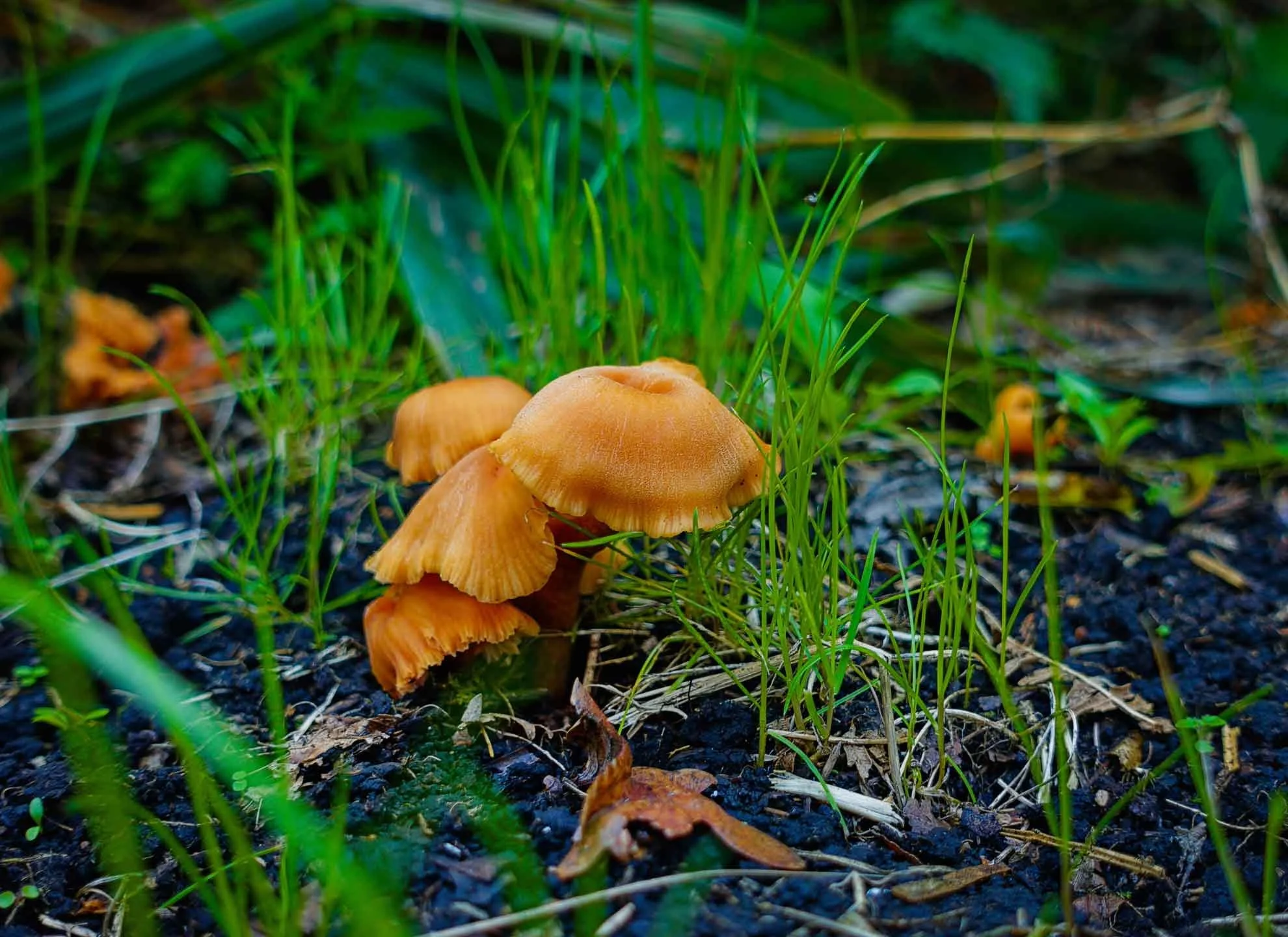
Picture this. You are walking through a forest landscape that has recently experienced a devastating wildfire. The familiar sights and sounds of woodland have been replaced by an altogether different environment. The ground is blackened, tree trunks stand charred and lifeless, and the once-green forest floor has become a mixture of ash, charcoal and scorched vegetation. The air carries the lingering smell of smoke, and the landscape feels strangely quiet. Yet amongst this apparent devastation, something unexpected catches your eye. Almost glowing against the dark earth is a small patch of intensely bright orange. On closer inspection, you discover that it is a fungus — a remarkable little organism that turns out to have an extraordinary relationship with fire. Far from being an unfortunate casualty of the wildfire, this fungus belongs to a fascinating group known as pyrophilous fungi, also known as fire-loving or burn-loving fungi. These organisms have evolved remarkable ways of responding to fire, and some of them actually thrive in the conditions left behind.
Their appearance is more than a curious biological phenomenon. These fungi can play an important role in the earliest stages of ecosystem recovery, helping to stabilise burnt soils, recycle nutrients and create conditions that allow other organisms to return. It is a wonderful example of nature's capacity to respond to disturbance, and a reminder that the recovery of an ecosystem often begins long before we notice the first green shoots.
I have recently witnessed something of this remarkable process, following the devastating wildfire that swept through parts of Glenmore Forest Park near Aviemore in the Scottish Highlands during the Summer of 2026.
The wildfire began on 15th July near Ryvoan Bothy and Glenmore, eventually affecting approximately 25 square kilometres of the surrounding landscape. Hundreds of firefighters and numerous partner organisations were involved in the response, which continued for weeks as crews tackled deep-seated hotspots and the threat of further ignition.
For anyone who knows and loves the Cairngorms, the damage was deeply saddening. Glenmore is a special landscape, home to some of Scotland's most important remnants of ancient Caledonian pinewood, alongside an extraordinary diversity of wildlife and plant life. However, amongst the blackened trees and scorched ground, nature is already beginning to respond. In August, Forestry and Land Scotland reported the discovery of brightly coloured pyrophilous fungi within the affected areas. These remarkable organisms were amongst the first signs of life returning to the burnt landscape, prompting Dave Clarke, Forestry and Land Scotland's Senior Programme Manager, to describe them as nature's own "Category 1 responders" to wildfire recovery. It is an evocative description, and one that captures something rather wonderful about these often-overlooked organisms. Before the familiar green shoots appear, before young trees begin to establish themselves and before the woodland floor starts to resemble a forest again, these little fungi are already getting to work.
To understand better why this matters so much, we need to explore the fascinating world of fire-loving fungi.
What Are Pyrophilous Fungi?
The word pyrophilous comes from the Greek words pyr, meaning fire, and philos, meaning loving or having an affinity for something. It is a wonderfully descriptive name for a group of fungi that have developed an association with burnt environments. Sometimes referred to as carbonicolous fungi, these organisms are particularly associated with charcoal, scorched wood and soil that has been affected by fire. Unlike many organisms that are damaged or destroyed by wildfire, pyrophilous fungi are often among the earliest colonisers of the resulting landscape. Some species can begin appearing within a matter of weeks, taking advantage of the unusual environmental conditions created by burning.
They are not a single species or even a closely related group of fungi. Rather, the term describes an ecological grouping of different fungi that share an affinity for fire-affected environments.
Some of the better-known examples include:
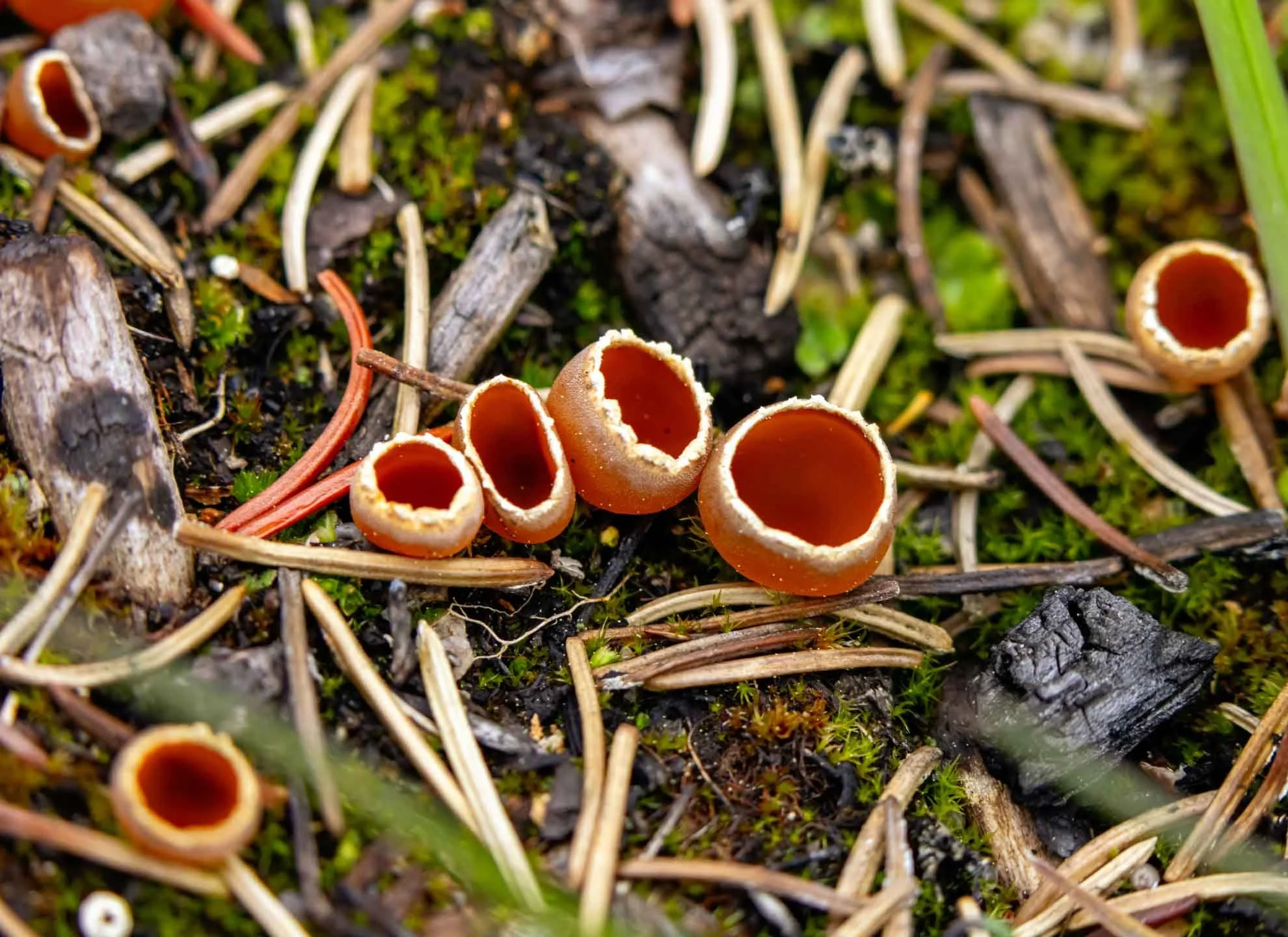
Geopyxis carbonaria
Pyronema omphalodes, a spectacularly bright orange fungus that can form dense, cushion-like clusters on burnt ground.
Pyronema domesticum, another orange-coloured species frequently associated with charcoal and fire sites.
Geopyxis carbonaria, commonly known as the charcoal-loving fairy cup, which produces small, cup-shaped fruiting bodies.
Anthracobia melaloma, sometimes known as the charcoal eyelash fungus, which appears in dense groups on burnt soil.
Certain species of Morchella, the morels, which can produce impressive fruitings following wildfires.
These species differ in appearance and biology, but they share an ability to respond positively to environments that have been transformed by fire. One particularly fascinating feature is that many fire-loving fungi are capable of producing their fruiting bodies in considerable abundance. What might initially appear to be a small patch of orange growth can sometimes develop into extensive colonies covering large areas of burnt ground.
The most important thing to understand, however, is that the colourful structures we see above ground are only a small part of the organism.
The Hidden World Beneath the Orange Fruiting Bodies
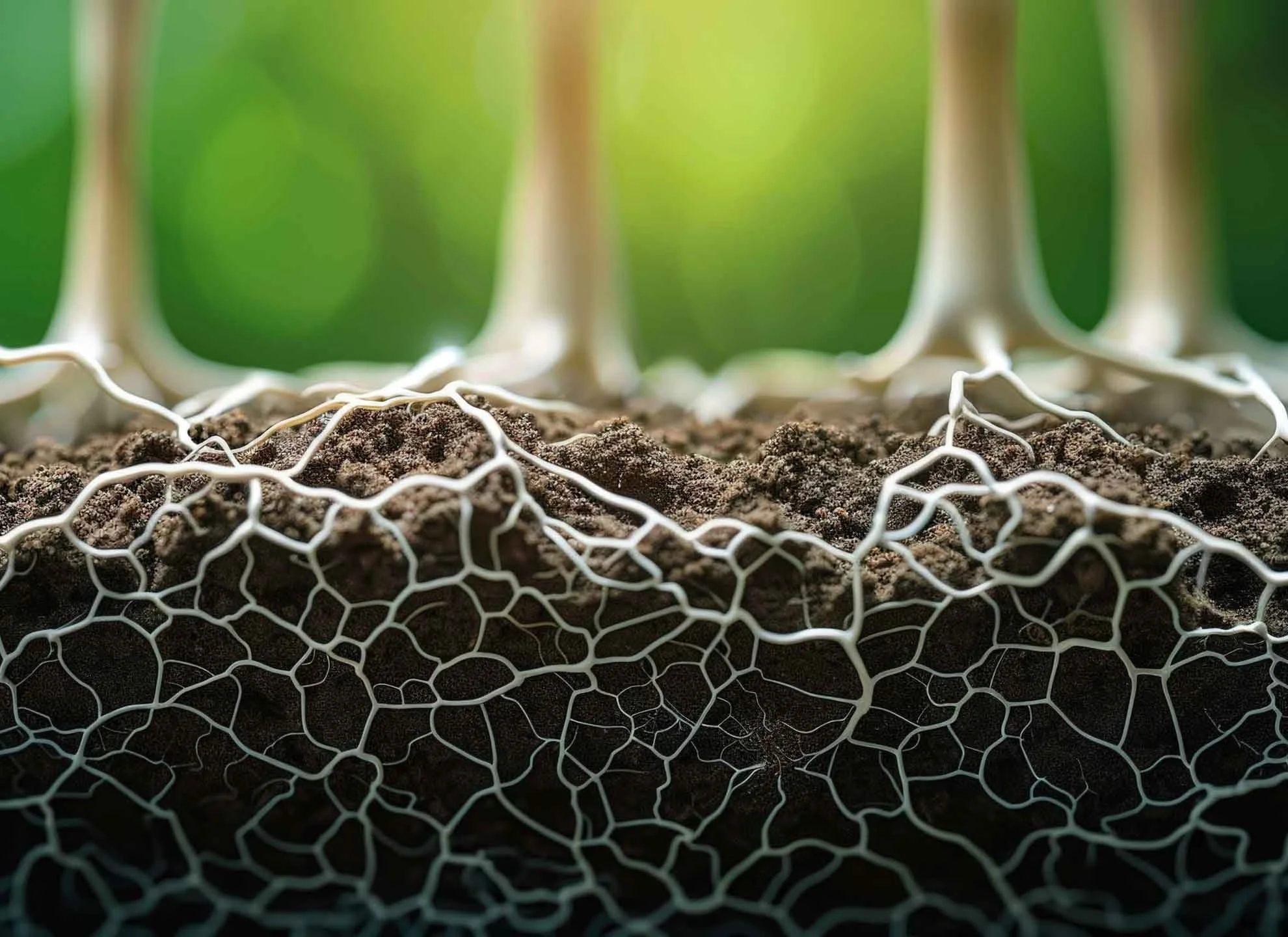
When we see a mushroom growing in woodland, it is easy to think of the mushroom itself as the organism. In reality, the visible structure is usually just the reproductive part of a much larger fungal network. The main body of most fungi consists of microscopic threads called hyphae. These grow through the soil, leaf litter, decaying wood and other organic materials, forming an intricate network known as mycelium. The mycelium is responsible for absorbing nutrients, breaking down organic material and interacting with the wider environment. It can extend through considerable areas of soil, often remaining largely invisible to us.
The brightly coloured structures produced by many pyrophilous fungi are known as fruiting bodies. Their purpose is reproduction — producing and releasing spores that can disperse and potentially establish new fungal growth elsewhere. In the case of Pyronema omphalodes, the fruiting bodies can appear as masses of tiny orange, irregularly shaped cushions or discs. They are often described as looking like little blobs of orange peel scattered across blackened soil and charred wood.
There is something rather extraordinary about this contrast. The bright orange growth appears almost luminous against the dark background, resembling the last glowing embers of a fire. Indeed, the association between these fungi and fire has been recognised for almost two centuries. In 1834, the German naturalist Carl Gustav Carus and his daughter Mariane encountered unusual orange growth on burnt wood and charred earth during a woodland walk. Carus subsequently studied the fungus and described its striking appearance, naming it Pyronema marianum in honour of his daughter. The name reflected its association with fire and its remarkable resemblance to glowing embers. The organism is now known as Pyronema omphalodes, and the encounter is often regarded as one of the earliest scientific accounts of pyrophilous fungi. Anna Marija Helt recounts this fascinating history in her article, The Vital Near-Magic of Fire-Eating Fungi, which provides an engaging introduction to the increasingly important field of research into fire-loving fungi.
But how do these organisms manage to appear in such abundance following an event that destroys so much other life?
How Do Fungi Survive Fire?
One of the most fascinating aspects of pyrophilous fungi is their ability to respond to an environment that has become extremely hostile to many other organisms. Fire can dramatically transform the biological and chemical properties of soil. It can destroy vegetation, reduce microbial populations, alter nutrient availability and leave behind layers of ash, charcoal and other products of combustion. For many fungi, these changes represent a serious challenge. However, certain pyrophilous species have evolved ways of exploiting the conditions that follow burning.
There are several possible explanations for how they establish themselves.
Dormant Life Waiting Beneath the Surface
Some fire-loving fungi may already be present in the soil before a fire occurs, surviving in dormant or relatively inactive forms. For example, Pyronema can produce specialised structures known as sclerotia. These are compact masses of fungal tissue that can survive unfavourable environmental conditions and remain dormant until conditions become suitable for renewed growth.
Some fungal spores are also remarkably resistant to heat.
The important distinction is that not every part of the soil experiences the same temperatures during a fire. While the surface may be exposed to intense heat, conditions beneath the ground can be considerably different. Some dormant fungal structures may therefore survive in places where other organisms have been destroyed. Following the fire, changes in temperature, soil chemistry and the availability of suitable nutrients can provide the signals needed for dormant fungi to become active. It is almost as though they have been waiting for the opportunity!
Arriving From Surrounding Areas
Not every fire-loving fungus necessarily survives the fire at the site where it subsequently appears. Some species may colonise burnt areas from nearby unburnt woodland, carried by wind, water or other natural processes. Spores are particularly well suited to dispersal. They are microscopic and can travel considerable distances, potentially finding suitable conditions in newly burnt environments. Research has even explored the possibility that some fungal spores might be carried in smoke generated by the fire itself. Other fungi have much more complex relationships with plants. Certain species can live within living plant tissues, sometimes remaining largely undetected until the plant is damaged by fire. Following the fire, they may become established in the surrounding soil and produce fruiting bodies.
These different strategies demonstrate just how varied the relationships between fungi and fire can be. They also help explain why pyrophilous fungi can appear so quickly after a wildfire. In some cases, the organisms may have been present all along, simply waiting for the right conditions. In others, they may arrive from the surrounding landscape.
A Succession of Fungal Pioneers
Another fascinating feature is that different species of pyrophilous fungi can appear at different stages following a fire. Some arrive relatively quickly, while others become more prominent over subsequent months or even years. This means that the recovery of the fungal community is itself a process of ecological succession, with different organisms taking advantage of changing environmental conditions. The appearance of one species may be followed by another as the availability of nutrients, moisture and suitable substrates changes. This succession is part of a much wider ecological process in which fungi, bacteria, plants and animals gradually recolonise and reshape the environment.
What initially appears to be a lifeless landscape is, in reality, a place where complex biological processes are already underway.
Why Are Fire-Loving Fungi So Important for Forest Recovery?
The appearance of pyrophilous fungi following a wildfire is fascinating in its own right, but their potential importance extends much further than their ability to survive and reproduce in burnt environments. Researchers are increasingly discovering that these fungi may play an important role in preparing damaged ecosystems for recovery. In particular, their activities can help restore some of the ecological functions that have been disrupted by fire.
Three areas are especially interesting — soil stabilisation, nutrient recycling and the creation of conditions that support plant regeneration.
1. Helping to hold the soil together
One of the major problems following an intense wildfire is the vulnerability of the soil. Under normal woodland conditions, soil is protected by vegetation, leaf litter, roots, microorganisms and an extensive network of fungal mycelium. Together, these help maintain soil structure, regulate moisture and reduce the risk of erosion.
A wildfire can remove much of this protection.
The destruction of vegetation exposes the ground to rainfall and wind. Ash and fine particles can be washed away, while changes to soil chemistry may make some burnt soils less able to absorb water. In certain circumstances, burning can also produce water-repellent compounds that make it more difficult for moisture to infiltrate the soil. This can increase the risk of surface runoff, erosion and the loss of valuable nutrients.
And this is where pyrophilous fungi become particularly interesting. As their mycelium spreads through burnt soil, it forms an extensive network of microscopic threads. These threads can become intertwined with individual soil particles, helping to bind them together. Rather than simply occupying the burnt ground, the fungi may actually help stabilise it.
This was the subject of an important research paper published in the journal Forest Ecology and Management in 2021. In their study, Olivia Filialuna and Cathy Cripps investigated whether three species of pyrophilous fungi could help aggregate and stabilise soil following forest fire.
The species they examined were:
Geopyxis carbonaria
Pyronema omphalodes
Morchella septimelata
The researchers isolated the fungi from burnt environments, cultivated them in laboratory conditions and introduced them into sterilised soil obtained from a natural burn site. They then assessed the soil's ability to remain aggregated over a period of 40 days, comparing the results with soil samples that had not received fungal inoculation.
The results were remarkable.
All three fungal species increased soil aggregation, with improvements becoming evident within just ten days. The effect was maintained throughout the experimental period, and the researchers found that soil could become up to 30% more aggregated in the presence of the fungi. This was the first direct experimental evidence that pyrophilous fungi could help aggregate burnt soil, and the implications are significant. By helping bind soil particles together, these fungal networks may reduce erosion and improve the soil's ability to retain moisture. They could therefore help protect the ground during the vulnerable period between the destruction of the original vegetation and the establishment of new plants.
It is important to recognise that this research was conducted using laboratory experiments rather than direct measurements of soil recovery in a natural woodland. Nevertheless, it provides compelling evidence for an ecological function that may be extremely important in the early stages of forest regeneration.
For more information, see Filialuna and Cripps (2021), Evidence that pyrophilous fungi aggregate soil after forest fire.
2. Breaking down charcoal and returning nutrients
Another important aspect of fungal activity is their ability to decompose organic material.
Fungi are among the natural world's most important decomposers. They produce enzymes that break down complex organic compounds, allowing nutrients and other substances to be recycled within ecosystems. Following a wildfire, the environment contains considerable amounts of material that has been chemically transformed by combustion. This includes charcoal and other forms of pyrogenic carbon, as well as partially burnt vegetation and organic debris.
Some of these materials can be difficult for many organisms to use. However, certain pyrophilous fungi have evolved the ability to exploit them. Research discussed by Helt in her JSTOR Daily article highlights the ability of Pyronema to consume charcoal and break down some of the carbon-rich material left behind by fire. This is particularly interesting because charcoal is often thought of as a relatively inert substance. Yet, although some forms of charcoal can persist in soils for very long periods, certain fungi are capable of breaking down components of this material. Through their metabolic activity, fungi can help make previously inaccessible substances available for further biological processes. They may also help capture nutrients released following fire, including nitrogen that becomes temporarily available in the soil.
Another intriguing possibility is that the fungi themselves become an important source of nutrients.
As they grow, fungal networks accumulate biomass. When these organisms eventually die and decompose, their remains contribute organic matter to the soil. This material is sometimes described as fungal necromass. In this way, the growth and eventual decomposition of early fungal colonisers may help feed subsequent generations of microorganisms and support the continuing recovery of the ecosystem. This is a wonderful example of how life and death are interconnected within the natural world, where even the organisms that arrive to exploit the aftermath of destruction can eventually become a resource for the next generation of life.
3. Preparing the ground for plants to return
The ultimate significance of these processes is that they may help create conditions in which plants can begin to re-establish themselves.
The return of vegetation after wildfire is influenced by many factors, including fire intensity, soil condition, moisture availability, seed survival and the presence of surviving roots. But plants cannot simply return without suitable growing conditions. The soil needs to provide an environment in which seeds can germinate, roots can establish and young plants can access the nutrients and moisture they require.
By helping to stabilise the soil, recycle nutrients and support microbial activity, pyrophilous fungi may contribute to the creation of these conditions. Their role is perhaps best understood as an early stage in ecological succession. Initially, the burnt landscape may be dominated by organisms that can tolerate or exploit the conditions created by fire. Over time, as the environment becomes more suitable, other groups of organisms begin to establish themselves. Grasses and other herbaceous plants may appear, followed by shrubs, young trees and an increasingly diverse range of organisms.
The precise sequence varies considerably between ecosystems and depends on the nature and severity of the fire. Nevertheless, the underlying process is one of gradual ecological reorganisation. The fungi are not rebuilding the forest themselves. Rather, they are participating in the biological processes that help make further recovery possible.
This is an important distinction, but it makes their contribution no less remarkable.
A Landscape Beginning to Breathe Again: Glenmore After the Fire
The appearance of pyrophilous fungi at Glenmore provides a wonderful opportunity to consider these ecological processes in a real landscape. When Forestry and Land Scotland reported their discovery in August 2026, they highlighted the importance of these organisms as early colonisers of burnt ground. The fungi were already helping to prepare the way for further regeneration, with some grasses beginning to reappear, and Dave Clarke's description of them as nature's own Category 1 responders is particularly memorable.
We often associate recovery following a disaster with visible signs of life — a green shoot emerging from the earth, a young tree beginning to grow or the return of birds and other wildlife. But recovery often begins much earlier, in processes that are largely invisible to us. Beneath the surface, microorganisms are responding to changes in their environment. Fungal networks are developing, organic material is being broken down and nutrients are being recycled. The visible appearance of a bright orange fungus is simply one of the ways in which this hidden activity becomes apparent. By October, Forestry and Land Scotland was reporting further encouraging signs of regeneration at Glenmore. Birch, Rowan and Willow were resprouting from surviving stems and root systems. Grasses, bracken and blaeberries were returning, particularly in areas where soil moisture had been retained and the fire had been less intense. Wildlife was also being recorded in the affected areas, including deer and capercaillie.
The first tree seedlings had already been found in burnt areas, and foresters were hopeful that further natural regeneration of Scots Pine and Birch would occur over the coming years. These are encouraging developments, however, it is important not to mistake the return of some vegetation for the complete recovery of the forest. Forestry and Land Scotland has also highlighted significant concerns about the long-term impact on Glenmore's iconic Scots Pine. Some of the oldest trees, often affectionately described as "granny pines", were more than 200 years old, and their loss would represent more than the disappearance of individual trees. They are important seed sources as well as providing habitats for a range of wildlife, including capercaillie, and where these veteran trees are lost, it could take centuries for trees of comparable stature to return. Some areas also experienced damage to the organic layer of the soil, presenting additional challenges for recovery.
This reminds us that ecological regeneration is not necessarily a straightforward return to what existed before. Ecosystems can recover some of their functions relatively quickly while other components take decades or centuries to re-establish. The bright orange fungi are therefore not a guarantee that Glenmore will soon look as it did before the fire. Rather, they are one encouraging indication that nature's processes of recovery are already underway.
The Wider Importance of Fungi in Ecosystem Resilience
The discovery of fire-loving fungi at Glenmore also raises some interesting questions about the wider importance of fungi in maintaining healthy ecosystems.
For a long time, fungi received considerably less attention than plants and animals in discussions of biodiversity and ecosystem functioning.
Yet, as our understanding of soil ecology and fungal biology has developed, it has become increasingly clear that fungi are fundamental to the functioning of terrestrial ecosystems.
They decompose organic material, facilitate nutrient cycling, interact with plant roots and contribute to the physical structure of soils.
Many plants also depend on relationships with mycorrhizal fungi.
These fungi form associations with plant roots, helping plants access water and mineral nutrients in exchange for carbon compounds produced through photosynthesis.
These relationships are especially important in woodland environments, where the health of trees and the wider soil community are closely interconnected.
Wildfire can have a significant impact on mycorrhizal communities, particularly when soil temperatures become sufficiently high to destroy fungal networks and spores.
The recovery of woodland therefore involves more than the re-establishment of trees and other visible vegetation. It also requires the gradual rebuilding of the intricate relationships between plants, fungi and other soil organisms.
Some fire-loving fungi may help provide an important bridge between the immediate aftermath of fire and the later re-establishment of these more complex ecological relationships.
Research into pyrophilous fungi is still developing, but this is an increasingly interesting area of study.
The work of Filialuna and Cripps is particularly valuable because it provides experimental evidence of a function that had previously been suggested largely through observation.
Other researchers are investigating the ways in which fire changes fungal communities, how these organisms respond to different levels of fire intensity and the mechanisms that allow particular species to colonise burnt landscapes.
There is still much to discover.
Is Fire Always Destructive?
The emergence of fire-loving fungi also invites us to reflect on our wider understanding of fire in the natural world.
We naturally associate wildfires with destruction, and for good reason. They can devastate habitats, threaten wildlife, release large amounts of stored carbon and cause extensive damage to ecosystems and communities.
The Glenmore wildfire was a stark reminder of the potential consequences of large, uncontrolled fires.
However, fire has also been an ecological influence in many landscapes throughout the world for thousands of years.
Certain woodland and grassland ecosystems have developed alongside periodic fire. Some plants possess adaptations that allow them to survive burning, while others depend on fire-related changes in their environment to stimulate seed release or germination.
There is also a long history of Indigenous and traditional land-management practices in different parts of the world that use carefully managed burning to maintain habitats and support ecological diversity.
Yet it is important to distinguish these ecological relationships from increasingly severe wildfires driven by dry conditions, accumulated vegetation and changing climatic patterns.
Not all fire is beneficial, and not all ecosystems are adapted to withstand intense burning.
In particular, the destruction of deep organic soil layers, the loss of mature trees and the damage to important habitats can have consequences that last for generations.
The presence of pyrophilous fungi does not somehow make a devastating wildfire desirable or necessary.
Instead, their importance lies in demonstrating that even in a severely disturbed environment, some biological processes can continue and may help other organisms to return.
They are part of nature's response to disturbance, rather than evidence that the disturbance itself was beneficial.
What Can These Little Fungi Teach Us About Recovery?
There is something rather beautiful about the ecological story of pyrophilous fungi.
We tend to notice the obvious signs of life around us. We recognise the beauty of a tree in full leaf, the appearance of spring flowers or the return of birdsong after a long winter.
But the natural world is full of processes that take place beyond our immediate awareness.
The fungal networks spreading through the soil, the microscopic organisms breaking down organic material and the gradual rebuilding of relationships between plants and soil organisms are all essential parts of the living world.
The bright orange fungi appearing at Glenmore provide a glimpse into this hidden activity.
They remind us that recovery is not always immediately visible, nor does it necessarily begin with the organisms we might expect.
Sometimes it begins with the smallest and least conspicuous forms of life.
There is also an interesting parallel here with our own experiences of recovery and renewal.
When we experience disruption, loss or difficult periods in our lives, we can sometimes struggle to recognise the early signs of change.
We may look for dramatic transformations or obvious improvements, overlooking the smaller processes that are already taking place beneath the surface.
Perhaps recovery begins with something as simple as finding a little more stability, reconnecting with something meaningful or allowing ourselves the time and space to begin again.
Like the natural world, our own recovery rarely follows a straight line.
There may be periods of growth, uncertainty, apparent inactivity and renewal. What is happening beneath the surface is not always immediately apparent, but that does not mean that nothing is happening.
Of course, human recovery and ecological recovery are not the same thing. But observing the natural world can offer us a different perspective on change, resilience and the importance of allowing processes to unfold in their own time.
The fungi at Glenmore offer a particularly striking reminder that even in places that appear profoundly damaged, life can begin to find a way forward.
A Nature Connection Invitation: Looking for Life in Unexpected Places
The next time you find yourself walking through woodland, take a little time to look more closely at the forest floor.
Rather than concentrating on the larger trees and more obvious features of the landscape, allow your attention to settle on the smaller details.
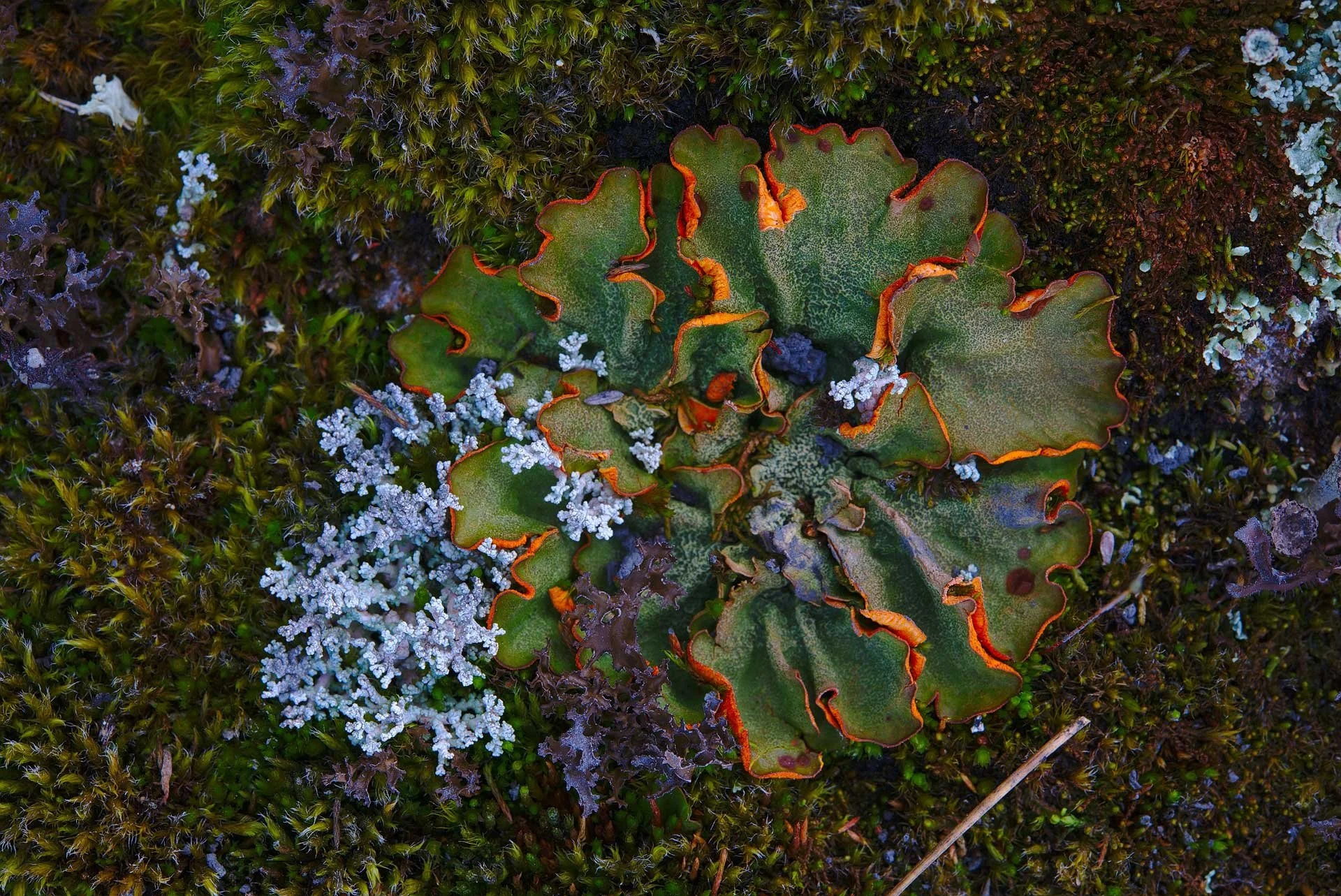
Look at the soil, the fallen branches, the mosses and the decaying leaves. Notice the different colours, textures and patterns. You may discover tiny fungi growing on a fallen log, delicate threads of mycelium beneath the leaf litter or the first signs of new plants emerging from last year's growth.
Think about the extraordinary amount of life that exists beyond what you can easily see.
Consider how the different organisms within the soil contribute to the health of the wider woodland. How might the fungi, bacteria, plants and other organisms be supporting one another?
You might also like to reflect on the idea of recovery. What does it mean for a woodland to recover from disturbance? Does recovery necessarily mean returning to exactly what existed before, or might it involve the emergence of something new?
Rather than searching for a particular answer, simply allow yourself to become curious.
And if you happen to encounter a burnt landscape, remember that it may be far more alive than it first appears. Observe from permitted paths and a safe distance, without disturbing the ground or touching fungi. Recently burnt areas can contain unstable trees, damaged roots and hidden hazards, so always respect access restrictions.
Sometimes the most wonderful discoveries come when we slow down, look a little closer and allow nature to surprise us.
Conclusion: The Remarkable Resilience of the Living World
The bright orange fire-loving fungi appearing amongst the scorched remains of Glenmore Forest Park are a wonderful reminder of nature's extraordinary complexity and resilience.
These small organisms, often overlooked in our appreciation of woodland ecosystems, are capable of responding to conditions that are extremely challenging for much of the natural world.
Their ability to colonise burnt ground, break down charcoal, recycle nutrients and help stabilise soil means they may play a surprisingly important role in the early stages of ecosystem recovery.
Research by Filialuna and Cripps has provided valuable experimental evidence of their ability to aggregate burnt soil, while ongoing work into post-fire fungal communities is revealing just how much we still have to learn about these remarkable organisms.
At Glenmore, their appearance was an early sign that nature's recovery processes were already underway, even while the landscape remained visibly damaged.
Since then, further signs of regeneration have emerged, from returning grasses and blaeberry to resprouting birch, rowan and willow. There are still significant challenges ahead, particularly for the ancient Scots pine woodland and the areas where fire has severely damaged the soil.
Recovery will take time, and some losses may be felt for centuries.
Yet there is something deeply encouraging about the sight of those little orange fungi emerging from the blackened earth.
They remind us that a forest is much more than the trees we see standing above the ground. It is an intricate community of organisms, relationships and processes, many of which remain hidden from our eyes.
And sometimes, the first signs of a forest finding its way back are not green leaves or new trees, but tiny orange fragments of life emerging from the ashes.
Perhaps we should pay a little more attention to the fungi beneath our feet. They have some remarkable stories to tell.
Nature Connection Invitation
Look a Little Closer — Finding Life in Unexpected Places
The next time you visit a woodland, take a few moments to slow down and turn your attention towards the forest floor. Rather than looking upwards at the trees, explore the smaller details of the landscape. Notice the fallen branches, decaying leaves, mosses, lichens and fungi growing amongst the undergrowth. Look for signs of new growth emerging from older vegetation, or the tiny organisms quietly breaking down what has fallen. How much life can you discover when you begin to look more closely? Consider how these often-overlooked organisms contribute to the health and renewal of the wider woodland.
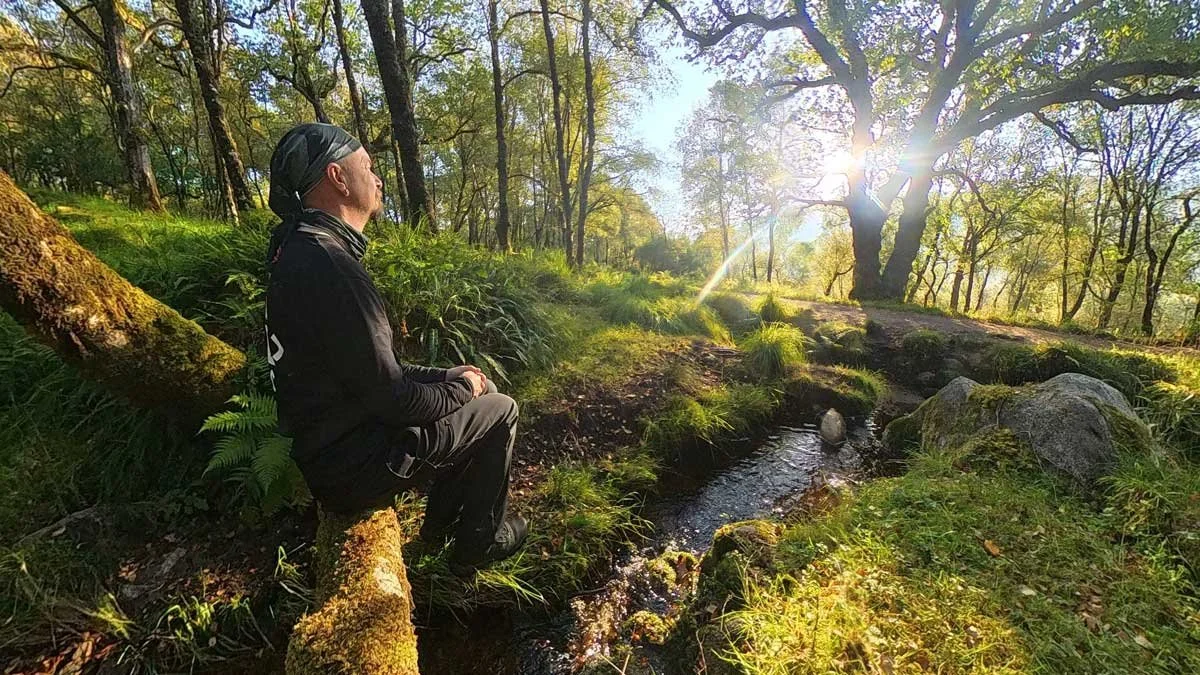
Now take a moment to reflect on the remarkable story of the fire-loving fungi. Some of nature's most fascinating forms of life are not only capable of surviving difficult conditions but can actually help create the foundations for new growth. As you sit quietly, consider the idea that recovery and renewal are not always immediately visible. Much of nature's work takes place beneath the surface, beyond our awareness. Is there something you can take from this observation and apply to your own life? Perhaps a reminder that change takes time, that small beginnings matter, and that even in places where life appears to have been lost, the possibility of renewal remains.
You don't need to find anything extraordinary. Simply being curious about the small, often unnoticed details of the natural world can be a wonderful way of deepening your connection with it. And please remember to admire fungi without picking or disturbing them.
You can download a PDF of this Nature Connection Invitation Here.
















If you have enjoyed this article and would like to support what we do by donating £2 or more to buy saplings to plant,
please follow the link below:





When therapeutic interactions move outside of the ‘consulting room’ and into nature, something interesting seems to happen. Nature can create a shared space where we walk alongside one another, notice the world together, and sometimes discover that healing becomes less about what one person does to another and more about how two people can explore things together.