

Deep Time
When Nature Connects Us Beyond Our Own Lifetimes
Tuesday 1st September 2026
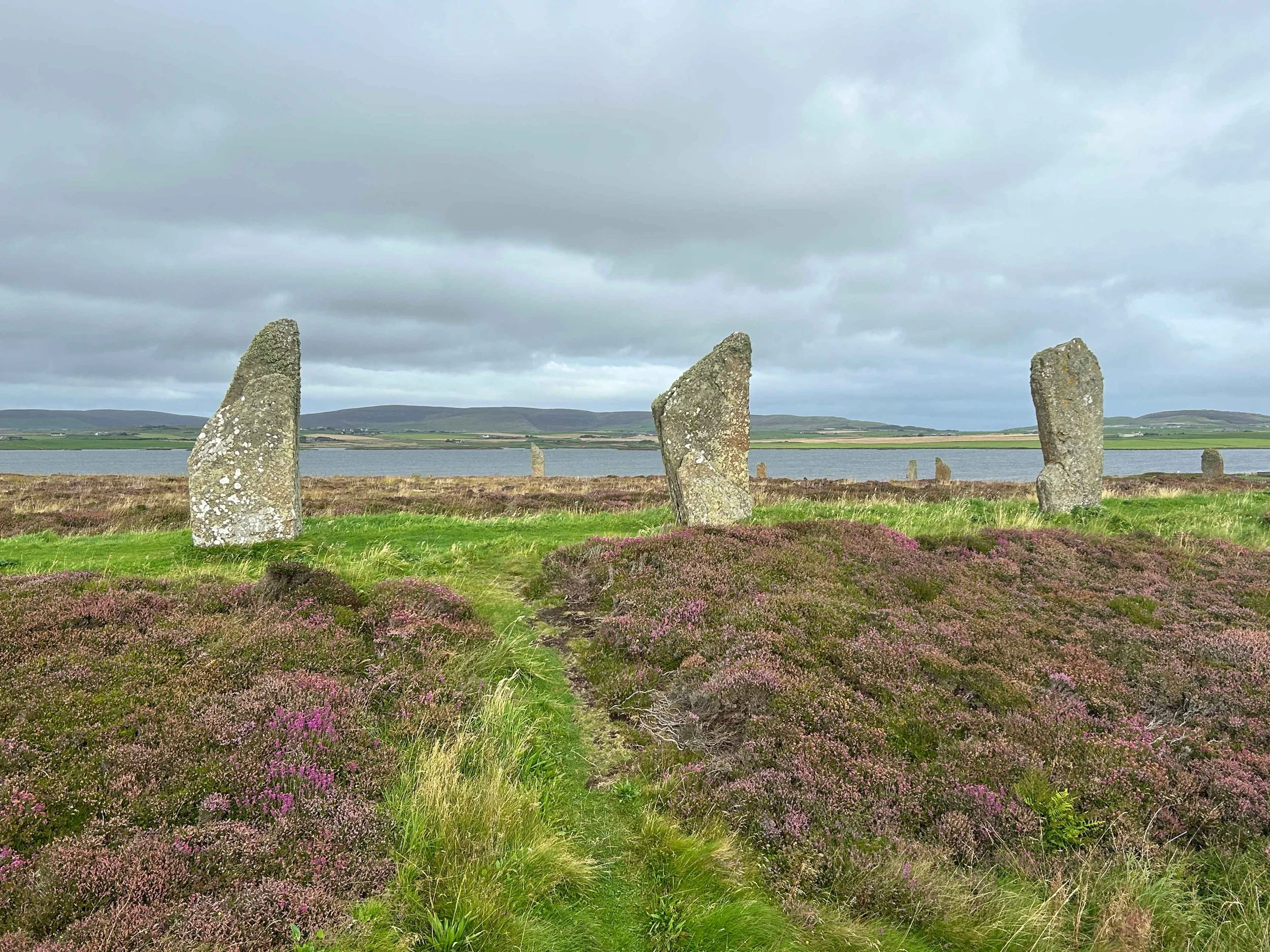
Whilst on holiday here, I am exploring what the landscapes and monuments of ancient Orkney can teach us about how our ancestors experienced their relationship with the living world.
Standing among the ancient stones of Orkney can produce a strange sensation. For a moment, the usual measure of time seems to fall away. We are accustomed to thinking about time in terms of hours, days and years. We remember birthdays, anniversaries and seasons. We think about what happened last week, what we might do next month, perhaps what we hope to achieve over the next few years.
But standing beside a Neolithic monument can stretch the imagination in a completely different direction.
Suddenly, fifty years seems very small.
A hundred years is barely a moment.
A thousand years feels strangely close.
And then the mind begins to struggle with something much larger — the possibility of standing in a place where people were living, working, raising families, observing the seasons and looking out across the same landscape thousands of years ago.
This is one of the gifts of what we might call ‘Deep Time’.
What is Deep Time?
Deep time is a way of thinking about time on a geological or evolutionary scale rather than within the relatively narrow boundaries of human history. A human lifetime is short. Even the entire span of recorded history is tiny compared with the age of the Earth, which is around 4.5 billion years. It is difficult for us to comprehend such timescales intellectually. We can understand the numbers, but understanding them emotionally is much harder.
Ancient landscapes can help to make Deep Time tangible.
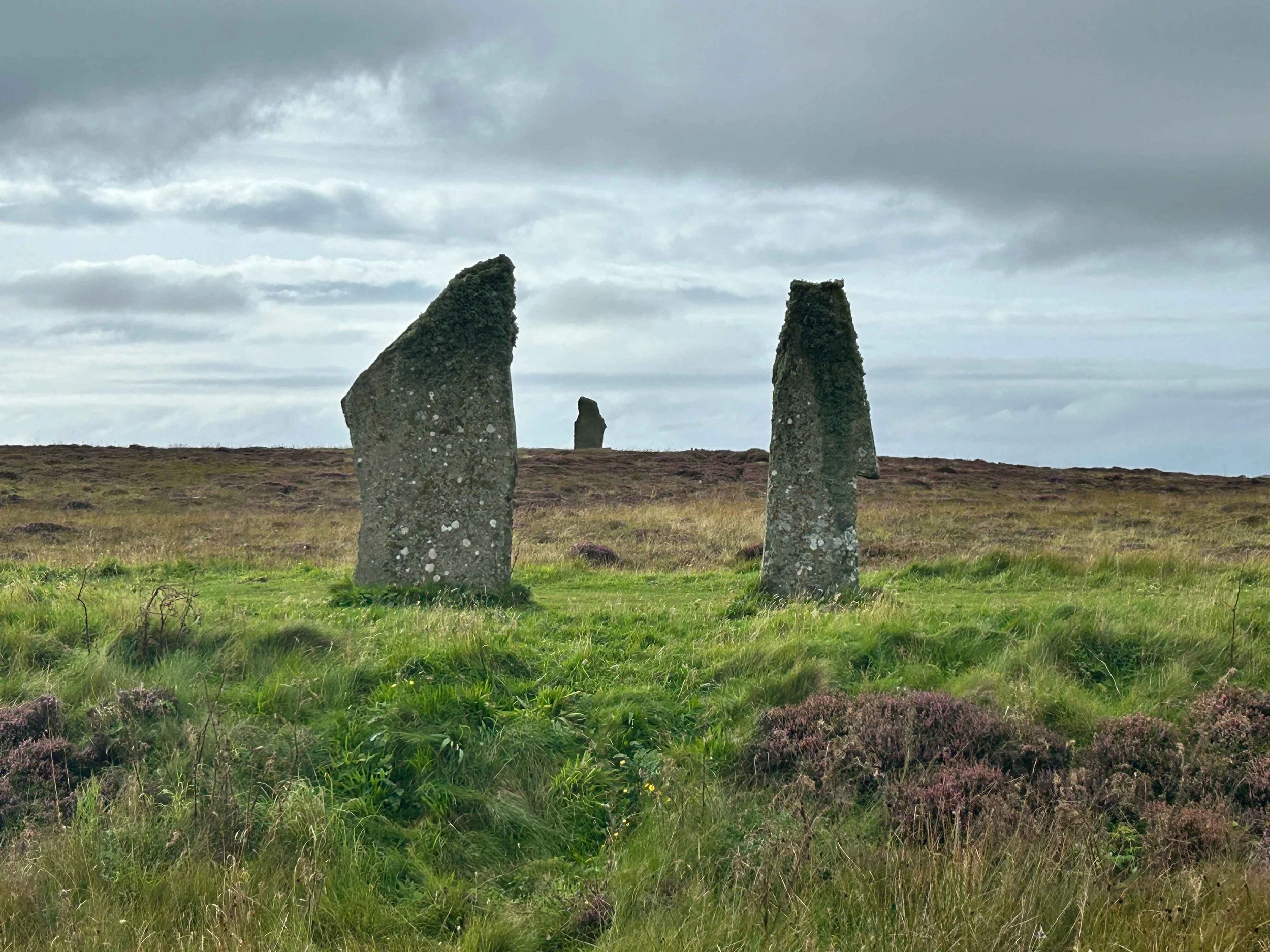
A standing stone is not merely an old stone. It is a physical point of contact between the present and an extraordinarily distant past. The people who placed it there are long gone.
Their homes may have disappeared.
Their voices are silent.
Their stories have largely been lost to us.
But the stone remains.
It has stood through countless Winters and Summers. Rain has fallen upon it, winds have passed around it, birds have perched on it, lichens have slowly colonised its surface and plants have grown beside it and died back again.
And now we stand beside it.
For a brief moment, our own lives become one more layer in the story of that place and the landscape is almost like a palimpsest — one story written over another without completely erasing what came before.
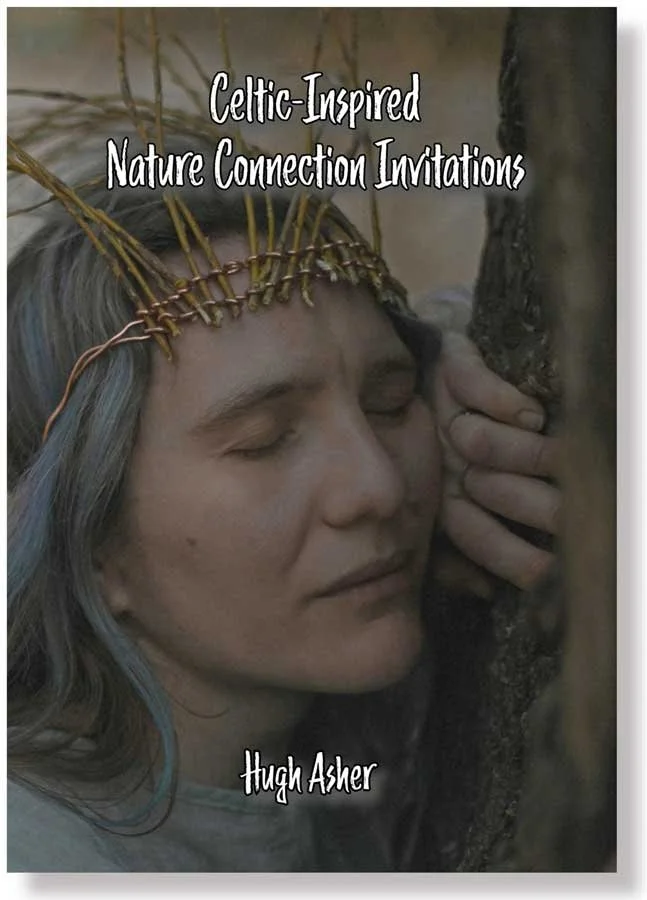
As the seasons change may we pause to meet the turning of the year with wonder.
Celtic-Inspired Nature Connection Ideas offers gentle, creative ways to deepen your relationship with the living world around you — through seasonal reflection, simple rituals, and nature-based practices inspired by Celtic tradition.
Whether you are looking for a meaningful gift, a companion for your own practice, or a way to mark the longest day with more intention, this book invites you to slow down, step outside, and listen.
Celebrate the light. Honour the land. Reconnect with the natural world.
This 40 page perfect-bound book is A5 in size and contains 16 Celtic-Inspired nature connection invitations including: Spiritually Engaging with a Tree; Becoming One with the Earth; The Cailleach’s Stone; Thin Places; Appeasing the Sídhe; and one for each of the four ‘Cross-Quarter’ days - Samhain, Imbolc, Beltane, and Lughnasadh.
There is also an overview of ‘The Celtic Calendar’ and how and why nature played such an important role in Celtic culture.
We are used to seeing nature as something in the present. Much of modern life encourages us to experience nature as something that exists now.
We go for a walk in the woods.
We notice the trees, birds and flowers.
We watch a sunset or listen to the sound of waves.
These are wonderful experiences of nature connection, and they can help us to become more attentive to the living world around us. But ancient landscapes offer another possibility. They encourage us to experience nature through time.
The tree in front of us is not just a tree we happen to be looking at today — it belongs to a longer story of germination, growth, decay and renewal.
The peat beneath our feet contains layers of plants that lived centuries ago.
The coastline has been shaped by tides and storms for generations.
The rocks beneath the landscape may have formed millions or even billions of years ago.
The soil contains the remains of countless generations of plants and animals.
Once we begin to see a landscape in this way, it becomes much harder to think of nature as merely scenery. We begin to encounter a world that is older, deeper and more enduring than our individual lives.
The Standing Stones Can Change Our Sense of Scale
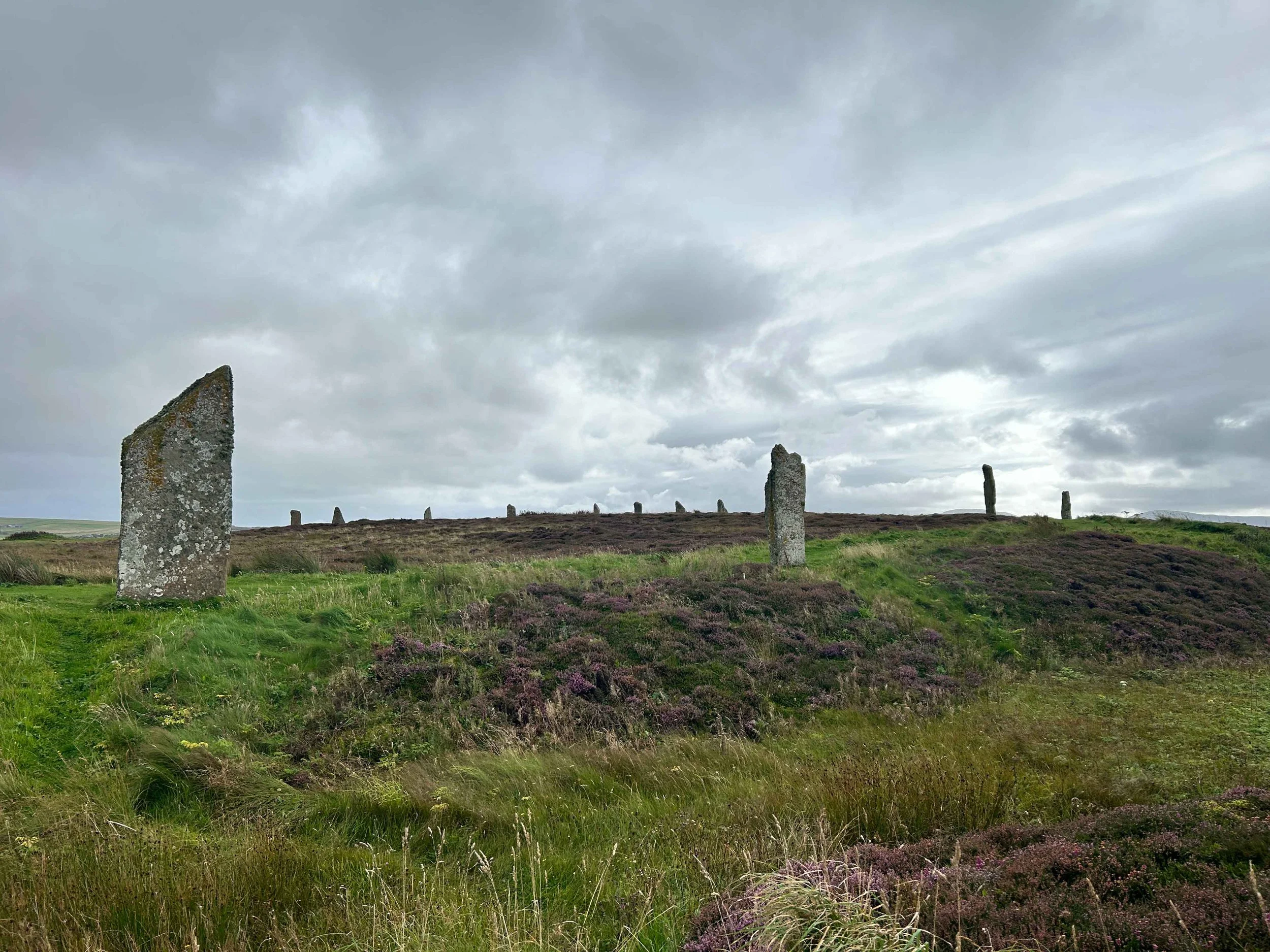
This may be one of the most powerful things about visiting places such as the Ring of Brodgar or the wider archaeological landscape of Orkney. We arrive as modern people carrying mobile phones, cameras, schedules and responsibilities. Our attention is often pulled towards the immediate and the urgent. Then we stand beside something that has been here for thousands of years. Our own concerns do not necessarily disappear, but they can begin to occupy a different place in our awareness.
A difficult day remains difficult.
An unanswered email remains unanswered.
The worries we carried with us do not magically vanish.
And yet, for a moment, they can become part of a much larger perspective.
The stone does not know about our deadlines.
The sea does not hurry.
The wind does not consult a calendar.
The landscape simply continues.
There can be something deeply calming about encountering that kind of continuity.
Deep Time Can Create Awe
This experience connects with another important aspect of nature connection — Awe. Awe often arises when we encounter something that is vast, powerful or difficult to comprehend. A mountain range, a night sky filled with stars or an immense ocean can all produce this response.
Ancient landscapes can do something similar.
The vastness is not only physical — it is temporal. We are confronted with a place that reaches beyond our ordinary experience of time. This can create a gentle sense that we are part of something much larger than ourselves. Importantly, this does not have to diminish us in a negative way. Instead, it can loosen the feeling that we have to hold the whole world on our shoulders.
Our lives matter.
Our relationships matter.
Our joys and difficulties matter.
But they are also part of something larger and there can be relief in remembering that.
Deep Time Can Deepen Our Sense of Belonging
There is another dimension to this experience that I find particularly interesting. We often talk about nature connection in terms of belonging.
We belong to a place.
We belong to an ecosystem.
We are part of the living world.
Deep time can extend that sense of belonging backwards and forwards. Standing in an ancient landscape, we become aware that we are not the first humans to experience this place.
Others have stood here before us.
They may have watched storms gather over the sea. They may have noticed the first signs of Spring. They may have listened to birdsong, felt the cold of winter or watched the moon rise above the horizon. We cannot know exactly what they thought or felt, but that uncertainty is important. It is tempting to project our own beliefs onto ancient people in this way, and imagine that they possessed some perfect or romantic understanding of nature, but we simply do not know enough to make such claims. All we can know is that they lived within a particular landscape and depended upon it in ways that were often far more immediate than our own. Their lives were shaped by weather, seasons, animals, plants, soil, stone and sea — and now, thousands of years later, we find ourselves standing in the same place.
The connection is not necessarily mystical.
It is simply human.
Thinking Beyond Our Own Lifetime
Deep time can also encourage us to think beyond our own lifespan. When we walk through a woodland, we might admire a magnificent old tree. But what will happen to that tree after we are gone?
What will grow where today's saplings stand?
What will the landscape look like fifty years from now?
A hundred years?
Five hundred yeard?
These questions can change the way we relate to nature. Instead of seeing ourselves simply as consumers of landscapes, we can begin to see ourselves as participants in an ongoing story. We inherit places from the generations before us. We care for them during our own brief time, and, ideally, we leave something healthy and flourishing for those who come after us.
This is one of the reason that Deep Time can have an ecological dimension.
When we become more aware of the enormous timescales of the living world, the idea that everything exists primarily for our immediate use can begin to feel strangely narrow.
We start to recognise that we are temporary inhabitants of a much older world.
A Simple Deep Time Nature Connection Practice
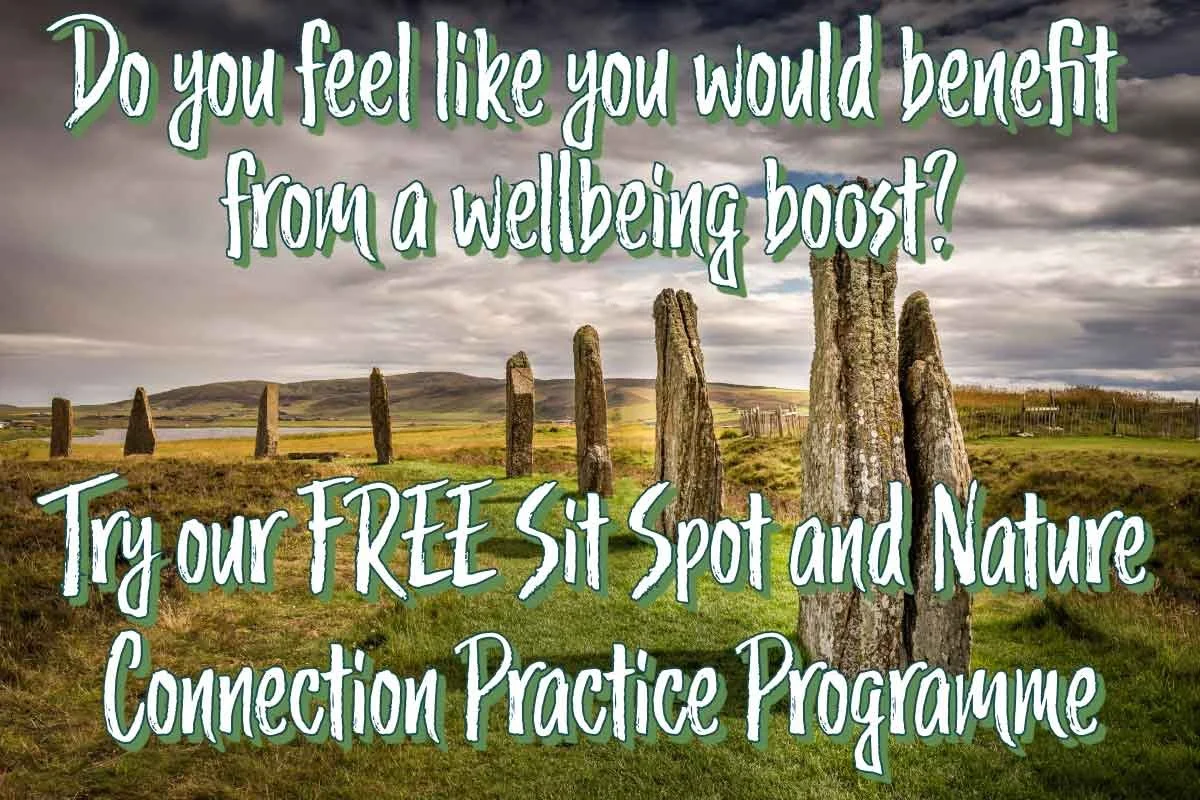
You do not need to visit an ancient monument to experience this. You can try it almost anywhere.
Find a place outdoors where you feel comfortable. A woodland, coastline, hillside, park or even a garden will do.
Begin by noticing what is present around you.
Listen to the sounds.
Feel the air on your skin.
Notice the ground beneath your feet.
Then allow your attention to move backwards through time.
Ask yourself “What was happening here fifty years ago?”
Then “What might have been here two hundred years ago?”
And “What might this landscape have been like a thousand years ago?”
You don't need to find the answers. Let the questions do the work. Then turn your attention forwards.
“What might this place look like fifty years from now?”
“What might still be here when I am gone?”
You may find that your experience of the place changes.
The trees become older than your own story.
The soil becomes a record.
The wind becomes part of something continuous.
The place becomes less like a backdrop and more like a living, changing participant in time.
Becoming Part of the Story
Perhaps this is the most beautiful thing that ancient landscapes can offer us — they remind us that we are temporary. But they also remind us that being temporary does not mean being insignificant.
We are one moment in a much longer story.
The people who built the monuments of Orkney were once living their ordinary lives. They too had worries, hopes, relationships, work to do and places they loved. They could not have known that thousands of years later someone would stand where they once stood and wonder about their lives.
And yet here we are.
Standing beneath the same sky.
Feeling the same wind.
Looking towards the same sea.
For a moment, the distance between then and now becomes surprisingly small. Perhaps this is one of the quiet gifts of Deep Time. It can take us beyond the narrow boundaries of the self and return us to something larger: the understanding that we are not separate from nature, not separate from place, and not separate from time.
We belong to an ancient, continuing world, and for a few precious moments, standing among the stones, we can feel it.















If you have enjoyed this article and would like to support what we do by donating £2 or more to buy saplings to plant,
please follow the link below:


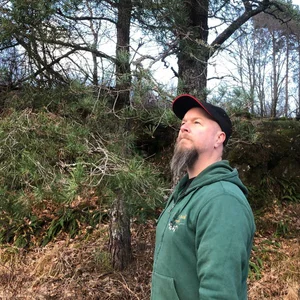
When therapeutic interactions move outside of the ‘consulting room’ and into nature, something interesting seems to happen. Nature can create a shared space where we walk alongside one another, notice the world together, and sometimes discover that healing becomes less about what one person does to another and more about how two people can explore things together.