

Saturday 7th November 2026
Have you ever visited somewhere that seemed to change the way you felt simply by being there? Perhaps it was a woodland where the light filtered gently through the canopy, a quiet stretch of coastline where the sound of the waves seemed to slow your thoughts, or a particular tree beneath whose branches you always feel comfortable sitting. Sometimes, without quite understanding why, certain places seem to offer us something that is difficult to find elsewhere — a sense of peace, belonging, perspective or restoration.
We often talk about the health benefits of spending time in nature, and there is a growing body of scientific research exploring how natural environments can support our physical and psychological wellbeing. However, there is another way of understanding this relationship that takes us beyond the question of what nature does for us and considers something rather more interesting — how do particular places become associated with healing, and what is it about our relationship with those places that makes them feel restorative?
This is the territory explored by the concept of therapeutic landscapes, first introduced by medical geographer Wilbert M. Gesler in 1992. His work proposed that health and healing cannot always be understood independently of the places in which we experience them. Rather than viewing an environment simply as a physical backdrop to our lives, Gesler encouraged us to consider how physical surroundings, social relationships, cultural meanings and individual experiences interact to create places that can support health and wellbeing.
His thinking has particular relevance to our relationship with natural environments. A woodland, for example, is much more than a collection of trees. It is a living environment involving light, sound, smell, movement, seasonal change, wildlife, memory and human experience. It can offer opportunities for solitude, companionship, reflection and sensory engagement. Through practices such as Shinrin-yoku, or Forest Bathing, we can begin to engage with these different qualities more intentionally.
In this article, we explore the concept of therapeutic landscapes, examine the work of Gesler and subsequent researchers, and consider how Forest Bathing and a deeper relationship with trees and woodland environments might help us create and experience places that support healing, resilience and wellbeing.
What Are Therapeutic Landscapes?
The concept of therapeutic landscapes emerged within the field of medical geography, a discipline concerned with understanding the relationships between geographical environments, health and healthcare. Traditionally, medical geography had often concentrated on the distribution of disease, environmental health risks and the geographical accessibility of medical services. Gesler wanted to broaden this perspective by exploring why certain places appeared to possess particular qualities associated with healing.
In his influential 1992 paper, Therapeutic Landscapes: Medical Issues in Light of the New Cultural Geography, he proposed that we should investigate the physical, social and symbolic environments within which experiences of health and healing take place. Gesler subsequently developed these ideas through his 1993 paper, Therapeutic Landscapes: Theory and a Case Study of Epidauros, Greece. He examined the ancient Greek sanctuary of Epidauros, a place renowned for its healing traditions, and explored how its natural setting, architecture, social activities, beliefs and spiritual associations had contributed to its reputation as a place of healing.
What made this approach particularly interesting was that Gesler was not suggesting that the natural environment alone produced healing. Instead, he recognised that therapeutic experiences emerged through the interaction of several different dimensions of a place.
These can be understood through three interconnected elements.
1. The Physical Environment
This includes the natural and built characteristics of a place. In a woodland, it might encompass the trees, vegetation, landscape, topography, water, quality of the air, pathways, sounds and seasonal conditions.
The physical environment provides the immediate sensory experience of being somewhere. It influences how comfortable, safe, stimulating or restorative a place might feel.
2. The Social Environment
Places are also shaped by the people who inhabit, visit and care for them. Social relationships, shared activities, cultural practices, community identity and the ways in which people interact with one another all influence the character of a landscape.
A woodland used by a sociable walking group, for example, might offer opportunities for companionship, belonging and mutual support. The same woodland might provide a very different experience for somebody who visits alone, perhaps seeking solitude or time away from social demands.
3. The Symbolic Environment
Perhaps the most interesting dimension concerns the meanings, beliefs, memories and associations that we attach to particular places.
A woodland may hold spiritual significance for one person, remind another of childhood adventures, and provide somebody else with a sense of continuity during a difficult period in their life. These meanings are not necessarily visible to other visitors, but they can profoundly influence the experience of being there.
Gesler also explored the relationship between what he described as the inner or meaning-related dimensions of a place and its wider outer or societal context. In other words, we need to consider both the personal significance of a landscape and the broader cultural, social and political circumstances that influence how people experience it. This distinction is important. A landscape does not become therapeutic simply because it is visually attractive or contains particular natural features. Its therapeutic qualities emerge through the complex interaction between the environment and those who experience it.
Why Some Places Feel More Restorative Than Others
Think about somewhere you particularly enjoy visiting. It might be a favourite woodland, a mountainside, a beach or even a small park close to home. What is it about that particular place that makes you feel comfortable or at ease? Perhaps it is the arrangement of the trees, the sound of a nearby stream, the openness of the landscape or the feeling of being sheltered from the outside world. Maybe it is somewhere you have visited regularly over many years, so that the place has become associated with familiar experiences and positive memories.
These are precisely the sorts of relationships that therapeutic landscape theory encourages us to explore.
A place can influence our experience through its physical qualities, but our interpretation of those qualities is also shaped by our own circumstances, expectations, memories and cultural backgrounds. For example, an isolated woodland might provide an enormous sense of freedom and tranquillity for somebody who enjoys being alone in nature. However, the same environment could feel threatening or uncomfortable to somebody who associates isolated places with vulnerability.
Similarly, a familiar woodland that has provided comfort during a period of emotional difficulty might acquire a particular significance. Returning to it can bring back memories of previous experiences, creating a sense of continuity and perhaps reminding us of how far we have travelled. In this way, therapeutic landscapes are not simply places that make us feel better in the moment. They can become part of our personal stories, providing a sense of identity, stability and belonging.
An important development in this thinking is the recognition that the therapeutic qualities of a place can change over time. A landscape that once felt welcoming may become associated with loss or difficult memories, while somewhere previously unfamiliar may gradually become a place of comfort. The relationship is dynamic rather than fixed.
The Therapeutic Qualities of Natural Environments
Although Gesler's framework is not restricted to natural environments, woodlands, gardens, mountains, rivers and coastal landscapes have received considerable attention within the wider therapeutic landscape literature.
Nature has long been associated with restoration and wellbeing, and there are several complementary theories that help explain why.
One particularly influential perspective is Attention Restoration Theory, developed by environmental psychologists Rachel and Stephen Kaplan. Their work suggests that natural environments can help to restore our capacity for directed attention, the effortful concentration we use when dealing with work, responsibilities, information and everyday demands.
Modern life frequently requires us to maintain attention for extended periods, often in environments filled with competing demands and distractions. This can contribute to mental fatigue. Natural environments, by contrast, frequently offer what the Kaplans described as soft fascination — interesting and engaging features that attract our attention without requiring considerable conscious effort. Watching sunlight move through the branches, listening to birdsong or observing ripples on the surface of water can provide gentle stimulation while allowing our attention to rest.
Another influential perspective is Stress Reduction Theory, associated with environmental psychologist Roger Ulrich. This proposes that certain natural environments can support relatively rapid reductions in stress and encourage positive emotional responses. Characteristics such as vegetation, water, natural patterns and appealing landscapes may contribute to feelings of safety and relaxation. Together, these theories provide useful explanations for some of the ways in which nature may support psychological restoration.
However, Therapeutic Landscape Theory takes us further. It asks us to consider how these environmental qualities interact with personal experience, social relationships and cultural meaning. A woodland might provide an opportunity to escape the demands of everyday life, but it might also become a place where people develop friendships, establish meaningful routines, reconnect with themselves or discover a renewed sense of purpose. It is this combination of environmental, psychological and social influences that makes the concept so valuable.
Forest Bathing — Experiencing the Woodland as a Therapeutic Landscape
Potentially one of the most interesting ways of exploring therapeutic landscapes is through the Japanese practice of Shinrin-yoku, commonly translated as Forest Bathing. Developed and promoted in Japan during the 1980s, Forest Bathing encourages people to spend time in woodland environments, consciously engaging with the natural world through all of their senses.
Despite its name, Forest Bathing does not involve water, nor does it require strenuous exercise or particularly challenging walks. It is about slowing down, immersing ourselves in the woodland atmosphere and becoming more aware of what is happening around us. Rather than concentrating on reaching a destination, completing a particular distance or achieving a physical challenge, Forest Bathing encourages us to experience the forest itself. We might pause to observe the changing patterns of light between the trees, listen to the different layers of woodland sounds, notice the scent of damp earth and vegetation or feel the texture of a fallen leaf. and in doing so, we begin to experience the woodland as a living environment rather than simply somewhere we happen to be walking through.
This has an interesting connection with Gesler's concept.
Forest Bathing provides an opportunity to engage with the physical environment, but it can also influence the social and symbolic dimensions of our experience. A guided Forest Bathing session, for example, may introduce opportunities for shared reflection, gentle conversation and a sense of belonging. Alternatively, a solo experience might allow us to reconnect with memories, explore personal meanings or simply enjoy the freedom of being alone. The woodland becomes more than the setting for an activity, it becomes an active part of the experience.
The Importance of our Senses
One of the defining characteristics of Forest Bathing is its emphasis on sensory awareness. Our everyday lives can involve spending considerable time in environments dominated by visual information, screens, artificial lighting and constant demands on our attention. But forested and woodland environments offer a much richer sensory experience. We can explore:
Sight
The changing colours of leaves, the intricate patterns of bark, the movement of branches, the play of sunlight and shadow, and the changing appearance of the woodland through the seasons.
Sound
Birdsong, wind moving through the canopy, rustling leaves, insects, flowing water and the occasional sound of a branch creaking.
Smell
The earthy fragrance of damp soil, decomposing leaves, moss, flowers and the distinctive aromas released by trees and other vegetation.
Touch
The temperature of the air, the texture of a fallen leaf, the roughness of bark, the softness of moss or the feeling of the ground beneath our feet.
Taste
If you are confident, competent and skilled in foraging, you might be able to collect wild berries. But instead of tasting wild plants or fungi, we can equally bring our awareness to the simple experience of drinking water or a warm drink outdoors, noticing its temperature and flavour as part of our wider sensory experience.
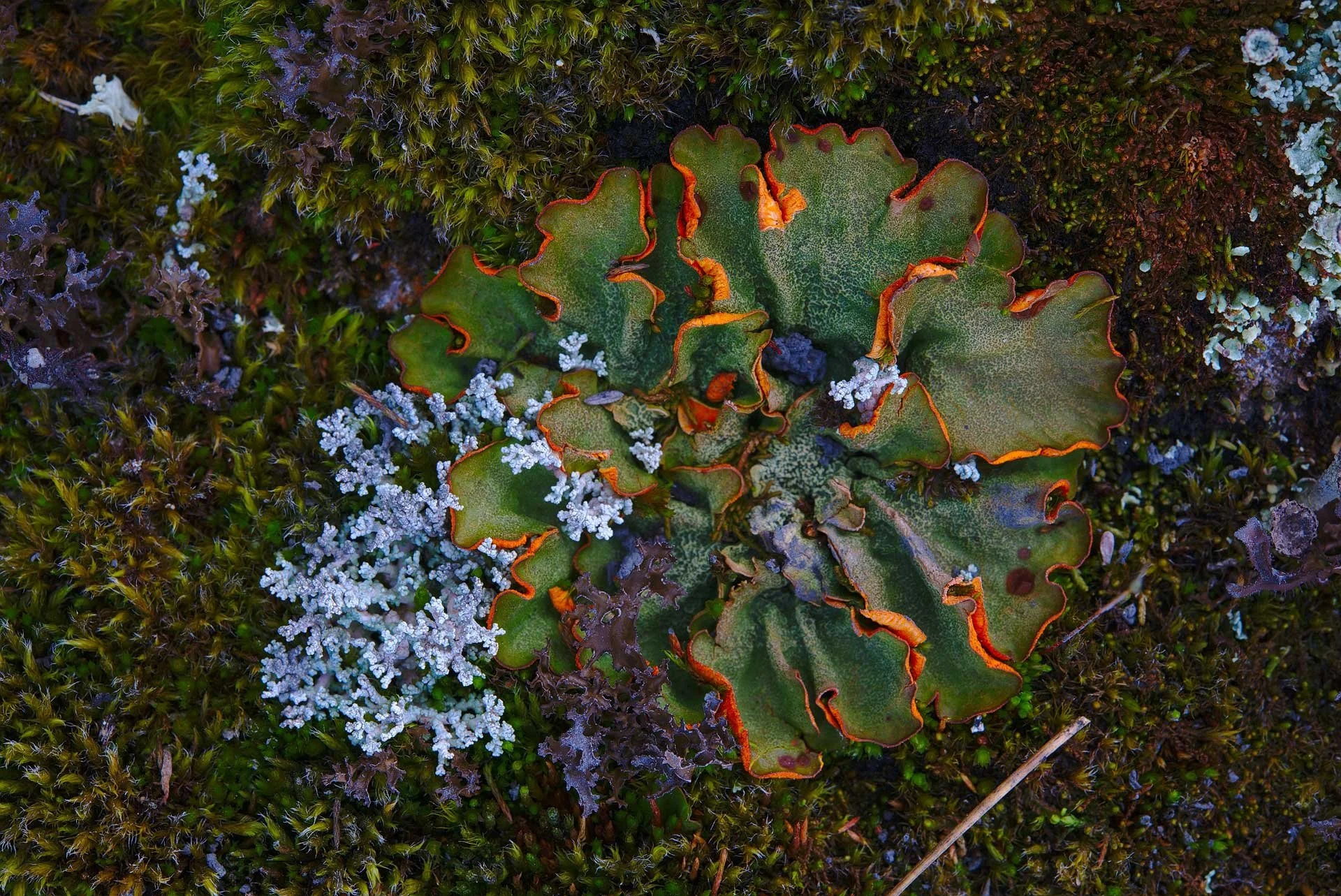
Engaging with these different senses can help draw our attention away from repetitive thoughts and everyday concerns and towards the immediate experience of being present. It also creates opportunities to experience the woodland in ways that we might otherwise overlook. We may have walked the same path dozens of times without noticing the tiny details of the lichens growing on a tree or the different scents released after rainfall. Forest Bathing invites us to become curious again.
What Does the Research Tell Us?
There is now a substantial and expanding body of research examining the physiological and psychological effects of Forest Bathing. Studies have investigated outcomes including heart rate, blood pressure, cortisol levels, immune activity, perceived stress, anxiety and mood.
A 2024 scoping review by Vermeesch and colleagues examined 63 research publications on Shinrin-yoku published between 2017 and 2022. The authors identified evidence of both physiological and psychological benefits across different age groups and geographical settings, while highlighting the continuing need for further research. More recently, a 2026 umbrella review by Borsani and colleagues examined 31 reviews of Forest Bathing. Its findings suggested positive associations with stress reduction, cardiovascular and autonomic responses, immune function and psychological wellbeing.
Researchers have proposed several possible explanations for these effects. The physiological response may involve changes in autonomic nervous system activity, including a shift towards greater parasympathetic activity, which is associated with relaxation and recovery. Some studies have also explored the possible contribution of phytoncides, volatile organic compounds released by trees and other plants. Psychologically, the experience of being immersed in natural surroundings may support attention restoration, emotional regulation and a reduction in perceived stress.
However, it is important to interpret these findings carefully. Research methodologies, intervention durations and the environments studied vary considerably. Participants cannot easily be blinded to whether they are spending time in a forest, and some outcomes rely on self-reported experiences. Indeed, a separate 2026 systematic review and meta-analysis by Andrade and colleagues highlighted the limited certainty of some of the available evidence.
Forest Bathing should therefore be most definitely be understood as a promising complementary approach to supporting health and wellbeing, rather than a replacement for medical treatment or an intervention that produces guaranteed outcomes. Nevertheless, the growing body of research provides an encouraging scientific foundation for something that many people already recognise through personal experience — spending attentive, unhurried time in a natural environment can be a deeply restorative experience.
Beyond the Individual — The Social Dimension of Forest Healing
It would be easy to interpret therapeutic landscapes entirely in terms of individual experiences. However, one of Gesler's important contributions was to recognise the significance of the social environment. Our relationship with places is influenced not only by what we experience personally, but also by the people around us and the social circumstances in which our experiences take place. Woodlands can provide opportunities for companionship, community participation and shared experiences. Walking with others, taking part in a guided forest bathing session, volunteering in woodland conservation or simply spending time in a familiar outdoor group can help develop relationships and a sense of belonging. For people experiencing loneliness, isolation or difficult periods of life, these opportunities can be particularly valuable.
There is something quite different about spending time alongside another person in a natural environment. Conversation does not always need to be continuous, and shared attention can be directed towards the surrounding landscape rather than towards the relationship itself. A group might pause to watch a bird, examine a fallen tree or listen to the sound of the wind. These small shared experiences can create connections without the pressure of having to find the right words. For people involved in recovery from addiction, trauma or other difficult life experiences, this can offer opportunities to develop confidence, reconnect with others and participate in positive activities that do not revolve around their difficulties.
However, the social dimension also reminds us that access to therapeutic landscapes is not always equal. Some people may face barriers relating to mobility, transport, financial circumstances, personal safety or a lack of welcoming outdoor spaces. Others may have cultural or personal experiences that make particular environments uncomfortable. A woodland cannot be assumed to feel safe, accessible or restorative for everyone. Consequently, creating opportunities for therapeutic experiences in nature involves thinking about inclusion, accessibility and the needs of different communities, rather than simply assuming that everyone can benefit in the same way.
The Symbolic Relationship Between Trees, Memory and Healing
Of the three dimensions identified by Gesler, I find the symbolic environment particularly fascinating because it offers opportunities to explore the deeper significance of our relationships with trees and woodland. Trees have occupied important positions within human cultures for thousands of years. They have been associated with wisdom, protection, renewal, longevity, ancestry, spirituality and the cycles of life. Across different cultures and traditions, particular trees and forests have acquired powerful symbolic meanings. These associations may influence how people experience particular landscapes, even when they are not consciously aware of them. For example, someone who grew up playing in woodland might associate trees with freedom, exploration and childhood happiness. Another person might have a favourite tree that reminds them of a loved one or provides a place to visit when they are experiencing grief.
These associations can make a particular landscape feel especially meaningful. They can also help explain why returning to familiar natural places can be important during periods of change or uncertainty. A favourite woodland may remain largely unchanged while other aspects of our lives are shifting. The seasonal cycles continue, trees grow and shed their leaves, and the familiar sounds and scents of the landscape remain recognisable, and this continuity can offer a sense of reassurance.
There is also something interesting about the relationship between the symbolic qualities of landscapes and the idea of spiritual connection. People do not need to follow a particular religious or spiritual tradition to experience a sense of wonder, reverence or connection when spending time in nature. For some, this may involve an appreciation of the age and resilience of trees. For others, it may be the experience of standing beneath a vast canopy, watching the movement of the clouds or contemplating the interconnectedness of living things. Such experiences can provide opportunities to reflect on our place within the wider natural world. They may also encourage a different understanding of healing, one that is not necessarily about fixing something that is wrong, but about rediscovering a sense of connection with ourselves and the world around us.
Can We Create Our Own Therapeutic Landscapes?
An important development in therapeutic landscape research has been the recognition that we do not necessarily have to travel to extraordinary or traditionally recognised places of healing to experience these benefits. Karolina Doughty's 2018 chapter, Therapeutic Landscapes, explores how the concept has evolved beyond famous healing sites and specialist healthcare environments to include ordinary places, everyday activities and the personal meanings attached to landscapes.
This is an important distinction. It suggests that therapeutic qualities are not restricted to spectacular mountains, ancient forests or remote wilderness. They can also develop through our relationships with familiar local woodlands, parks, gardens and even small green spaces close to home. In fact, the familiarity of an everyday place may be part of what makes it meaningful. Repeated visits allow us to become familiar with its changing characteristics. We begin to recognise individual trees, notice seasonal patterns and observe the arrival and departure of wildlife, and over time, the place can become woven into our everyday lives. We may develop a particular route that we enjoy walking, find a favourite tree beneath which to sit or discover a small clearing where we feel comfortable spending time.
Through these repeated experiences, a relationship develops.
This is where Forest Bathing can become particularly valuable. Rather than treating each visit as an isolated opportunity to obtain a particular health benefit, we can begin to cultivate an ongoing relationship with a woodland environment. We might return regularly, noticing how the same place changes throughout the year. We may begin to recognise individual trees and appreciate their different characteristics. We can observe how our own feelings and experiences change in response to the landscape, while the woodland continues its own seasonal rhythms. In this sense, creating a therapeutic landscape is less about finding somewhere that possesses magical healing properties and more about developing the conditions in which a meaningful, supportive relationship with place can emerge.
From Taking From Nature to Participating in Nature
There is another important consideration here that I believe deserves particular attention. Much of the discussion surrounding nature and wellbeing understandably focuses on the benefits that people receive from spending time outdoors. We talk about reduced stress, improved mood, increased physical activity and opportunities for psychological restoration.
However, there is a danger that this can turn nature into little more than a resource that exists to serve human needs, and our relationship with the natural world is considerably more interesting than that. We are not separate from nature, visiting it occasionally to obtain a little restoration before returning to our otherwise disconnected lives. We are part of the same living world as the trees, fungi, plants and animals around us.
This perspective encourages us to consider what happens when our experience of nature becomes more reciprocal.
Perhaps visiting a woodland inspires us to care more deeply about its future. Perhaps spending time beneath an old tree encourages us to think about the generations of life that have existed around it. Maybe an experience of peace and belonging motivates us to become involved in woodland conservation or simply to become more mindful of the natural world in our everyday lives. This relationship begins to move beyond the benefits we receive and towards a greater appreciation of our responsibilities and connections. In this respect, a therapeutic landscape can provide an opportunity not only for personal healing but also for developing a more caring relationship with the wider living world.
A More Relational Understanding of Therapeutic Landscapes
As the concept of therapeutic landscapes has developed, researchers have increasingly questioned whether healing should be understood as something that flows in only one direction, from a beneficial environment towards an individual. Instead, the idea that particular places can simultaneously hold the potential to heal and to cause discomfort has become an important part of the discussion.
Karolina Doughty explores this development in her chapter, describing how later researchers have approached therapeutic landscapes through relational perspectives. One example is the work of David Conradson, who explored the relationships between people, places and experiences of care in a rural English retreat setting. This way of thinking suggests that the therapeutic qualities of a landscape are not simply properties that exist independently within a particular environment. Rather they emerge through encounters between people, places and the wider living world.
For Forest Bathing, this is a particularly useful perspective.
Consider the experience of sitting quietly beneath an old oak tree. The tree has its own history, biological processes and ecological relationships. Its roots extend into the soil, its branches provide habitats for other organisms, and its leaves interact with the changing seasons. Our experience of sitting beneath it is shaped by all these physical realities, as well as by our own perceptions, emotions and memories. Perhaps we feel protected by its branches or become curious about its age. Maybe we notice the movement of its leaves and find ourselves becoming more relaxed. The experience emerges through the encounter between ourselves and the wider environment. It is not simply a matter of the tree providing a service to us. This relational perspective also invites us to recognise the importance of non-human life within therapeutic landscapes. Trees, fungi, wildlife, water and the wider ecological processes of a woodland all contribute to the character of the place. A forest is not a static backdrop but a living community. and when we engage with it attentively, we have opportunities to become more aware of these relationships and perhaps to recognise ourselves as participants in them.
I find this a particularly valuable way of thinking about Silvotherapy and Forest Bathing. Rather than approaching trees merely as sources of beneficial compounds or visual stimulation, we can begin to appreciate them as living organisms with which we share an interconnected world.
Final Thoughts — Finding Healing in Our Relationship with Place
Wilbert Gesler's concept of therapeutic landscapes offers us a valuable way of understanding why certain places can have such a profound influence on our health and wellbeing. By considering the physical, social and symbolic dimensions of our surroundings, we can begin to appreciate that the therapeutic qualities of a landscape are not simply determined by its appearance or natural characteristics. They emerge through the relationships between people, places, experiences, memories, beliefs and the wider social and cultural environments in which we live, and forests and woodlands provide particularly rich opportunities for these experiences.
Through Forest Bathing, we can slow down, engage our senses and become more attentive to the living environment around us. We may experience a reduction in stress, an improvement in our mood or simply a welcome opportunity to step away from the demands of everyday life. But perhaps the value of these experiences extends further. As we return to familiar places, develop relationships with individual trees and become more attentive to the changing rhythms of the woodland, we may begin to experience something deeper than temporary restoration.
We may develop a sense of belonging.
We may discover places that help us navigate difficult experiences, provide continuity during periods of change or remind us of our connection with something much larger than ourselves.
And perhaps, through these experiences, we begin to understand that healing is not always something that happens to us. Sometimes it emerges through the relationships we develop with the world around us.
A therapeutic landscape does not have to be somewhere extraordinary. It might be a favourite woodland, a familiar tree, a quiet garden or even a small green space that we return to regularly. What matters is not simply where we go, but how we experience that place and the relationship we gradually develop with it. Perhaps the invitation is simply to find somewhere in nature where we feel comfortable enough to slow down, pay attention and allow ourselves to become part of the landscape, rather than merely a visitor passing through.
Nature Connection Invitation
Finding Your Own Therapeutic Landscape
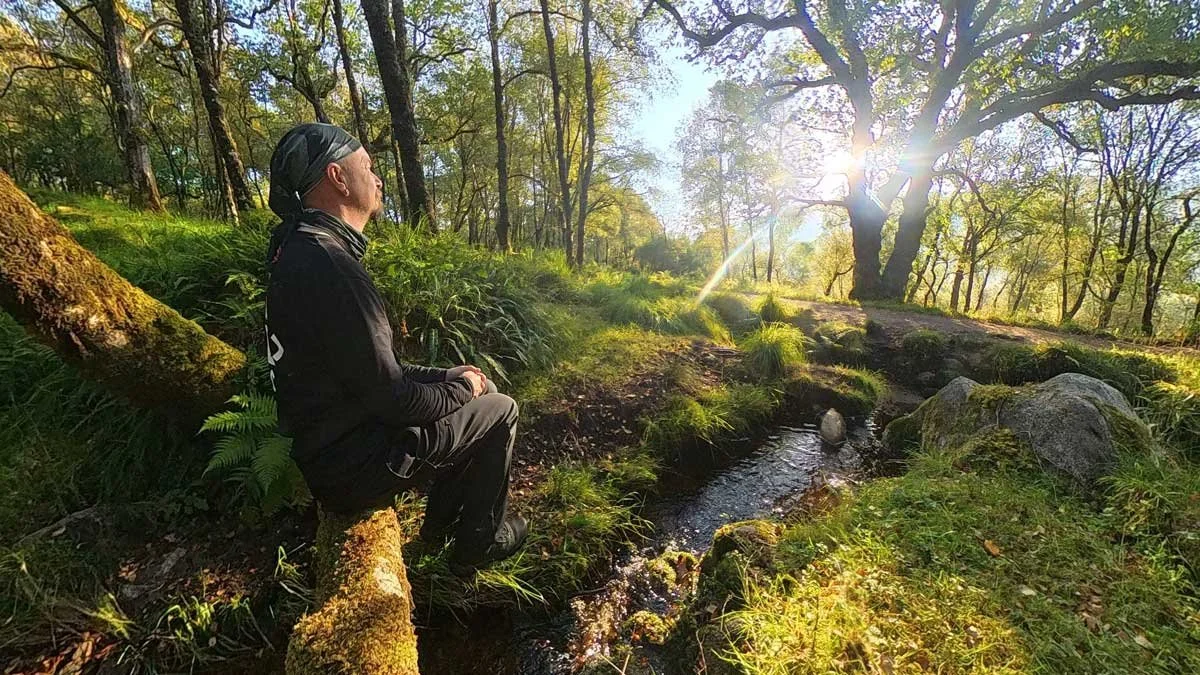
Think about somewhere in nature where you feel particularly comfortable, peaceful or at ease. It might be a woodland, a favourite tree, a stretch of coastline or a quiet green space close to home. Rather than setting out on a walk with a particular destination in mind, spend some time simply being there. Find somewhere comfortable to sit or stand and allow yourself to become more aware of your surroundings. What can you see, hear and smell? How does the air feel against your skin? What happens to your thoughts and feelings as you spend time in this environment?
Now consider the relationship you have with this particular place. What does it mean to you? Does it remind you of a particular experience or time in your life? Do you feel a sense of familiarity, safety or belonging here? How might your experience be different if you visited with somebody else, or at another time of year?
Finally, extend your attention beyond your own experience. Notice the trees, plants, fungi and wildlife around you. Consider the relationships that exist between them and the wider environment. Is there something you could do to care for this place in return for the enjoyment and restoration it offers you?
You might decide to revisit regularly, perhaps noticing how it changes with the seasons. Over time, you may discover that this familiar place becomes an increasingly meaningful part of your relationship with nature.
There is no need to force a particular feeling or expectation. Simply allow yourself to be curious, present and receptive to whatever the experience offers.
Sometimes, the beginning of a therapeutic relationship with nature is simply learning to spend time somewhere and really getting to know it.















If you have enjoyed this article and would like to support what we do by donating £2 or more to buy saplings to plant,
please follow the link below:



When therapeutic interactions move outside of the ‘consulting room’ and into nature, something interesting seems to happen. Nature can create a shared space where we walk alongside one another, notice the world together, and sometimes discover that healing becomes less about what one person does to another and more about how two people can explore things together.