

Fairytales and Fear of Nature
Saturday 10th January 2026
Like many people, you may feel ambivalent about woods — a sunny woodland can seem tranquil, yet a dark thicket may set your nerves jangling. Studies show that dim light and dense vegetation can trigger our “fight or flight” responses — our cortisol levels rise and we become hypervigilant when visibility is low. In fact, researchers have identified a growing phenomenon of “biophobia” a fear or discomfort toward nature that is rising worldwide. This trend is driven by factors like urban living and media narratives that portray natural places as dangerous. For example, an extensive review found that urbanisation, reduced exposure to green spaces, and scary stories about nature can all reinforce a sense of danger in forests. In our cultural imagination – much of it fueled by fairy tales – forests have long been depicted as enchanted yet perilous places, and these stories can shape how children and adults feel about the woods.
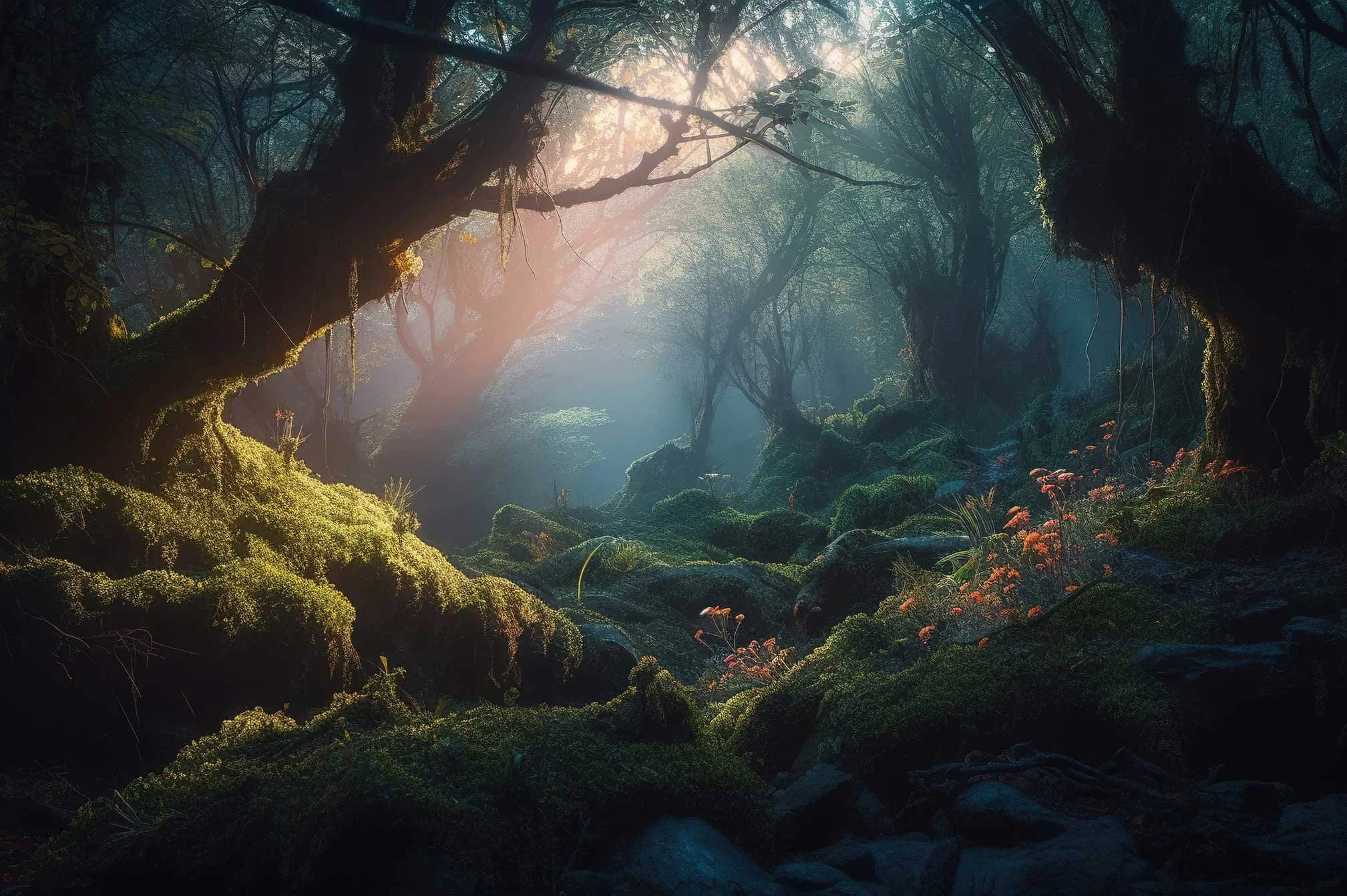
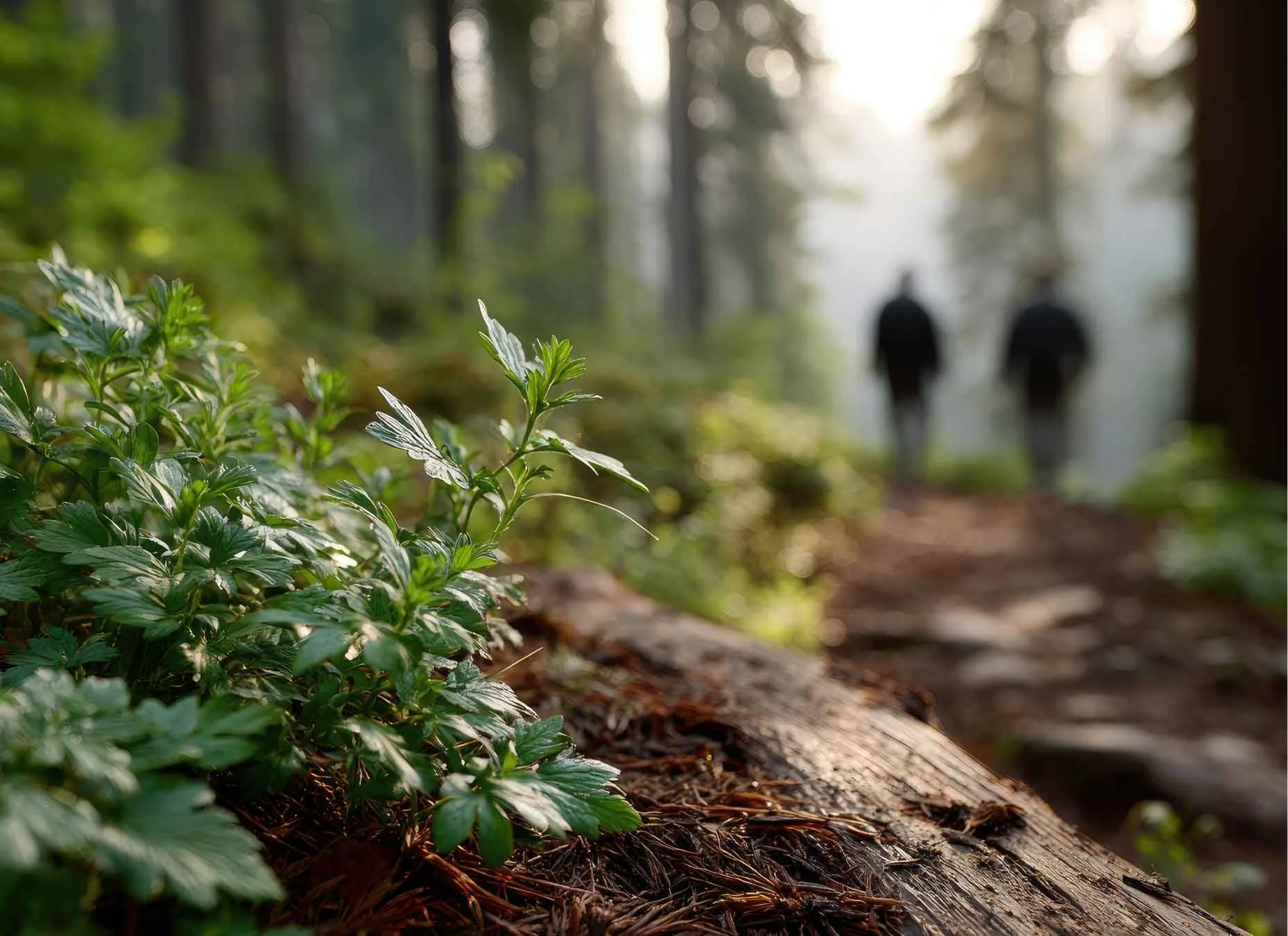
Walking among tall trees can feel completely peaceful when sunlight filters through the leaves. In this bright, airy forest scene, the world seems gentle and calm. But move into a darker grove, and the mood flips — deep shadows and flickering light amplify the sense of mystery and potential threat. Scientists note that simply being in low light outdoors can spike our stress hormones and make us feel unsafe. Our bodies instinctively heighten alertness when the woods grow dim. “Darkness in the forest can be a trigger for states of fear and nervous system agitation. If the body perceives itself to be in danger, it activates Sympathetic Nervous System mechanisms, increasing Cortisol levels, and in the case of darkness, generating hypervigilance reactions”. These physical reactions are compounded by what we’ve learned. Growing up, many of us hear tales where any rustle in the underbrush becomes a hungry wolf or lurking witch. Such narratives prime us to expect danger in forests, even when the actual risk (especially in suburban parks or reserves) is minimal.
In our defence, from an evolutionary perspective, humans do appear to be wired with a negativity bias — a tendency to prioritise potential threats over neutral or positive information — because, historically, the cost of being wrong about danger was extraordinarily high. For our ancestors, interpreting a rustling shrub as a lurking sabre-toothed tiger, even when it was only the wind, might have led to a brief surge of fear and a wasted burst of energy, but it kept them alive. The opposite mistake — dismissing the movement of a real predator as nothing more than foliage or a rock — could be fatal and remove that individual from the gene pool entirely. Over thousands of generations, natural selection therefore favoured nervous systems that erred on the side of caution, rapidly amplifying ambiguous sensory information into a threat response. This bias toward “false positives” helped humans survive in dangerous environments, but in a modern context it can mean that our brains continue to react to uncertainty, unfamiliar places, or imagined risks as though they were life-threatening, even when no sabre-toothed tiger is present.
Fairy Tales: Magic and Menace in the Woods

Since medieval times, European fairy tales have cast forests as both wondrous realms and dark labyrinths. As folklorist Maria Tatar observes, “Forests are sublime and dangerous, full of mystery, magic, terror, and monstrosity; an enchanted place where anything can happen”. In Little Red Riding Hood the woods hide a cunning wolf; in Hansel and Gretel they conceal a cannibal witch; in Sleeping Beauty, thorny briars protect an enchanted castle. Yet these same woods can also be sanctuary — Snow White flees into the forest for safety, Hansel and Gretel find shelter in a humble abode, and other stories let heroes emerge stronger after facing trials among the trees. In each case the forest is a place of transformation. Little Red Riding Hood, for example, comes out of her ordeal more self-assured, having faced down her fear. Such tales use the woodland setting as a proving ground — characters must journey through the “wild” to learn courage, wit, or humility.
Fairy tales often blur the line between the familiar order of home and the chaos of the forest. As Ecocritical writer Brian Radford notes that Grimms’ stories deliberately take readers “from the structure of society into the chaotic world within the forest where magic and turmoil preside”. Within these green depths, ordinary rules vanish. In Jack Zipes’s words, the forest “allows for enchantment and disenchantment, for it is a place where society’s conventions no longer hold true”. In other words, the woods become a world apart — dangerous because it is unpredictable, yet utopian because it is free from daily constraints.
Indeed, throughout European folklore, the forest motif conveys this duality of utopia and peril. Ecocritical scholars describe Grimm’s nature imagery as “both a utopian ideal and a perilous environment of death and sorcery”. The enchanted woods can symbolise freedom and the raw beauty of nature, but just as often they represent the unknown that hides enemies and hazards. A recent analysis of fairy tales observes that enchanted forests typically “represent places of unknown, cradle of uncertainty and danger”. Thus the classic forest in stories is an arena of extremes — one moment a cradle of wonder, the next a menacing trap. And children’s imaginations absorb both messages.
Common Symbols in the Fairy-Tale Forest:
Predators and Villains
Wolves, bears, ogres or witches often lurk in stories, embodying our fears of getting lost or attacked.Helpers and Magic
Fairies, talking animals or mysterious helpers show up unexpectedly, suggesting that kindness or wisdom can be found even in the wild.Trials and Transformation
Tasks undertaken in the woods (such as following a trail of breadcrumbs, collecting firewood, or picking magical berries) become rites of passage in which characters re-emerge changed, having overcome internal and external fears.
Childhood Fear and “Biophobia”
These narrative themes can influence real emotions. Surveys and studies report that children often fear forests more than adults — especially girls, who typically score higher on forest-related anxiety tests. This anxiety is usually tied to concerns like encountering wild animals or getting lost, exactly the scenario fairy tales dramatize. In psychological terms, growing up on a steady diet of scary woods stories can seed a lasting phobia. The Cleveland Clinic notes that specific fears of trees or forests (dendrophobia, hylophobia) can arise from “negative stories about trees” heard in childhood. In other words, hearing about witches in the woods or monsters among the trees can translate into genuine nighttime fears of being outside.
The concept of biophobia highlights how cultural and personal factors mingle. Recent research finds that many people experience fear or disgust of nature due to societal changes. Urbanisation and media often remove us from forests, then depict them as scary — a combination that reinforces anxiety. As one systematic review puts it, biophobia is fueled by “urbanization, reduced exposure, and media portrayals that reinforce perceived danger”. When we spend little time among trees, our skills and comfort in nature atrophy. Then a dark forest walk or even a news story about a wild animal attack can confirm our worst fears. Psychologists warn that this cycle causes people to “miss out on well-established benefits” of nature, harming health and even undermining conservation when people come to view wildlife as a nuisance.
On the other hand, positive experiences can reshape the narrative. Studies suggest that offering children safe, joyful encounters with forests can counteract biophobia. In fact, experts propose creating more green spaces and nature programs to give kids “positive experiences with nature early in life”. By learning to enjoy a picnic under the pines or a guided night-time walk with lanterns, children can build familiarity that replaces fear. Forest therapy practices can take this approach, gradually exposing people to woodland sights, sounds and smells in comforting ways. Over time, the same trees that once inspired dread can become a source of wonder and calm.
Embracing the Forest — Moving Beyond Fear
Fairy tales will likely always depict forests as magical and mysterious, but we can choose which parts of those stories to believe. While acknowledging real dangers (it’s wise to respect wild animals and stick to paths and trails), we can also recall that many fairy-tale adventures end not in tragedy but in triumph and return. The forest in Hansel and Gretel ends up being the place of reunion and homecoming, after all. Likewise, the actor Frank L. Baum’s Into the Woods famously reminds us that a dark forest experience often leads characters to “find themselves”.
Modern research underscores that real forest should hold more fascination than fear. Spending time among trees is proven to reduce stress, lower blood pressure, and improve mood. By clinging only to the scary tales and ignoring the helpful ones, society risks losing our link to these benefits. As one academic summary warns, negative emotions toward nature can drive destructive attitudes — but understanding and exposure can reverse the trend. In practice, this means actively challenging our learned apprehensions — recount a story where the forest plays hero, teach children the names of local trees and animals, or simply take a slow, curiosity-driven walk in the woods.
Final Thoughts
In the end, fairy tales and facts both have a place. The forest is indeed a place of mystery — but mystery need not equal menace. By blending respect for the unknown with knowledge and experience, we can fill those “enchanted” woods with wonder instead of fear. Reframing the narrative allows us to connect more deeply with nature, just as countless generations once did under the very trees that filled their stories with both danger and delight.
And then we really will live ‘happily ever after!’
If you have enjoyed this article and would like to support what we do by donating £2 or more to buy saplings to plant, please follow the link below:



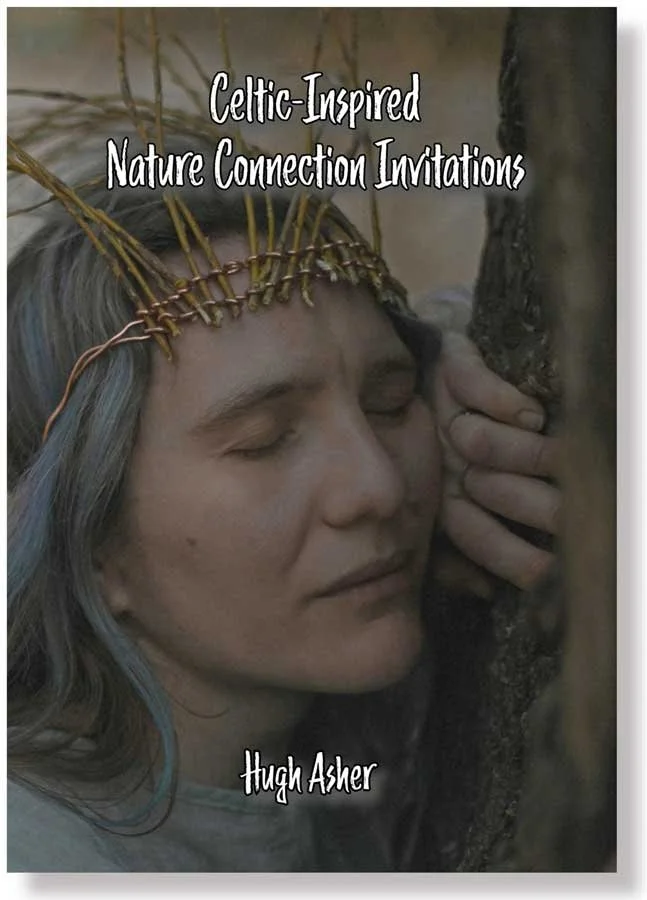




















A small collection designed to gently open the door into deeper relationship with the natural world.
This complete set of four Forest Healing booklets brings together practical guidance, reflective ideas, and simple nature connection practices that can be used anywhere — from ancient woodland to a nearby park, garden, or even a single Sit Spot outdoors.
Written to be accessible, grounding, and easy to follow, these booklets offer a pathway into the core practices of Forest Bathing (Shinrin-yoku), Silvotherapy, and everyday nature connection. Rather than asking you to achieve anything, they simply invite you to slow down, notice more deeply, and allow nature to become an active presence in your wellbeing.
Across the four booklets you will explore:
• What Forest Bathing, Silvotherapy, and Nature Connection actually are
• The key benefits of spending mindful time in natural environments
• The practice of the “Sit Spot” and how to develop your own relationship with a chosen place
• Simple, practical Forest Bathing invitations you can try alone or with others
• Ways to bring nature connection into everyday life, even in small moments
Together, they form a gentle introduction to practices that have been shown to support reduced stress, improved mood, greater clarity of thought, and a deeper sense of belonging within the natural world.
These are not academic texts or rigid instruction manuals. They are invitations — encouraging you to step outside, slow your pace, and rediscover the quiet intelligence of trees, weather, and landscape.
Whether you are completely new to nature connection or looking to deepen an existing practice, this collection offers a simple, supportive starting point for building a more intentional and restorative relationship with the living world around you.
A small set of booklets that can change the way you experience even the most familiar patch of nature.
Buy all Four Forest Bathing and Nature-Connection Booklets for £11.00 including FREE P&P within the UK.
Postage to the Rest of the World is £4.