

The Social Significance of Fire
Saturday 18th April 2026
Recently, the Cairngorms National Park Authority (near where Forest Healing is based) announced a ban on open fires in parts of the park, which came into force on the 1st April 2026. It was introduced to help protect the fragile landscapes and reduce the risk of wildfires. For many people who spend time in wild places, the idea of lighting a small campfire has long been associated with warmth, companionship, and a sense of connection with nature. Yet the decision is also a reminder that fire is never a neutral presence in the landscape. It is powerful, transformative, and demands care and responsibility.
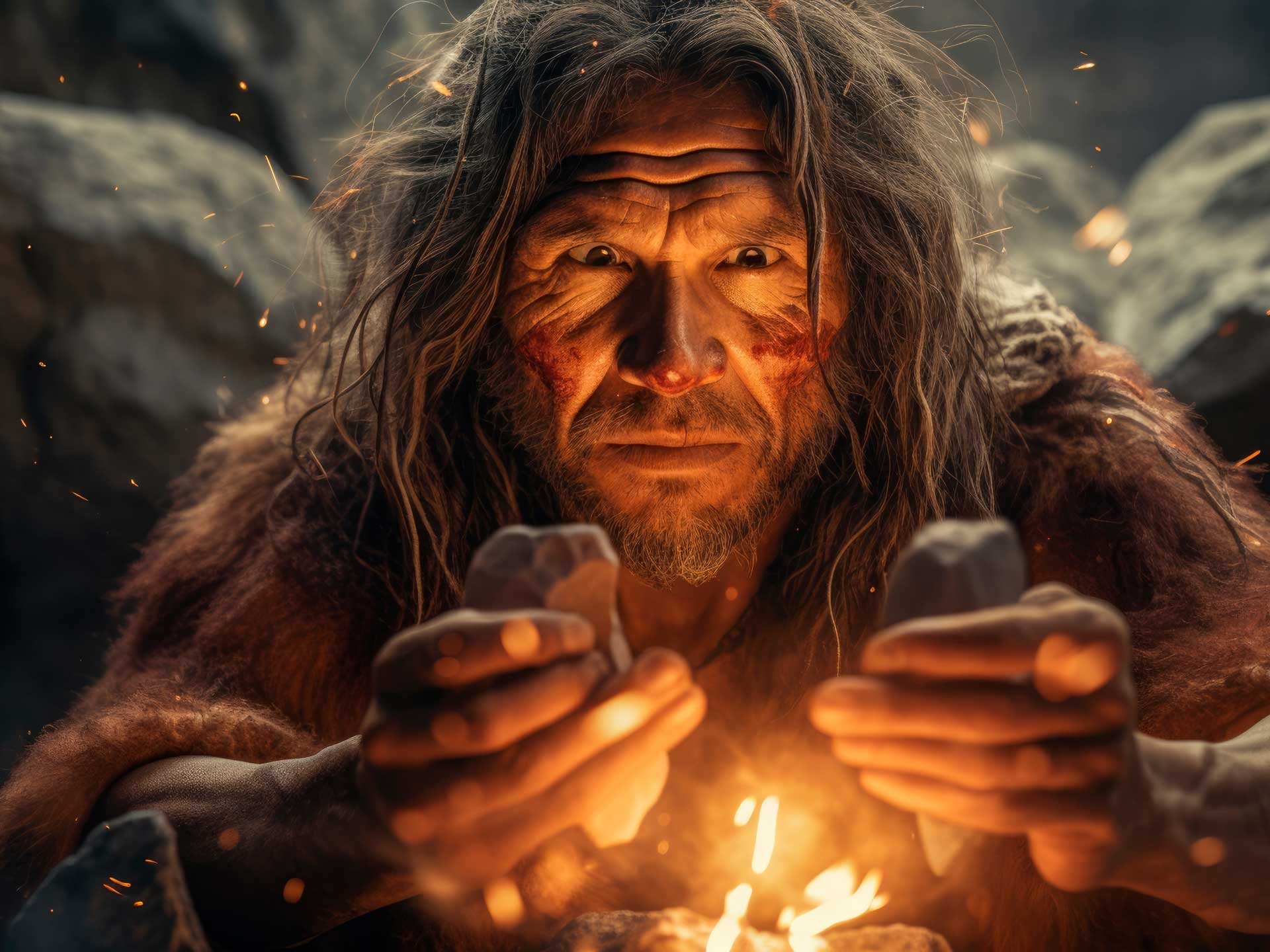
The announcement also invites a deeper reflection. Fire has been part of human life for hundreds of thousands of years. Long before modern parks, regulations, and conservation policies, the discovery of fire changed the course of human history. It allowed our ancestors to cook food, survive colder climates, and protect themselves from predators. But perhaps most importantly, fire brought people together. Around the glow of a fire, early humans gathered, shared stories, exchanged knowledge, and began to build the social bonds that would eventually shape human culture. In many ways, the circle of firelight became one of the first spaces in which human community truly formed.
The Social Significance of Fire: The Flame that Gathered Humanity
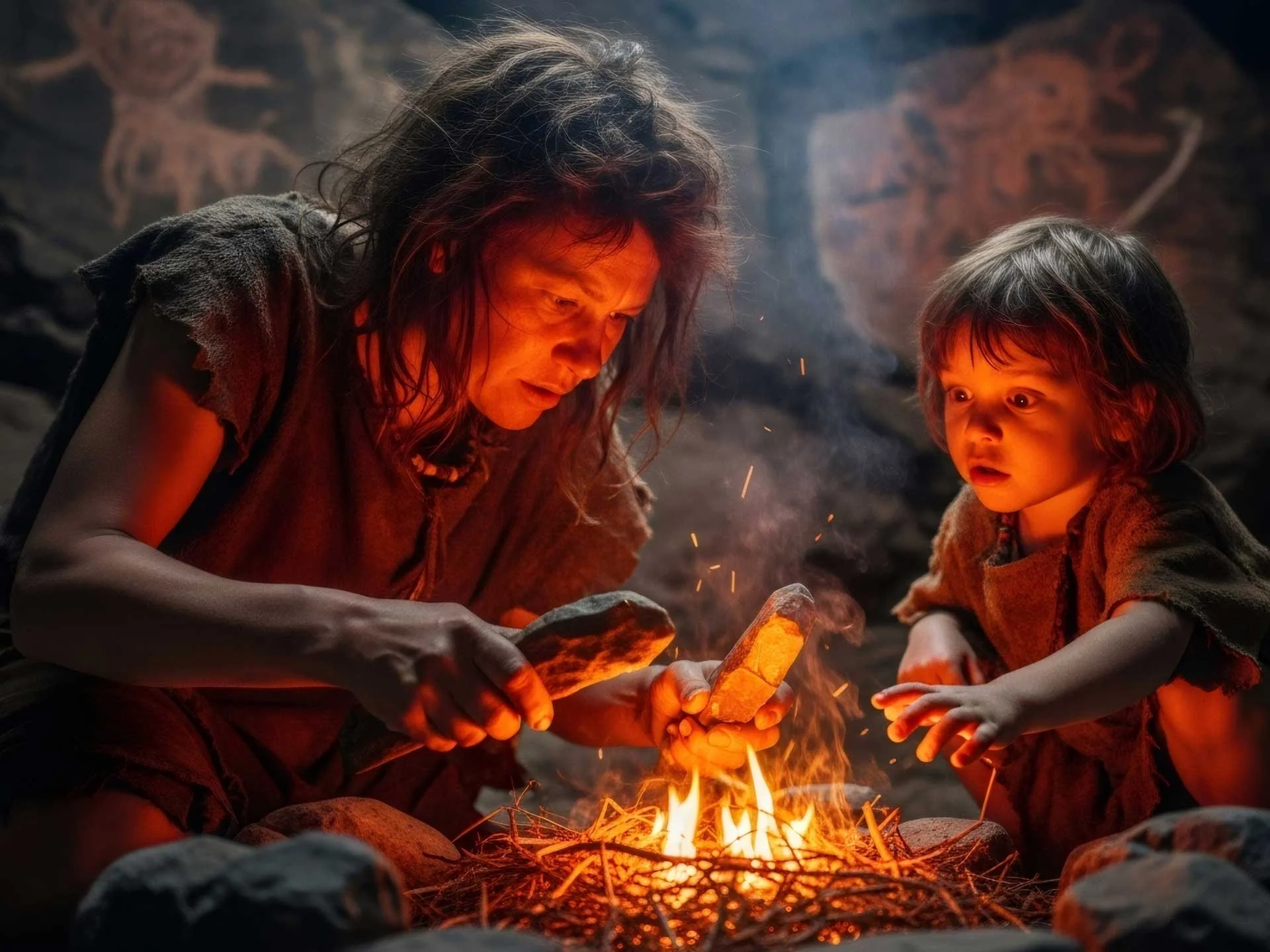
A long time before cities, before agriculture, and before written language, there was fire. For early humans, fire was not simply a tool. It would have been warmth in the cold, light in the darkness, protection against the unknown, and a place to gather. The discovery of fire was possibly one of the most transformative moments in human history, but its importance goes far beyond cooking or survival. Fire would have shaped how people related to one another. It would have created spaces for conversation, storytelling, learning, and belonging. Around the glow of a fire, something remarkable probably happened. Individuals became a group. Knowledge began to flow between generations. Stories were told, ideas were shared, and culture slowly began to take shape. In many ways, the fire circle may have been the first human social institution.
Even today, thousands of years later, people still feel the pull of a fire. We gather around campfires, light candles for remembrance, and mark festivals with flames and bonfires. Something ancient in us still responds to the quiet invitation of firelight. To understand why, we need to look back to the very beginning of humanity’s relationship with fire.
Fire has always been more than a physical phenomenon. It is light against darkness, warmth against cold, protection against danger, and transformation against decay. For early humans, the discovery of fire was not simply a technical breakthrough. It was a turning point in social evolution. Around the fire, people gathered. Stories were told. Skills were shared. Decisions were made. Bonds were formed. In many ways, fire became one of the first true centres of human community.
The First Encounters with Fire
Early humans did not immediately control fire. For hundreds of thousands of years, fire appeared only as a natural phenomenon. Lightning strikes could ignite forests or grasslands. Volcanoes could release burning flows of lava. Wildfires would sweep across landscapes, leaving behind charred earth and renewed ecosystems. An our ancestors would have probably watched these events with a mixture of fear and fascination.
Fire destroyed, but it also revealed possibilities. After a wildfire, animals might be easier to hunt. Cooked food might have been discovered accidentally amongst the ashes. Warmth from lingering embers might have provided comfort in cold conditions. At some point — most likely about 400,000 years ago — early humans learned to preserve fire rather than simply observe it. They may have carried smouldering branches or embers with them, keeping flames alive from one day to the next. Later still came the ability to deliberately create fire through friction or sparks. This marked a profound turning point. Fire had moved from being a force of nature to becoming a companion to human life. This may sound simple, but it was revolutionary.
Fire as the First Social Centre
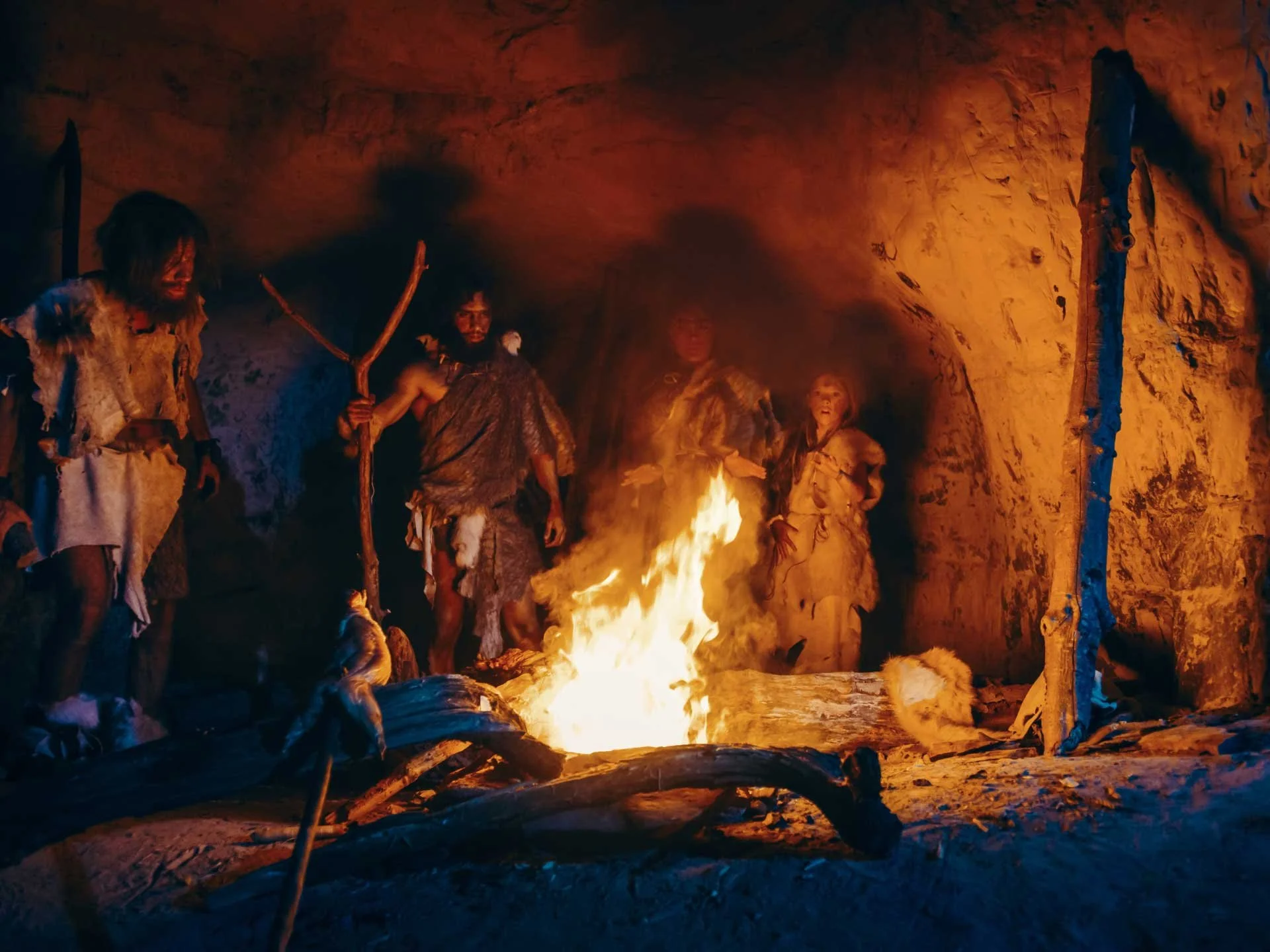
The first and most obvious social effect of fire was that it created a shared focal point. In the prehistoric world, the fire would have provided an enormous draw. It would have given people a place to gather after the day’s work, a place where the group naturally formed a circle. A fire naturally draws people together. Once humans could maintain a fire, it would quickly have become the centre of communal life. A fire produces warmth that spreads outwards encouraging people to sit nearby. Its light extends into darkness but only for a limited distance, creating a defined shared space. Unlike many aspects of early life, which were solitary or small-scale, fire drew people inward. Around it, human beings would have sat close enough to see each other’s faces, hear one another’s voices, and coordinate their lives. They could now remain together in larger groups long after sunset. In the prehistoric world, where daylight determined most activity, fire effectively would have extended the day. The evening hours were no longer lost to darkness. Instead, they became social time. When people gathered around the flames after hunting or gathering, they rested, talked, repaired tools, prepared food, and shared experiences from the day. The fire created a rhythm of community life — a daily return to the same shared centre. In this way, the fire circle may have been the earliest form of human social space.
This gathering around fire most likely also changed communication too. In daylight, most communication among early humans would have been functional and immediate — where to hunt, what to gather, how to avoid danger. At night, around the fire, communication could have become more expansive. People would have had time to talk beyond urgent tasks. They could explain, remember, imagine, and reflect. Fire allowed humans to use the evening hours not only for rest but for social exchange. In that sense, fire helped make the development of culture possible in a deeper way, because culture depends on the sharing of meaning, not just the sharing of resources.
The Birthplace of Storytelling
Another important social developments around fire was possibly the emergence of storytelling, which was most likely to have been born and flourished around fire. The flickering light, the darkness beyond the circle, and the sense of safety within it created the ideal conditions for telling stories. Around the fire, elders could pass on knowledge to the young. They could recount hunting experiences, warn of dangerous animals, describe landscapes, or share myths explaining the origins of the world. Tales could encode lessons about courage, caution, kinship, and survival. Oral tradition depends on attention, memory, and repetition, and fire provided an environment in which all three could thrive. The fire would not have merely kept people warm; it would have held them still long enough to listen. These stories may have become the earliest forms of cultural memory. Over time, stories would have allowed knowledge to travel across generations. A child listening beside the fire might learn not only survival skills but also the shared history of their people. In this way, fire helped create continuity between past and future. Without writing, storytelling was the library of early human societies — and the fire circle was its reading room.
This mattered socially because storytelling is far more than entertainment — storytelling is one of the main ways human beings build shared identity. It is one of the primary ways human beings transmit knowledge and identity. Stories teach people how the world works, what dangers exist, what values matter, and what it means to belong to a particular group. A group that tells the same stories begins to see itself as a group. Stories transmit values and create continuity between generations. Through them, a child learns not only how to survive but how to belong. The environment around a fire is perfectly suited to storytelling. Around the fire, the community could rehearse its sense of who it was, where it had come from, and what mattered most. The darkness beyond the circle creates a sense of mystery. The flickering light captures attention. The warmth encourages stillness and listening. In this way, fire became a tool of social memory.
Fire and the Extension of Human Time
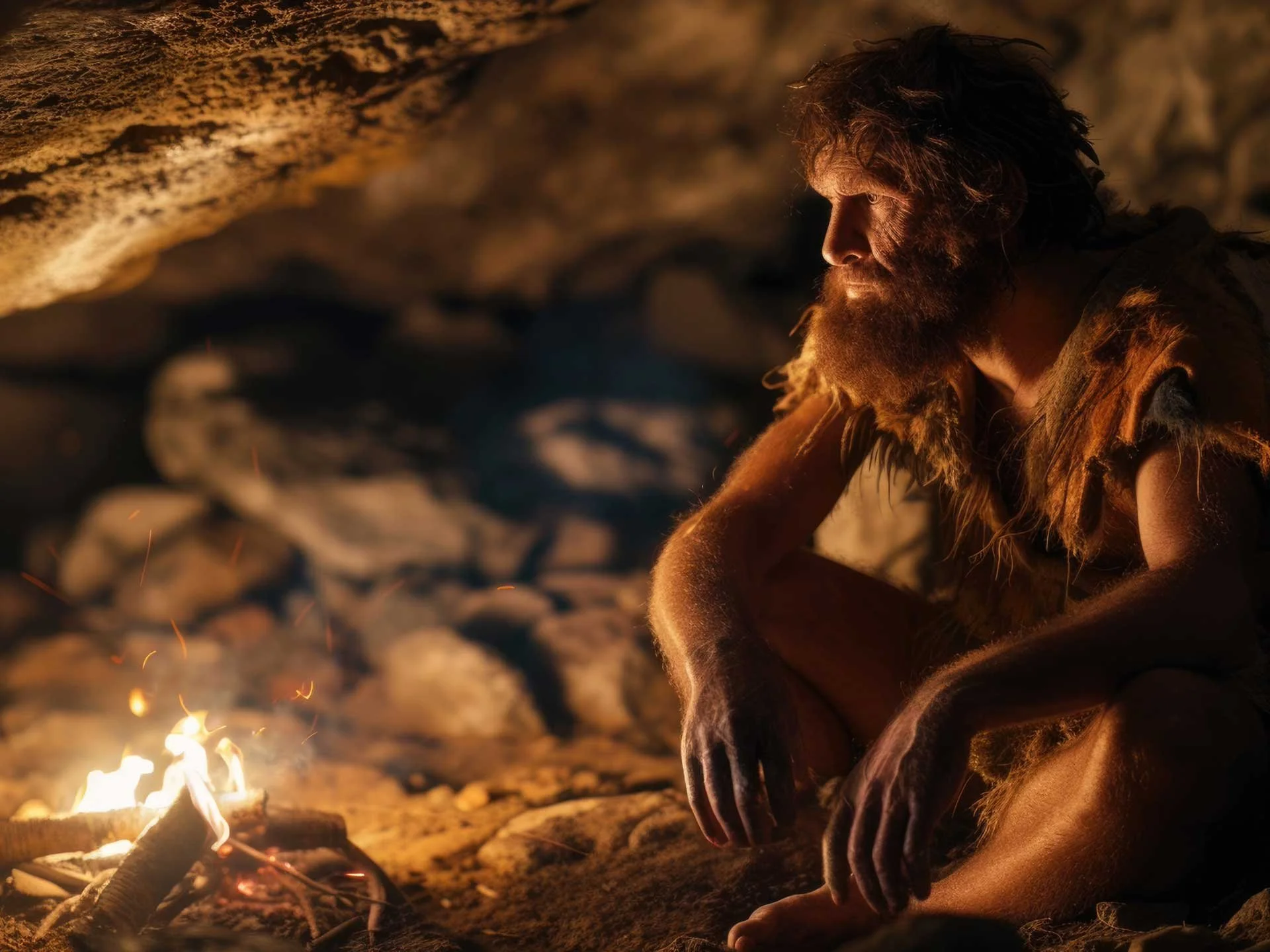
Fire also enabled a new division of time. Before controlled fire, night brought a sharp end to productive activity. After fire, darkness no longer meant total inactivity. Evening became a social domain and this would have altered human rhythms, encouraging longer waking hours, more social interaction, and more opportunities for cooperative planning. The ability to extend time after sunset may have deepened relationships within groups, because time together is one of the foundations of trust. Sitting together through the evening, sharing warmth and light, people could build emotional bonds that were harder to form in the rush of daylight labour. The ability to remain active after dark may have had even deeper social consequences. As discussed, whilst in daylight hours, early human life was largely focused on immediate survival: hunting, gathering, tool-making, and navigating the landscape, when communication was likely to be predominantly practical and task-focused. But once darkness fell and the fire was lit, a different kind of time emerged. This was reflective time when people could talk more freely. They could discuss plans, revisit past experiences, speculate about the future, or explore ideas. The evening fire created space for conversation beyond immediate necessity. These conversations likely strengthened social bonds within groups. Trust and cooperation grow through shared time, and the fire provided a regular opportunity for that time to occur. In this way, fire supported the development of deeper social relationships.
There is also a psychological dimension to this. Fire affects the human nervous system. Its warmth is comforting, its movement captivating, its light reassuring. Even today, many people feel drawn to a fire in a way that seems almost instinctive. That same attraction must have been powerful in the ancient world. Fire offered a rare combination of safety and fascination. It held danger in check while also providing something beautiful to watch. This made it an especially effective social anchor. People were not only forced to stay near it; they wanted to. That desire to linger together may have contributed to deeper social cohesion.
The Shared Meal
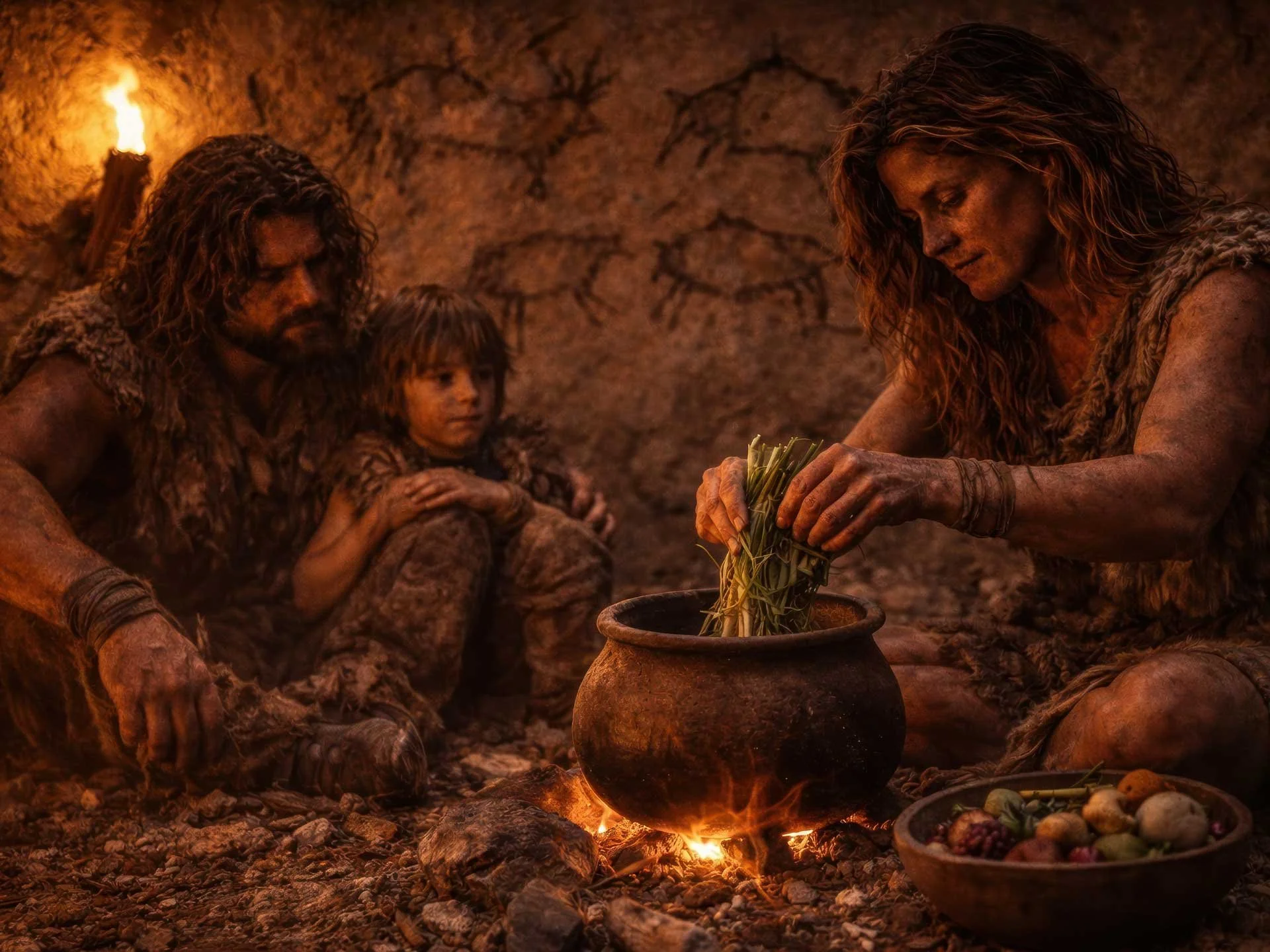
Fire also transformed one of the most basic human activities: eating. Cooking changes food in powerful ways. Heat softens tough fibres, kills harmful microbes, and releases new flavours and nutrients. Cooked food is often easier to digest and more enjoyable to eat. Cooking changed human diets, but it also changed social life. Preparing food over fire often requires cooperation. Someone gathers fuel. Someone prepares ingredients. Someone tends the flame. Food can then be shared communally. The act of cooking turned eating from a purely individual act into a social practice. Shared meals, warmed by fire, likely became occasions for reciprocity, negotiation, and celebration. Food shared around a fire is more than nourishment; it is an expression of mutual dependence.
Cooking may also have expanded the social possibilities of the human body itself. Softer, more digestible food reduced some of the time and effort required for chewing and processing raw materials. That, in turn, may have supported changes in human development over long periods. While these biological effects are important, the social significance is just as striking. If food becomes easier to prepare and share, then the group can spend more time on other cooperative activities. In this way, the fire shaped not only the meal but the whole structure of human interaction.
Fire as Protection
Fire also offered protection, and protection has social consequences. A group that can keep predators at bay is a group that can stay together more securely. Firelight, smoke, and heat would have helped early humans deter nocturnal animals and create safer sleeping areas. This would have made it possible for groups to settle more confidently in specific places, at least temporarily. Stability supports social development. When survival becomes slightly less precarious, people gain the freedom to invest more energy in relationships, creativity, and cultural expression. Fire thus helped create the conditions for social continuity.
Over time, fire became central to human settlement. Communities that could manage fire could shape their environment more effectively. They could clear land, prepare materials, and adapt landscapes for habitation. This was more than practical control — it was a different relationship with the world. Fire allowed humans to become active shapers of their surroundings, not merely occupants of them. That new power had social implications because it demanded coordination. Controlled burning, land clearing, and later more sophisticated uses of heat all required knowledge shared within the group. Fire knowledge became a form of social capital.
As societies became more complex, fire would have continued to play a central role. In villages, camps, and later cities, the hearth became a domestic centre. The hearth was not only a place to cook; it was the heart of the home. Around the hearth, families gathered, worked, ate, and talked. The domestic fire made private life possible in a new way. It created a warm, defined centre within the home, around which daily life could be organised. Even in later civilisations, the hearth remained symbolically powerful because it represented continuity, shelter, and family belonging.
Fire and Ritual
The social meaning of fire extends beyond the household into ritual and religion. Across cultures, fire has often been treated as sacred. It is used in ceremonies of purification, remembrance, blessing, and transformation. This is not accidental. Fire visibly changes what it touches. Wood becomes ash. Wax becomes light. Incense becomes fragrance. Because fire transforms, it has long been associated with transition and renewal. Ritual fire brings people together around shared meanings that reach beyond everyday survival. In ceremonies, fire marks beginnings and endings, grief and hope, death and rebirth.
This ritual role gives fire a profound social significance. Shared sacred fire can unite a community around a common center of meaning. It can mark festivals, seasonal changes, rites of passage, and communal vows. In many traditions, fire is not just used by a group — it helps create the group. People gather in relation to it, orienting themselves around something larger than the individual. The social power of fire here lies in its ability to embody collective values in visible form.
Fire has also been important in political life. Throughout history, public fires, beacons, bonfires, and ceremonial flames have been used to communicate authority, signal danger, and unite populations. In some settings, fire has symbolised sovereignty or communal identity. In others, it has been associated with resistance and revolution. The same element that once warmed a small prehistoric group later became part of nation-building, public commemoration, and civic ritual. Fire’s social meaning is therefore flexible, but always potent. It speaks to human beings because it combines utility with symbolism.
We can also understand fire as a technology of attention. Around it, people focus. The fire gives shape to social space and social rhythm. In a world without screens, without electric light, and without the distractions of modern life, the flame would have commanded full presence. That shared attention matters. Communities are formed not only by shared tasks but by shared focus. Fire created a place where attention could be gathered. It invited people to sit, look, wait, and listen together. In doing so, it supported the emergence of more elaborate social life, including teaching, ritual, decision-making, and group memory.
The discovery and control of fire also changed how humans experienced difference between day and night, inside and outside, safety and danger, home and wilderness. Socially, these distinctions mattered because they organised belonging. The fire marked the boundary of the group. Within the light, there was companionship and order. Beyond it, there was uncertainty and threat. This is partly practical, but it is also symbolic. Human communities often define themselves by the spaces they inhabit and protect. Fire made that boundary visible.
Fire and Human Creativity
As time went on, fire became the basis for many later forms of craft and industry. Pottery, metalworking, brickmaking, and glass production all depend on controlled heat. These crafts transformed human societies, allowing people to create stronger tools, durable buildings, and new forms of art. These developments changed societies profoundly, enabling new kinds of tools, trade, architecture, and labour organisation. But even here, the social significance of fire remained central. The workshop, the kiln, and the forge all became places where people worked together around controlled heat. Skills and knowledge would have been passed from one generation to another as craft skills were learned through apprenticeship and teaching. Workshops and forges became social centres of work and learning. Specialisation deepened. Fire supported not just products, but professions.
Final Thoughts
There is something striking about the fact that so many human institutions are built around fire, whether literally or symbolically. The campfire, the hearth, the altar, the furnace, the forge, the beacon, the torch, the candle, and even the modern controlled flame all carry traces of the same ancient significance. They are places or objects where people gather, remember, transform, and connect. Fire is one of the few human experiences that has remained meaningful across such vast stretches of time. It reaches backward to our earliest ancestors while still shaping our present lives.
In the modern world, fire is less central to daily survival than it once was, but its symbolic and social power has not disappeared. Bonfires are still used in seasonal festivals. Candles are still lit for remembrance, celebration, and mourning. Campfires still create intimacy among friends, families, and communities. Around a fire, people often talk more openly, laugh more freely, and feel less guarded. There is something about fire that draws out the social self. It invites presence. It slows the pace. It makes room for connection. Perhaps this is because fire reminds us of our shared origins. Before buildings, before electricity, before schedules and screens, there was the fire and the circle around it. There were voices in the dark, stories carried forward, meals shared, fears eased, and relationships strengthened. Fire helped turn a collection of individuals into a community. It gave early humans not only a means of survival but a way of living differently, more collectively, more imaginatively, and more consciously together.
The social significance of fire, then, is not simply that it provided warmth or protection. It shaped the very conditions under which human society developed. It made gathering possible. It extended conversation into the night. It supported storytelling, teaching, ritual, work, memory, and belonging. It helped human beings organise themselves around a shared centre and discover that life could be more than immediate survival. Life could be communal, symbolic, and reflective. In that sense, fire did more than illuminate the darkness. It illuminated what human life could become.
If you have enjoyed this article and would like to support what we do by donating £2 or more to buy saplings to plant, please follow the link below:


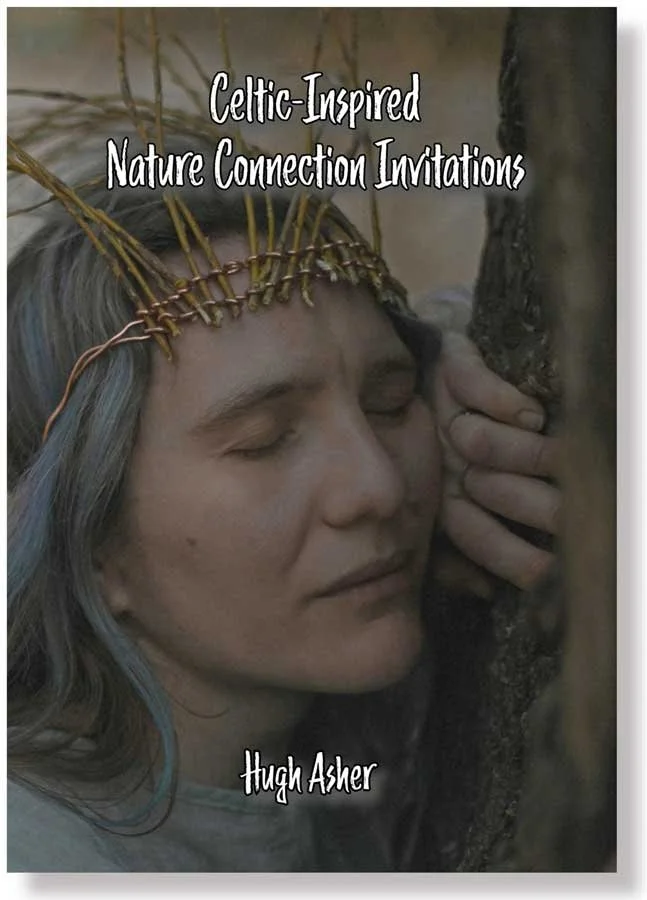



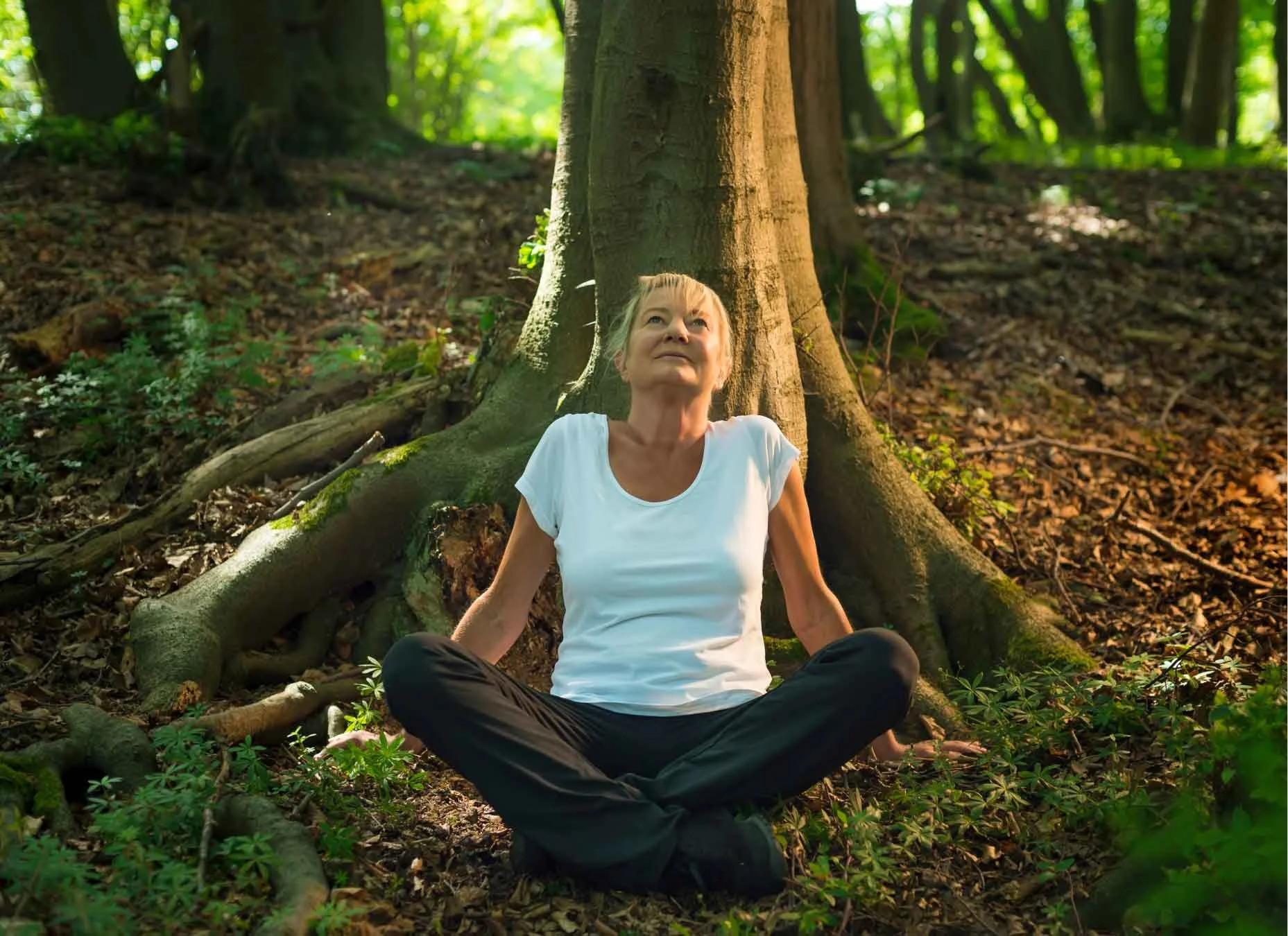









A small collection designed to gently open the door into deeper relationship with the natural world.
This complete set of four Forest Healing booklets brings together practical guidance, reflective ideas, and simple nature connection practices that can be used anywhere — from ancient woodland to a nearby park, garden, or even a single Sit Spot outdoors.
Written to be accessible, grounding, and easy to follow, these booklets offer a pathway into the core practices of Forest Bathing (Shinrin-yoku), Silvotherapy, and everyday nature connection. Rather than asking you to achieve anything, they simply invite you to slow down, notice more deeply, and allow nature to become an active presence in your wellbeing.
Across the four booklets you will explore:
• What Forest Bathing, Silvotherapy, and Nature Connection actually are
• The key benefits of spending mindful time in natural environments
• The practice of the “Sit Spot” and how to develop your own relationship with a chosen place
• Simple, practical Forest Bathing invitations you can try alone or with others
• Ways to bring nature connection into everyday life, even in small moments
Together, they form a gentle introduction to practices that have been shown to support reduced stress, improved mood, greater clarity of thought, and a deeper sense of belonging within the natural world.
These are not academic texts or rigid instruction manuals. They are invitations — encouraging you to step outside, slow your pace, and rediscover the quiet intelligence of trees, weather, and landscape.
Whether you are completely new to nature connection or looking to deepen an existing practice, this collection offers a simple, supportive starting point for building a more intentional and restorative relationship with the living world around you.
A small set of booklets that can change the way you experience even the most familiar patch of nature.
Buy all Four Forest Bathing and Nature-Connection Booklets for £11.00 including FREE P&P within the UK.
Postage to the Rest of the World is £4.