

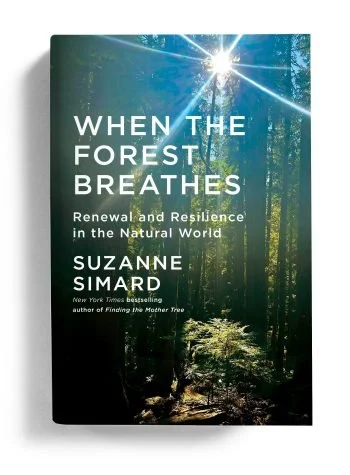
Book Review: ‘When the Forest Breathes: Renewal and Resilience in the Natural World’ by Suzanne Simard
Tuesday 7th April 2026
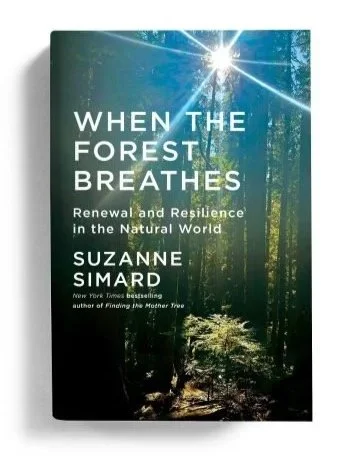
In her new recently published book, When the Forest Breathes, forest ecologist Suzanne Simard once again invites us to look more deeply into the life of forests — and in doing so, to reconsider our relationship with the living world. You may already know her through her groundbreaking research on the underground networks that connect trees (the mycorrhizal network or ‘Wood Wide Web’), or through her earlier book Finding the Mother Tree. This new work feels like a natural continuation of that journey.
It is a book about resilience, renewal, and the quiet intelligence of forests, but also about what those things might teach us about how to live.
Suzanne Simard has long argued that forests are not simply collections of individual trees competing with one another. Instead, they function as communities. Beneath the soil, trees are connected through vast fungal networks that allow them to share nutrients, signals, and support. Older trees — often called “mother trees” — play a particularly important role, nurturing young saplings and helping forests recover from disturbance.
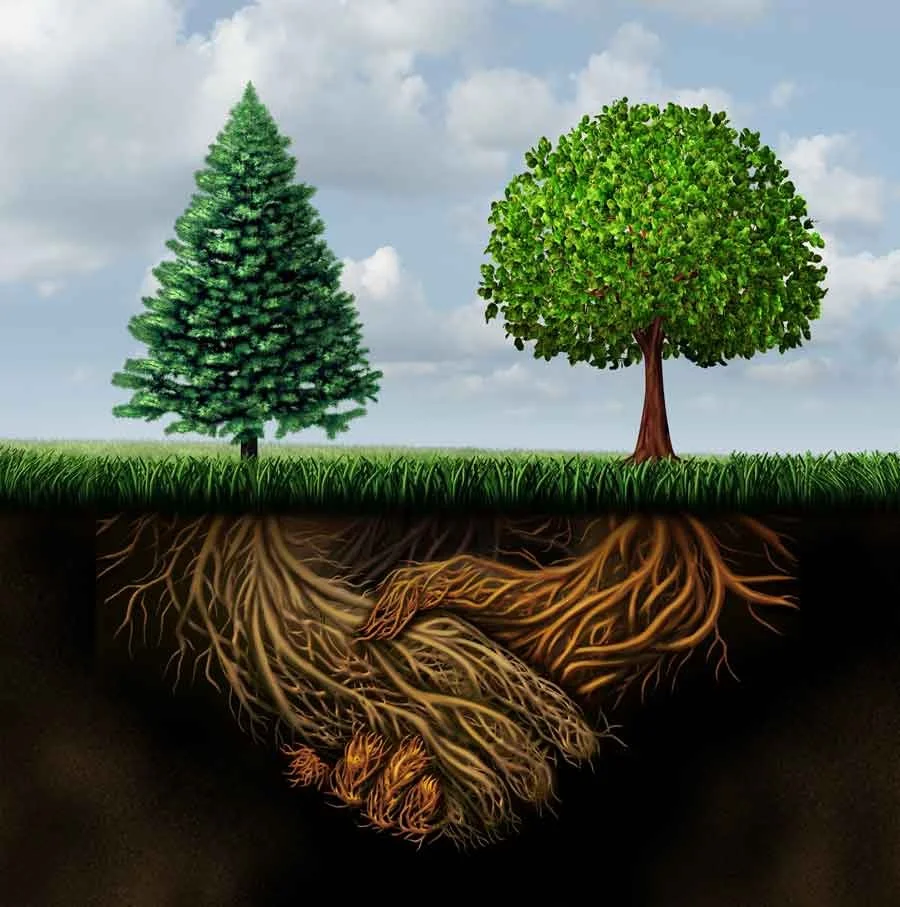
In When the Forest Breathes, Suzanne Simard revisits these ideas but places them in a wider and more reflective context. Rather than focusing only on the discovery itself, she explores what it means for the future of forests and for the people who depend on them. The central message is simple yet profound: forests thrive through cooperation, continuity, and relationship. When these systems are disrupted — through clear-cutting, soil degradation, or poorly managed forestry — the delicate web that sustains the forest is damaged.
One of the book’s great strengths is the way she combines science with story. Her research is rigorous and rooted in decades of fieldwork, but she writes with a warmth that makes complex ecological processes feel vivid and alive. We encounter forests not as abstract ecosystems but as places filled with memory, struggle, and renewal. She draws on her work across multiple research sites, as well as on her long-running Mother Tree Project, which studies how forests regenerate when natural relationships between trees are respected.
For readers interested in nature connection or ecotherapy, this blend of science and lived experience is particularly compelling. Her writing reminds us that knowledge does not only come from laboratories and data sets; it also grows from time spent walking in forests, observing seasonal change, and listening carefully to the patterns of the natural world. Her approach echoes something that many people intuitively feel when they spend time among trees: that forests are dynamic, responsive communities rather than static scenery.
Another theme that runs through the book is the idea of renewal. Forests are often perceived through the lens of loss — wildfires, disease, logging, and climate change dominate the headlines. Suzanne Simard does not ignore these threats. In fact, she addresses them directly, showing how modern industrial forestry has sometimes misunderstood or oversimplified the complexity of forest ecosystems. Practices such as large-scale clear-cutting can remove not only trees but also the living networks that allow forests to recover.
Yet the tone of the book is ultimately hopeful. In it she shows that forests possess remarkable capacities for resilience when their natural relationships are allowed to function — deadwood enriches the soil, mature trees shelter new growth, and fungal networks redistribute resources. What might look like decay from the outside often turns out to be part of a deeper cycle of regeneration. In other words, the forest breathes through patterns of loss and renewal that have unfolded for millennia.
One particularly moving aspect of the book is how Suzanne Simard weaves personal reflections into her scientific narrative. Her life as a researcher, mother, daughter, and collaborator unfolds alongside the ecological story she is telling. This gives the book a reflective quality that goes beyond traditional science writing. Forest regeneration becomes intertwined with the cycles of human life—family, ageing, grief, and growth. These parallel stories subtly reinforce the central idea that life continues through relationships across generations.
Readers may also appreciate Suzanne Simard’s openness to different ways of understanding forests. While firmly grounded in scientific research, she acknowledges the wisdom of Indigenous perspectives on land stewardship. Many Indigenous cultures have long recognised forests as living communities rather than resources to be extracted. By bringing these perspectives into conversation with modern ecology, she suggests that a more respectful and sustainable relationship with forests is both possible and necessary.
For those interested in the practices of Forest Bathing, nature connection, or ecotherapy, the book offers an important reminder: the healing qualities of forests are not co-incidental. They arise from the same complex networks of life that Suzanne Simard studies scientifically. When we walk slowly through a woodland, we are entering a community shaped by cooperation, patience, and reciprocity. Understanding that deeper ecology can enrich our experience of being there.
Perhaps the most powerful contribution of When the Forest Breathes is that it has the potential to change how we see forests. Once we begin to recognise the connections beneath our feet — the fungal threads linking roots, the elder trees sustaining younger ones — it becomes much more difficult to think of forests as simple timber resources. Instead, they appear as living systems whose health depends on relationships built over centuries.
Suzanne Simard does not present herself as having all the answers. Rather, she offers a perspective shaped by curiosity, humility, and decades of listening to forests. Her message is both scientific and ethical: if we want forests to survive the challenges of the coming century, we must learn from the patterns that have sustained them for thousands of years.
For Forest Healing followers, this is a book that will most likely resonate deeply. It affirms something that many people sense when they spend time among trees — that forests are not silent places but vibrant communities. They breathe, communicate, support one another, and recover when given the chance.
In reminding us of this, Suzanne Simard offers something more than a scientific explanation. She offers an invitation: to see forests differently, to care for them more thoughtfully, and perhaps to rediscover our own place within the wider community of life.
If you have enjoyed this article and would like to support what we do by donating £2 or more to buy saplings to plant, please follow the link below:


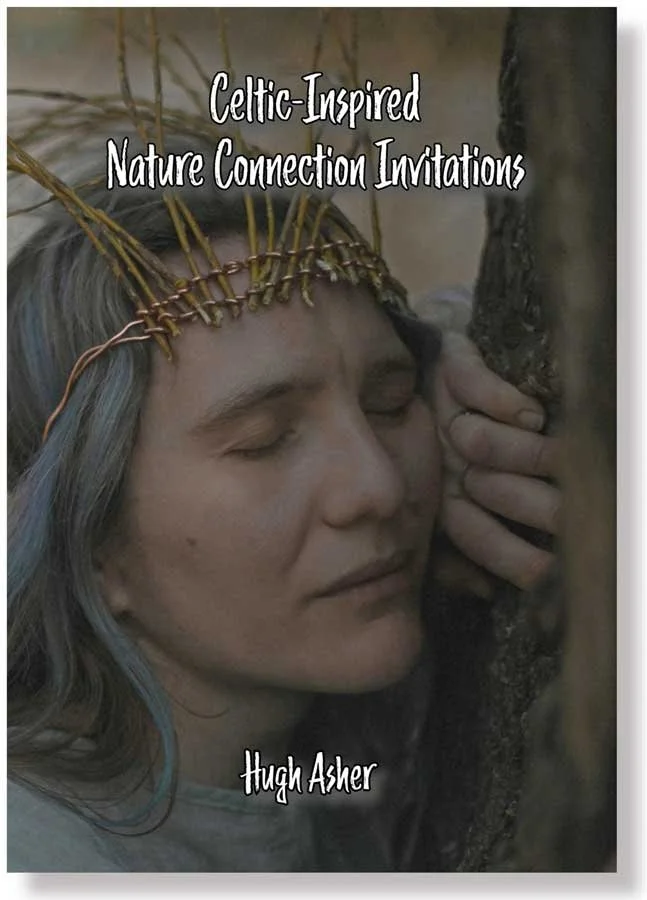

























A small collection designed to gently open the door into deeper relationship with the natural world.
This complete set of four Forest Healing booklets brings together practical guidance, reflective ideas, and simple nature connection practices that can be used anywhere — from ancient woodland to a nearby park, garden, or even a single Sit Spot outdoors.
Written to be accessible, grounding, and easy to follow, these booklets offer a pathway into the core practices of Forest Bathing (Shinrin-yoku), Silvotherapy, and everyday nature connection. Rather than asking you to achieve anything, they simply invite you to slow down, notice more deeply, and allow nature to become an active presence in your wellbeing.
Across the four booklets you will explore:
• What Forest Bathing, Silvotherapy, and Nature Connection actually are
• The key benefits of spending mindful time in natural environments
• The practice of the “Sit Spot” and how to develop your own relationship with a chosen place
• Simple, practical Forest Bathing invitations you can try alone or with others
• Ways to bring nature connection into everyday life, even in small moments
Together, they form a gentle introduction to practices that have been shown to support reduced stress, improved mood, greater clarity of thought, and a deeper sense of belonging within the natural world.
These are not academic texts or rigid instruction manuals. They are invitations — encouraging you to step outside, slow your pace, and rediscover the quiet intelligence of trees, weather, and landscape.
Whether you are completely new to nature connection or looking to deepen an existing practice, this collection offers a simple, supportive starting point for building a more intentional and restorative relationship with the living world around you.
A small set of booklets that can change the way you experience even the most familiar patch of nature.
Buy all Four Forest Bathing and Nature-Connection Booklets for £11.00 including FREE P&P within the UK.
Postage to the Rest of the World is £4.