

St. Lesmo, The Celtic Saints and Nature Connection
Saturday 21st March 2026
I am really privileged to spend quite a lot of time on the Glen Tanar Estate where I take people in recovery from drug and alcohol problems to undertake conservation and ecology activities as part of my ‘Recovery Through Nature Role’. Glen Tanar is the location of St. Lesmo’s Chapel, and so I felt drawn to look in more detail this week at St. Lesmo, the beliefs of the ‘Celtic Saints’ and the role of nature in wider Celtic spiritual practices.
St. Lesmo of Glen Tanar
St Lesmo is a somewhat obscure medieval hermit primarily associated with Glen Tanar, near Aboyne in Aberdeenshire. According to tradition he lived around AD 700–780 and “ministered” to travellers on the old Firmounth Pass. However, no contemporary records survive, and he is not mentioned in the Aberdeen Breviary (1507) or other early Scottish texts, which has led historians to question his historical status. The main source is the 17th‑century scholar Thomas Dempster, who listed him as a “saint”, and a few local accounts (such as Cushnie Enterprises) that note he “died c.731 AD” and had a spring named St Lesmo’s Well near the chapel site. In short, St. Lesmo is said to have been a great teacher who attracted disciples, but this rests on more on local lore, rather than on in-depth documentary evidence.
St. Lesmo’s Chapel in Glen Tanar
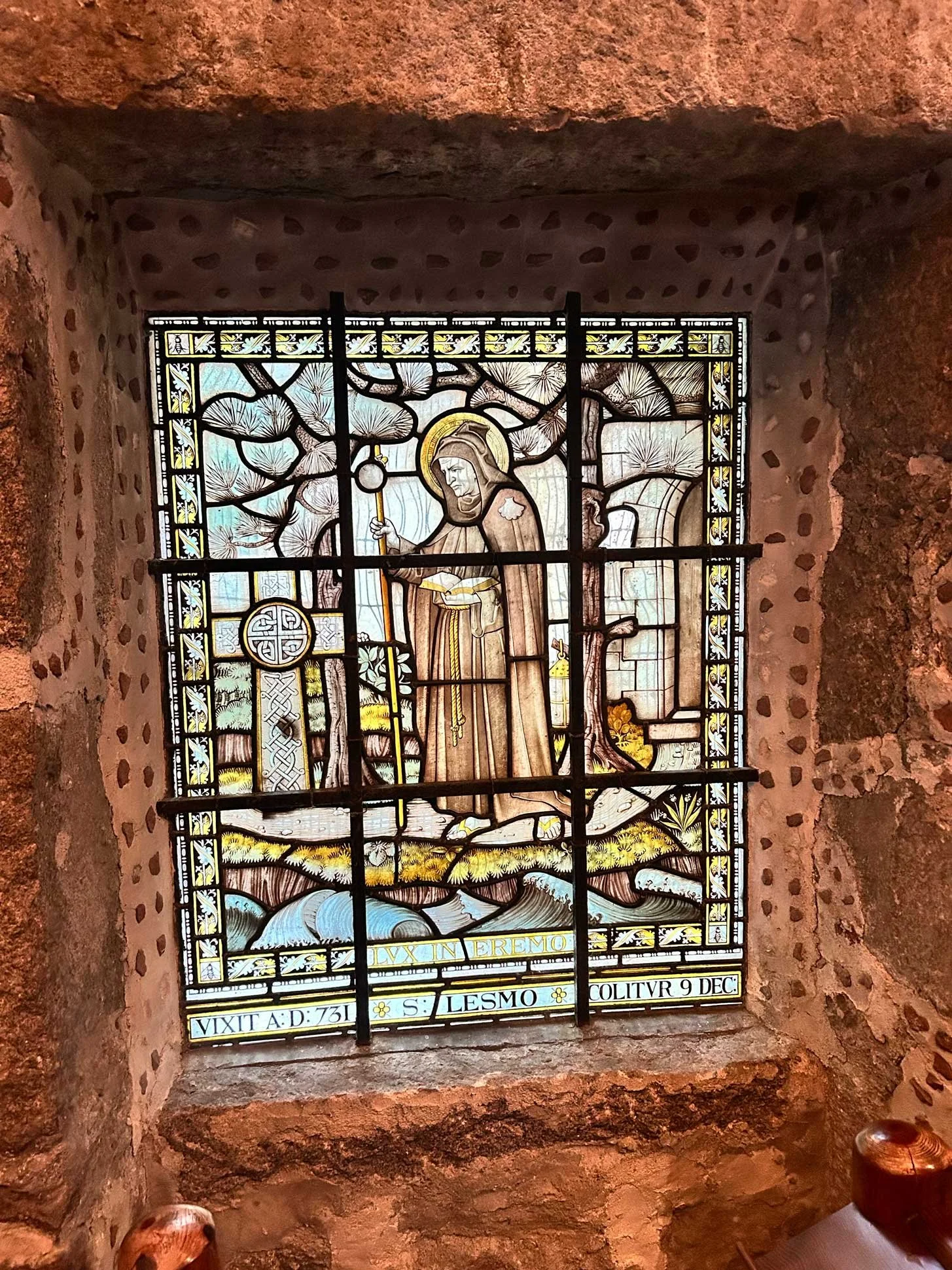
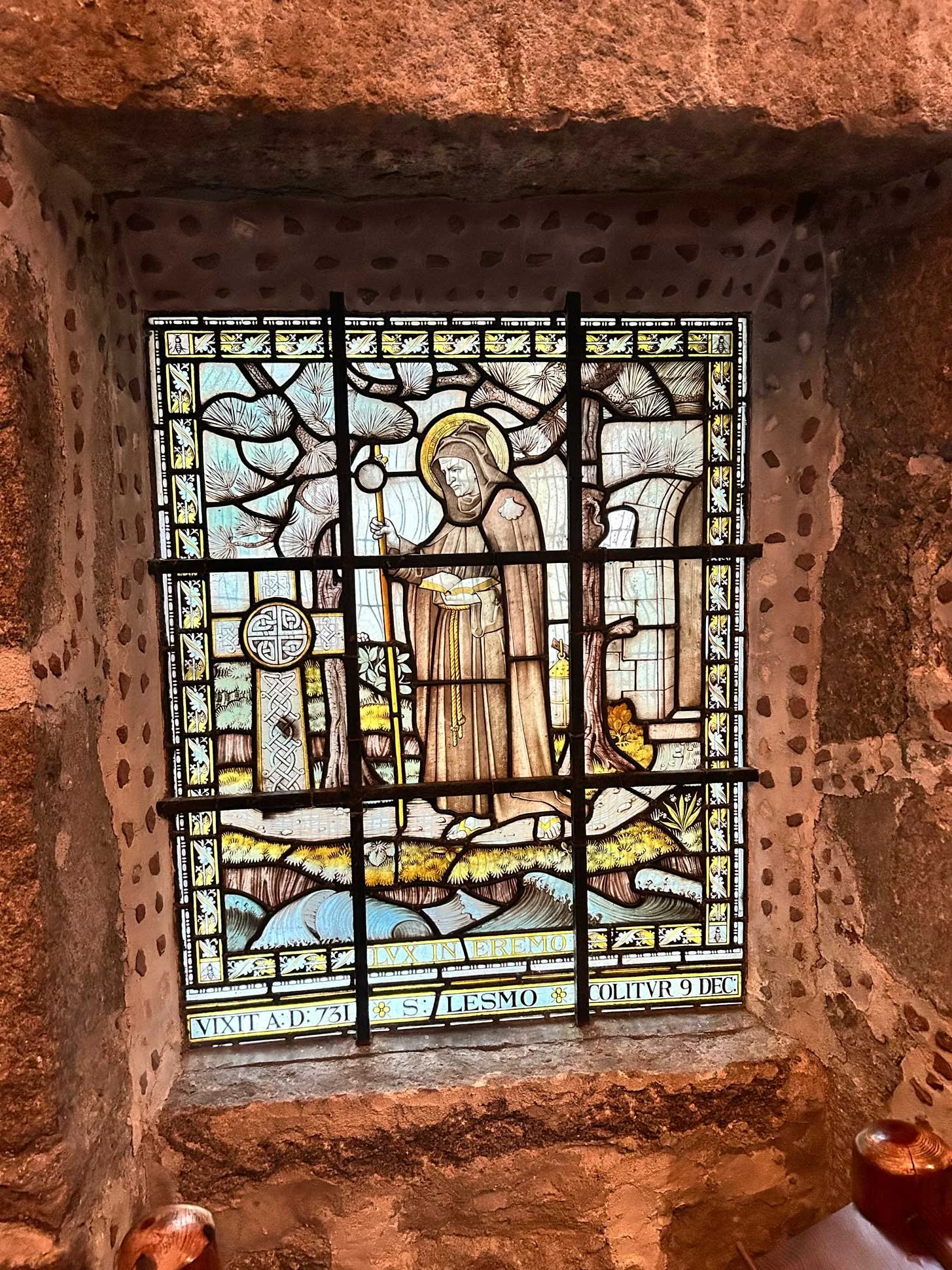
St Lesmo’s Chapel, Glen Tanar (built 1871–72). The stained‑glass window shows Lesmo as a pilgrim hermit, with the aphorism "LUX IN EREMO" below it, which translates as "Light in the Wilderness" providing a suggested link to nature and wild places.
In 1871 to 72 the wealthy laird William Cunliffe Brooks (an aristocrat from Manchester) built a private Scottish Episcopal chapel in Glen Tanar dedicated to St Lesmo. Its most notable feature is a stained‑glass window (pictured above) depicting Lesmo with a pilgrim’s staff and scallop shell – symbols of his status as a pilgrim. The window bears the inscription VIXIT AD 731…COLITUR 9 DEC (“He lived AD 731 – commemorated 9th Dec.”) and the motto LUX IN EREMO (“Light in the Wilderness”). These late 19th-century relics illustrate his story, but they may also hint that St Lesmo’s cult was potentially locally revived in Victorian times. Besides the chapel, a small spring marked “Hermit’s Well” appears on old Ordnance Survey maps of Glen Tanar, also suggesting a folk remembrance of Lesmo as a recluse in that landscape.
Celtic Saints and the Natural World
In a wider Celtic Christian context, many medieval Irish and Scottish saints are closely associated with nature — though often in ways we might not expect. Modern writers sometimes describe Celtic saints as if they were “nature mystics”, but scholars caution this can be anachronistic. In reality, most early Celtic monks and hermits sought out wilderness primarily for ascetic discipline, rather than environmentalism. As one historian notes, “many Celtic saints withdrew into the wilderness and slept in caves, but they did not do this out of love of nature. Rather, this was a product of an asceticism that sought to mortify the flesh”. Similarly, surviving prayers show the Irish saw nature as potentially dangerous — invoking God’s help against storms, drowning and wild beasts. For example, traditional prayers call on “strength of heaven — Light of Sun, Radiance of Moon, Splendour of fire, Speed of lightning, Swiftness of wind…” as divine protections.
Nevertheless, Celtic Christianity did ascribe a sacred quality to creation. Celts believed that everywhere in nature could encounter the divine. Irish tradition speaks of “sacred wells” and other “thin places” – spots where the veil between Heaven and Earth is thin. One writer explains that the old faith held “other ‘thin places’ where the visible and invisible world were unusually close together”. In this sacramental view, natural elements were outward signs of inner grace. Indeed, the famed Breastplate of St. Patrick literally invokes Sun, Moon, Sea and Earth as part of God’s protective creation. As Celtic theologians later taught, the physical world is “an outward and visible sign of an inward and invisible grace” – echoes of the Biblical teaching that “the tree teaches us” about righteousness (Psalm 1) or that all creation praises God.
Many legends around the Celtic Saints emphasise kindness to animals and the sacredness of creation. For instance:
St Columba of Iona (6th c.)
After founding the monastery on Iona, Columba insisted his monks care for the island’s wild birds. One story tells how he ordered a monk to carry an injured crane ashore and tend it, instructing that it be fed and sheltered for three days.St Kevin of Glendalough (6th–7th c.)
Kevin lived as an anchorite (a religious recluse who withdraws from secular society to live a solitary, prayer-focused life in strict, often permanent, confinement) in the Wicklow Mountains. Legend says a small bird built its nest in his outstretched hand while he stood in prayer. Kevin remained motionless for two weeks rather than disturb the bird or its eggs.St Columbanus (6th c.)
This Irish missionary is famed for gentle dominion over beasts. Stories tell of how wolves and birds would gather around him during prayer, acting tame as “puppies” listening to his psalms.St Cuthbert of Lindisfarne (7th c.)
St. Cuthbert emerged from icy sea prayer to find two otters had followed him ashore and were licking his feet to warm him.St Kieran of Saighir (6th–7th c.)
Legend describes how Kieran’s hermitage in Offaly was built with the help of a friendly boar, deer, badger and fox. The boar helped dig soil, the deer piled stones, and the other animals joined Kieran’s work.St Mochua had only a mouse, a fly and a rooster as coworkers — the cock crowing for matins, the mouse nibbling his ear as an alarm, and a fly guiding his finger along script.
These stories aren’t just charming folklore – they reflect a genuine Celtic sense that all creation participates in the life of God. As the Celtic prayerbook Carmina Gadelica declares, “There is no bird on the wing… but proclaims his [God’s] goodness”. An ancient Irish hymn similarly teaches that every plant, insect and animal “reveals a part of God” to us. Saint Ninian of Whithorn put it plainly: “The fruit of all study is to perceive the eternal Word of God reflected in every plant, insect, bird, animal, every man and woman”. And Saint Columbanus famously said, “Understand the creation if you would wish to know the Creator”. In short, these sources suggest that for the Celtic Christians (and pre-Christian Celts before them) the natural world was alive with the divine. One writer notes the Celts applied Christ’s command to the “least of my brothers and sisters” even to the smallest creatures, seeing all life as kindred and sacred.
Celtic Nature and Spiritual Tradition
The pagan roots of Celtic culture also weave deeply through their nature‑centric spirituality. Ancient Celts were animists: they believed “all things in the natural world possess a spirit or soul”. Every river, spring, hill and grove was thought to be inhabited by deities or spirits (often called sidhe or fairies). The Celts held a deep reverence for the inherent spirituality of the natural world – the idea that landforms, rivers and even rocks could be living symbols of the divine. For example, an old Gaelic invocation literally calls on the land itself: “Shining, shining sea! Fertile, fertile mountain! Wooded vale! Abundant river, abundant in waters!”. Such verses celebrate the land’s bounty as if greeting sacred kin.
Sacred Landscapes
The Celts marked many places as holy. Hills, caves, springs and ancient trees were “imbued with spiritual significance”. Many rituals took place outdoors among those features. High places (like hilltops and crannogs), grove‑temples and sacred wells were traditional gathering points. Even after Christianisation, monastic communities often built churches on these sites.Trees and Groves
Trees were particularly revered. Druids (whose name means “oak-knowers”) held oak groves as holy. The oak was hailed as the “King of Trees”, symbolizing strength and wisdom. Rituals frequently occurred in sacred groves; one observer writes that Celts considered trees as living beings with their own unique souls. (This respect for trees survives in legends like the Ogham script, which associates letters with different trees.)Animal Spirits
Certain animals were seen as guides or omens. Red deer, boars, stags, wolves, birds and insects appear as companions or symbols of the gods. Celtic deities like Cernunnos (the antlered forest god) and Brigid (goddess of Spring and healing) personify wilderness and fertility. The Celtic “Green Man” motif (a face emerging from foliage) — used later in churches — echoes this fusion of human and natural forms.Festivals of the Wheel of the Year
Celtic culture embedded nature in its calendar. The year was punctuated by four great fire festivals marking seasonal change. Imbolc (February) celebrated spring’s first stirrings, Beltane (May) celebrated summer’s arrival with bonfires and flowers, Lughnasadh (August) honored the first harvest, and Samhain (November) marked the onset of Winter and the turn of the year. These communal celebrations turned the cycles of planting, growth and harvest into sacred time.Druids and Spiritual Priests
The Druids were the learned class who maintained this nature-based wisdom. They acted as mediators between people, nature and spirit, interpreting omens from bird flights, tree rings and star positions. They conducted rites in woods and at spring wells. Even in Christian times, some Celtic saints and clerics integrated Druidic practices: for example, early monasteries were sometimes founded at former grove‑temple sites, and local wells were “Christianised” by naming them after saints.Sustainability and Community
Underlying these beliefs was a practical ethos of stewardship. Celtic farmers practiced crop rotation and communal grazing, recognizing that their wellbeing depended on keeping the land healthy. The Celts’ environmental awareness was rooted in animism and a sense of kinship: they believed their community extended to animals, plants and ancestors of the land. One modern summary observes that Celtic tradition teaches sustainability and interconnectedness: “the idea of interconnectedness… extends to all life forms, promoting a sense of responsibility towards the wellbeing of the planet”.
In short, Celtic culture (both pagan and Christian) wove nature into its spirituality at every level. Sacred hills, ancient trees, holy wells and the rhythm of seasons all conveyed meaning. Whether through saintly legends or old folk-beliefs, the Celts understood themselves as part of a sacred landscape. This worldview — nature as kin and creation as sacramental — underpins the enduring idea of “Celtic Earth spirituality”.
Final Thoughts
The legend of St. Lesmo of Glen Tanar is an example of a hermit‑saint tied to the wilderness; like many early Celtic hermits he served travellers on rough mountain roads. But it is really the broader Celtic tradition (with or without Christianity) that kept alive a deep love and respect for nature. From holy wells to storybook saints feeding animals, the Celtic ethos saw the natural world as charged with the divine. Even today, the legacy lives on in liturgy, folklore and the Green Man images of churches – reminders that for the Celts every tree, river and creature could point toward the divine.
If you have enjoyed this article and would like to support what we do by donating £2 or more to buy saplings to plant, please follow the link below:


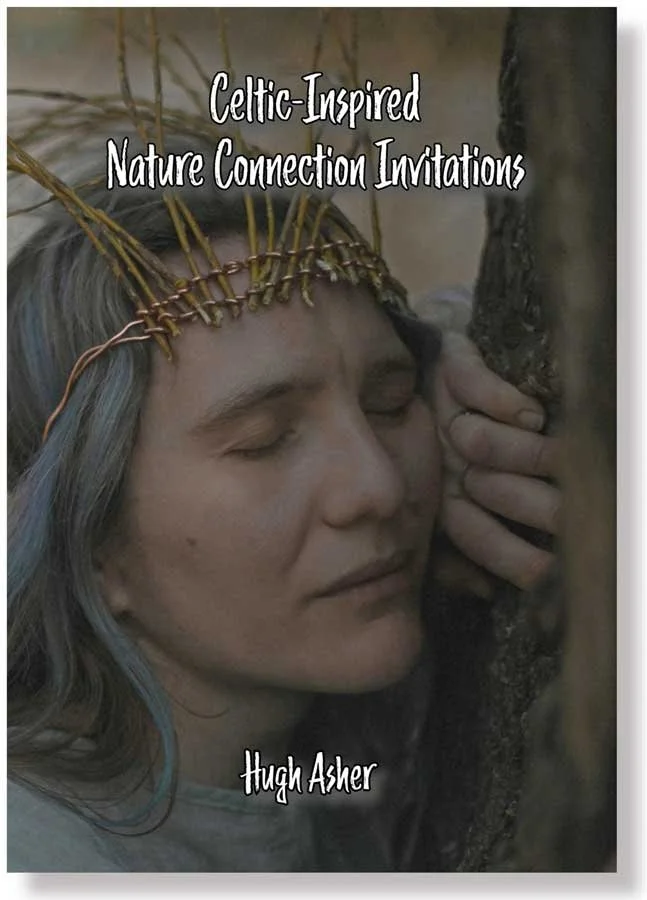








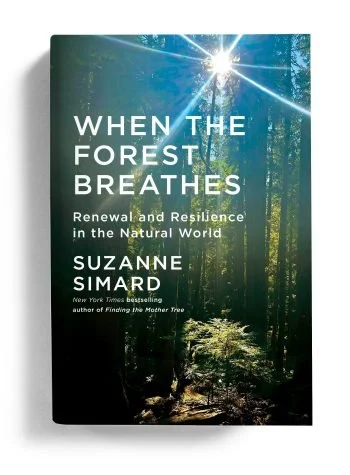

A small collection designed to gently open the door into deeper relationship with the natural world.
This complete set of four Forest Healing booklets brings together practical guidance, reflective ideas, and simple nature connection practices that can be used anywhere — from ancient woodland to a nearby park, garden, or even a single Sit Spot outdoors.
Written to be accessible, grounding, and easy to follow, these booklets offer a pathway into the core practices of Forest Bathing (Shinrin-yoku), Silvotherapy, and everyday nature connection. Rather than asking you to achieve anything, they simply invite you to slow down, notice more deeply, and allow nature to become an active presence in your wellbeing.
Across the four booklets you will explore:
• What Forest Bathing, Silvotherapy, and Nature Connection actually are
• The key benefits of spending mindful time in natural environments
• The practice of the “Sit Spot” and how to develop your own relationship with a chosen place
• Simple, practical Forest Bathing invitations you can try alone or with others
• Ways to bring nature connection into everyday life, even in small moments
Together, they form a gentle introduction to practices that have been shown to support reduced stress, improved mood, greater clarity of thought, and a deeper sense of belonging within the natural world.
These are not academic texts or rigid instruction manuals. They are invitations — encouraging you to step outside, slow your pace, and rediscover the quiet intelligence of trees, weather, and landscape.
Whether you are completely new to nature connection or looking to deepen an existing practice, this collection offers a simple, supportive starting point for building a more intentional and restorative relationship with the living world around you.
A small set of booklets that can change the way you experience even the most familiar patch of nature.
Buy all Four Forest Bathing and Nature-Connection Booklets for £11.00 including FREE P&P within the UK.
Postage to the Rest of the World is £4.