

Why I Have Mixed Feelings About John Muir
Saturday 7th March 2026
John Muir (1838–1914) was one of the most influential voices in the early conservation movement and is often affectionately called the “Father of the National Parks” in the United States. Born in Dunbar, Scotland, he emigrated to the United States as a child, where he developed a profound spiritual and scientific fascination with the natural world. His writings, activism, and tireless exploration helped shape modern ideas about wilderness as a place not only of ecological value, but of deep psychological and spiritual renewal.
Muir’s journeys through the American West — particularly in the Sierra Nevada of California — transformed both his life and the nation’s environmental conscience. His vivid essays about places such as Yosemite Valley captured the imagination of readers and policymakers alike, portraying wild landscapes as sacred spaces worthy of protection rather than exploitation. At a time when forests were widely viewed as timber reserves and mountains as obstacles to expansion, Muir articulated a radically different vision: that wild places possess intrinsic value.
In 1892, Muir co-founded the Sierra Club, which went on to become one of the most enduring environmental organisations in the world. Through advocacy, public lectures, and correspondence — including influential engagement with President Theodore Roosevelt — Muir played a key role in establishing and expanding protected areas across the United States.
Beyond policy and preservation, Muir’s legacy endures in the way he invited people to feel nature. His reflections on forests, glaciers, and wildflowers speak to an intimate reciprocity between humans and the living world — a perspective that continues to inspire nature connection practices today. For anyone interested in the reciprocal relationships between people and trees, Muir stands as both a historical figure and a poetic guide into the heart of the wild.
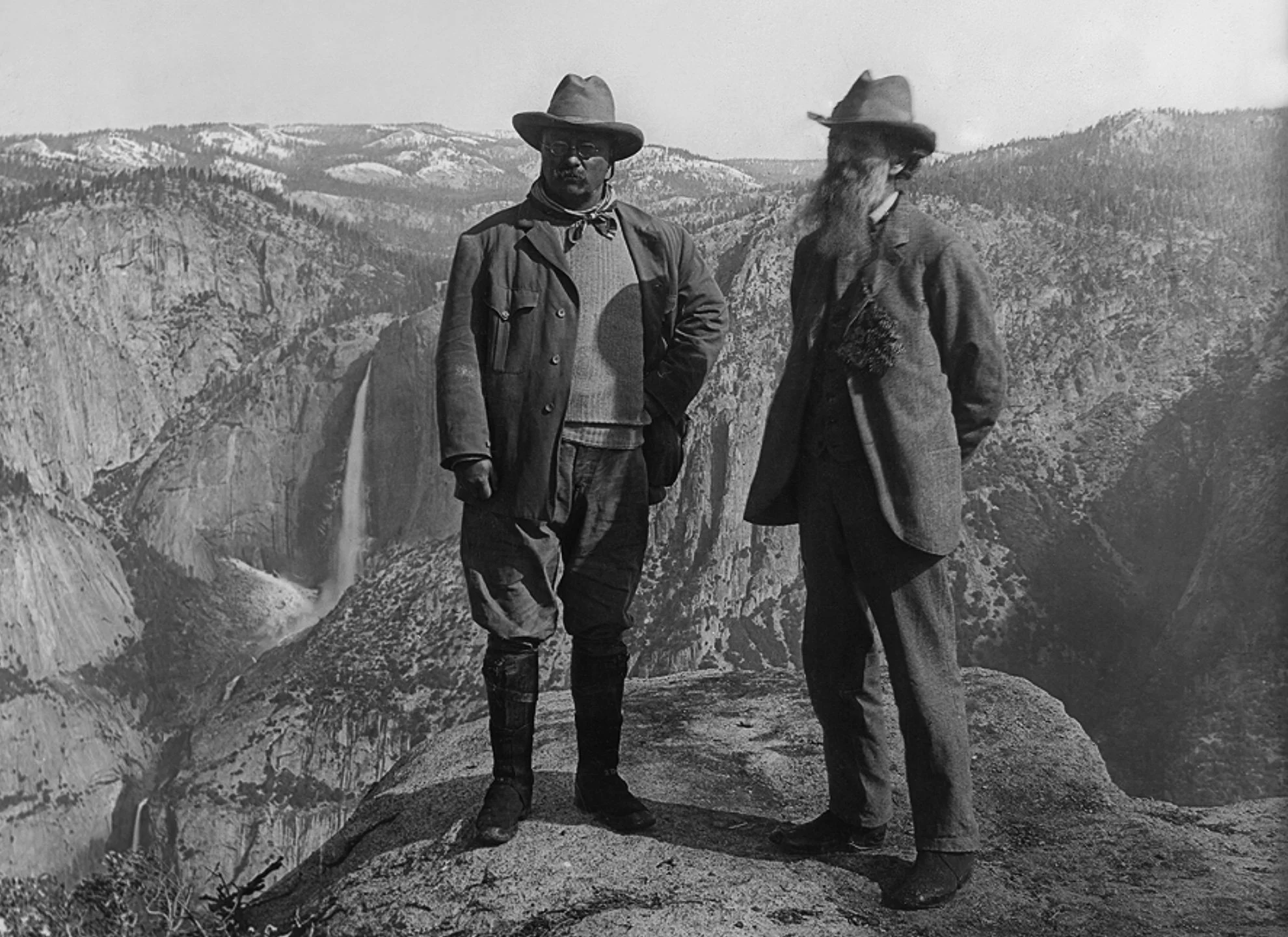
Theodore Roosevelt (Left) and John Muir (Right)
Hiking, Sauntering and What We Might Call Forest Bathing
John Muir made a playful but very meaningful distinction between what we now call “hiking” and what he preferred to describe as “sauntering”. For Muir, the word hiking suggested purposeful travel — movement with a destination, a goal, or a timetable. To him it implied covering ground, measuring distance, and arriving somewhere. That spirit of efficiency felt at odds with his experience of wilderness we are told, and it is said that he did not enter forests and mountains to conquer them or to clock miles — he entered them to belong.
By contrast, John Muir loved the word sauntering. He drew on an old, somewhat romantic etymology apparently, claiming that it came from “à la sainte terre” — “to the Holy Land”. Whether this is linguistically accurate or not, the symbolism mattered deeply to him. To saunter was to wander with reverence, to move through the landscape as if on a pilgrimage. It meant allowing the land to set the pace. A saunterer could pause for an hour beside a stream, follow the flight of a bird, or lie on warm granite watching clouds drift past. The journey itself — the encounter — was the point.
This distinction reveals something central to Muir’s philosophy. He believed wild places were not scenery to be consumed but living communities to be met with humility and attention. Hiking, in its goal-oriented sense, risked reducing nature to a backdrop for achievement. Sauntering, on the other hand, cultivated a much deeper relationship with nature. To him it encouraged openness, curiosity, and receptivity — qualities that allowed the mountains and forests to teach.
In this way, John Muir’s preference for sauntering speaks powerfully to modern nature connection practices. To saunter is to slow down enough to notice the intricate textures of bark, the scent of sun-warmed pine, or the quiet industry of ants at work. It is to move without agenda and to let the more-than-human world shape the encounter. For Muir, that was not leisure in the trivial sense — it was a form of devotion.
The Darker Side of John Muir’s Legacy
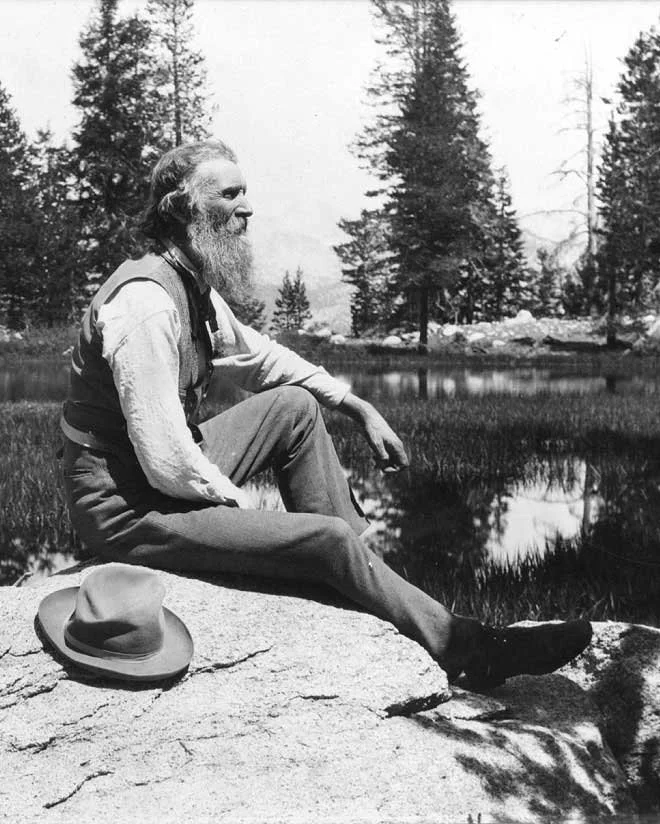
Whilst John Muir is seen as ‘The Father of the National Parks’ in the United States, as he was instrumental in creating national parks like Yosemite and Sequoia, his vision was shaped by views that might not seem as acceptable or appropriate today. Although John Muir’s lyrical writing and descriptions of his walking expeditions greatly inspired the modern environmental movement, many of his beliefs – especially about race and wilderness – are now seen as somewhat, if not deeply, problematic. Many modern scholars have reexamined Muir’s legacy in light of his 19th-century prejudices and exclusionary ideals.
Praise and Prejudice: Muir’s Early Views
In his time, Muir’s attitudes toward race reflected common 19th-century prejudices. He frequently expressed these prejudices using derogatory language. For example, Muir is reported as calling Native Americans “dirty savages” and his image of pristine wilderness unshaped by humans only existed if native people weren’t part of it. He wrote that American Indians “seemed to have no right place in the landscape” of Yosemite, implying they did not belong in what he saw as wild nature, and that Native Americans (Indians) needed to be removed in order to reinvent those places as untouched. Such remarks were common in his era but are often viewed as offensive to modern readers. It is also widely noted that many of Muir’s associates in the early days of the Sierra Club — a prominent American environmental organisation founded in 1892 by John Muir to protect wild places, promote sustainable energy, and advocate for environmental policy — actively promoted white supremacist ideas. Leaders like Joseph LeConte and David Starr Jordan endorsed eugenics and “promoting the race” of whites, linking conservation to a racist worldview.
It should be remembered though, and acknowledged though that later in life, Muir’s views did shift somewhat. By the turn of the 20th Century he was traveling widely in Alaska and living among Native guides, where he came to admire many Alaskan Native cultures, and his later writings include praise for indigenous tribes. The Sierra Club notes that Muir’s “views evolved later in his life” after his youthful comments. Nevertheless, his early writings remain central to how we remember him, and they continue to be regularly cited when examining the darker side of his legacy.
The Wilderness Concept: “Nature Without People”
One of Muir’s most enduring ideas was the notion of wilderness as a divine creation, separate from humans. He described mountains and forests as holy places “unsullied by human influence”. Influenced by transcendentalist thought, Muir often spoke of nature as a manifestation of God’s will — implying it should be preserved in a state free of human disturbance.
Muir’s writing rarely acknowledged that Indigenous tribes had long managed the lands he loved. Environmental historian William Cronon notes that the late-19th-century idea of wilderness saw the land as “fashioned by God, rather than crafted by people”. Muir embodied this view: in The Mountains of California he called the landscape a “divine manuscript” from which he would read spiritual lessons — language that effectively erased human agency. This idealisation espoused
God-given nature
Muir described the Sierra Nevada as a “divine manuscript” from which to read spiritual lessons, reflecting his belief that nature existed apart from people.Unsullied landscapes
He insisted wilderness was only valuable when “unsullied by human influence”, a view implying true wildlands must exclude humans entirely.Indigenous displacement
In practice, this ethos helped justify the removal of Native Americans from areas that became National Parks. Conservation policy under Muir’s influence treated such National Parks as “sacred places without people, and principally without Native people”, as historians observe.
These ideas shaped how Yosemite and other National Parks were established. By Muir’s time, U.S. policy had already violently displaced Yosemite’s native Ahwahnechee and Miwuk tribes. Muir’s writings simply ignored that history. Scholars point out that his accounts are marked by “the absence of reflection on… the removal of Native peoples from the ‘natural’ lands he describes”. In short, Muir treated wilderness as a place where people (especially Native American tribes) had already been erased.
Erasure of Indigenous Presence
Because of this erasure, Muir’s narrative contains glaring contradictions, although his own upbringing may offer a clues. His family settled on land recently taken from Native tribes in Wisconsin, yet in his books Native Americans appear only in childhood memories and not in the western landscapes he celebrates. His approach conveniently avoided the fact that the valleys and forests he adored were long the homelands of peoples who had been forced out.
Modern scholars often suggest that Muir suppressed these memories. One analysis describes how Muir, the famed conservationist, had “created a system of land preservation that relies on the erasure of people, especially Native people, from pristine nature”. By portraying parks as “sacred” and “unpeopled,” early conservationists avoided confronting the dispossession that made wilderness possible. The result was a “romanticised” history in which the founding of parks overlooked their colonial underpinnings.
Indigenous Perspectives and Modern Reappraisal
Today, many argue that Muir’s contribution to nature preservation should be acknowledged alongside recognition of those displaced. The Sierra Club has urged that while Muir’s name can and should stay on parks and landmarks, we must also tell the truth about history. “It’s not just Muir who was racist”, Stanford historian Richard White observes; rather, the entire creation of the wilderness areas “that we now rightly prize” was built on racial assumptions. In 2020 the Club explicitly noted that wild places are also “the ancestral homelands of Native peoples, forced off their lands” during the era before parks.
Native Californians speak strongly on this history. For example, Southern Sierra Miwuk chair Sandra Roan Chapman emphasises that her people were the true “first stewards” of Yosemite. She bluntly rejects the myth of Muir’s discovery: “They say John Muir found Eden. He didn’t find Eden. It was always there.”. Other tribal members remind us that they were “banished… out of Yosemite” yet still remain on the land. Such voices underline that the land’s history did not begin with Muir’s arrival.
These reappraisals are also reflected in policy discussions. Some conservationists now propose returning large tracts of wilderness to tribal management, reversing the exclusions of the 19th century. In Yosemite, the Park Service has agreed to co-manage certain sites with Miwuk tribes and to restore native place names and cultural programs on ancestral sites. Acknowledging Muir’s mistakes is seen as part of a broader move toward environmental justice and inclusivity.
Legacy: Contributions and Critiques
John Muir’s legacy is complex. On the one hand, his writings awakened many people to the beauty of the Sierra, the redwood groves, and the Alaskan peaks. Many national parks exist today largely thanks to his efforts. On the other hand, the ideology he championed — that nature is best preserved when it is “untouched” by people — carried the blind spots of his era.
Final Thoughts
In summary, views of Muir now often distinguish between his conservation impact and his outdated beliefs. His racist remarks and his denial of Indigenous land rights are viewed as unacceptable by today’s standards. Yet experts suggest we learn from that history rather than erase it. As Richard White put it, we should “leave Muir’s name on things but explain that… it is not just Muir who was racist… the way we created the wilderness areas we now rightly prize was racist.”. In practice, we can pair praise for wild beauty with honest mention of past injustices. By treating Muir’s example as a learning exercise — acknowledging both the lands he helped save and the peoples displaced in the process — we can honour nature and history together.
If you have enjoyed this article and would like to support what we do by donating £2 or more to buy saplings to plant, please follow the link below:


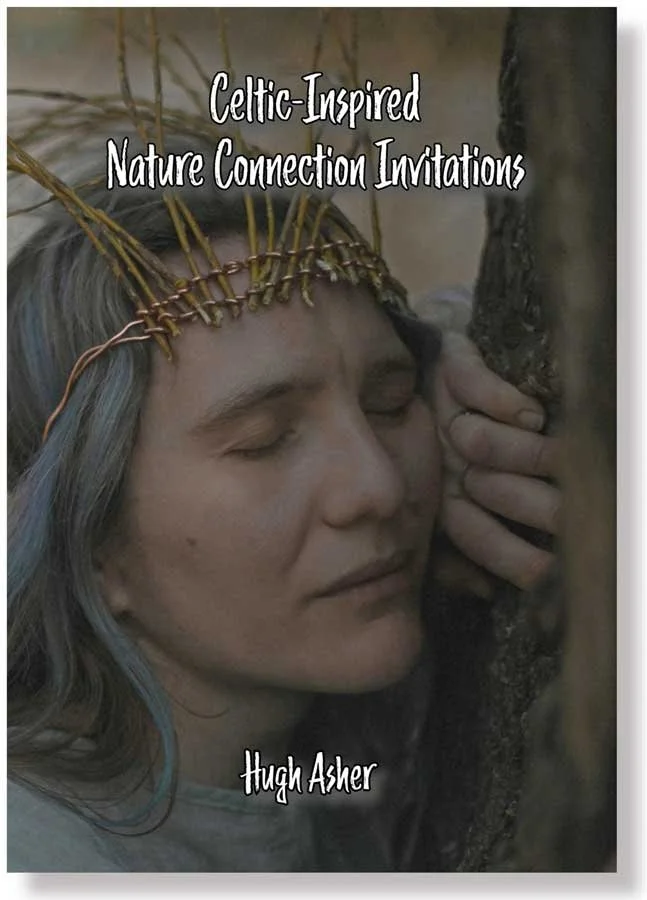





















A small collection designed to gently open the door into deeper relationship with the natural world.
This complete set of four Forest Healing booklets brings together practical guidance, reflective ideas, and simple nature connection practices that can be used anywhere — from ancient woodland to a nearby park, garden, or even a single Sit Spot outdoors.
Written to be accessible, grounding, and easy to follow, these booklets offer a pathway into the core practices of Forest Bathing (Shinrin-yoku), Silvotherapy, and everyday nature connection. Rather than asking you to achieve anything, they simply invite you to slow down, notice more deeply, and allow nature to become an active presence in your wellbeing.
Across the four booklets you will explore:
• What Forest Bathing, Silvotherapy, and Nature Connection actually are
• The key benefits of spending mindful time in natural environments
• The practice of the “Sit Spot” and how to develop your own relationship with a chosen place
• Simple, practical Forest Bathing invitations you can try alone or with others
• Ways to bring nature connection into everyday life, even in small moments
Together, they form a gentle introduction to practices that have been shown to support reduced stress, improved mood, greater clarity of thought, and a deeper sense of belonging within the natural world.
These are not academic texts or rigid instruction manuals. They are invitations — encouraging you to step outside, slow your pace, and rediscover the quiet intelligence of trees, weather, and landscape.
Whether you are completely new to nature connection or looking to deepen an existing practice, this collection offers a simple, supportive starting point for building a more intentional and restorative relationship with the living world around you.
A small set of booklets that can change the way you experience even the most familiar patch of nature.
Buy all Four Forest Bathing and Nature-Connection Booklets for £11.00 including FREE P&P within the UK.
Postage to the Rest of the World is £4.