

The Benefits of Connecting Deep Work and Nature For Focused Productivity
First Written 7th January 2023
Updated 28th March 2026
We all have a natural connection to nature, but sometimes we don’t realise how important it is for our mental and physical wellbeing. Learning how to disconnect from technology and embrace ‘Deep Work’ by spending more time in nature can be highly beneficial both for our mental and emotional wellbeing, was well as for our productivity, creativity, clarity and concentration.
Deep Work
‘Deep Work’ is a term coined by productivity expert and professor Cal Newport to refer to extended periods of focused, undistracted effort on cognitively demanding tasks. It is a state of flow in which a person is fully immersed in their work and where they are able to work at their highest level of productivity and creativity to produce high-quality results, often in a short amount of time. Modern work environments (involving frequent email notifications, multitasking, and open offices) continually tax our attention and lead to mental fatigue. Attention Restoration Theory (ART) proposes that natural environments replenish this resource by engaging our involuntary attention (soft fascination) and allowing directed attention to rest. According to ART, restorative environments offer four qualities – Fascination, Being Away, Extent, and Compatibility – all found in nature
Some people find activities such as meditation or mindfulness practices to help them achieve a state of Deep Work more easily and frequently. Nature-based activities such as listening to leaves rustle or watching clouds drift (fascination) effortlessly holds our attention, while greenery feels ‘away’ from work demands, replenishing our focus. Empirical studies confirm that natural settings consistently score higher on perceived restorativeness than urban settings. This theoretical framework underpins why a walk in the woods or even a window view might renew our capacity for deep work.
Nature Connection
Nature connection refers to the relationship between humans and the natural environment. There are many different ways that people can connect with nature and find benefits. Some people might find a sense of peace and calm by spending time in natural surroundings, such as by going for a walk in the woods or spending time by a lake. Others might find that simply being in nature helps them to feel more grounded and connected to the world around them. Still others might find that nature provides a sense of adventure and excitement, such as when exploring a new trail or climbing a mountain. In general, being in nature can provide a sense of balance and wellbeing, and can help people to feel more connected to the natural world, even though connection with nature can take many forms and is unique to each individual.
Deep Work and Nature Connection
There is evidence that both Deep Work and nature connection can have positive effects on wellbeing, productivity, and creativity. In particular, research has shown that spending time in nature can improve mental health, reduce stress and anxiety, and boost creativity. Research specifically looking at the effects of Forest Bathing on creativity found that as well as increasing positive emotions and reducing negative emotions, Forest Bathing improved participants’ creative performances by over 25%, suggesting that forest therapies can increase high-level creative cognitive functioning.Similarly, the ability to focus and engage in Deep Work can lead to increased productivity and improved quality of work. There is further evidence that combining the two can be particularly beneficial, as the natural environment can provide a peaceful and distraction-free setting for Deep Work, while the sense of connection to nature can help to reduce stress and promote a sense of well-being.
Cognitive Benefits of Nature Exposure
Working Memory & Attention
Multiple reviews and meta-analyses show that nature exposure boosts cognitive functions, especially those requiring sustained attention. A systematic review found working memory and cognitive flexibility were reliably improved after natural exposure, with low-to-moderate effect sizes. For example, Berman et al. (2008) famously showed that a 50-minute nature walk (vs. urban walk) improved participants’ backward digit-span scores. More recently, a large analysis (N=528) of various nature vs. urban interventions confirmed significant gains in an executive working-memory task (backwards digit span) after nature exposure, even after accounting for practice effects. In sum, studies consistently find that post-nature performance on attention-demanding tasks is higher than post-urban exposure.
Neural Indices
EEG research corroborates behavioral findings. In one Randomised Control Trial, a 40-minute nature walk (vs. urban walk) produced an increase in the brain’s error-related negativity (ERN) component – an index of executive control – while the urban group showed no change. In other words, after walking in nature participants had a measurably stronger neural signal of improved cognitive control. Likewise, a 15-minute outdoor walk (vs. indoor) increased P300 amplitude (a marker of attention) in the oddball task. These neural enhancements indicate that even brief outdoor activity can sharpen attention networks above and beyond exercise alone.
Mood and Stress Reduction
Nature’s cognitive benefits are partly mediated by lowering stress and improving mood. Exposure to natural environments or stimuli reliably decreases stress hormones and subjective fatigue. For instance, guided Forest Bathing Walks (Shinrin-yoku) have shown large drops in cortisol and blood pressure compared to urban walks. In one study, as little as 4–6 minutes of forest or park exposure produced statistically significant reductions in stress and improvements in attention test scores. Simply listening to forest sounds (birds, streams) also improved mood and perceived restorativeness more than traffic noises. Lower stress means less cognitive interference (anxiety, mind-wandering), allowing deeper concentration.
Creativity and Problem-Solving
Time in nature can spark insight and creative thinking. In laboratory studies, participants performed better on convergent-thinking problems after nature imagery or walks. For example, a recent trial found that a mental guided “walk in nature” (imagining being in a forest) significantly improved scores on a remote-associates creativity test, whereas an “urban” guided walk did not. This suggests that even simulated nature experiences can boost the convergent facet of creativity. (Other studies report nature exposure promotes divergent ideas generation as well.) Anecdotal examples abound: both Einstein (see below) and Newton reportedly took nature walks that led to breakthroughs. While rigorous causation is hard to prove, the empirical trend is clear – brain networks underlying insight and flexibility recover during nature breaks.
Take a Walk in Nature to De-Stress and Refocus

A daily walk in nature was sacred to Albert Einstein as he believed that allowing his mind to wander during walks often brought solutions regarding the universe's most vexing mysteries. This is supported by studies that have shown that taking a walk in nature boosts creativity, reduces stress, and can even enhance problem-solving abilities as the brain seems to adopt a totally different style of thinking that can lead to insights you might not get sitting indoors at a desk. When implementing Deep Work methods, it is therefore often beneficial to take breaks outdoors to reset the mind. A literal change of scenery can help refocus energy levels, break up tedious tasks, and spark fresh ideas. Not only that, but getting outside can allow you to connect with nature better, and this can give you an increased sense of well-being and leave you feeling more energised to continue your work. It is also well documented that exercise reduces stress, anxiety and depression and evidence suggests we benefit more from exercise done in nature rather than indoors or in urban settings.
Experience Clarity and Focus Through Nature Connection
Getting outdoors and connecting with nature is a great way to clear your head, focus on the task at hand, and experience better mental clarity and creativity. Nature has an inherently calming effect that helps to eliminate distractions and to open up space so that we can think more clearly and creatively, and to form connection between ideas. This type of ‘Deep Work’ requires boundaries, discipline, and a dedication to productivity, but it can really be beneficial in the long run.
Finding the Right Balance of Work and Nature Connection
When connecting with nature and engaging in Deep Work, it’s important to find the right balance. Too much time spent on focused tasks can cause burnout and too little can prevent progress. Try to establish realistic goals for yourself and incorporate regular breaks outdoors into your daily working routine. Start small, even if that means just spending a few moments standing or sitting in the sun, so that you develop healthy habits of taking regular nature breaks which will ultimately help increase overall productivity and maximise focus levels.
Evidence-Based Strategies and Exercises
1. Nature Micro-Breaks
Incorporate brief nature breaks into work rhythms. Research suggests that even 5–10 minutes outside or near green scenery can restore attention. In one study, four minutes of natural exposure significantly lowered stress levels and a six-minute break raised performance on an attention task. Actionable tips: step outside on breaks (no phone or screens), do a slow ‘mindful walk’ focusing on sights and sounds, or sit under a tree. Maybe set an alarm or timer to prompt short walks outside every 60–90 minutes.
2. Outdoor Work Sessions
When possible, work outdoors. This might mean moving your laptop to a park bench for reading and writing emails, holding walking meetings, or scheduling one deep-work block in a garden or patio. A Danish ‘Outdoor Office Work’ intervention (POP-OUT) trained employees to take work tasks outside. After 12 weeks, they reported significantly more days per week working outdoors (effect d=0.65) and higher nature-connectedness. Notably, highly stressed employees in that study saw the largest stress reduction (d=1.00) after the program. Outdoor work is most feasible when climate and job allow, altghough even sitting in fresh air near a window helps.
3. Biophilic Workspace Design
Bring nature to you. Add desk plants, green walls or indoor gardens – systematic reviews link plants to cognitive improvements and well-being. A meta-analysis found indoor plants significantly improved academic achievement and lowered diastolic blood pressure. One office study found that workers surrounded by greenery had 30–60% lower stress than those without. Besides plants, maximise natural light and outdoor views: just having a view of trees outside your window has been shown to sustain focus and mood. Even pictures of nature can help: experiments show viewing images or videos of natural scenes modestly enhances restoration. Make ‘green spaces’ in the office — communal atriums with plants or live walls — for staff to retreat for a focus reset.
4. Nature Sounds and Scents
Use auditory (and possibly olfactory) nature cues. Nature soundtracks (rain, forest ambience, birdsong) played through headphones can induce relaxation. A mobile-app intervention had students listening daily to nature sounds for 4 weeks; the experimental group showed significant gains in working memory accuracy and speed over the control group. Similarly, one lab study found forest soundscapes improved attentiveness more than traffic noise. Consider playing subtle nature sounds during deep work (perhaps using headphones or speakers) or using apps that cycle natural soundscapes. Some people also use essential oils (especially pine, citrus) for a green-room effect; while less studied, these can create a multisensory nature ambience.
5. Mindful Nature Practices
Combine mindfulness with nature. ‘Forest Bathing’ (AKA Shinrin-yoku) is the practice of slowly immersing yourself in a forest with all senses. Forest Bathing ‘Invitations’ include quietly listening to birds, observing the texture of bark, or mindful walking. Although guided Forest Bathing walks often last several hours, even a 10-minute mindful nature exercise helps: such as sitting quietly while noticing the wind in leaves (engaging involuntary attention). Also try a ‘Sit Spot’: choose a plant or patch of ground to observe each day for several minutes, perhaps jotting down sensations in a journal. These practices train soft fascination, complementing work-related focus. (Even 15 minutes of quiet observation has been linked to reduced rumination.)
6. Scheduling and Routine
Make nature integration systematic. For example, schedule a daily ‘green hour’ — a protected time block for outdoor deep work — or end each day with a nature walk to decompress. Align breaks with circadian light shifts: a short morning sunlight break, midday walk, and late-afternoon plant tending can leverage natural rhythms. Keep the pattern consistent (task-pause-task) so your brain associates breaks with restoration. Tools like nature reminder apps or wearable trackers can nudge you to step outside. Over time, you will adapt to expecting these micro-resets as part of your workday, sustaining productivity and preventing burnout.
Establish a Routine That Incorporates Deep Work and Nature For Maximum Effectiveness
By creating a routine that includes Deep Work and nature-based activities, you can gain much more focus and productivity. Set both short-term and long-term goals for yourself when it comes to incorporating these activities into your workday. If you’re stuck indoors working on a task, schedule an outdoor break just like any other activity — this allows for structure and helps make it easier for you to fully commit to the activity. It also directs your focus away from potential distractions, allowing more space for creative flow.
Try to go beyond simply standing in the sunshine though, and be creative with combining Deep Work and nature. Like Einstein try taking a mindful walk in nature to stimulate your senses and creativity, giving yourself a mental break that will help you come back to the task with a new perspective. If you find it challenging to stay focused on indoor tasks that require concentration, try going outdoors to do them instead - getting creative can help you break away from distractions and allow more space for exploring new ideas.
You can also focus on each part in turn. A great way to increase your nature connection is to try our FREE 28-Day Sit Spot and Nature Connection Practice Programme.
Final Thoughts
Integrating nature into your Deep Work routine is supported by robust evidence from psychology and neuroscience. Exposure to green environments restores attention, lowers stress, and even enhances creativity. Practical, low-cost interventions – outdoor work, plants, views, sounds – can be implemented with minimal disruption.
For anyone seeking to deepen focus and productivity, the strategy is clear: build in breaks and elements of nature. This aligns with emerging workplace design trends and cognitive science. Employers and individuals should consider routine ‘nature prescriptions’ as seriously as exercise breaks. As one systematic review notes, these strategies replenish the very mental resources deep work depends on. Future research will refine the guidelines, but current evidence already makes a compelling case: a greener workspace is not just nicer – it’s a smarter way to work.





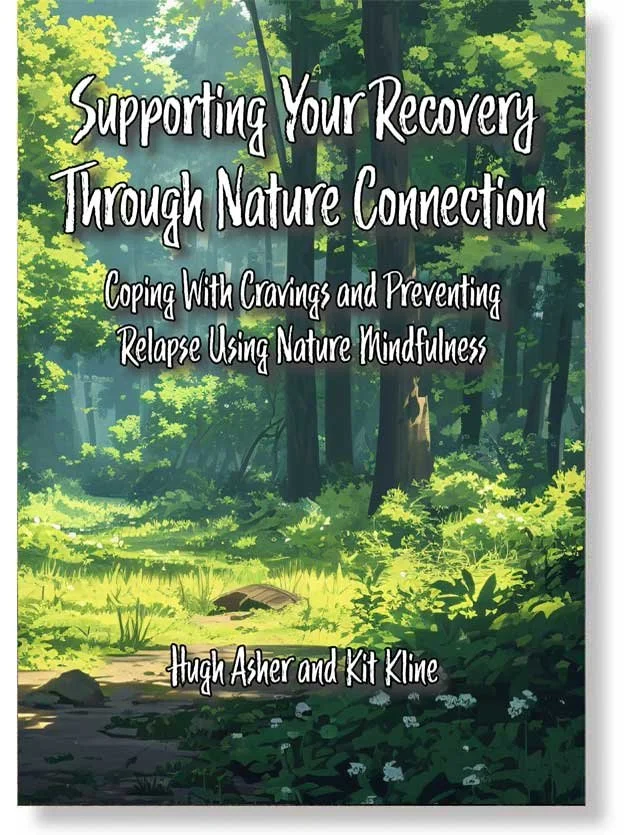







































A small collection designed to gently open the door into deeper relationship with the natural world.
This complete set of four Forest Healing booklets brings together practical guidance, reflective ideas, and simple nature connection practices that can be used anywhere — from ancient woodland to a nearby park, garden, or even a single Sit Spot outdoors.
Written to be accessible, grounding, and easy to follow, these booklets offer a pathway into the core practices of Forest Bathing (Shinrin-yoku), Silvotherapy, and everyday nature connection. Rather than asking you to achieve anything, they simply invite you to slow down, notice more deeply, and allow nature to become an active presence in your wellbeing.
Across the four booklets you will explore:
• What Forest Bathing, Silvotherapy, and Nature Connection actually are
• The key benefits of spending mindful time in natural environments
• The practice of the “Sit Spot” and how to develop your own relationship with a chosen place
• Simple, practical Forest Bathing invitations you can try alone or with others
• Ways to bring nature connection into everyday life, even in small moments
Together, they form a gentle introduction to practices that have been shown to support reduced stress, improved mood, greater clarity of thought, and a deeper sense of belonging within the natural world.
These are not academic texts or rigid instruction manuals. They are invitations — encouraging you to step outside, slow your pace, and rediscover the quiet intelligence of trees, weather, and landscape.
Whether you are completely new to nature connection or looking to deepen an existing practice, this collection offers a simple, supportive starting point for building a more intentional and restorative relationship with the living world around you.
A small set of booklets that can change the way you experience even the most familiar patch of nature.
Buy all Four Forest Bathing and Nature-Connection Booklets for £11.00 including FREE P&P within the UK.
Postage to the Rest of the World is £4.