

Do People Want Green Messages In Film? - Hollywood's Role in Environmental Education
22nd June 2024
This week we bring you a guest post from Georgette Kilgore, Emissions Analyst and Director of Environmental Science at 8 Billion Trees.
Recent movies like "Avatar: The Way of Water" showcase the importance of nature and the need to protect it. And this brings up an interesting concept … what is Hollywood’s role in ‘educating’ viewers about environmental issues?
Can it work to inspire audiences to think about the planet and take action to protect it? Or, would such deliberate manipulation backfire and cause people to resent it?
What do people say about seeing messages like this in their movies and can these messages be effective in changing perceptions?
Public Support for Climate-Friendly Films
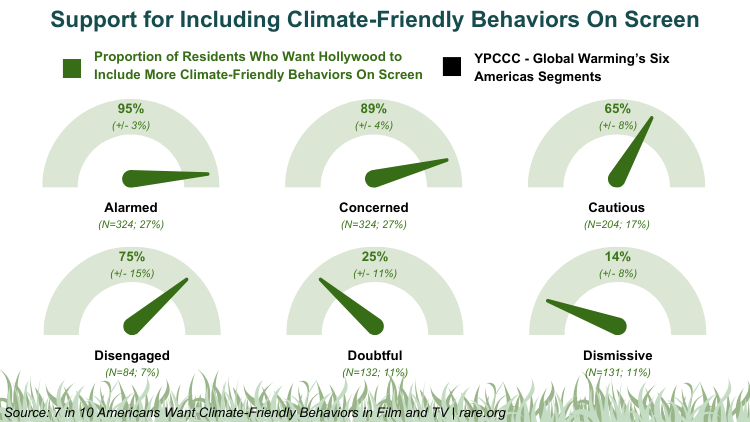
A recent survey revealed strong support for Hollywood's role in climate education, with 70.15% of respondents advocating for climate-friendly actions on screen. Among those "Alarmed" or "Concerned" about climate change — over half of Americans per the Yale Program on Climate Change Communication’s Six Americas Survey — support is nearly unanimous. Only 16-22% of this group showed any reluctance, indicating Hollywood's significant potential to promote environmental awareness.
But, how effective is the messaging?
The Power of Emotional Stories

Films have a special ability to transport us to different worlds and make us feel connected to the characters and their struggles. This emotional connection is what makes films such powerful tools for education. When we watch a movie like "Avatar," we aren't just entertained; we also learn about the delicate balance of nature and the consequences of disrupting it. The film story is set on Pandora, a planet where the indigenous Na’vi people live in harmony with nature, and illustrates how their way of life is threatened by humans who want to exploit the planet’s resources. This narrative highlights the importance of protecting our natural world and respecting the balance of ecosystems
Reducing Resistance to Environmental Messages
One of the biggest challenges in environmental education is overcoming people's resistance to change. Many people are set in their ways and find it hard to accept new ideas, especially if those ideas require them to change their behaviour. Films can help reduce this resistance by presenting environmental messages in a way that is engaging and less confrontational. Research has shown that narratives in films can reduce resistance to environmental messages. By immersing audiences in a story, films can make it easier for people to accept new ideas.
This is because stories engage our emotions and make us more open to different perspectives. For example, watching "Avatar" might make someone more sympathetic to environmental causes because they have emotionally connected with the characters and their plight.
Hollywood's Role in Shaping Public Opinion
The Lorax
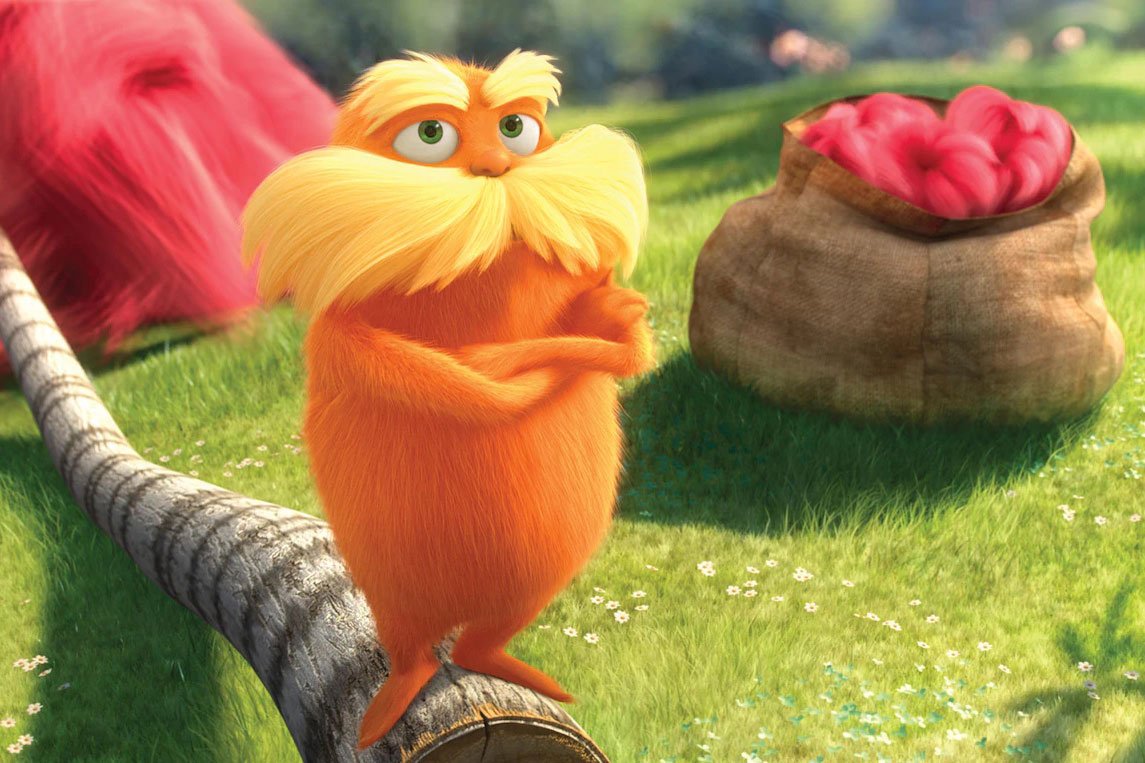
Hollywood has a long history of making films that address important social issues, and environmental conservation is no exception. Movies like "An Inconvenient Truth" and "The Lorax" have brought attention to climate change and deforestation, respectively. These films not only entertain but also educate their audiences about the importance of protecting the environment. In addition to big-budget films, there are many documentaries that focus on environmental issues. These documentaries can be very effective in raising awareness and inspiring action. For instance, "The uses and limitations of film in environmental education" discusses how documentaries can increase knowledge and concern about environmental issues, even among those who might be skeptical. This shows that Hollywood has a significant role in shaping public opinion and encouraging people to take action for the environment.
Creating Meaningful Connections with Nature
One of the key ways that films can promote environmental education is by helping people feel more connected to nature. This connection is crucial because it can lead to more environmentally friendly behaviors. When people feel connected to nature, they are more likely to take steps to protect it. Films can create this connection by showing the beauty and wonder of the natural world. For example, "The full story: Understanding how films affect environmental change through the lens of narrative persuasion" explains how films can enhance our connection to nature and promote pro-environmental behavior.
The environmental awareness promoted by films can extend beyond individual behavior changes to inspire broader societal transformations, such as the development of eco-cities. These cities are designed with sustainability at their core, often utilizing renewable energy sources like government solar programs, hydropower, and wind turbines to reduce their carbon footprint. Just as films like "Avatar: The Way of Water" highlight the harmony between the Na’vi and their environment, eco-cities aim to integrate human habitation with natural ecosystems seamlessly.
By showing audiences the beauty and importance of nature, films can inspire support for sustainable urban planning and renewable energy initiatives. This can lead to increased public pressure on policymakers to adopt green technologies and practices, further emphasizing how renewable energy sources like hydropower and wind turbines fuel eco-cities.
Overcoming Challenges and Limitations
While films are powerful tools for environmental education, they are not without their limitations. Not everyone who watches an environmental film will be motivated to change their behavior. Some people may enjoy the film but not feel compelled to take action. However, the potential for films to inspire change is significant. Even if only a small percentage of viewers are motivated to take action, the cumulative effect can be substantial. Additionally, films can spark conversations and raise awareness, which can lead to broader social changes over time. For example, "Nature documentaries as catalysts for change: Mapping out the ‘Blackfish Effect’" discusses how documentaries have led to increased conservation efforts and policy changes. This shows that while films may not always lead to immediate action, they can have a long-term impact by influencing public discourse and policy.
Inspiring the Next Generation
Another important role that films play in environmental education is inspiring the next generation. Children and young adults are particularly impressionable, and films can have a lasting impact on their views and behaviors. Movies like "Wall-E" and "Moana" introduce young audiences to environmental themes in a way that is engaging and accessible. By teaching children about the importance of protecting the environment, films can help cultivate a sense of responsibility and stewardship for the planet. This is crucial for ensuring that future generations continue to value and protect our natural world. And, by reducing resistance to environmental messages, shaping public opinion, and creating meaningful connections with nature, Hollywood plays a crucial role in environmental education.
If you have enjoyed this article and would like to support what we do by donating £2 or more to buy saplings to plant, please follow the link below:




































A small collection designed to gently open the door into deeper relationship with the natural world.
This complete set of four Forest Healing booklets brings together practical guidance, reflective ideas, and simple nature connection practices that can be used anywhere — from ancient woodland to a nearby park, garden, or even a single Sit Spot outdoors.
Written to be accessible, grounding, and easy to follow, these booklets offer a pathway into the core practices of Forest Bathing (Shinrin-yoku), Silvotherapy, and everyday nature connection. Rather than asking you to achieve anything, they simply invite you to slow down, notice more deeply, and allow nature to become an active presence in your wellbeing.
Across the four booklets you will explore:
• What Forest Bathing, Silvotherapy, and Nature Connection actually are
• The key benefits of spending mindful time in natural environments
• The practice of the “Sit Spot” and how to develop your own relationship with a chosen place
• Simple, practical Forest Bathing invitations you can try alone or with others
• Ways to bring nature connection into everyday life, even in small moments
Together, they form a gentle introduction to practices that have been shown to support reduced stress, improved mood, greater clarity of thought, and a deeper sense of belonging within the natural world.
These are not academic texts or rigid instruction manuals. They are invitations — encouraging you to step outside, slow your pace, and rediscover the quiet intelligence of trees, weather, and landscape.
Whether you are completely new to nature connection or looking to deepen an existing practice, this collection offers a simple, supportive starting point for building a more intentional and restorative relationship with the living world around you.
A small set of booklets that can change the way you experience even the most familiar patch of nature.
Buy all Four Forest Bathing and Nature-Connection Booklets for £11.00 including FREE P&P within the UK.
Postage to the Rest of the World is £4.