

Scottish Folklore - The Brownie or Ùruisg
November 16th 2024
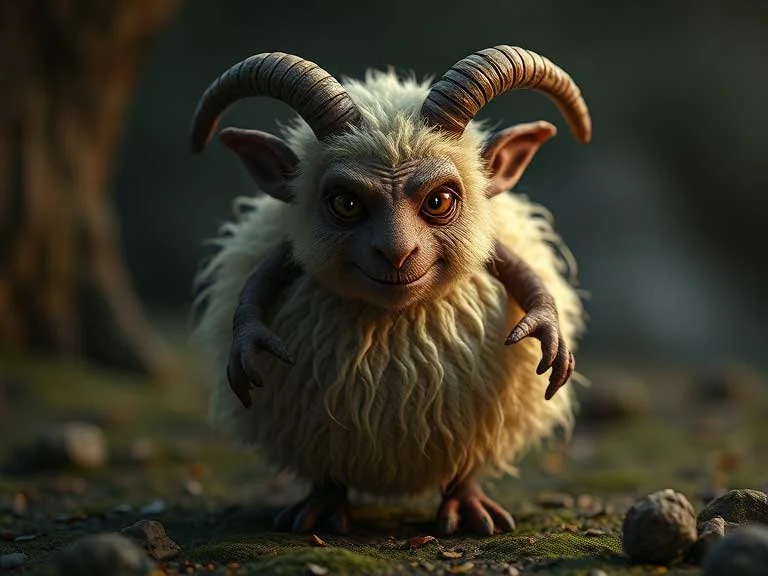
The Paco Ban?
I visited ‘Puck’s Glen’ in Dunoon a few weeks ago. A truly magical and mystical place that I found to be nature-connection heaven, with a wide variety of trees including Californian Redwoods, Western Hemlock and Douglas Fir, as well as streams and waterfalls, moss-covered rocks and lots of wooden bridges.
As well as being allegedly inhabited by the Ghillie Dhu, the Glen is best known as the home to its own mischievous faerie spirit - the Poca Ban - perhaps the inspiration for calling it Puck's Glen? The Poca Ban is said to roam the Glen disguised as a rolling ball of wool that trips up its unexpecting victims! It made me wonder whether the Poca Ban was some relation to a brùnaidh (a ‘Brownie’) or an ùruisg from Scottish Folklore.
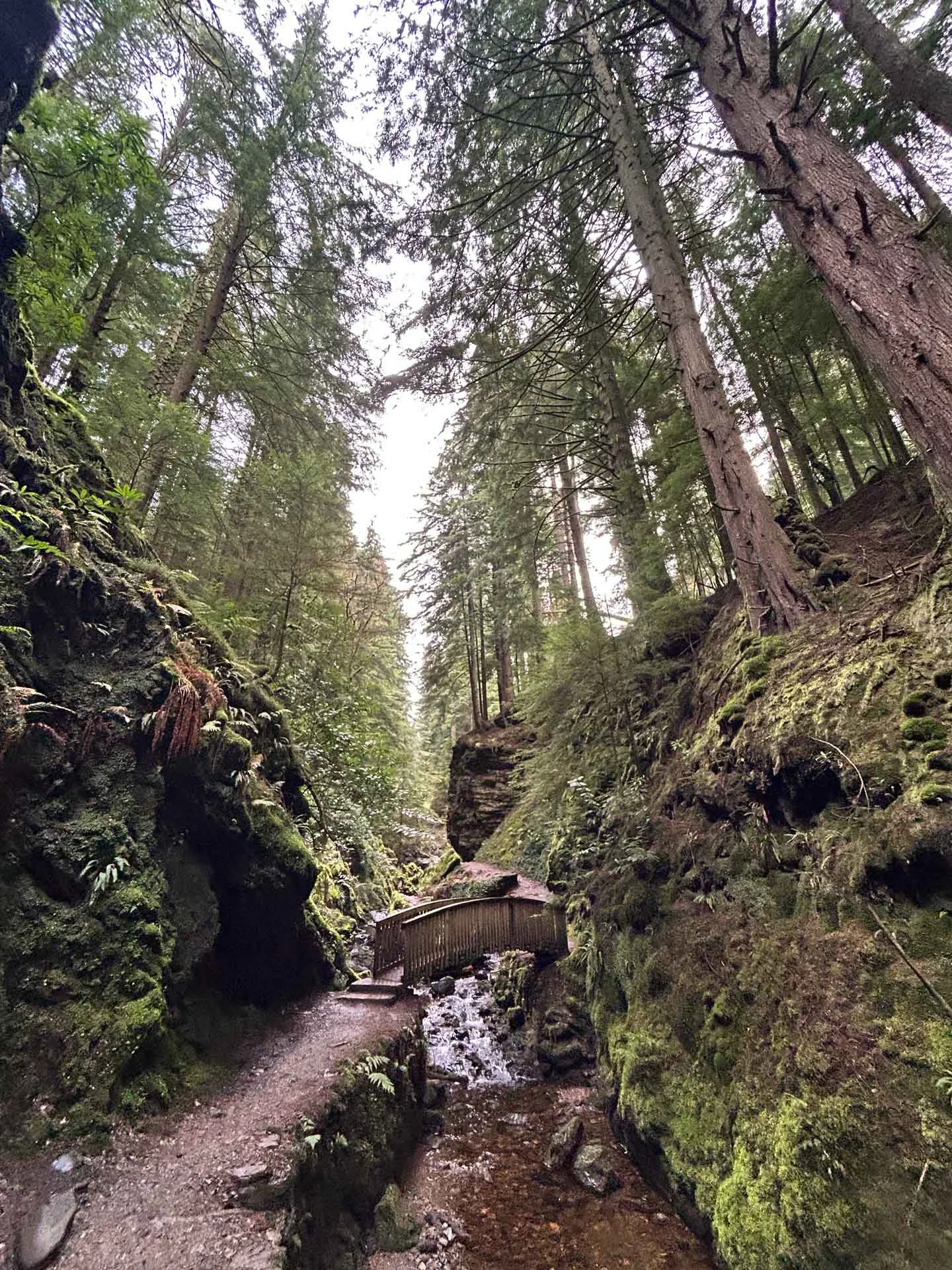
Puck’s Glen near Dunoon
The Brownie or Ùruisg
Also known as a brùnaidh or gruagach in Scots Gaelic, a Brownie (or Brounie) is a good-natured type of hobgoblin from Scottish folklore that is said to inhabit houses and to come out at night while the owners of the house are asleep and perform various chores and farming tasks, especially milking the cows, churning butter and cleaning.
In the Scottish Highlands there is also said to be a kind called an ùruisg (or urisk) who prefer to spend the Summer months amongst the remote Highland waterfalls and streams, and to only come down from the hills and mountains around the end of harvest time to shelter in homes and farmhouses during Winter, in order to warm themselves and to help out on the farm. They are usually depicted as male, although there are examples of female Brownies in Scottish folklore, such as the Highland Brownie Meg Mullach (or Hairy Meg). In some folklore ùruisg are depicted as half-man half-goat rather than as the same as a Brownie, although similar in character.
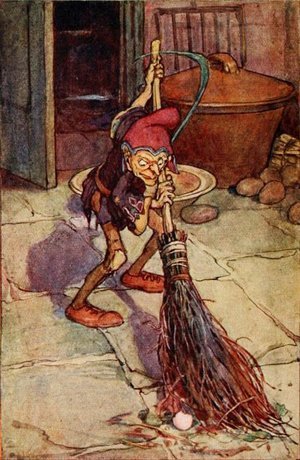
This is an illustration by Alice B Woodward of a Brownie, a tutelary spirit from English and Scottish folklore, said to reside in old homes and perform chores in exchange for offerings of milk or cream.
Having a Brownie live with you is thought to bring prosperity. However, when inhabiting houses and homesteads, they do not like to be seen, spending the day hiding in the remote recesses of the home, and working only during the hours of darkness, accepting small gifts and food in return (it is said that they particularly like porridge with honey, and also milk and cheese from the dairy). This is an important point to understand if a Brounie comes to stay, as they work for the joy of it, and are said to abandon the house, taking their prosperity with them, if they are given gifts of blankets or clothing, or they perceive that they are being bribed, rewarded or payed a fee for the work that they do.
This is highlighted by the tale of ‘The Brownie of Boghall Farm’.
The Brownie of Boghall Farm
Boghall Farm, between Dollar and Blairingone in Perth and Kinross, was said to be the home of a Brownie who possessed great strength and could turn his hand to almost any chores in the farmhouse and on the farm. He lived on eating porridge and slept on a bed of straw in the barn, working tirelessly each night for the farmer and his wife, who are said to have appreciated his work greatly. But one Winter there were cold winds and deep snow and the farmer’s wife became concerned about the Brownie and put woollen blankets upon the straw pile he used as a bed. When he saw this he cried out:
“To leave my old haunts, oh my heart it is sair,
But the wife gae me blankets – she’ll see me nae mair;
I’ve worked in her barn, frae evening till day.
My curse on the blankets that drove me away.
All the boon that I asked were my sowans and strae,
But success to Bogha’ although Brownie’s away.”
The Brownie left the farm, and whether due to his departure or not, Boghall Farm was never the same again, and within a few years the farm was abandoned to nature. What happened to the Brownie is unknown, but because he was used to farm work and was a good worker who sought little reward for all he did, he would most probably have found employment elsewhere quite easily.
As recently as 1910, Alasdair MagGregor wrote in his book about Scottish Folklore ‘The Peat Fire Flame’ about a crofter at Balmorag Farmhouse who would slowly pour a jug of milk into a nearby hole where a Brownie was thought to live, on the first night that the cattle were to be let out of the barn in Spring. The crofter would then walk away without looking back in the hope that the Brownie would look over the cattle whilst the crofter slept.
Whilst Brownies most commonly live alone with their hosts, they are said to meet frequently, usually in remote rocky glens and where their voices mingle with the roar from the waterfalls. Famous speakers at such gatherings such as ‘Peallaidh an Spùit’ (Peallaidh of the Spout), ‘Stochdail a’ Chùirt’, and ‘Brùnaidh an Easain’ (Brownie of the Little Waterfall) have found a lasting place in Scottish folklore. A waterfall near Tyndrum is called Eas na h-uruisg or The Ùruisg's Cascade and the famous Coire nan uruisgean derives its name from a legendary meeting of all the Ùruisgs in Scotland being held there.
However, the relationship between mortal and ùruisg has not always been cordial, and Brownies or Ùruisgs are reputed to become mischievous and even malicious and hostile when they feel slighted, insulted or taken advantage of. Darach Croft is located in West Lochaber, which has a long history of associations with fae-folk, indeed Strontian (or Sròn an t-Sìthein in Gaelic) where the croft is located, translates as the nose or 'point' of the faerie hill. According to Folk Tales and Fairy Lore in Gaelic and English by James MacDougall:
An Urisk once lived in a steep rock at the foot of Sgurr-a-Chaorainn in Lochaber. This Urisk was, it appears, very troublesome to the herd of Blar-a-Chaorainn, when he happened to go the way of Sgurr. Not an evening he passed it but the Urisk put his head out of a hole in the face of the rock and bawled after him:
“Carl, son of carl, son of carl. There you have of carls three: — a carl are you, and a carl is your father, and your son will be a carl, and his son will be a carl, and you all will be carls, like it or not."
When this herd left Blar-a-Chaorainn, there came in his place another whom his acquaintances called Donald Mor. Donald was but a short time on the farm, until he was as much annoyed by the Urisk as the herd that had left. Not an evening did he return from the hill past the rock but the Urisk bawled after him:
‘'Donald Mor, I do not like you."
This salutation was far from being pleasing to honest Donald, but he kept his opinion to himself as long as he could. At length his patience was so completely worn out by the Urisk's continual jeering that he could not contain himself any longer. One evening, when returning, cold and hungry, from the hill, and the Urisk bawling after him as usual: "Donald Mor, I do not like you," Donald turned on his heel in wrath, and bawled as loud as the Urisk himself: "That is but the return you owe me."
The Urisk ceased his jeering; and from that time to this his voice has not been heard by any other person.
Another tale is told of the Urisk of Eas Buidhe.
In Glen Mallie, in Lochaber, there is an eerie ravine called Eas Buidhe. In this ravine it was said that the Urisks took refuge; and near it were the Summer pasture bothies of some of the farmers in the Glen. One of the Urisks, The Urisk of Eas Buidhe, Sitting in Glen Maillie, was very troublesome to one of the dairymaids staying in the bothies near the ravine. Not a day passed but he came to the bothy where she lived; and he spent the time sitting at the fire, asking questions, and obstructing her in her work. She grew tired of him, but she knew not how to rout him without turning the wrath of the other Urisks against her. At last her patience with him was so completely worn out that she resolved to get rid of him, happen what might. One day as he was crouching about the fire as usual, he asked, among his questions, what her name was. She replied that it was:
"Myself and Myself."
“That is a curious name" said he.
"Never mind, that is what I am called."
A pot full of whey hung over the fire, and when she went to take it off, he was in her way, as usual. This so provoked her that she intentionally allowed a wave of the boiling whey to fall on his feet, and scald him. He sprang up quickly from his seat, and ran out, howling and crying that he was burnt. As soon as the other Urisks heard this, they ran up from the ravine to meet him, and asked who burnt him. He answered that it was “Myself and Myself.”
“Oh, if you have burnt yourself, it cannot be helped; but if anyone else had done it, we would have burnt him and all that is in the bothies along with him."
Final Thoughts
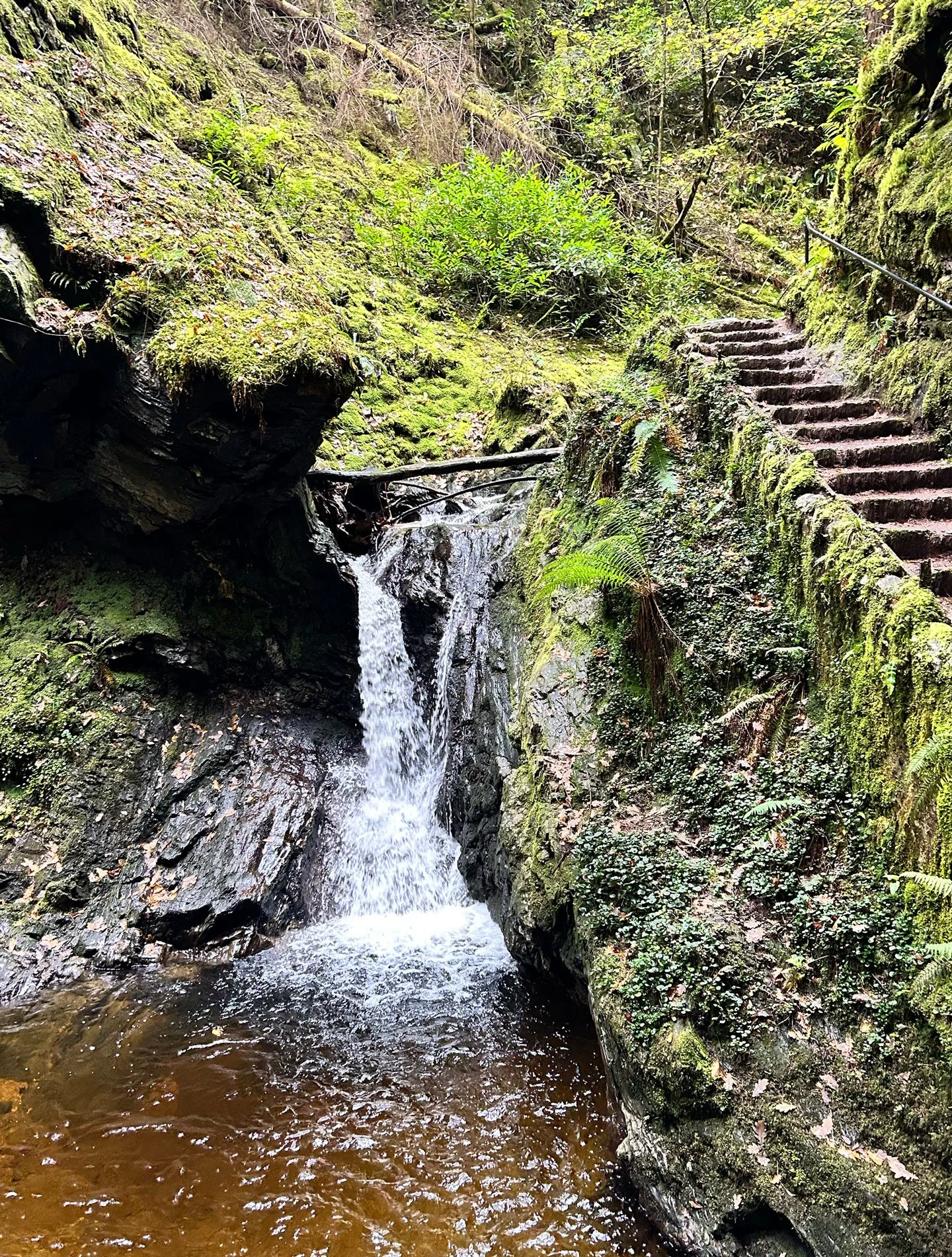
In truth, Puck’s Glen was only created in the 1870’s by the Greenock sugar refiner and philanthropist James Duncan when he bought the estate. He arranged extensive plantings, including more than six million trees around the estate, and added paths leading up the Eas Mòr gorge for his visitors to enjoy the magical atmosphere of the glen, reminiscent of the mythological Puck in William Shakespeare's play A Midsummer Night's Dream.
In 1924, a subsequent owner, Harry George Younger, presented the estates to the Forestry Commissioners. When the Royal Scottish Arboricultural Society made a visit in July 1925, they described Puck's Glen as “a striking example of how man, working hand in hand with nature, has made what was once a bare hillside ravine into one of the most lovely walks imaginable”.
It is, though a good reflection of its name and most definitely appears to be a place that the Ùruisg might choose to live.
If you have enjoyed this article and would like to support what we do by donating £2 or more to buy saplings to plant, please follow the link below:

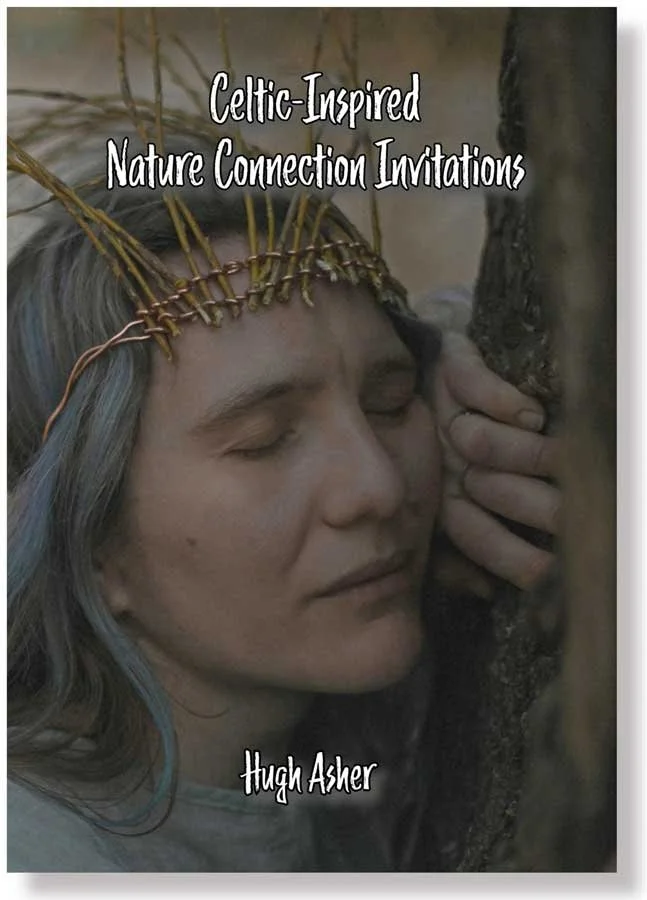

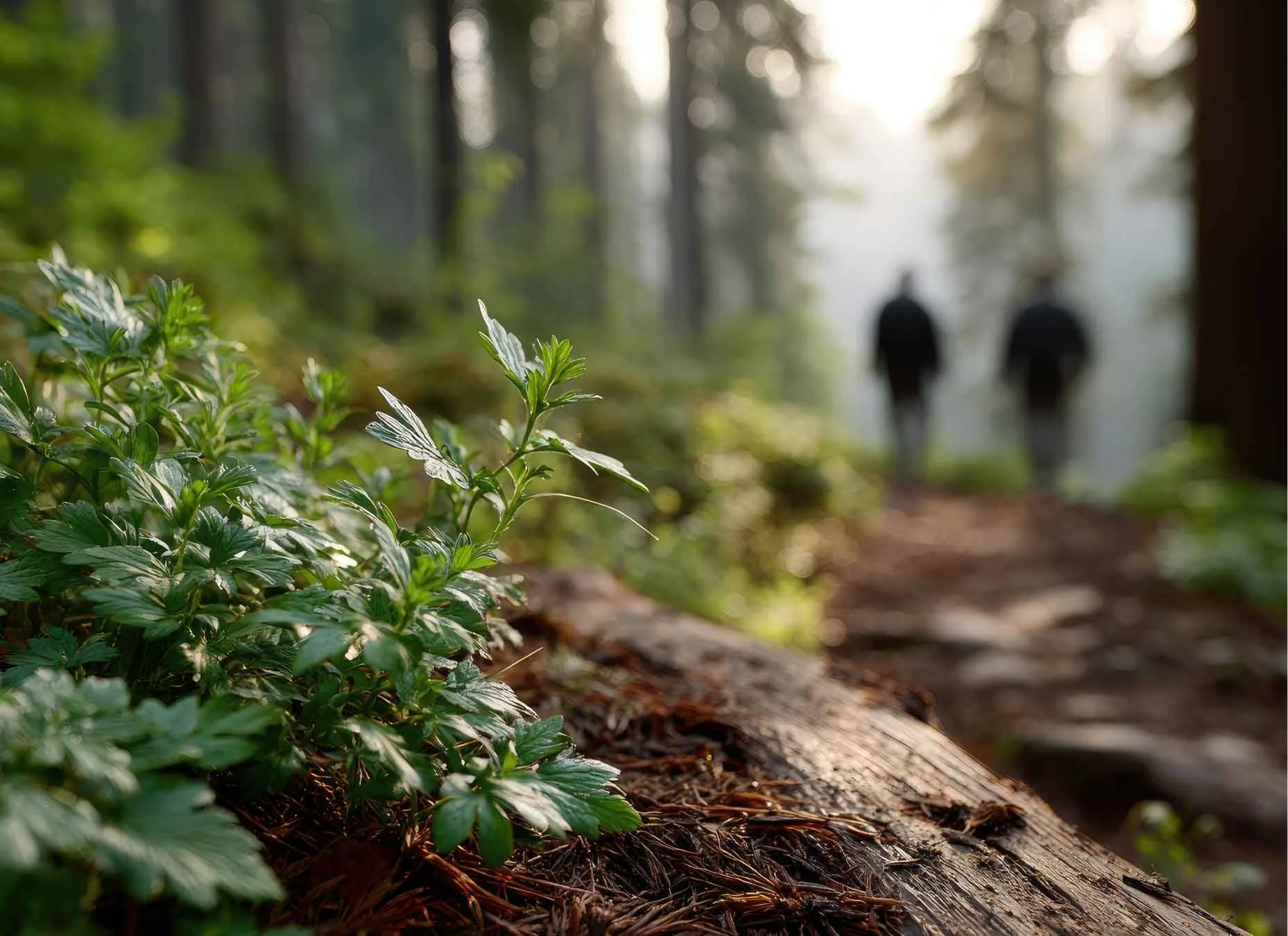
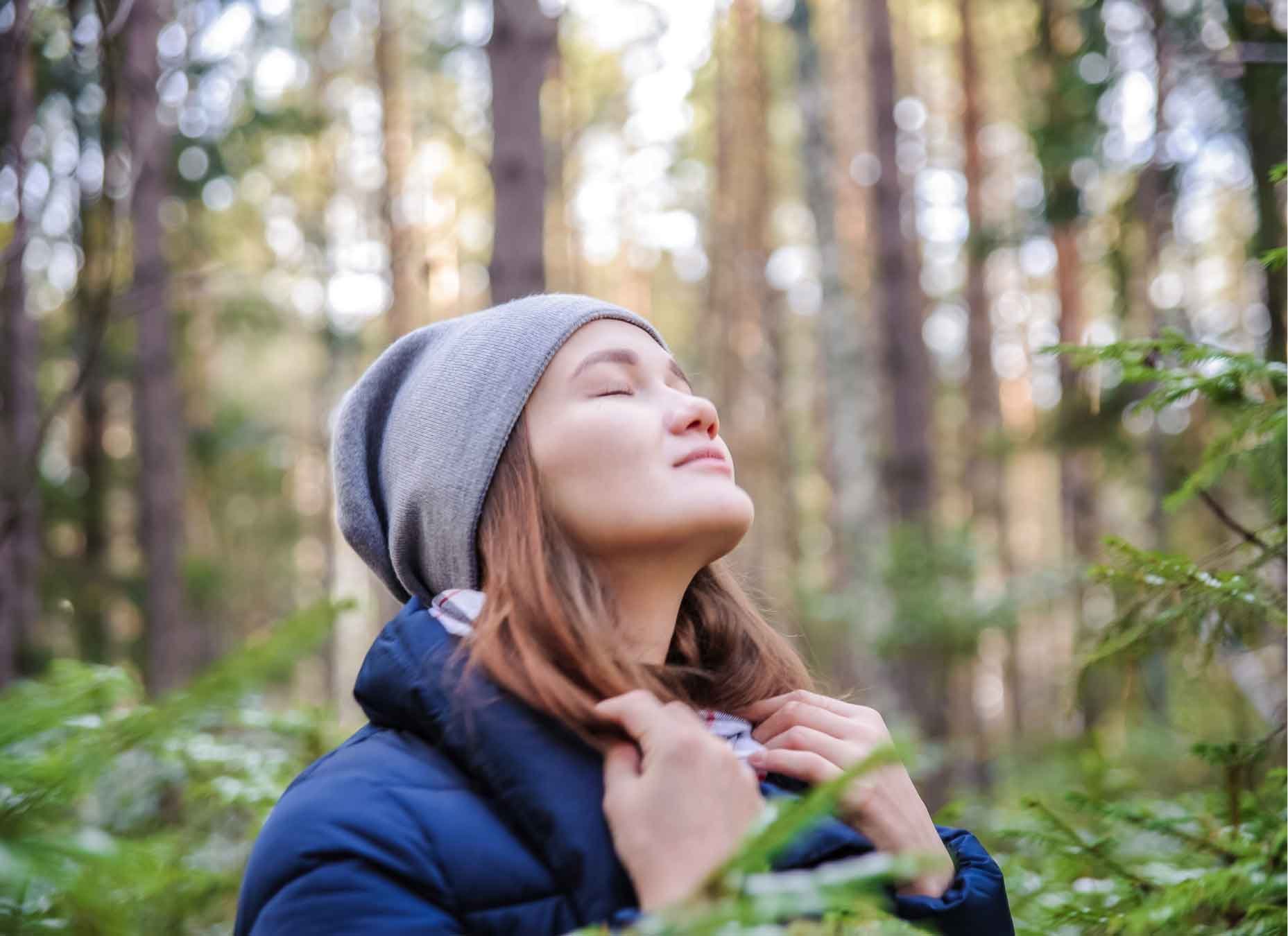





A small collection designed to gently open the door into deeper relationship with the natural world.
This complete set of four Forest Healing booklets brings together practical guidance, reflective ideas, and simple nature connection practices that can be used anywhere — from ancient woodland to a nearby park, garden, or even a single Sit Spot outdoors.
Written to be accessible, grounding, and easy to follow, these booklets offer a pathway into the core practices of Forest Bathing (Shinrin-yoku), Silvotherapy, and everyday nature connection. Rather than asking you to achieve anything, they simply invite you to slow down, notice more deeply, and allow nature to become an active presence in your wellbeing.
Across the four booklets you will explore:
• What Forest Bathing, Silvotherapy, and Nature Connection actually are
• The key benefits of spending mindful time in natural environments
• The practice of the “Sit Spot” and how to develop your own relationship with a chosen place
• Simple, practical Forest Bathing invitations you can try alone or with others
• Ways to bring nature connection into everyday life, even in small moments
Together, they form a gentle introduction to practices that have been shown to support reduced stress, improved mood, greater clarity of thought, and a deeper sense of belonging within the natural world.
These are not academic texts or rigid instruction manuals. They are invitations — encouraging you to step outside, slow your pace, and rediscover the quiet intelligence of trees, weather, and landscape.
Whether you are completely new to nature connection or looking to deepen an existing practice, this collection offers a simple, supportive starting point for building a more intentional and restorative relationship with the living world around you.
A small set of booklets that can change the way you experience even the most familiar patch of nature.
Buy all Four Forest Bathing and Nature-Connection Booklets for £11.00 including FREE P&P within the UK.
Postage to the Rest of the World is £4.