

Walking in the Field of Autism — Experiences of being nurtured by nature
27th July 2024
This week’s article is a guest post by Sarah Loiuse reflecting on Autism, what it means to her, the value of diagnosis, and her experiences of being ‘nurtured by nature’
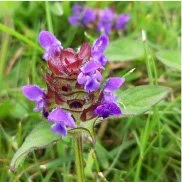
One hundred and seventeen steps from my front door, on an overcast day in early July, my feet come to an abrupt stop, and the knees above sink into the grass below. The neighbours’ house with its elegant portico evaporates from my peripheral vision and the hedge cutter’s convulsive droning recedes from my auditory consciousness. Instinctively, my right hand reaches out and my head juts forward in familiar fashion. It’s not the first time this has happened this week and nor will it be the last. Yet, I am strangely calm. This is not the onset of a shutdown that paralyses my body, sets speech on mute and eliminates rational thought. It is a rare moment of inner peace allowing the usual whirl of thoughts to settle like flakes in a snow globe. Attention crystalised, I am focussed on just one thing: an infant wildflower metaphorically peeping through its green bedroom curtains.
Diagnostic criteria
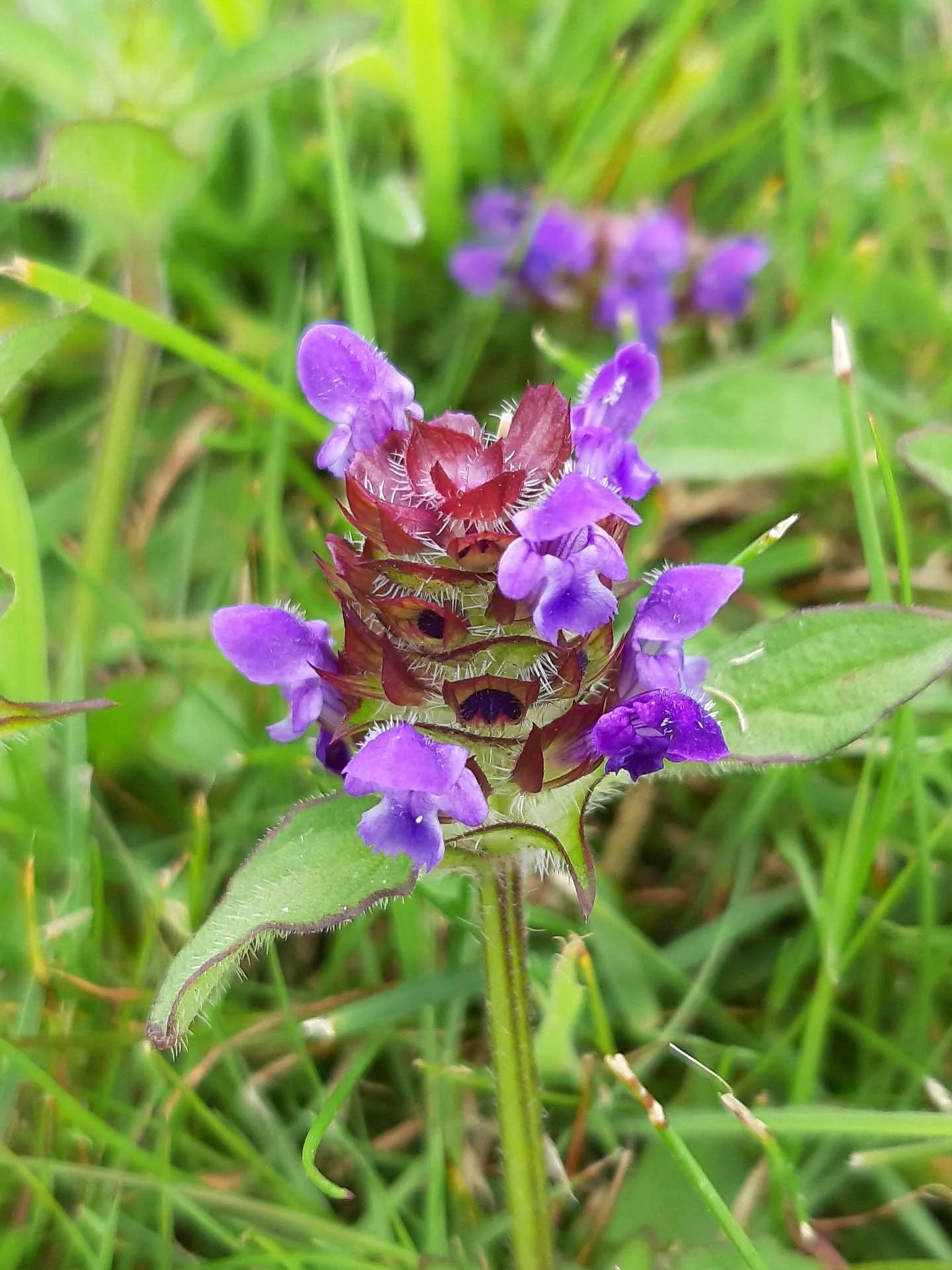
‘Self-heal’
Page 269 of my field guide subsequently tells me that this perennial wildflower from the mint family is called Prunella vulgaris or Self-heal. It is known by a variety of other common names such as ‘blue Lucy’ or ‘thimble flower’, and the word ‘Prunella’ also has several associations. These include its derivation from the German name for diphtheria (which it was previously a treatment for) and from an archaic French word meaning ‘little plum’ (which evokes the composite purple-red colour saturating its flowers and the lines defining the leaves and stem). In contrast, the word vulgaris, meaning ‘common’ or ‘vulgar’, is perhaps more indicative of its ‘ugly’ spattering across the grass — and thus at first sight, could elicit opinion that Self-heal is merely an unattractive, inconsequential and unwelcome weed. The more curious observer, though, might pause long enough to revel in the intricacy of its fir-cone-like head and flowers and later, in the discovery of its medicinal and edible properties. Still others, like the botanical author Sarah Raven, may look upon Self-heal with poetical fondness, likening it to a miniature merry-go-round with rotating purple flower horses. I am naturally rooted in the curious and poetic camp and find the plant intriguing on many levels — including the personal. More than an indication of my interests, the initial dismissal of this wildflower as something plain, worthless and irritating, followed by efforts to understand its value, serve as a reflection of how I once regarded myself as an autistic female, and the ‘self-heal’ing journey thereafter.
My autism diagnosis came late in life, at the age of 41, thanks to a doctor who looked beyond the unhappiness arising from several adverse life events and understood the innumerable ways in which autism can present. It was personally significant because it changed the wholly negative way that I judged myself and renewed my sense of hope for the future. The sensory challenges, intrapersonal confusions and thinking styles that had engendered my isolation in high-school and adulthood were still there, but now I had a more objective way for dealing with their triggers and motivations.
The ability to understand, form and maintain social relationships is one of the criteria considered in the diagnosis of autism and has always been problematic for me, especially in the realm of friendships. Between six and eleven years old, for example, my younger cousins were ready-made soccer companions consistently calling at my door, but an internalised anxiety ensured I rarely called at theirs. Fear of initiating interactions swiftly made the transition to secondary school, and manifested as me skirting the edge of the breaktime field, fearing the bullies and anyone approaching, whilst also hoping that someone would take me in. Things did not naturally improve with age and higher education, and only intensified as an undergraduate, when I had to endure halls of residence and shared spaces. Tiptoeing to the kitchen to avoid detection and darting back to my room with a hasty one-pot meal became another timetabled activity, and inadvertently contributed to anorexic-like behaviours. Other people’s noise was hugely challenging too. Music, laughter and conversation were unpredictable, uncontrollable sounds that often reduced me to tears — and they still can do. Autism continues to affect me every day and in multiple ways. Fortunately, I have learned a lot about the condition through my work and thus ways of coping better in different situations. Reading has been my greatest companion, and my interests a useful escape mechanism.
In the past, I have struggled to explain my monotropic focus to people – the way in which I can hyperfocus on my interests for hours to the exclusion of all else, oblivious to feelings of pain or the need to drink, eat, pee etc. Pete Wharmby, however, adeptly discusses this in his fascinating book, UNTYPICAL — referring to research positing monotropism as a theoretical explanation of autistic thinking styles and likening the intensity of an autistic person’s focus to the beam of a laser, rather than the sweep of a headlight or floodlight. My laser beam view has been applied to many interests over the years, some of which have stood in isolation and others that have seamlessly dissolved into another (the Famous Five, Ray Mears, cycling, the 19th Century, animal scat, 1:87 photography, the German language, architecture and watercolour painting, to name but nine). Whilst their hold on me has varied too — from several weeks to many years — they all share the following features: (i) in-depth researching, (ii) the acquisition of as many related books / resources as possible, (iii) sustained periods of intense concentration, (iv) upset if I cannot access them, (v) a solitary preoccupation that fills every spare moment, and most crucially, (vi) a positive impact on my wellbeing. That said, I am failing to recall an interest as all-encompassing as my wildflower walks.
Hedgerow harmony
If I were to estimate the length and breadth of my daily walks, I would envisage walking 3-10 miles within a geographical area of roughly 10 square miles (which compares in no way to the 500,000 miles of hedgerow tinselling the UK). The regularity satisfies my instinctive need for routine and is very comforting. It is restorative too, in the mode described by Annabel Streets, who says that walking alone affords the opportunity to gain perspective and to nurture the relationship we have with ourselves. Many are the times when I have left the house cloaked in the stress of a working day, spewing frustrations into the air, only to suddenly realise some time and several miles later, that I am silent and serene. The effects are also cumulative because two years of hedgerow walking seems to have tempered the lows that formerly engulfed me. Those moments of ill health are much rarer, shorter and less intense.
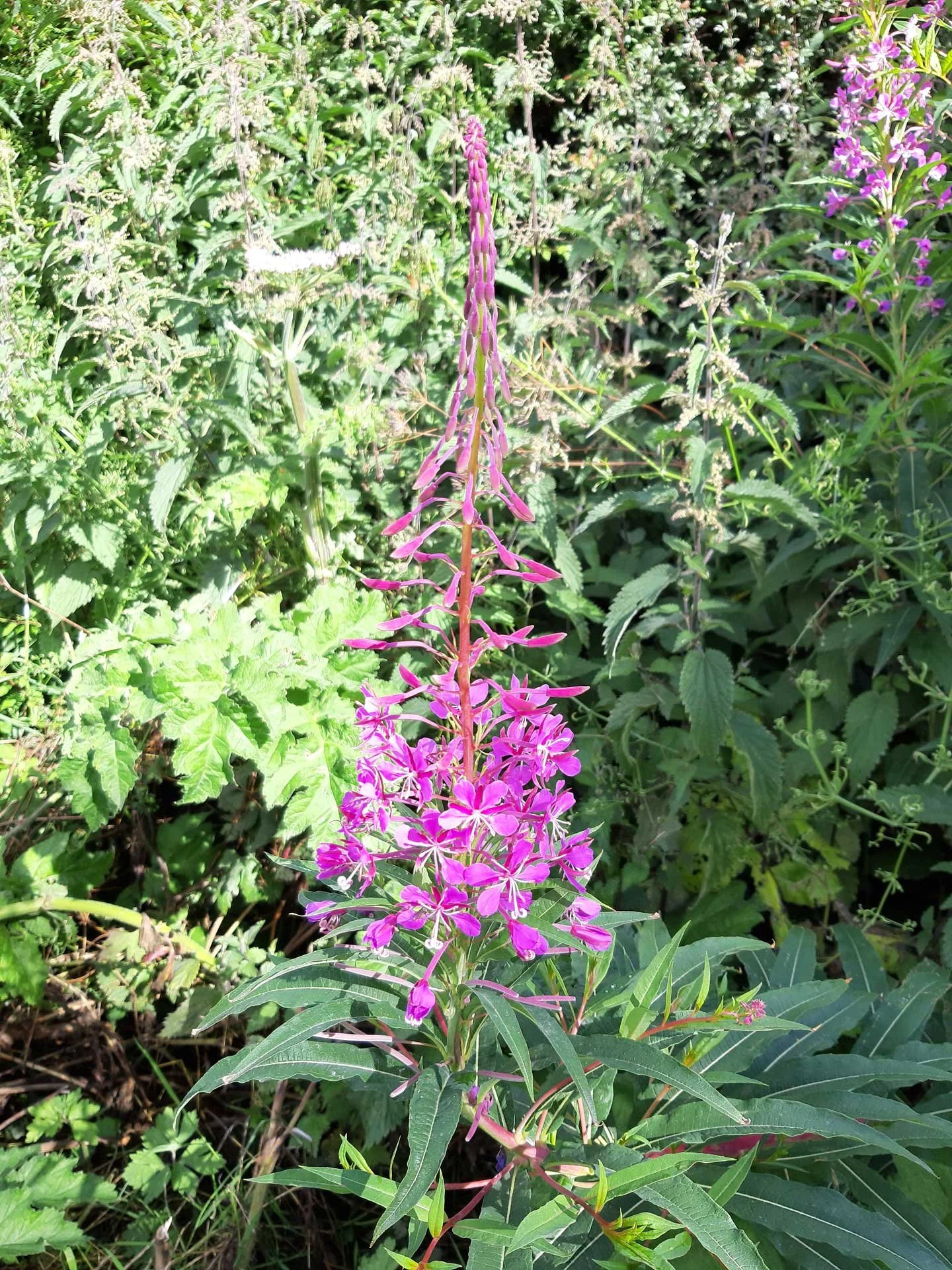
Rosebay Willowherb
Green spaces often become populated places, but this is not a trend I have noticed within the lanes. I largely have them to myself. This is pleasing because I do not cope well with groups or crowds, nor, as you have learned, with their concomitant noise. Incidentally, the near absence of people has contrarily conferred an additional ‘social’ advantage — relieving me of an unstated pressure to hold eye contact and make conversation. There is life in the lanes, but the dramas are animalistic and botanical and played out on a relatively silent stage — witnessed in balletic butterfly displays, towering willowherbs, and scuttling beetles. The silence has a relaxing effect, and the peace is more conducive to clearer thinking and keener observation. It also allows my senses to function in a more cohesive, Goldilocks-like manner; they are not overly heightened or chronically under-aroused.
Another great benefit to walking alone, in my experience at least, is its propensity to court an exclusive entertainment. In company, for instance, would I have seen a family of four polecat kits and their velvet-clad mother curiously wriggling towards me, from beneath the hedge? Would the snacking squirrels have lingered long enough to shower me with their twiglet packaging? Would that frog have sheltered by my left foot as I waited out the rain under an oak tree? That aside, the fact that these organic treats are consumed with a natural delight is, itself, quite remarkable, because I am not very good at social displays of enthusiasm (i.e., being silently absorbed in working out what to say and how to correctly organise parts of my face). But none of this applies when, say, hunkered down beside a Yellow Rattle, shaking its seed casing. Or staring up at the brain-like connections crowning a winter oak tree. Or inhaling the rosemary-sage scent of crushed Mugwort leaves. Here, my emotional expression of joy is freer, more natural in nature. The widening furrow of a smile irrigated with teardrops is wholly genuine, as are the childlike cries of excitement.
Leif Bersweden, the orchid hunter, believes ‘There is a childlike freedom about giving yourself over to the excitement of nature’ and I could not agree more. The feeling of release is surely something to be prized or treasured. Indeed, when I set out on my walks, the child in me has the vaguest notion of searching for a floral treasure on a top-secret mission, allured by the covertness of its location and identity. Plus, once found and researched, the treasure of newfound knowledge is exponentially rewarding, and somehow empowering. I gain the privilege of doing, seeing and learning things that other people do not.
Living life on the hedge
Learning about wildflowers and immersing myself in nature over the last eight months stand as testament to a personal journey of mental transformation. The person writing this article today feels quite different to the person facing an adverse life event three seasons ago, and different again to the sporadically unhappy adult and adolescent preceding her. Just as The Secret Garden had a transformative effect on Mary Lennox, changing the way she saw herself and others, so the village hedgerows forming my ‘secret garden’ have affected me too.
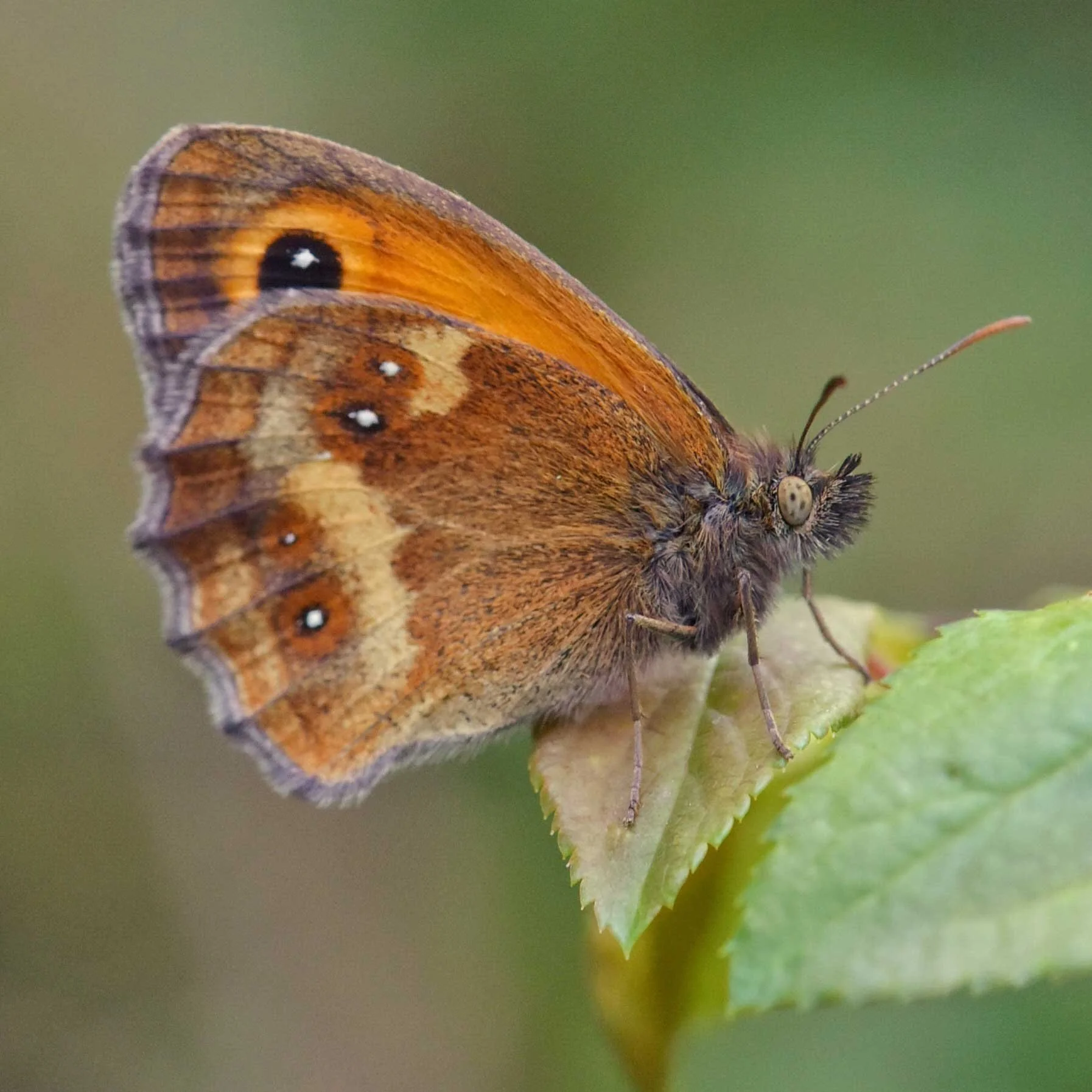
Gatekeeper or ‘Hedge Brown’ Butterfly
Although time spent in nature, quite rightly, has not been a perfect affair, and I cannot say that my life is perfect either, I feel infinitely better for it. I am still hypersensitive to the sound, proximity or touch of all insects, and intensely dislike them buzzing or flying about my ears or landing on my skin and clothing. But I now like to look at them from afar and am learning to be more tolerant, in a way that is impossible indoors. I am also learning to be more mindful of the things I touch and where I venture to avoid mishap or injury. The enthusiasm prompting my impulsivity outdoors could have been ‘blisteringly’ disastrous, for instance, if those leaves that I inquisitively handled had belonged to the Giant Hogweed plant, rather than Common Hogweed. I still overthink things and worry far too much about what people think of me. But the knowledge I have gained from my hedgerow wanderings has boosted my self-esteem and made me more resilient in the face of problems. I can capitalise on my strengths (detail orientation, pattern recognition, focus, recall, research, organisation, thoughtfulness), and am more open to both conversation with strangers and interactions with others. Nature has helped me become more mentally balanced and to manage my senses better, so that these too can function in harmony. More than this, I now have a tangible means of experiencing and expressing pure joy. Living life on the hedge, so to speak, I can dare to be and enjoy being me.
Article references
Annabel Streets (2022) 52 Ways to Walk. Bloomsbury Publishing
Britannica (2024) The Secret Garden. https://www.britannica.com/topic/The-Secret-Garden
Collins Dictionary (2024) Prunella. https://www.collinsdictionary.com/dictionary/english/prunelle
Leif Bersweden (2017) The Orchid Hunter. Short Books
Neil Fletcher (2010) Wild Flowers. Dorling Kindersley
Pete Wharmby (2024) UNTYPICAL: How the World Isn’t Built for Autistic People and What We Should Do About It. HarperCollins Publishers
Sarah Raven (2011) Wild Flowers. Bloomsbury Publishing
The National Autistic Society (2024) What is autism? https://www.autism.org.uk/advice-and-guidance/what-is-autism
The Royal Horticultural Society (2024) Prunella vulgaris. https://www.rhs.org.uk/plants/13944/prunella-vulgaris/details
The Woodland Trust (2024) Hedgerows. www.woodlandtrust.org.uk
Wikipedia (2024) Prunella vulgaris. https://en.wikipedia.org/wiki/Prunella_vulgaris
If you would like to learn more about the importance of terminology, then read this article on “A Shift from Autism Acceptance to Appreciation”.
If you are autistic or neurodiverse and interested in collaborating with me on further research and writing about neurodiversity and nature connection, please get in touch by emailing me at hugh@silvotherapy.co.uk.
Hugh
If you have enjoyed this article and would like to support what we do by donating £2 or more to buy saplings to plant, please follow the link below:

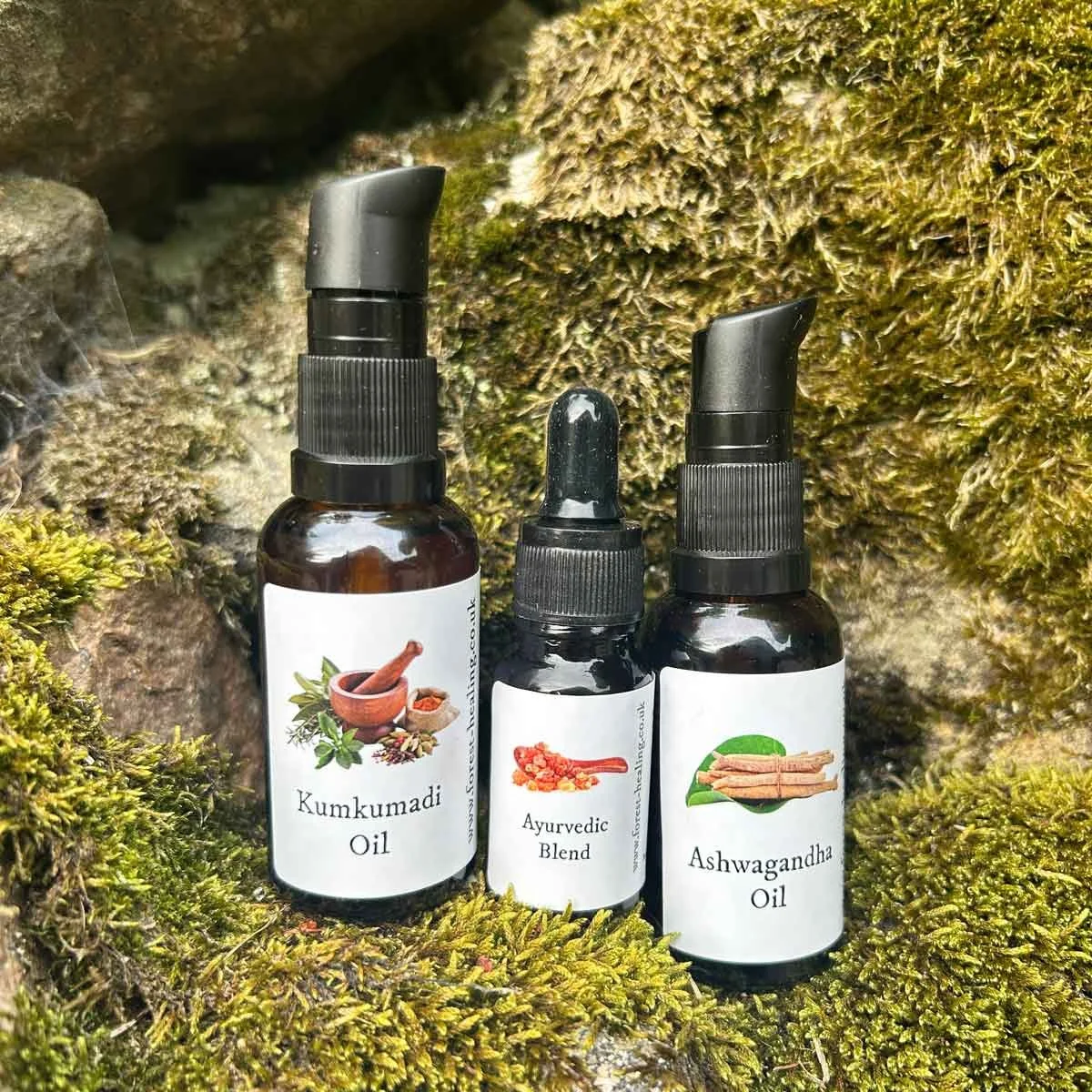
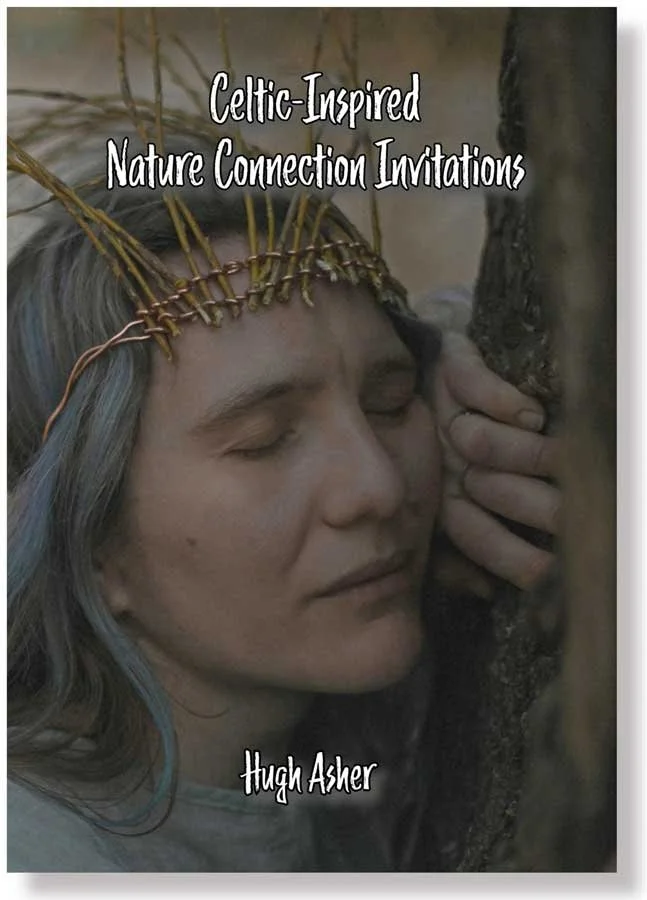
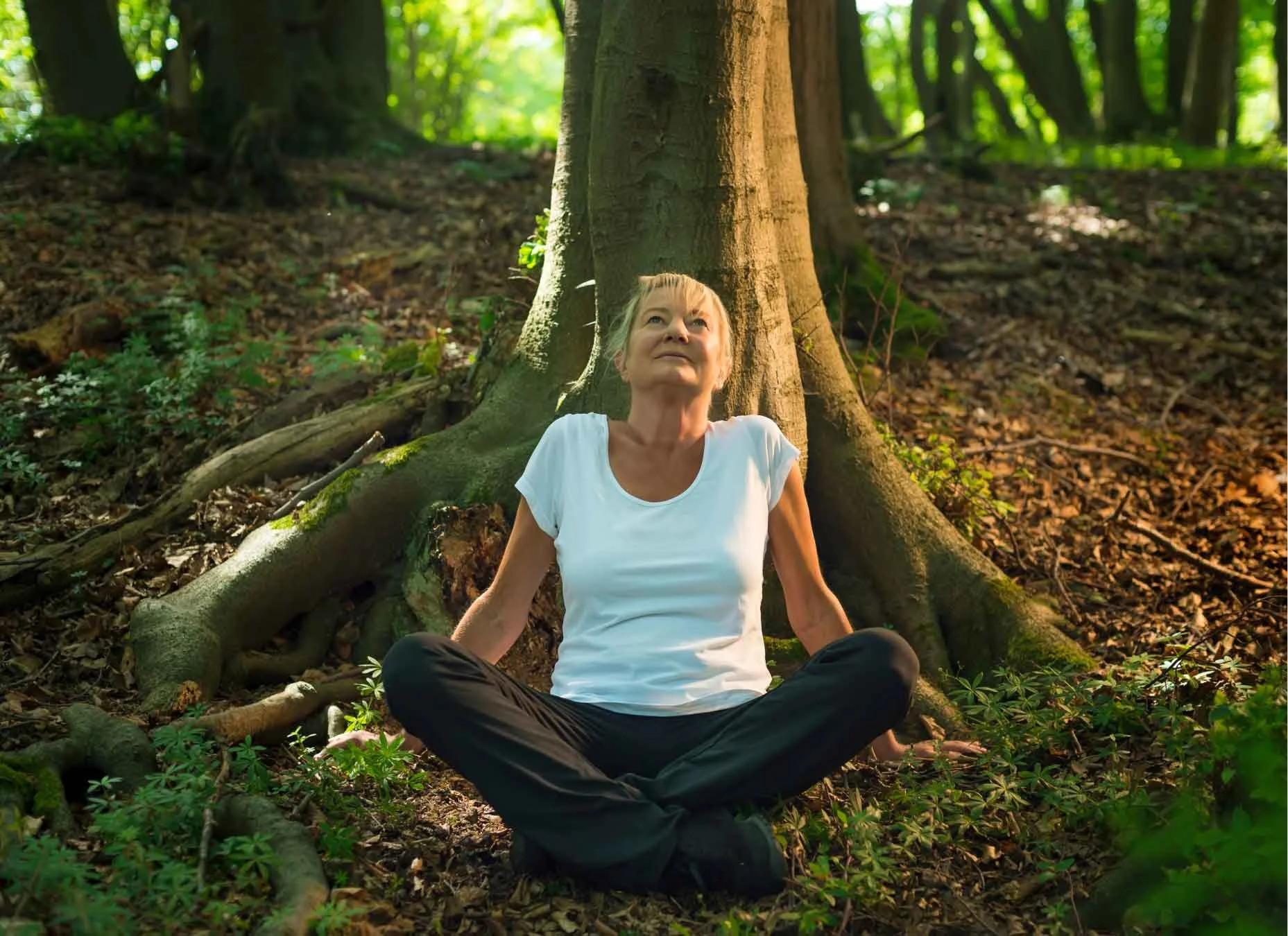












A small collection designed to gently open the door into deeper relationship with the natural world.
This complete set of four Forest Healing booklets brings together practical guidance, reflective ideas, and simple nature connection practices that can be used anywhere — from ancient woodland to a nearby park, garden, or even a single Sit Spot outdoors.
Written to be accessible, grounding, and easy to follow, these booklets offer a pathway into the core practices of Forest Bathing (Shinrin-yoku), Silvotherapy, and everyday nature connection. Rather than asking you to achieve anything, they simply invite you to slow down, notice more deeply, and allow nature to become an active presence in your wellbeing.
Across the four booklets you will explore:
• What Forest Bathing, Silvotherapy, and Nature Connection actually are
• The key benefits of spending mindful time in natural environments
• The practice of the “Sit Spot” and how to develop your own relationship with a chosen place
• Simple, practical Forest Bathing invitations you can try alone or with others
• Ways to bring nature connection into everyday life, even in small moments
Together, they form a gentle introduction to practices that have been shown to support reduced stress, improved mood, greater clarity of thought, and a deeper sense of belonging within the natural world.
These are not academic texts or rigid instruction manuals. They are invitations — encouraging you to step outside, slow your pace, and rediscover the quiet intelligence of trees, weather, and landscape.
Whether you are completely new to nature connection or looking to deepen an existing practice, this collection offers a simple, supportive starting point for building a more intentional and restorative relationship with the living world around you.
A small set of booklets that can change the way you experience even the most familiar patch of nature.
Buy all Four Forest Bathing and Nature-Connection Booklets for £11.00 including FREE P&P within the UK.
Postage to the Rest of the World is £4.