

Connecting with Nature: Forest Therapy, Shinrin-Yoku and the Cultivation of Hope and Self-Efficacy
Saturday 24th May 2025
This is the first of two articles I am writing about the importance of Hope and Self-Efficacy. Next week’s article will be about “Hope and Self-Efficacy - The Foundations for Recovery” from both mental health and drug and alcohol challenges.
Spending time in nature isn’t just a pleasant escape from the stress of modern-day urban life – it can fundamentally bolster your sense of hope and confidence, which are key components of mental and emotional health and wellbeing, as well as personal development. Forest Bathing (also known as Shinrin-yoku in Japan) and Forest Therapy are mindful nature-connection practices that have gained attention for their healing power. These practices invite people to engage their senses in forests or wild green spaces, prompting restful attention and emotional renewal. In simple terms, these practices involve walking slowly in nature, usually among trees, breathing deeply, and noticing sights, sounds, textures and scents without judgment. Guided Forest Bathing and Forest Therapy walks usually include a structured sequence of mindful invitations to increase your connection with nature and your immediate environment. Research has shown that found that even short sessions of 20 to 30 minutes can significantly raise measures of wellbeing – laying the groundwork for you to feel more hopeful about your life and more confident and capable of meeting challenges.

Theoretical Background
Nature’s beneficial effects can be understood through well-established psychological theories. Attention Restoration Theory (ART) proposes that exposure to natural environments helps to restore our cognitive focus. Modern life demands constant attention; forests, by contrast, gently engage our involuntary attention (through rustling leaves, bird song, or the fractal patterns of tree branches) and give our directed-attention reserves a chance to recover). When the mind is less fatigued, people can think more clearly about their goals and possibilities – a foundation for nurturing hope. Similarly, Roger Ulrich’s (1984 & 1991) Psychophysiological Stress Recovery Theory suggests that being in nature activates the parasympathetic nervous system and reduces physiological stress. Lower stress means less anxiety and ruminative worry; people often report feeling a profound sense of calm and relaxation after a Forest Therapy session. In this relaxed state, negative thought patterns quiet down and a greater sense of possibility can emerge.

Beyond these cognitive and physiological shifts, nature experiences often evoke positive emotions like awe, wonder and gratitude, which have their own psychological benefits. Psychologists note that awe-inspiring natural views (like a canopy of giant trees or a mountain vista) can give a broader perspective on life, and can even generate “collective joy” when shared in groups. Positive emotions tend to broaden and build people’s coping abilities (see Fredrickson’s “Broaden-and-Build” theory), allowing them to think more creatively about future possibilities and personal strengths. In practice, Forest Therapy participants frequently describe a sense of being gently held or held in the embrace of nature – as one fellow Nature and Forest Therapy Guide put it, “Forest Therapy is about prompting people to slowly, and carefully, and lovingly look at the place where they are”. This mindful connection often leads to increased feelings of meaning and hope. In fact, participants in a nature-therapy pilot program reported improvements “at the soul level” and found the experience profoundly meaningful. Such deep emotional rejuvenation can replenish peoples’ inner resources and faith in themselves.
Hope and Self-Efficacy: What are they and Why Do They Matter?
Hope and self-efficacy are key psychological assets. Psychologist C.R. Snyder defines hope as having a confident sense of goal-direction (agency) and multiple ways to reach those goals (pathways). Hope is not merely optimism; it’s a strategic, goal-oriented motivation. People who feel hopeful tend to set more meaningful goals and persist longer because they believe solutions exist. Snyder talks in terms of ‘expectancies for goal attainment’ and also describe how individuals who report higher levels of hope also report higher levels of self-esteem, are more goal orientated and have a lower propensity towards negative self-thoughts. Hope has been referred to as a catalyst for other precursors to change as it can reduce anxiety and increase confidence in ability to cope and in confronting problems.
Self-efficacy, a concept introduced by Albert Bandura, is the belief in your ability to perform the actions needed to achieve a desired outcome. When self-efficacy is high, people tackle challenges with confidence and resilience – it’s a self-fulfilling belief in one’s capability - as Henry Ford is reported as saying “Whether you think that you can, or you think that you can’t, you are probably right”. And as Bandura described:
“Unless people believe they can produce desired effects by their actions they have little incentive to act or to persevere in the face of difficulties. Whatever other factors serve as motivators, they are rooted in the core belief that one has the power to effect changes by one’s actions. [People who] expect their efforts to produce favorable results, view obstacles as surmountable and figure out ways to overcome them [whereas] people of low self-efficacy are easily convinced of the futility of effort in the face of impediments. ”
Within Motivational Interviewing, building self-efficacy is the ‘S’ in EDARS (Express Empathy; Develop Discrepancy; Avoid Argumentation; Roll with Resistance; and Support Self-Efficacy). For health and wellbeing practitioners therefore, fostering hope and self-efficacy in the people that they support is often a goal. When their people feel hopeful, they’re more engaged in therapy and life; when they feel efficacious (have high levels of self-efficacy!), they’re more likely to take positive actions. Nature-connection practices can be surprisingly powerful tools for building these qualities. By buffering stress, restoring mental energy, and evoking positive affect, Forest Therapy provides a fertile ground for hope and efficacy to grow. Researchers have noted that nature-based interventions often “strengthen self-efficacy” and support life balance. In an integrative review of nature-based programs for people with stress-related conditions, Johansson et al. found that such interventions “offer restoration that… strengthen self-efficacy”. In other words, when people engage meaningfully with nature, they often come away feeling more capable and resilient.
Likewise, hope can blossom when nature guides clients to see new possibilities. In a study of young offenders, activities in nature “have shown great changes in young offenders’ hopes, resilience, and self-efficacy”. Although these were at-risk youth, the principle applies widely: nature’s stable rhythms and regenerative cycles can symbolically suggest renewal and possibilities for change. For example, observing a hardy moss growing in a crack or a tree sprout after Winter can metaphorically illustrate a person’s own capacity to regrow from hardship. Snyder’s ‘hope theory’ emphasises agency (willpower) and pathways (waypower). A calm, attentive forest mind is more likely to muster willpower (because stress is lower) and to imagine multiple pathways forward (because the mind is freer from clutter). In effect, nature-assisted mindfulness helps clients recalibrate their inner confidence and outlook.
On the self-efficacy side, Bandura identifies four sources of efficacy beliefs: mastery experiences, vicarious observation, social persuasion, and physiological & emotional states. Forest therapy can tap into all four.
Mastery Experiences
Engaging in simple nature tasks (like identifying a bird call, navigating a trail, or succeeding in a reflective exercise) gives concrete evidence of capability. Even planting a seedling or gently foraging fallen leaves can create a felt sense of achievement.
Vicarious Experience
Group forest walks expose clients to peers’ successes and coping strategies. Seeing another person calmly handle a challenge (say, overcoming fear of nature or sharing vulnerably in a circle) can inspire belief that “If they can do it, then so can I.”
Social Persuasion
Guides often build confidence by positively affirming participants, celebrating small wins, and modeling curiosity.
Physiological States
Finally, the relaxed, grounded body state induced by nature counters the tension that often sabotages confidence (think of how your heart races during experiences of anxiety). When the body is calm (as Forest Therapy commonly induces), people interpret that as a signal that they can handle stressors. In short, such nature-connection activities can create multiple small victories and calm strengths participants can attribute to themselves.

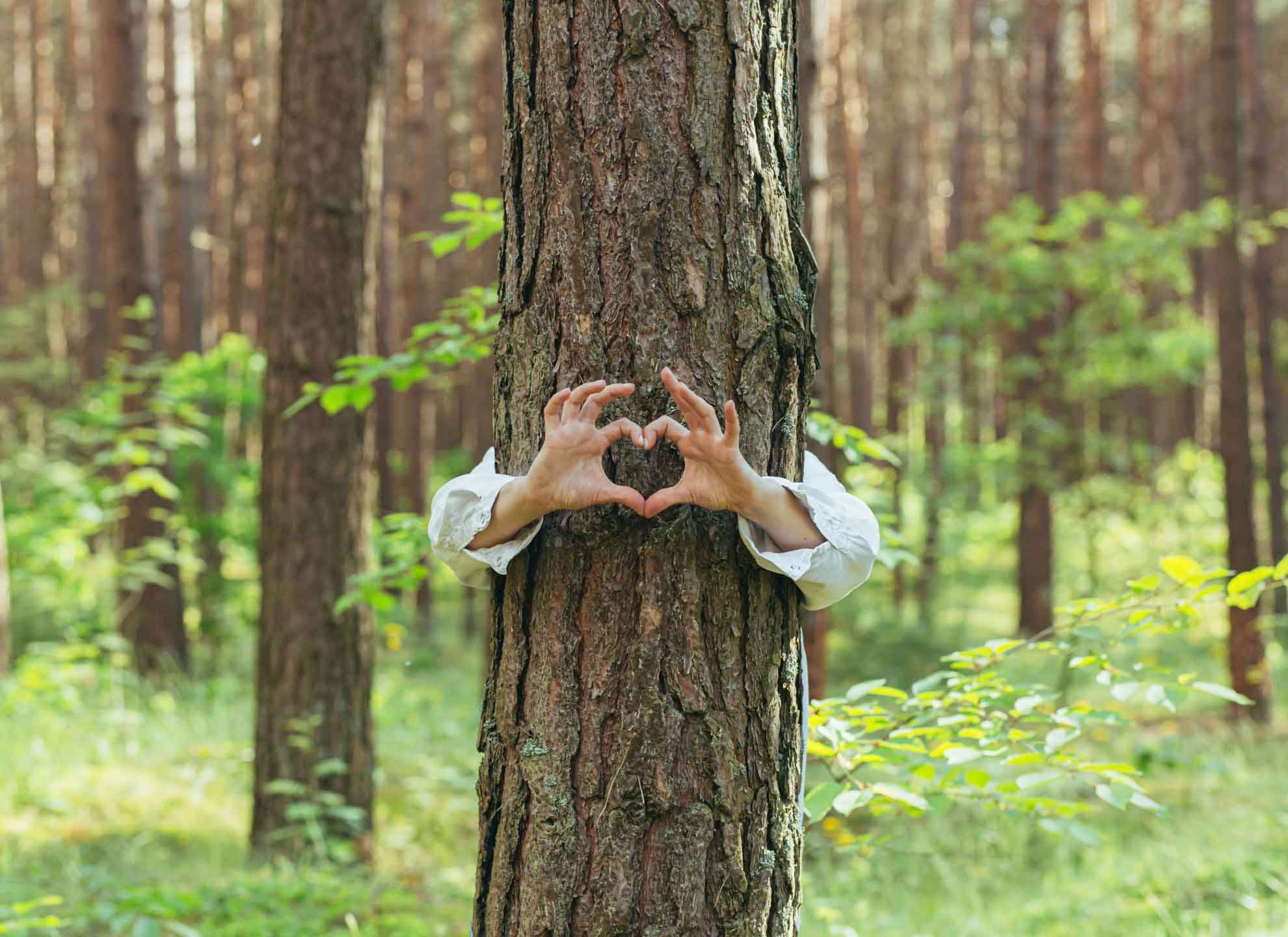
A participant embraces a tree as part of a Forest Therapy session, activating a physical sense of connection and calm.
Such embodied practices are a hallmark of Forest Therapy – feeling the bark, grounding your feet on soil, or simply hugging a tree. These tactile moments can help people to shift from cognitive rumination to direct sensory awareness, building an “I can” confidence about being present. This grounding also often sparks gratitude and humility, subtle but important fuels for a hopeful mindset.
Research Highlights: Nature’s Impact on Mental Wellbeing
A vast quantity of peer-reviewed studies have documented the wide ranging mental health benefits of forest experiences – and these extend to key elements of hope and efficacy. For instance, a controlled study of school students who took part in a Forest Bathing walk found that after just one guided 90-minute walk, participants’ average mental well-being scores (on the Warwick-Edinburgh scale) rose significantly. A moderate effect was seen after one session, and after three forest walks the improvement was even larger. Importantly, the number of students scoring in the depression range dropped dramatically – all but eliminating those at mild or probable depression thresholds. While the study did not measure “hope” per se, higher mental wellbeing typically includes enhanced optimism and vitality, both aligned with hope. Participants also provided open-ended feedback about their experiences, often speaking of feeling calmer, more connected, and capable, reflecting an uptick in self-efficacy.
In adult populations, the trend is similar. An integrative review of 25 nature-intervention studies noted that group Forest Bathing programs offer “individualised, meaningful activities … in a non-demanding atmosphere”. Key findings were that Nature-Based Interventions reduced stress, improved health and wellbeing, and strengthened self-efficacy and work ability. In practical terms, people in these programs developed confidence in managing their daily lives – exactly the self-efficacy practitioners aim to nurture. Similarly, a German hospital pilot study found that nature-based therapy significantly improved mental well-being and connectedness to nature, while depression scores decreased. The patients in that study repeatedly described the experience as “meaningful” and noted an “improvement at the soul level” – suggesting a qualitative deepening of hope and personal meaning. All participants rated the therapy effective, highlighting elements like the supportive environment and creative activities (for example, poems and reflections with nature themes) that fostered their connection to self and environment.
Even among vulnerable groups, nature’s power shows up. In a study of juvenile offenders on probation, a two-day Forest Therapy program led to significant gains in psychological wellbeing (measured by the Korean Well-Being Manifestation Measure) and physiological relaxation (heart rate variability indices) relative to a control group. Research cited in that study reported “great changes in young offenders’ hopes, resilience, and self-efficacy” after nature-based activities. In other words, marginalised young people often discover newfound agency and forward-looking optimism through outdoor programs. Forest settings can feel safer and more egalitarian than clinical settings or urban environments; and participants noted they could be themselves and trust others in the group, helping them open up and envision better futures.
Other research echoes these findings. A meta-analysis of forest therapy outcomes in Korea concluded that forest-based interventions broadly reduce depression and anxiety. Reduced depression often correlates with increased hope – individuals no longer see their situation as hopelessly bleak. Another study found that even viewing forest scenes can lower stress and improve positive mood significantly more than viewing urban scenes or equivalent exercise indoors. As one participant in a COVID-19 lockdown study noted, simply looking at “blue-green spaces” (forests, parks, water) had tangible mental health benefits. When stress eases and positivity rises, people naturally feel more capable of dealing with challenges.
Finally, the role of mindfulness in nature therapy has also been highlighted: studies have found that participants who practice mindfulness (a common component of Forest Bathing and Forest Therapy practices) show greater life satisfaction and reduced distress. Mindfulness bridges nature and mental resilience, encouraging a flexible, non-judgmental stance that nurtures hope (“This moment is okay; I have what I need to cope”). While direct measures of hope in nature studies are still rare, qualitative feedback consistently mentions words like “renewed”, “energised”, “calm and optimistic” – all pointing toward enhanced hopefulness and faith in themselves.
How Nature Builds Hope and Efficacy
Let’s now look a little deeper into the “how” behind these effects.
Stress Reduction
High stress narrows cognition (fight-or-flight) and often floods the mind with negative self-talk (undermining efficacy) or hopeless thinking (“I can’t handle this”). By activating the parasympathetic system, Forest Bathing literally lowers blood pressure and cortisol, creating physiological safety. A calmer body sends a message to the brain: “We’re safe now”. In this relaxed state, people often experience more positive thoughts and perceive themselves as more in control. This stress-buffering effect is a direct route to bolstered self-efficacy (“I did something calming for myself, so I can do more”).
Attention Restoration
Mental fatigue can make problems seem unsolvable, breeding hopelessness. Restorative nature exposure replenishes directed attention, enabling clearer problem-solving. A refreshed mind is more capable of mapping out steps toward goals (pathways thinking). I often guide participants to set intentions at the end of a Forest Therapy session: because their attention is renewed, they find it easier to outline a plan of action or to envision a future scenario positively.
Affect Regulation and Positive Emotion
Nature experiences typically shift affect from negative to neutral or positive (even small joys like seeing sunlight on leaves). Positive affect feeds hope by broadening perspective. In one conceptual example, a person engaging in nature-connection activities might feel a gentle joy watching squirrels or listening to a stream - and this joy makes the brain more open to considering good outcomes and personal strengths. Over time, these ‘micro-moments’ accumulate, building an emotional “bank balance” of resilience against despair.
Embodied Awareness
Forest Therapy often involves using the body as a vehicle of healing – through walking, stretching, tree-hugging, or even mindful breathing rooted in the Earth. Participants become more aware of their physical capabilities (for example “I can climb this hill without fear”) and interoceptive cues (“I feel steady as my feet touch the ground”). This “embodiment” anchors them to the here-and-now, making challenges feel more surmountable. Many people who participate in nature-connection activities report feeling physically stronger or more balanced afterwards, which can translate into mental confidence.
Social Connection and Community
Guided Forest Bathing sessions are often done in groups, even if silence is valued. The mere presence of others doing the same healing work provides subtle social support and normalisation (“we’re all in this together”). Shared silence, sharing circles or sharing a simple cup of tea under the trees at the end of the session, can foster a quiet camaraderie. Belonging to a nurturing group can spark hope (“If these people believe in doing this, maybe change is possible”), and the supportive structure enhances self-efficacy by giving a sense of shared effort and accountability.
Metaphor and Meaning
Forests and nature naturally lend themselves to metaphors (growth, cycles, resilience) that can be used to frame a person’s journey. For example, noticing the rings of a tree stump can prompt reflection on personal life events. Planting a seed might symbolise creating new goals; viewing the changes in nature – like seeing bulbs sprout in spring or leaves fall in Autumn – helps people to reflect on their own capacity for renewal and cycles of recovery. Such concrete metaphors make abstract hope and efficacy more tangible as these meaning-making processes can catalyse a hopeful narrative: “Just like this forest regenerates each year, I can regenerate my life too.”
Practical Nature-Connection Exercises for Practitioners
Below are some tried-and-true nature-based exercises that you can try. Each is aimed at engaging senses, body, or meaning in a way that can boost hope or self-efficacy. These activities can be done in a park, forest, or even a small garden:
Mindful Forest Walk
Begin with a slow, silent walk among trees and notice different sounds that bring you pleasure, such as birdsong, the sound of running water or rustling leaves, or different smells that are you feel closer to nature, such as the smell of pine or damp earth. These practices gently restores attention and anchor the mind in the present.Grounding and Tree-Hugging
Stand next to a large tree, close your eyes, and place your hands on the trunk. Feel the texture, temperature, and solidity of the tree. (As shown above, even hugging a tree can evoke deep calm.) Take a few grounding breaths: imagine roots extending from your feet into the earth. After a minute or two, many feel more centred. With each breath, sense your strength growing, and ask yourself “What is one challenging thing I feel stronger to face now?” This links the physical grounding with mental empowerment.Sit Spot
Find a quiet spot to sit down, perhaps on a blanket or log. Sit silently and still for 5–10 minutes, just observing the surroundings: watch a leaf fall, listen to the distant chatter of nature. Afterwards, reflect on anything that came up (e.g. “I notice I feel peaceful and hopeful about dealing with my stress now that I’m calmer.”). This practice can reduce sympathetic arousal (fight-flight) and give mental space for hope to arise.Nature Journaling or Sketching
Draw or write about something in nature that stands out. It could be a colourful leaf, an interesting rock, or the pattern of branches above. Use all your senses. This creative reflection often brings insights. For example, you might see a small plant pushing through concrete and say to yourself, “I see myself breaking through my obstacles”. This explicit metaphor links nature’s resilience with personal hope.“I Am” Affirmation with Nature Props
Pick up a natural object, such as a small stone, pinecone, feather. Hold it and say aloud to yourself, “I am [adjective], I do [action], and this helps me [goal].” For instance, holding a smooth stone they might say, “I am strong. I take steady steps forward. I have the power to change my situation”. Pairing affirmations with a tactile symbol can reinforce self-efficacy beliefs.Seasonal Metaphor Reflection
Look for meaning and metaphor in seasonal activities or events. In Spring, notice how planting a real or imagined seed can represent a personal goal: what nurturing does it need to grow? In Autumn, think about letting go of past hurts as leaves fall. These exercises help you to frame your struggles as natural processes with an eventual future renewal, fostering both hope and patient agency.Gratitude Walk
Towards the end of a nature walk, identify and name things you feel grateful for in the forest, such as sunlight on leaves, feeling the breeze on your face, or the sounds of birds. Gratitude is known to increase positive mood, which can support hopeful thinking. The act of noticing positives in the environment can translate to noticing positives in your life.Decision or Goal Making in Nature
Stand at a fork in a forest path or at the edge of a clearing. Use this as a metaphorical choice point: “One path is where you are now, the other is where you want to go.” Think about what steps (branches) lead forward. This physical metaphor can make abstract decisions more concrete and promotes greater feelings of agency. It uses both the imagination and the body, anchoring plans in a felt experience.
Final Thoughts
Nature-connection practices offer a rich resource for fostering hope and self-efficacy. By reducing stress and cognitive load, engaging the body’s senses and rhythms, and awakening positive emotions, activities like Forest Bathing quietly rebuild a person’s belief in themselves and their future. Numerous studies show that people who walk in forests and natural environments often report feeling calm, empowered and optimistic afterwards. Nature-Connection and Forest Therapy activities such as these don’t just reduce symptoms of stress and depression; they can plant seeds of agency and hope that can be carried into all areas of life.
If you have enjoyed this article and would like to support what we do by donating £2 or more to buy saplings to plant, please follow the link below:

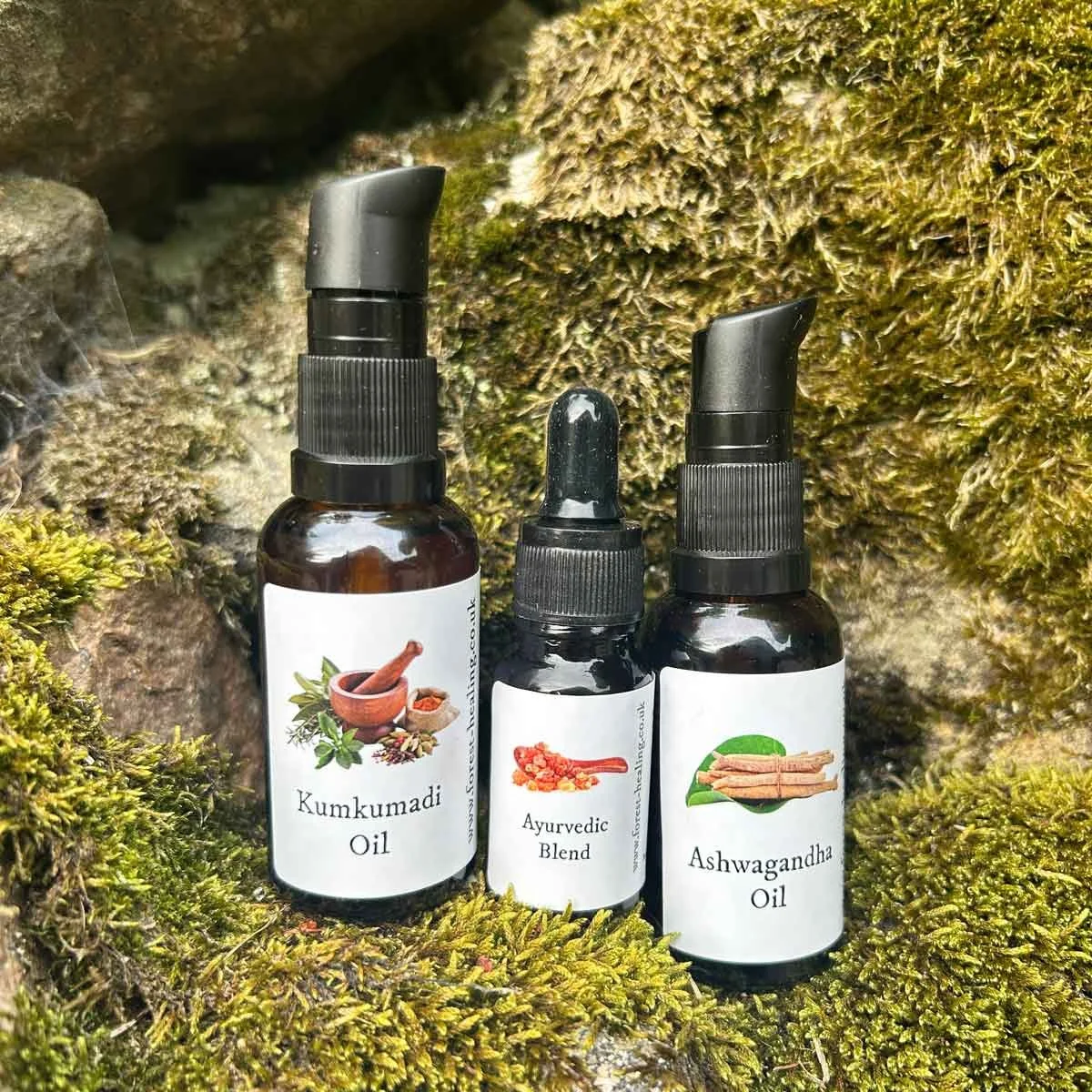























A small collection designed to gently open the door into deeper relationship with the natural world.
This complete set of four Forest Healing booklets brings together practical guidance, reflective ideas, and simple nature connection practices that can be used anywhere — from ancient woodland to a nearby park, garden, or even a single Sit Spot outdoors.
Written to be accessible, grounding, and easy to follow, these booklets offer a pathway into the core practices of Forest Bathing (Shinrin-yoku), Silvotherapy, and everyday nature connection. Rather than asking you to achieve anything, they simply invite you to slow down, notice more deeply, and allow nature to become an active presence in your wellbeing.
Across the four booklets you will explore:
• What Forest Bathing, Silvotherapy, and Nature Connection actually are
• The key benefits of spending mindful time in natural environments
• The practice of the “Sit Spot” and how to develop your own relationship with a chosen place
• Simple, practical Forest Bathing invitations you can try alone or with others
• Ways to bring nature connection into everyday life, even in small moments
Together, they form a gentle introduction to practices that have been shown to support reduced stress, improved mood, greater clarity of thought, and a deeper sense of belonging within the natural world.
These are not academic texts or rigid instruction manuals. They are invitations — encouraging you to step outside, slow your pace, and rediscover the quiet intelligence of trees, weather, and landscape.
Whether you are completely new to nature connection or looking to deepen an existing practice, this collection offers a simple, supportive starting point for building a more intentional and restorative relationship with the living world around you.
A small set of booklets that can change the way you experience even the most familiar patch of nature.
Buy all Four Forest Bathing and Nature-Connection Booklets for £11.00 including FREE P&P within the UK.
Postage to the Rest of the World is £4.