

Are The Japanese More Culturally Aligned With The Concept of Forest Bathing?
Since its first conception in Japan in the 1980s Forest Bathing, or ‘shinrin-yoku’, has become a popular practice for people looking to improve their mental health and reconnect with the natural world. It was conceived as a natural therapy to alleviate the pervasive stress of Japan’s growing urban office culture. Shinrin-yoku involves spending time in a forest, taking in the sights, sounds, and smells of the natural environment, and allowing yourself to be fully present in the moment. As Dr Qing Li describes in his book ‘Shinrin-Yoku: The Art and Science of Forest-Bathing’, “It is no surprise that shinrin-yoku developed in Japan. The Japanese are a forest civilization. Their culture, philosophy and religion are carved out of the forests that blanket the country.”
Japan is also one of the most forested countries in the world - forests cover about 69% of Japan's total land area, making it the third most forested country in the world after Finland and Sweden - having the right geological and climatic conditions for abundant forests. Furthermore, Japan's forest areas are predominantly native and historic woodlands and rainforests, rather than monoculture plantations. Whilst Japan is said to be poor in natural resources it is rich in forest resources. The Japanese people have always viewed nature as an integral part of their lives, and this is reflected in their art, literature, and daily practices.
This article will explore the question “Are The Japanese More Culturally Aligned With The Concept Of Forest Bathing?”
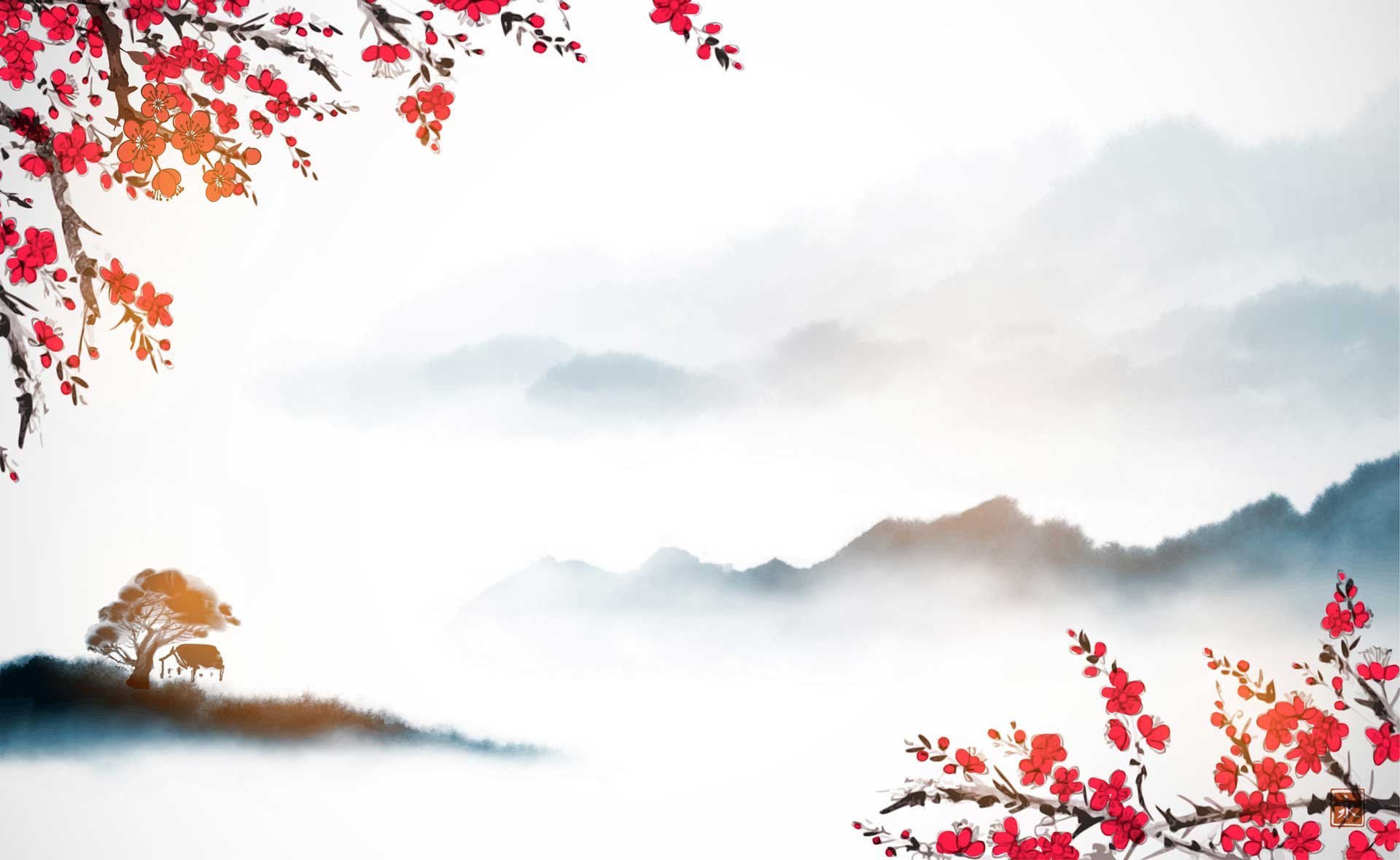
Japan is a country with a rich cultural heritage and a deep connection to nature and is considered to be one of the most nature-connected countries in the modern world. From the traditional art of flower arrangement to the reverence for mountains, the Japanese people have a profound respect for the natural world that is woven into the fabric of their society.
Japanese Religion and Nature Connection
Shinto, Japan’s indigenous religion, has a particular focus on the natural world. The Shinto belief is that all natural objects have spirits, or kami, that must be respected and revered. This means that mountains, rivers, trees, and rocks are not just inanimate objects, but are living entities with their own personalities and desires and this belief has influenced Japanese culture, which emphasises the importance of respecting and appreciating the natural world. Shinto rituals and practices are often conducted outdoors, and many of Japan's most famous shrines and temples are located in natural settings, such as forests or on mountainsides.
Similarly Buddhism, Japan’s second religion, promotes living in harmony with nature and Buddhists believe that all life is interrelated and interdependent. They also believe that Nature and the natural environment are alive and at least partly conscious, and that nature is neither sacred and perfect, or evil. Further, from the Buddhist viewpoint, humans are not distinct from or superior to other sentient beings.
Shizen
Shizen (also pronounced jinen), literally means ‘from itself (shi/ji) thus it does (zen/nen)’, but is often translated from Japanese as ‘naturalness’, ‘a mode of being that is natural’ or ‘a natural state’. It is one of the seven principles of Zen aesthetics and also conveys the idea that we are all connected to nature and that the more related to nature something is, the more pleasing it is. The word is said to come from the ancient Chinese word ziran, used in many of the religio-philosophical texts such as the Daoist Dao De Jing (Tao-te Ching), to refer to the spontaneous way of birth, growth and transformation. The Dao De Jing situates ziran at the most fundamental level of the Chinese “great chain of being” stating that
“Humanity is based on Earth: Earth is based on Heaven; Heaven is based on the Way (Dao); and the Way is based on what emerges naturally (ziran).”
Nature Connection and Language
As Erin Nimi Longhurst describes in her book ‘Japonisme – Ikigai, forest bathing, wabi-sabi and more’, the Japanese language is full of single word concepts related to nature that do not have a direct English translation, including:
Komorebi - used to describe the kind of light often seen in a forest where the rays of the sun are filtered through the leaves of the trees.
Kogarashi – used to describe a cold wintery ‘leaf-wilting wind’ that nudges the wilting leaves to fall from the trees in Autumn. It is said to mark the true start of the winter season and Japan’s Meteorological Agency maintains a record of the first Kogarashi every year.
Kawaakari – used to describe the glow of a river or stream in darkness or dusk and the way that moonlight reflects off a river.
The characters for the Japanese phrase kachou fuugetsu literally translate as ‘flower, bird, wind, moon’ but most commonly translates as ‘learning about yourself through experiencing the beauty of nature’.
Poetry and Nature
The 8th Century Japanese poetry anthology, the Man’yōshū (Collection of Myriad Leaves) contains over 4,500 poems about nature. Almost all of them are tanka (short poems), structured syllabically with lines typically running 5-7-5-7-7. This style of poetry was simplified in the 17th Century into the haiku, or 5-7-5 syllable poem, which also commonly relate to the natural world, celebrating the beauty of nature in a few simple lines.
Japanese Art and Nature
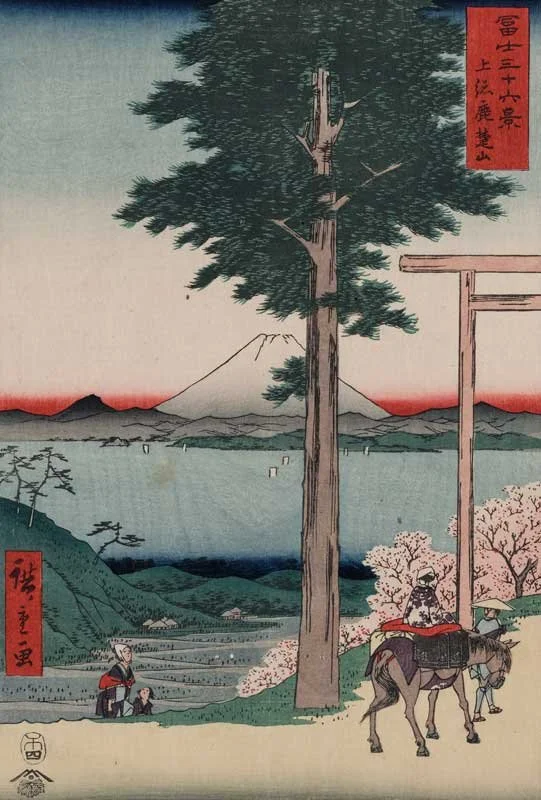
Japanese art, including painting, poetry, and ceramics, is also deeply influenced by nature. Traditional Japanese painting often features natural scenes, such as mountains, rivers, and trees, and the use of natural materials, such as ink and rice paper, is also common, whilst ceramics often incorporate natural motifs, such as leaves or flowers.
Architecture and Nature
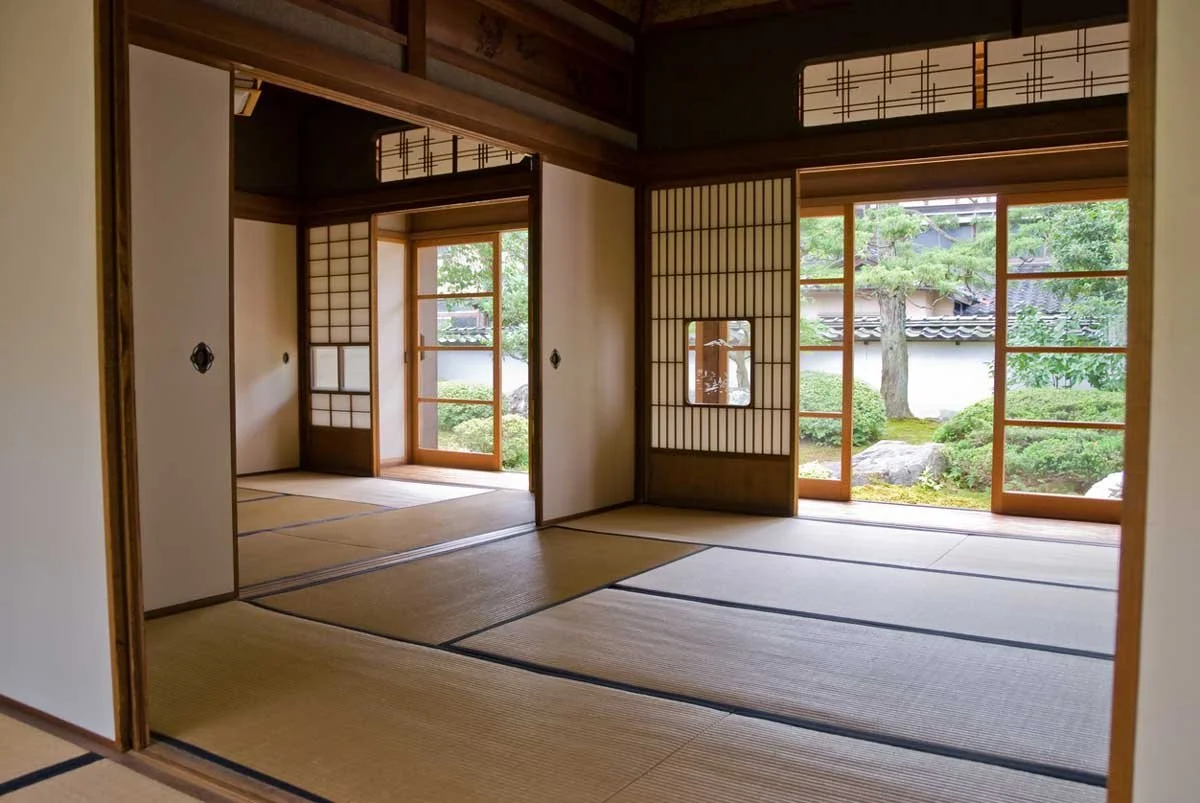
Traditional Japanese houses have translucent paper screens meaning that you can shut the door without fully shutting yourself off from nature.
Bonsai
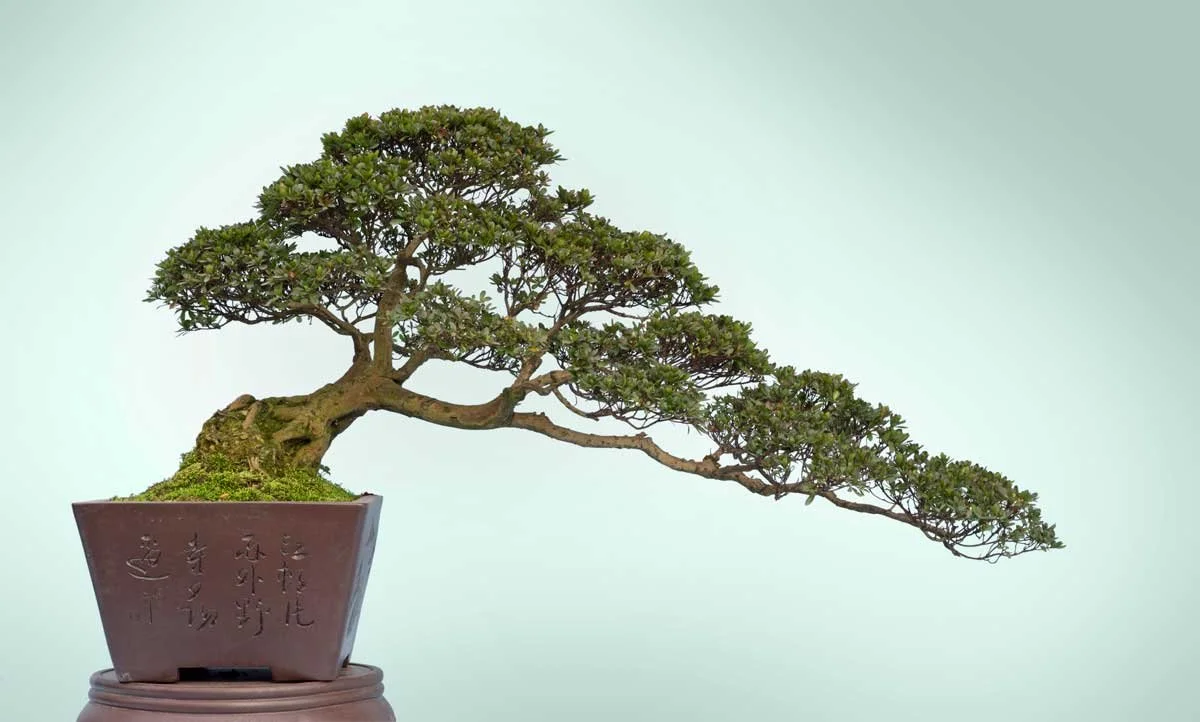
One of the most famous examples of this reverence for nature can be found in Japan’s ancient art of bonsai. Bonsai is the practice of cultivating miniature trees, often for decades or even centuries, in order to create a work of art that reflects the beauty and harmony of the natural world. The careful attention paid to the tree’s growth and shaping is seen as a way of harmonising with the kami that resides within the tree.
The Way of Tea
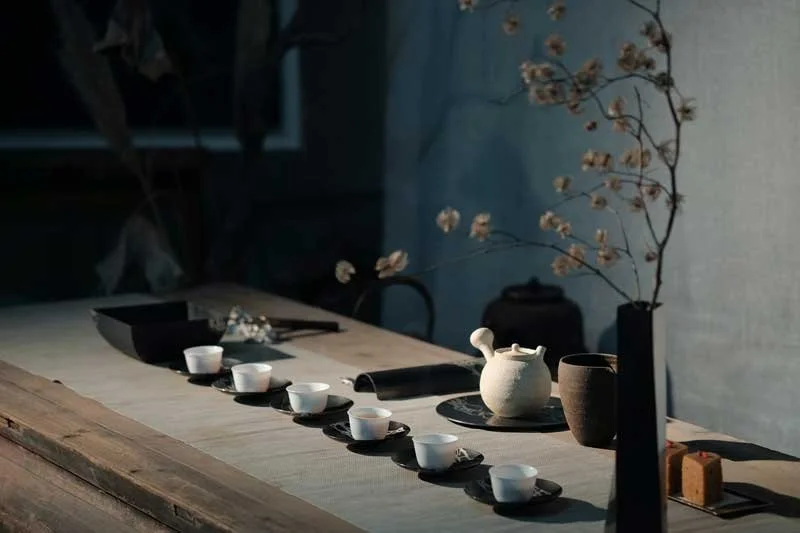
Another example of Japan’s deep connection to nature can be found in their traditional tea ceremony (chadō). The ceremony takes place in a specially designed tea room that is often surrounded by a garden that has been carefully cultivated to reflect the changing seasons. The guests are encouraged to take a moment to appreciate the natural beauty of the surroundings, which is seen as an important part of the tea ceremony experience.
Cherry Blossom
Japanese culture also has a long history of celebrating the changing of the seasons. Cherry blossom season, or hanami, is a famous example of this. During this time, people gather in parks and gardens to view the cherry blossoms in full bloom. The tradition of hanami has been celebrated in Japan for over a thousand years and is seen as a way of appreciating the fleeting beauty of nature.
Wabi Sabi
Wabi sabi is a Japanese aesthetic concept that values the imperfect, impermanent, and incomplete. It is often associated with the beauty of natural objects, such as flowers that are wilting or trees that are gnarled and twisted. The idea that flaws should not be hidden but emphasised is a concept fairly unique to Zen practice.
Appreciation of nature and the natural beauty that exists that beyond human creation is one of the critical characteristics of wabi sabi. It is about accepting the transience of all things as nature demonstrates on many levels from the annual shedding of leaves to creation of landscapes through wind and water, and the cycles of life.
As Beth Kempton writes in her book ‘Wabi Sabi - Japanese Wisdom for a Perfectly Imperfect Life’, “Wabi is about finding beauty in simplicity, and a spiritual richness and serenity in detaching from the material world. Sabi is more concerned with the passage of time, with the way that all things grow and decay and how ageing alters the visual nature of those things” -
Wabi sabi is an intuitive response to beauty that reflects the true nature of life.
Wabi sabi is an acceptance and appreciation of the impermanent, imperfect and incomplete nature of everything.
Wabi sabi is a recognition of the gifts of simple, slow and natural living.
Forest Bathing can help to foster an appreciation of wabi sabi, through recognising and appreciating the beauty of nature, acknowledging the cycles of life, the imperfections and impermanence displayed in nature, and the importance of viewing ourselves as a part of nature rather than apart from nature (separate from it).
“The forest does not care what your hair looks like. The mountains don’t move for any job title. The rivers keep running, regardless of your social media following, your salary or your popularity. The flowers keep on blooming, whether or not you make mistakes. Nature just is, and welcomes you, just as you are.”
Forest Bases, Forest Medicine and Green Prescribing
There are now (as of April 2023) about 65 Forest Therapy centres across Japan. Each centre has a Forest Therapy base and marked trails as well as certified Forest Therapy guides. According to the website of the Japanese Forest Therapy Society,
“A ‘Forest Therapy Base’ is an area located in a forest where the relaxing effects have been observed based on scientific analysis conducted by a forest medical expert. Moreover, it is an area where nature merges with society permitting people to come together and partake in some social activity surrounded in a natural environment. At each ‘Forest Therapy Base’, for the purpose of promoting a healthy lifestyle and encourage relaxation, other than forest walking, various other forest therapy programs are made available to visitors. In order to be certified as a ‘Forest Therapy Base’, an appropriate forest location must be properly maintained such that visitors can effectively receive ‘Forest Therapy’ and enjoy the physiological and psychological benefits.”
Forest Medicine
Japan, as well as South Korea, have developed a keen interest in ‘Forest Medicine’ over the last 40 years, led by specialist such as Dr. Qing Li, who describes Forest Medicine as encompassing “the effects of forest environments on human health and is a new interdisciplinary science, belonging to the categories of alternative medicine, environmental medicine and preventive medicine.”. Forest Medicine is the study of the effects that forests and forest environments have on human health through researching the effects that these environment have on people by taking physiological and psychological measurements before and after they participate in forest bathing. A wide range of mental, physical and emotional benefits have been identified. You can read more about Forest Medicine in this article that we have written.
Green Prescribing
As the World Economic Forum note, clinicians in Japan have been prescribing shinrin-yoku since the 1980s, recommending patients to get out and use the country’s 3,000 miles of woodland walks. To date, $4 million has been spent promoting shinrin-yoku as a national health programme.
Final Thoughts
In conclusion, the Japanese culture of nature connection is a deeply ingrained aspect of the country's heritage and is recognised as preventative medical intervention. The importance of respecting and appreciating the natural world can be seen in everything from religion and art to cuisine and government policy. As we face global challenges such as climate change and environmental degradation, the Japanese cultural nature connection serves as a reminder of the importance of our relationship with the natural world.
If you have enjoyed this article and would like to support what we do by donating £2 or more to buy saplings, please follow the link below:





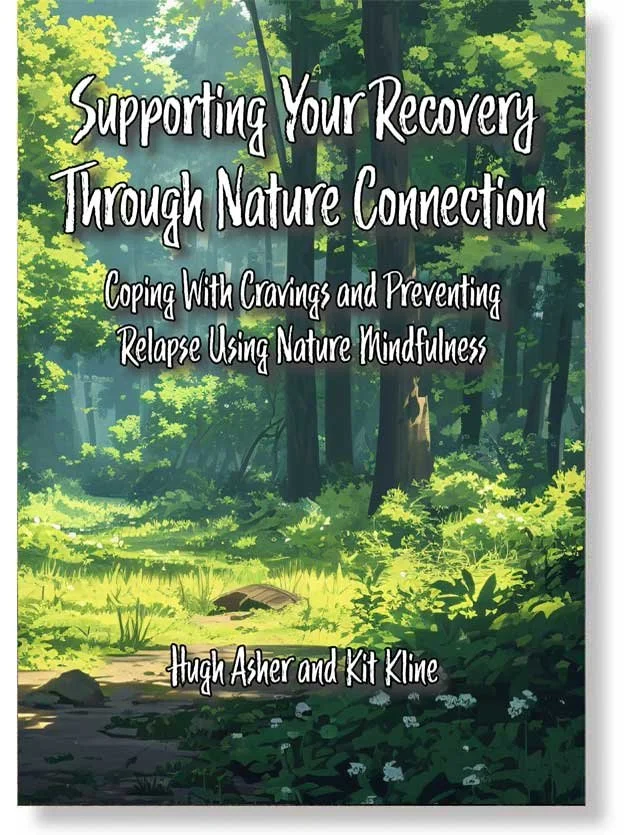













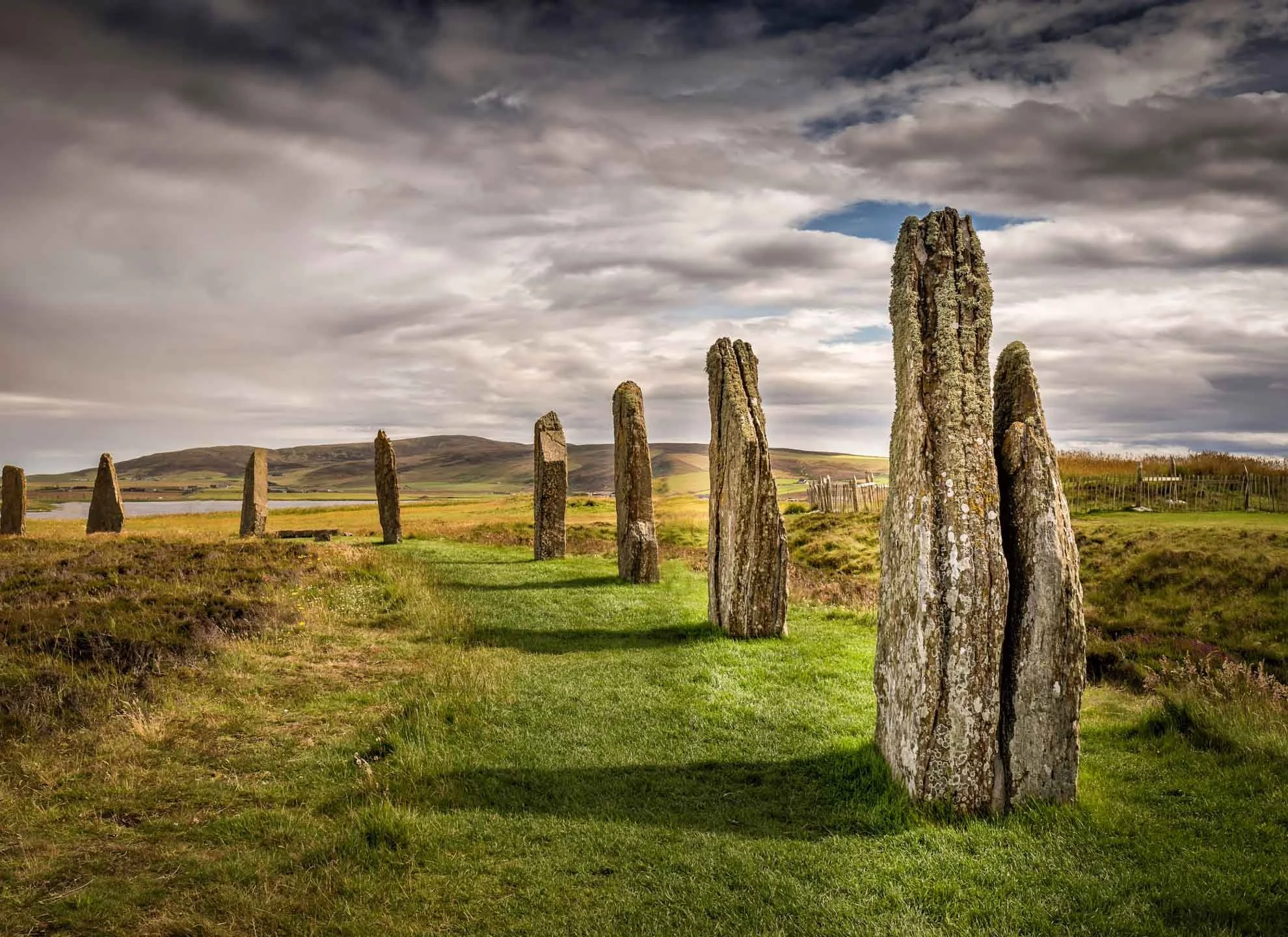
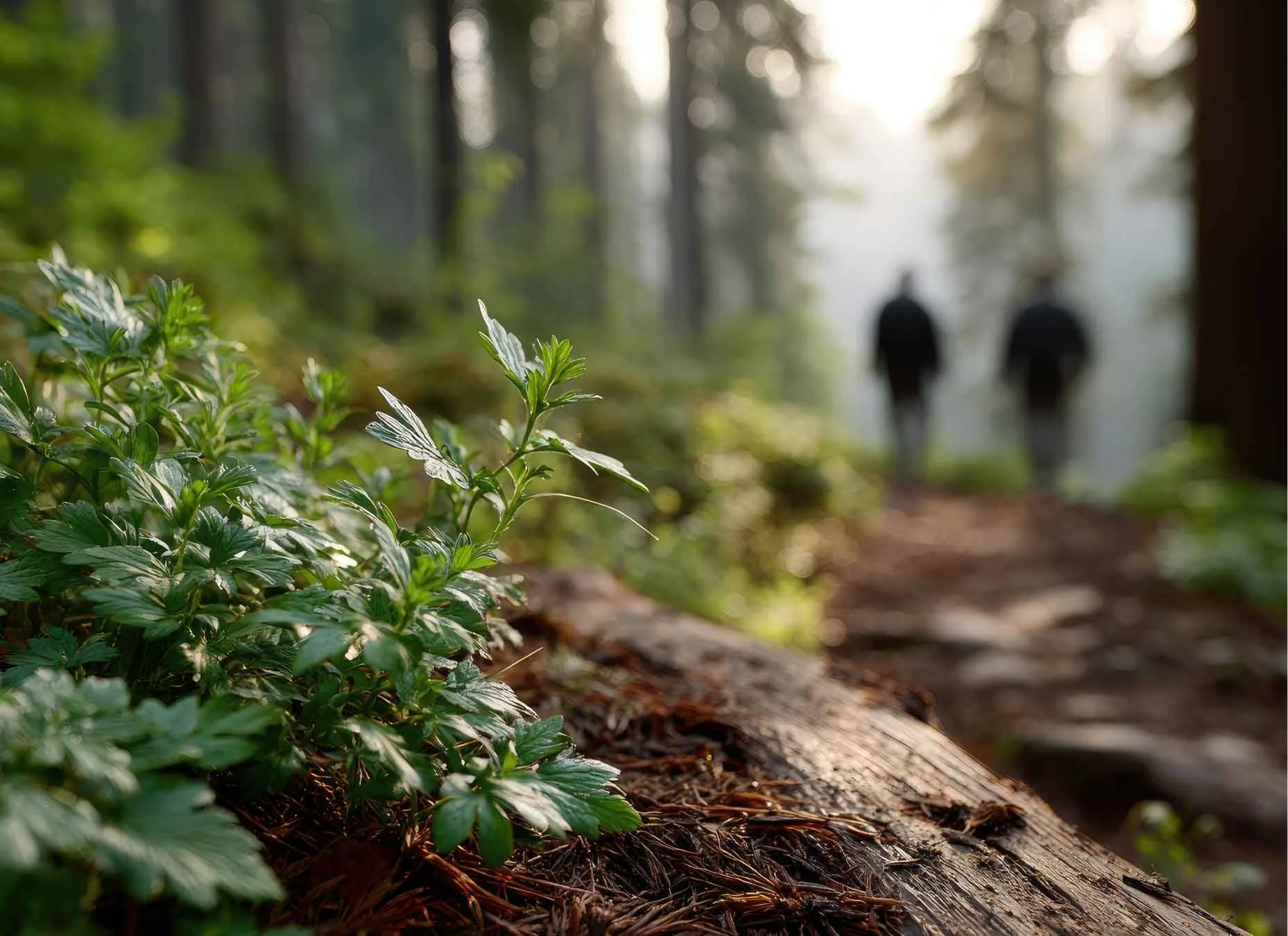
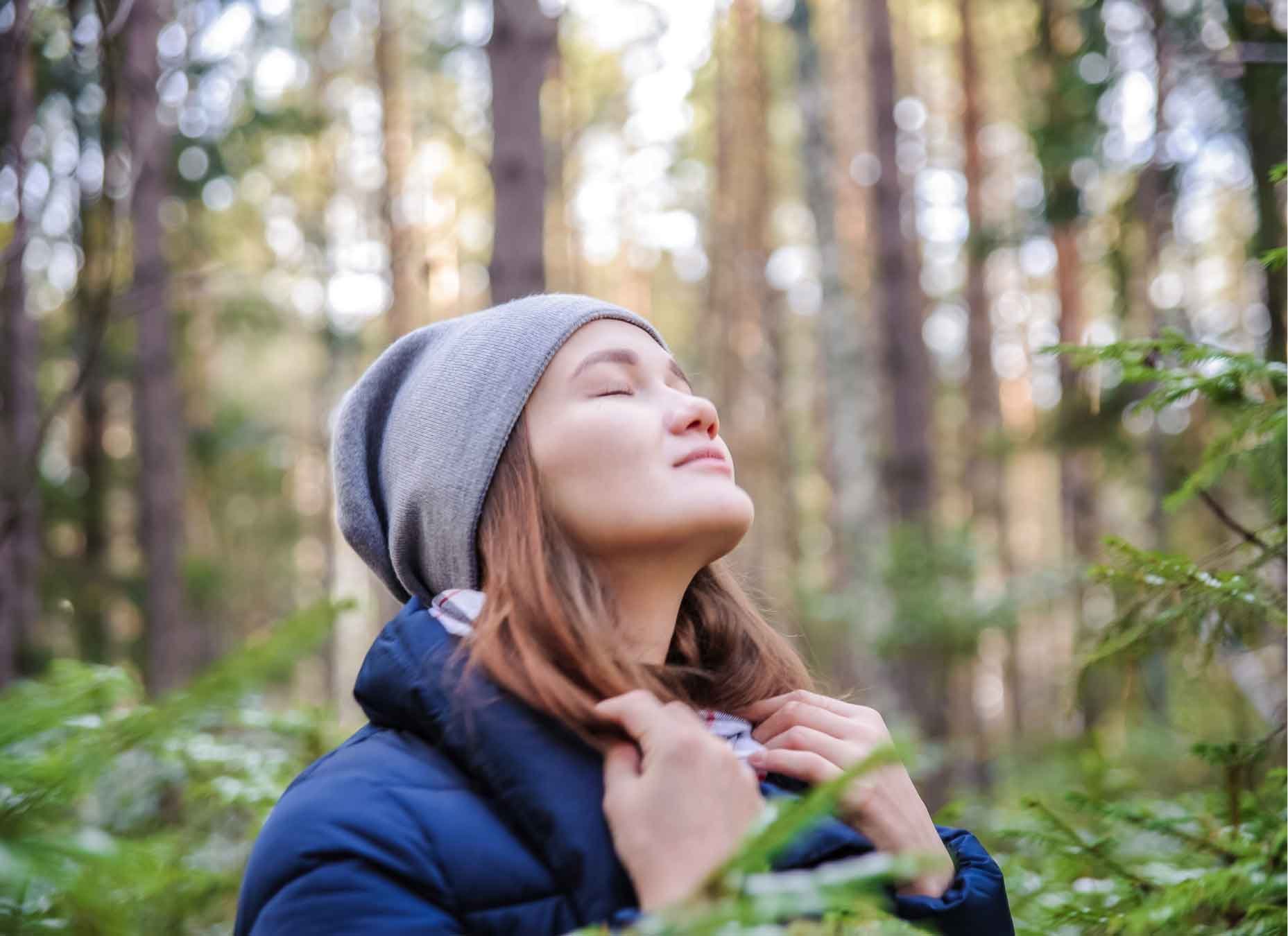

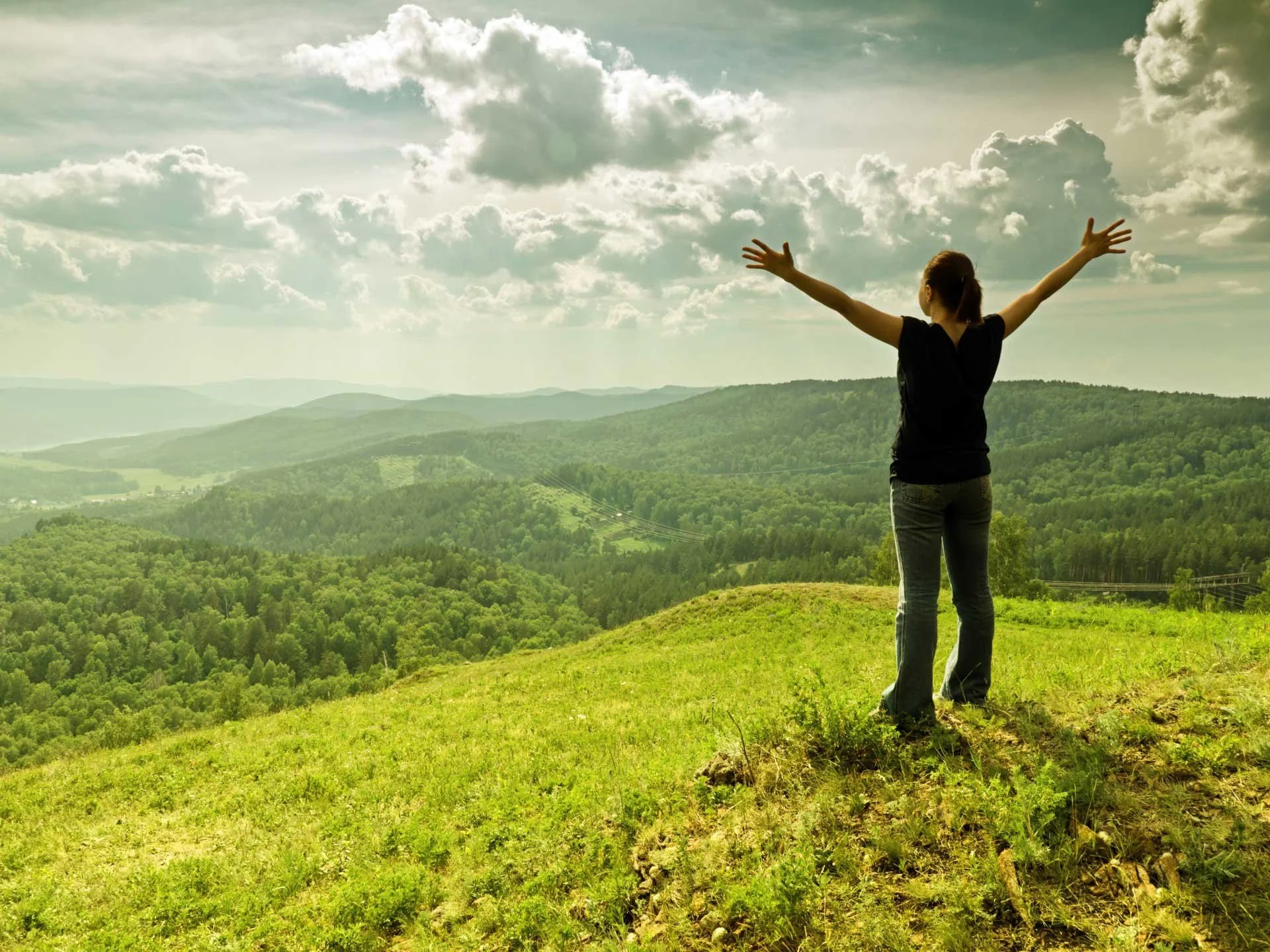












A small collection designed to gently open the door into deeper relationship with the natural world.
This complete set of four Forest Healing booklets brings together practical guidance, reflective ideas, and simple nature connection practices that can be used anywhere — from ancient woodland to a nearby park, garden, or even a single Sit Spot outdoors.
Written to be accessible, grounding, and easy to follow, these booklets offer a pathway into the core practices of Forest Bathing (Shinrin-yoku), Silvotherapy, and everyday nature connection. Rather than asking you to achieve anything, they simply invite you to slow down, notice more deeply, and allow nature to become an active presence in your wellbeing.
Across the four booklets you will explore:
• What Forest Bathing, Silvotherapy, and Nature Connection actually are
• The key benefits of spending mindful time in natural environments
• The practice of the “Sit Spot” and how to develop your own relationship with a chosen place
• Simple, practical Forest Bathing invitations you can try alone or with others
• Ways to bring nature connection into everyday life, even in small moments
Together, they form a gentle introduction to practices that have been shown to support reduced stress, improved mood, greater clarity of thought, and a deeper sense of belonging within the natural world.
These are not academic texts or rigid instruction manuals. They are invitations — encouraging you to step outside, slow your pace, and rediscover the quiet intelligence of trees, weather, and landscape.
Whether you are completely new to nature connection or looking to deepen an existing practice, this collection offers a simple, supportive starting point for building a more intentional and restorative relationship with the living world around you.
A small set of booklets that can change the way you experience even the most familiar patch of nature.
Buy all Four Forest Bathing and Nature-Connection Booklets for £11.00 including FREE P&P within the UK.
Postage to the Rest of the World is £4.