

The Fascinating World of Dragonflies - One of Our Most Aerodynamic Insects
8th June 2024
Today is National Dragonfly Day (apparently), and I love Dragonflies and Damselflies!
Dragonflies (and Damselflies) are some of the most fascinating and beautiful insects in the world. With their vibrant colours, incredible flying abilities, and complex life cycles, dragonflies can captivate the imagination and have earned their place as one of nature's most astonishing creatures. This article explores some of the remarkable attributes and intriguing facts about dragonflies, that account for why I find them so amazing.
Ancient Lineage and Evolution
Dragonflies belong to the order Odonata, which is divided into two suborders: Anisoptera (true dragonflies) and Zygoptera (damselflies). They are among the oldest insects, with a lineage tracing back over 300 million years to the Carboniferous Period, and as such they predate the dinosaurs. Fossil records reveal that prehistoric dragonflies, such as the genus Meganeura, had wingspans of up to 70 centimetres (27.5 inches), making them some of the largest insects ever to have existed, as well as amongst the earliest winged insects to evolve. Modern dragonflies, although smaller, still exhibit remarkable evolutionary adaptability, as well as very proficient predatory skills, that have allowed them to thrive for millions of years.
Breathtaking Diversity
There are over 5,000 known species of dragonflies, each exhibiting unique colours, patterns, and behaviours. They can be found in almost every part of the world, from tropical rainforests to temperate regions. The diversity in coloration among dragonfly species is not just for aesthetic appeal; it often plays a role in thermoregulation, camouflage, and mating displays.
Male dragonflies are particularly known for their territorial behavior. They often patrol and defend their chosen breeding sites, engaging in aerial battles with rival males. These encounters are not just about securing a mate but also about ensuring the safety and suitability of the breeding environment.
Exceptional Flight Abilities
Dragonflies are unparalleled aviators in the insect world. Their flight capabilities are complex and highly efficient, allowing them to:
Hover Like Helicopters
Dragonflies can hover in place, thanks to their ability to move each of their four wings independently. This capability is crucial for hunting and evading predators.
Fly Backwards
Few insects can fly backward, but dragonflies can, using rapid wingbeats to change direction instantly.
Reach Impressive Speeds
Some species, such as the Southern Giant Darner, can fly at speeds up to 30 miles per hour (48 kilometres per hour), making them one of the fastest insects.
Perform Aerobatic Manoeuvres
Their agility in the air is unmatched. Dragonflies can execute sharp turns, loops, and sudden dives with precision, which is essential for capturing prey.
Dragonflies' flight mechanics are so advanced that they have inspired modern drone technology (a process called ‘biomimicry’. Researchers study their flight to develop more efficient and agile flying robots. The intricacies of dragonfly flight involve complex aerodynamics, including the ability to create vortices with their wings to generate lift and thrust.
Voracious Predators
Dragonflies are apex predators in the insect world, primarily feeding on mosquitoes, flies, and other small insects. Their predatory efficiency is remarkable, with a success rate in capturing prey of about 95%. This is largely due to their highly developed visual and neurological systems, but they are also equipped with sharp mandibles and a unique prey capture technique. A dragonfly will snatch its prey mid-flight using its legs, which are covered with tiny spines that form an effective trap. Once a dragonfly spots its prey, it uses an ‘interception’ strategy, where it predicts the prey's flight path and intercepts it mid-air. This method of hunting is more akin to a fighter jet locking onto a target than the kind of random pursuit seen in many other predators.
Their predatory prowess extends to their larval stage as well. Dragonfly larvae, known as nymphs, are aquatic and equally formidable hunters. They possess extendable jaws that shoot out to capture unsuspecting prey, such as small fish, tadpoles, and other aquatic insects. The nymph stage can last several years, depending on the species, during which they moult multiple times before emerging as adults (but more about that later).
Remarkable Eyesight
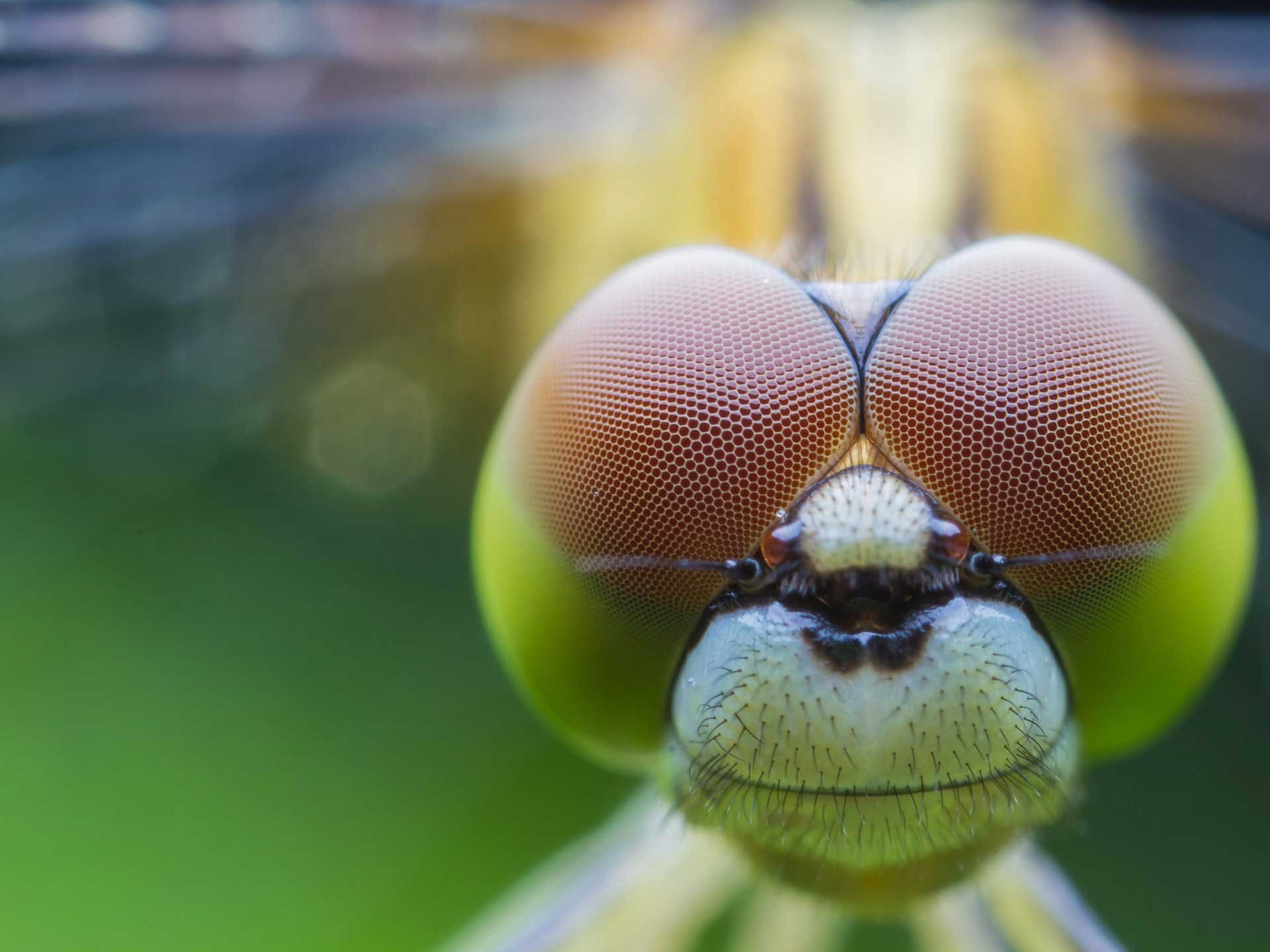
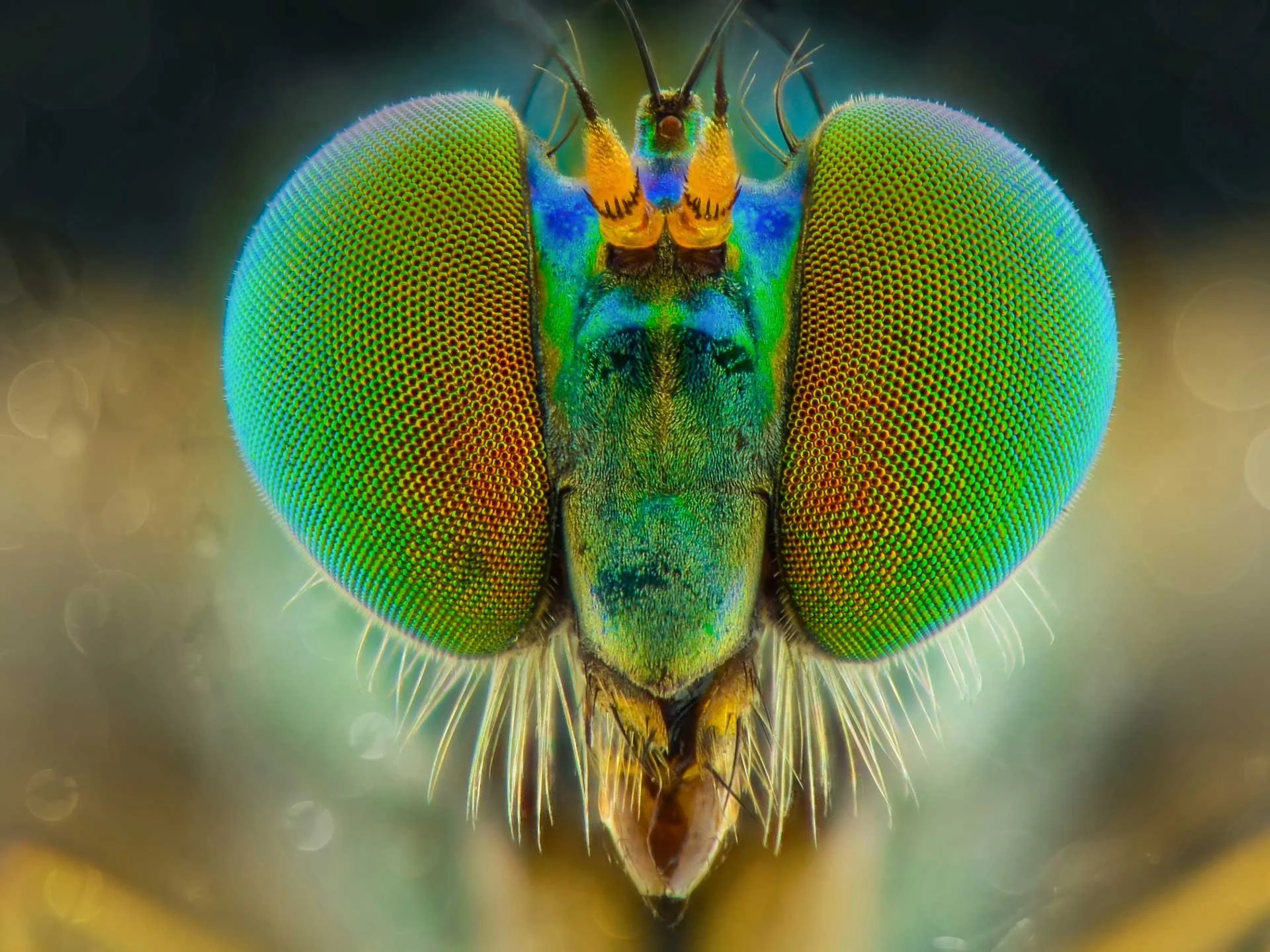
Dragonflies have some of the most sophisticated eyes in the animal kingdom. Their large, compound eyes provide nearly 360-degree vision and are composed of up to 30,000 ommatidia (individual visual units). This extensive visual field allows them to detect movement and colour changes with incredible accuracy, crucial for hunting and avoiding predators. They can also perceive ultraviolet light, which is invisible to the human eye, enhancing their ability to detect movement and colour. Additionally, their brain processes visual information incredibly quickly, enabling them to react and adjust their flight paths instantaneously.
Life Cycle and Metamorphosis
The life cycle of a dragonfly consists of three main stages: egg, nymph (larva), and adult. This metamorphosis is not only complex but also quite fascinating:
Egg Stage
Female dragonflies lay their eggs in or near water. Depending on the species, eggs can hatch in a few days or take several weeks.
Nymph Stage
The nymph stage is aquatic, and dragonfly nymphs are voracious predators, feeding on small aquatic organisms, tadpoles, and even small fish. This stage can last from a few months to several years, depending on the species and environmental conditions.
Nymphs undergo a series of moults as they grow, eventually emerging from the water to transform into adult dragonflies. This metamorphosis can be a dramatic and visually striking process.
Adult Stage
The adult dragonfly emerges from its exoskeleton in a process called ecdysis, pumps blood into its wings, and after a period of drying and hardening, takes to the skies. Newly emerged adult dragonflies are termed 'tenerals'. The adult phase is predominantly dedicated to reproduction, and adult dragonflies often display striking colours and elaborate courtship behaviours.
Some Fascinating Facts …
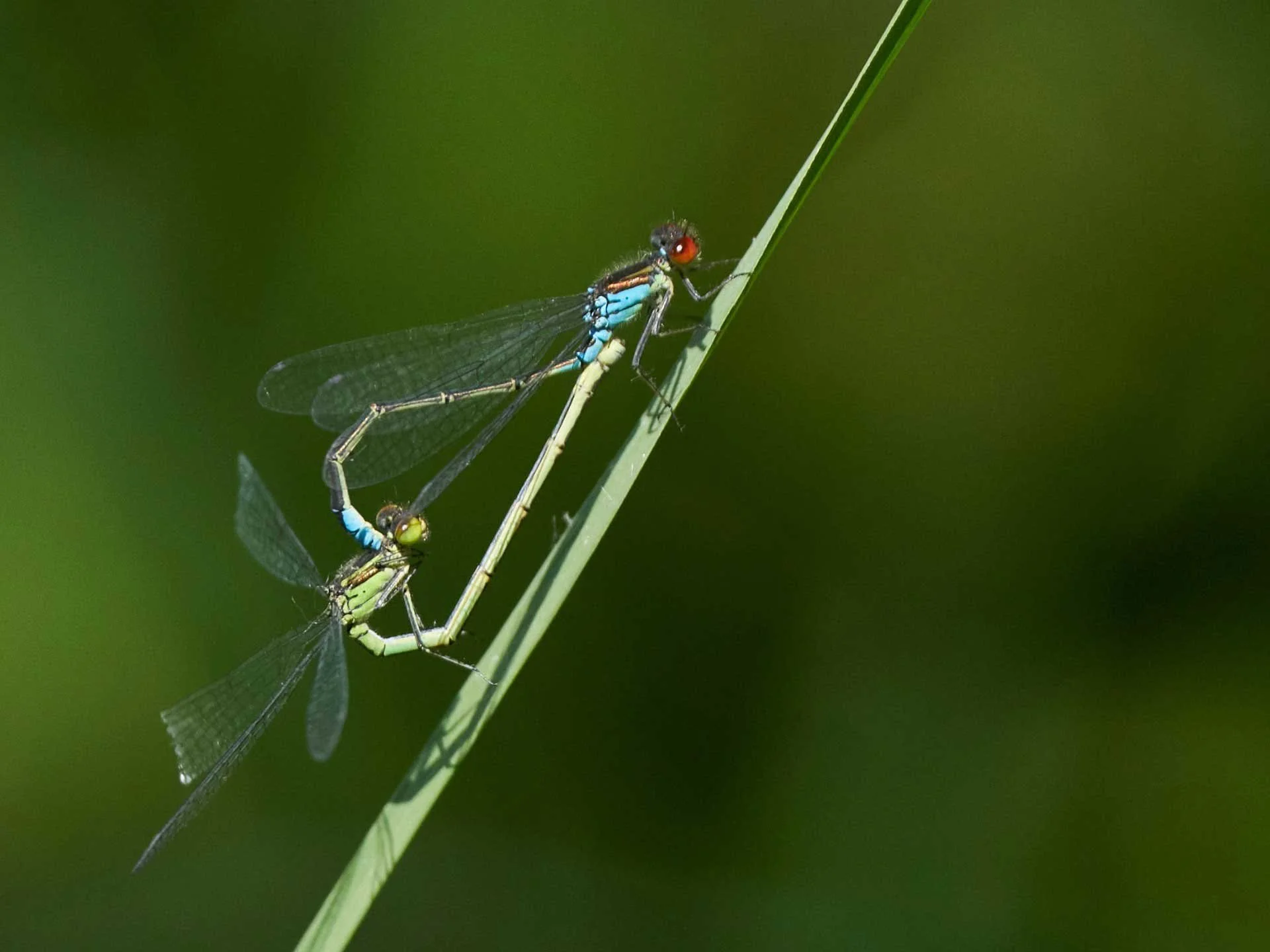
Mating Wheels
Dragonflies have a unique mating process known as the ‘mating wheel’, where the male grasps the female by the head or thorax using specialised claspers. The female then curls her abdomen to connect with the male's secondary genitalia to receive sperm.
Wing Flexibility
The wings of dragonflies are very delicate, but very effectively strengthened by a network of veins and membranes, making them both strong and flexible. This structure allows them to withstand the rigours of high-speed flight and aerial combat.
Thermoregulation
Dragonflies can regulate their body temperature by adjusting their position relative to the sun. In cooler weather, they may bask in the sun to warm up, while in hotter conditions, they can orient their bodies to minimise solar exposure.
Migratory Species
Some dragonfly species, like the Globe Skimmer (Pantala flavescens), undertake long migratory journeys across oceans and continents, traveling thousands of miles.
Ecological Importance
Dragonflies are vital indicators of environmental health. Since they rely on clean bodies of water for breeding, their presence or absence can signal the quality of the habitat. Their role as predators also helps control the populations of pest insects, such as mosquitoes, thus contributing to the balance of ecosystems and reducing many insect-borne diseases such as malaria.
Moreover, dragonflies are important to the food cycle, as birds, frogs, and some other predators rely on them as a food source. Their complex life cycle, involving both aquatic and terrestrial environments, also means that they play a role in nutrient cycling between these two ecosystems.
Learn to Notice More!
One of the greatest gifts of spending time in nature is learning to notice what most people walk past. If dragonflies have captured your imagination, you might enjoy exploring the wider practice of nature connection.
Many cultures see dragonflies as reminders of change, lightness and transformation.
Whether or not we accept those traditions literally, spending time quietly watching dragonflies can encourage us to slow down, become more attentive and reconnect with the living world.
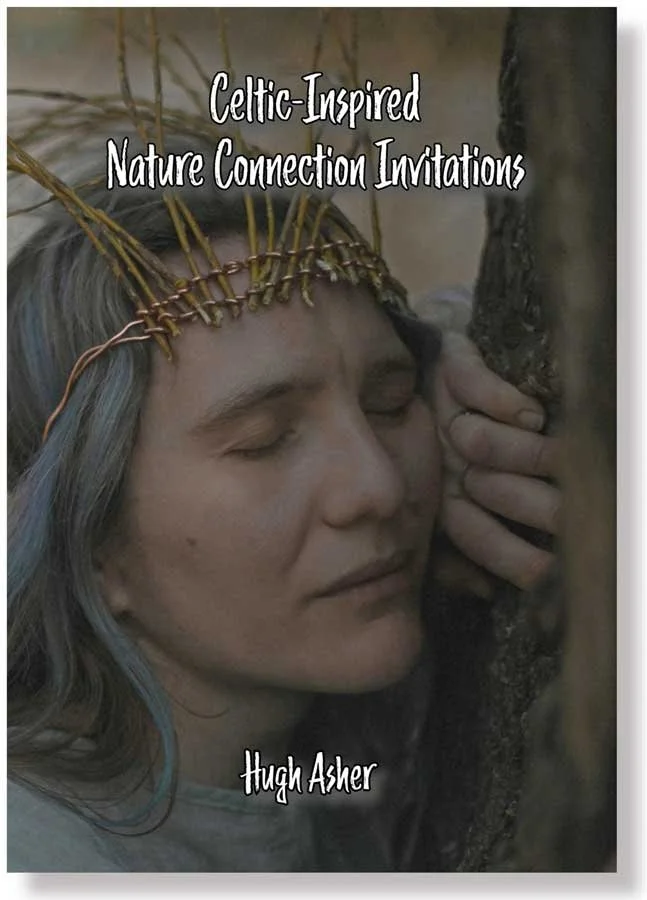
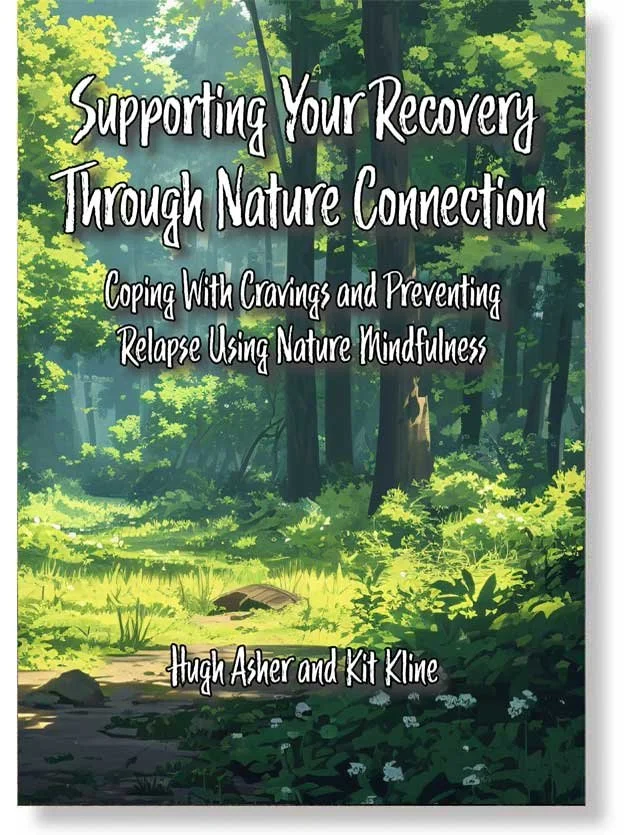
If that idea resonates with you, I've written several guides exploring how nature can become a companion for wellbeing.





Cultural Significance and Symbolism
Throughout history, dragonflies have held various cultural significances. In many cultures, they are symbols of change, transformation, and adaptability. In Japan, dragonflies are considered symbols of courage, strength, and happiness. Native American tribes often view them as representations of swiftness and activity. Their ethereal beauty and dynamic flight have inspired countless works of art, literature, and folklore.

Conservation and Threats
Despite their ecological importance and cultural significance, dragonflies face numerous threats. Habitat destruction, pollution, and climate change are significant challenges to their survival. Wetlands and freshwater habitats, crucial for their breeding and development, are particularly vulnerable to human activities. Conservation efforts are essential to protect these incredible insects and the ecosystems they inhabit. Creating and preserving wetlands, reducing pesticide use, and monitoring water quality are therefore vital steps in ensuring their survival.
Help Nature Thrive
Healthy dragonfly populations depend upon healthy wetlands.
If you'd like to support this website and future educational articles, every purchase helps me continue creating free nature resources, so I would be delighted if you would visit our store (opens in a new window).
You can also help fund native tree planting through the Forest Healing project.
The Difference Between a Dragonfly and a Damselfly
Dragonflies and Damselflies are both members of the order Odonata, but they belong to different suborders: dragonflies are part of the suborder Anisoptera, while damselflies belong to the suborder Zygoptera.
Here are some of the key differences between the two:

A Dragonfly
Body Structure:
Dragonflies
Have a bulkier, more robust body. Their abdomens are generally thicker.Damselflies
Have a slender, more delicate body with a thinner abdomen.

A Damselfly
Wing Position:
Dragonflies
Hold their wings open and perpendicular to their body when at rest.Damselflies
Hold their wings together and parallel over their back when at rest.
Wing Shape:
Dragonflies
Have hind wings that are broader at the base than the forewings.Damselflies
Have wings that are similar in shape and size, both forewings and hind wings are slender and narrow at the base.

Dragonfly Eyes
Eye Position:
Dragonflies
Have large eyes that touch or nearly touch at the top of the head.Damselflies
Have eyes that are separated and usually sit on the sides of the head.
Damselfly Eyes
Flight Pattern:
Dragonflies
Are strong fliers, capable of flying long distances, and they generally fly straight.Damselflies
Are weaker fliers, often fluttering and not flying as far.
Behaviour and Habitat:
Dragonflies
Tend to be more aggressive and can be seen flying around ponds, lakes, and rivers.Damselflies
Are usually more timid and are often found in vegetation near water.
Understanding these differences can help you easily distinguish between these two fascinating insects when you encounter them in nature.
A Large Common Bluetailed Damselfly Standing On A Lily Pad
Final Thoughts
Dragonflies are truly remarkable creatures, showcasing a blend of ancient heritage, unparalleled flying skills, predatory prowess, and ecological significance. Their presence enriches our natural world and offers valuable insights into the delicate balance of ecosystems. By understanding and appreciating these magnificent insects, we can contribute to their conservation and ensure that future generations continue to marvel at the wonders of dragonflies.
If you have enjoyed this article and would like to support what we do by donating £2 or more to grow and to buy saplings to plant, please support the Forest Healing Project by following the link below:































A small collection designed to gently open the door into deeper relationship with the natural world.
This complete set of four Forest Healing booklets brings together practical guidance, reflective ideas, and simple nature connection practices that can be used anywhere — from ancient woodland to a nearby park, garden, or even a single Sit Spot outdoors.
Written to be accessible, grounding, and easy to follow, these booklets offer a pathway into the core practices of Forest Bathing (Shinrin-yoku), Silvotherapy, and everyday nature connection. Rather than asking you to achieve anything, they simply invite you to slow down, notice more deeply, and allow nature to become an active presence in your wellbeing.
Across the four booklets you will explore:
• What Forest Bathing, Silvotherapy, and Nature Connection actually are
• The key benefits of spending mindful time in natural environments
• The practice of the “Sit Spot” and how to develop your own relationship with a chosen place
• Simple, practical Forest Bathing invitations you can try alone or with others
• Ways to bring nature connection into everyday life, even in small moments
Together, they form a gentle introduction to practices that have been shown to support reduced stress, improved mood, greater clarity of thought, and a deeper sense of belonging within the natural world.
These are not academic texts or rigid instruction manuals. They are invitations — encouraging you to step outside, slow your pace, and rediscover the quiet intelligence of trees, weather, and landscape.
Whether you are completely new to nature connection or looking to deepen an existing practice, this collection offers a simple, supportive starting point for building a more intentional and restorative relationship with the living world around you.
A small set of booklets that can change the way you experience even the most familiar patch of nature.
Buy all Four Forest Bathing and Nature-Connection Booklets for £11.00 including FREE P&P within the UK.
Postage to the Rest of the World is £4.