

Forest Healing Part One - How Forest Can Heal Us
Saturday 5th July 2025
Spending time in forests isn’t just a pleasant pastime — research shows it can actually improve our health and wellbeing. In 1982, the Japanese Ministry of Agriculture, Forestry and Fisheries began referring to mindfully spending time in nature as ‘Shinrin-yoku’, meaning immersing yourself in the forest atmosphere or “forest bathing”, and they also actively started to encourage people to visit forests to relieve stress and improve health. As practicing Shinrin-yoku has become more widespread and mainstream, an increasing number of studies, especially from Japan and South Korea, have reported real and profound benefits. One particular survey describes how “even five minutes around trees or in green spaces may improve health”. Forests offer a wealth and variety of healing benefits — they calm our minds, uplift our mood, and tune up our bodies. For example, exposure to forest environments has been linked to boosted immunity, lower blood pressure, reduced stress, better mood, and improved focus and recovery. In short, nature, and forests in particular, can be like a free, side-effect-free prescription for health and happiness for many people.
Humans evolved in nature, and our brains and bodies recognise and are relaxed by seeing patterns in the forests. Recent work highlights two fascinating reasons forests are so restorative. First, many studies suggest that tree-emitted chemicals (called phytoncides) have direct health effects – they boost immune cells and calm stress responses. Second, our brains seem hardwired to love exposure to the fractals present in nature – the repeated patterns of branches, leaves and ferns at different sizes. Viewing fractals raises relaxed “alpha” brain waves and dramatically lowers stress. On top of these physiological effects, forests also offer powerful metaphors for daily living: for example, the way trees shed leaves in autumn can teach us about letting go of burdens and making space for new growth.
Throughout this article we will look deeply into the science as well as the common sense behind these claims. We’ll explore the work of forest medicine pioneers like Qing Li and Yoshifumi Miyazaki, review the latest studies on mind and body, and explore how fractals and tree wisdom play a role. Along the way, you’ll see academic and peer-reviewed evidence that forest therapy is more than feel-good folklore – it is a legitimate, science-backed path to wellness.
Immune and Physical Health Benefits
One of the most well-documented effects of forest exposure is on our physical health. Researchers have found that time among trees measurably strengthens the immune system and calms the body’s stress responses. A key mechanism is breathing in the phytoncides – volatile organic compounds that trees emit to protect themselves from insects and rot. When we inhale these forest aromatics, our bodies respond. For instance, one review explains that phytoncides have antibacterial properties, and human trials show that inhaling them reduces stress and boosts immune function even in an urban setting. Studies have found that breathing in phytoncides can raise Natural Killer cell (NK) activity (white blood cells that attack viruses and tumours) and keep it elevated for weeks. For example, Li et al. (2010) reported that just a single day trip to a forest significantly increased participants’ NK cell activity and anti-cancer proteins, while lowering cortisol (a stress hormone). Remarkably, the immune boost lasted at least a week. The authors attributed these benefits in part to forest phytoncides (like pine-derived pinene) and to reduced stress hormones in the group.

10 ml of Therapeutic Grade Hinoki Cypress Essential Oil in a dropper bottle.
Bring the calming scent of the Japanese forest into your home with Hinoki Oil. Distilled from the sacred Hinoki Cypress, this beautifully woody and citrus-fresh essential oil is inspired by the restorative practice of forest bathing and helps create moments of calm, mindfulness, and nature connection.
Hinoki Oil – Bringing the Essence of the Japanese Forest into Your Home
Imagine stepping into a quiet forest of ancient Japanese cypress trees. The air is cool and still. Sunlight filters through the canopy, and the scent of warm wood, fresh needles, and distant citrus fills your senses. This is the experience that Hinoki Oil can evoke.
Distilled from the revered Hinoki Cypress (Chamaecyparis obtusa), a tree that has been treasured in Japan for centuries, Hinoki Oil carries a distinctive aroma that is soft, woody, slightly smoky, and subtly citrusy. Its fragrance is often associated with traditional Japanese temples, forest shrines, and the restorative practice of forest bathing, or Shinrin-yoku.
Many people find Hinoki's scent deeply calming and grounding. Rich in natural plant compounds known as phytoncides, it offers a simple way to bring a little of the forest indoors when spending time among trees is not possible.
Use a few drops in a diffuser during meditation, yoga, journalling, or quiet reflection. Add it to a warm bath to create a spa-like atmosphere, or simply inhale its aroma whenever you need a moment of stillness and reconnection.
At Forest Healing, we love Hinoki because it captures something of the quiet wisdom of old forests. Its scent invites us to slow down, breathe deeply, and remember that we are part of the natural world, not separate from it.
Ways to enjoy Hinoki Oil:
• Diffuse to create a peaceful, woodland-inspired atmosphere
• Add to a nature connection or mindfulness practice
• Blend with cedarwood, bergamot, frankincense, or lavender
• Use as part of an evening wind-down ritual
• Bring the scent of the forest into your home, workspace, or therapy room
A small bottle of Hinoki Oil offers more than a fragrance. It offers an invitation to pause, reconnect, and experience a little of the restorative spirit of the forest wherever you are.
Postage and Packing is £2 for up to six 10ml bottles in the UK.
Due to insurance and liability reasons, we no longer ship our essential oils to the USA or Canada - Sorry!
Even among people facing more serious and enduring health challenges, phytoncides can help. In a Korean trial, cancer survivors who “bathed” in a phytoncide-scented environment saw a significant drop in psychological stress and cortisol levels, plus an increase in parasympathetic (rest-and-digest) activity. In other words, just breathing these tree oils for an hour a day reduces stress hormones and makes our bodies shift into relaxation mode. Alongside the hormonal changes, their NK cell counts rose significantly – a powerful natural defense boost. These findings mean that forest chemicals can have concrete health effects: they ”provide relief for psychological stress” and enhance immunity even outside the forest.
Forests also benefit our cardiovascular health. A classic Japanese field study led by Yoshifumi Miyazaki and colleagues examined men with slightly elevated blood pressure. After a relaxing forest walk, participants showed significantly lower systolic and diastolic blood pressure, as well as reduced urinary adrenaline and serum cortisol – all signs of a downshifted stress response. The men also reported feeling much more relaxed and “natural” afterward, and mood measures like tension, confusion and anger all dropped. In short, a short stay in the woods brought their blood pressure and heart rate into healthier ranges, and lifted their mood. As the authors note, forest therapy could be a gentle way to prevent progression toward hypertension in at-risk adults.
So why do forests lower blood pressure and heart rate? Because they retrain our autonomic nervous system. In a detailed review of “forest medicine”, Qing Li explains that being in forests reduces sympathetic (fight-or-flight) activity and increases parasympathetic activity. Less sympathetic drive means lower adrenaline and noradrenaline, which in turn leads to lower blood pressure. Indeed, Li’s team has repeatedly found that forest bathing cuts stress hormones (adrenaline, noradrenaline, cortisol) and boosts parasympathetic signals, resulting in reduced blood pressure and pulse. Blood-pressure reductions after forest walks are now well documented: many studies report that middle-aged people with high-normal BP see significant reductions after just one forest outing.
Finally, being among trees appears to speed recovery from illness. One famous finding (cited by the U.S. Forest Service and hospitals) is that patients recover faster from surgery if their room window shows trees instead of a concrete wall. In short, forests give us better immune function, lower stress chemicals, and gentler hearts and arteries. These physical effects lay a strong biological foundation for why woods feel so restorative.
Mental and Emotional Benefits
The impact of forests on our minds and emotions is equally striking. Neuropsychological theories have long proposed that nature gives our brain an effortless rest, and data back this up. The Attention Restoration Theory (Kaplan 1989) proposes that natural environments provide a kind of “soft fascination” that lets our directed attention recover. In practice, time in the woods helps to clear mental fatigue, sharpen focus, and brighten mood. Experiments show that people report feeling more lively, refreshed, and less stressed or anxious after a forest walk versus a city walk.
Forest outings also lower markers of psychological stress. The New York State Department of Environmental Conservation notes that simply looking at trees lowers cortisol and adrenaline levels, and reduces feelings of anxiety, depression, anger, confusion and fatigue. Forest-bathing programs in both Japan and Korea demonstrate this, showing that participants consistently show large drops in negative mood and anxiety scores after just a weekend in the woods. One trial of middle-aged women did blood tests before and after a three-day forest retreat; the women’s serotonin levels (a neurotransmitter tied to mood and well-being) rose significantly. This suggests that forest time can have a direct chemical benefit on the brain’s happiness circuits.
Improved concentration and cognition are also part of the package. Researchers find that even short nature breaks boost focus – for instance, children with ADHD perform better on attention tests after walking in parks. From a brainwave perspective, viewing nature’s fractals (discussed below) has been shown to increase relaxed alpha waves, which correlates with increased concentration and calm alertness. In other words, rather than forcing our mind to focus, the forest gently replenishes our mental resources. Some programs even use forest bathing as adjunct therapy for stress-related conditions and mental fatigue.
Emotionally, being in the forest tends to boost mood and build resilience. Many people report feeling happier, more connected, and more at peace after time with trees. This is not just anecdote — multiple studies have shown statistically significant increases in positive mood scores and decreases in negative moods after nature exposure. In Japan, psychologists have catalogued how forest therapy sharply lowers tension, confusion, anger and total mood disturbance in people. And the calming ambience of forests can be especially helpful for those dealing with trauma or anxiety — by stimulating the parasympathetic nervous system, nature helps quiet the fight-or-flight response and ease our emotional stress.
In this way forests act to naturally suppress stress hormones and negative emotions while boosting mood chemicals and focus. As Li and colleagues summarise, forest medicine works by engaging a psycho-neuro-endocrine-immune network — calming the mind sends signals to the nervous and endocrine systems (autonomic balance), which in turn relieves hormones and boosts immunity. Put simply, nature heals on multiple fronts – body and mind together.
Fractals and Nature’s Geometry
Why is nature so intrinsically relaxing? One powerful clue comes from fractals – complex patterns that repeat at different scales. Trees, ferns, coastlines, clouds and mountains all exhibit fractal geometry. Our brains seem especially tuned to process these repeating shapes efficiently, which has a calming effect. Studies have found that gazing at natural fractals increases alpha brainwaves (a marker of relaxation) and decreases stress. In fact, one experiment reported that looking at fractal patterns cut people’s stress levels by up to 60% — in this way fractals seem to activate the areas of the brain that regulate stress, making us feel at ease.
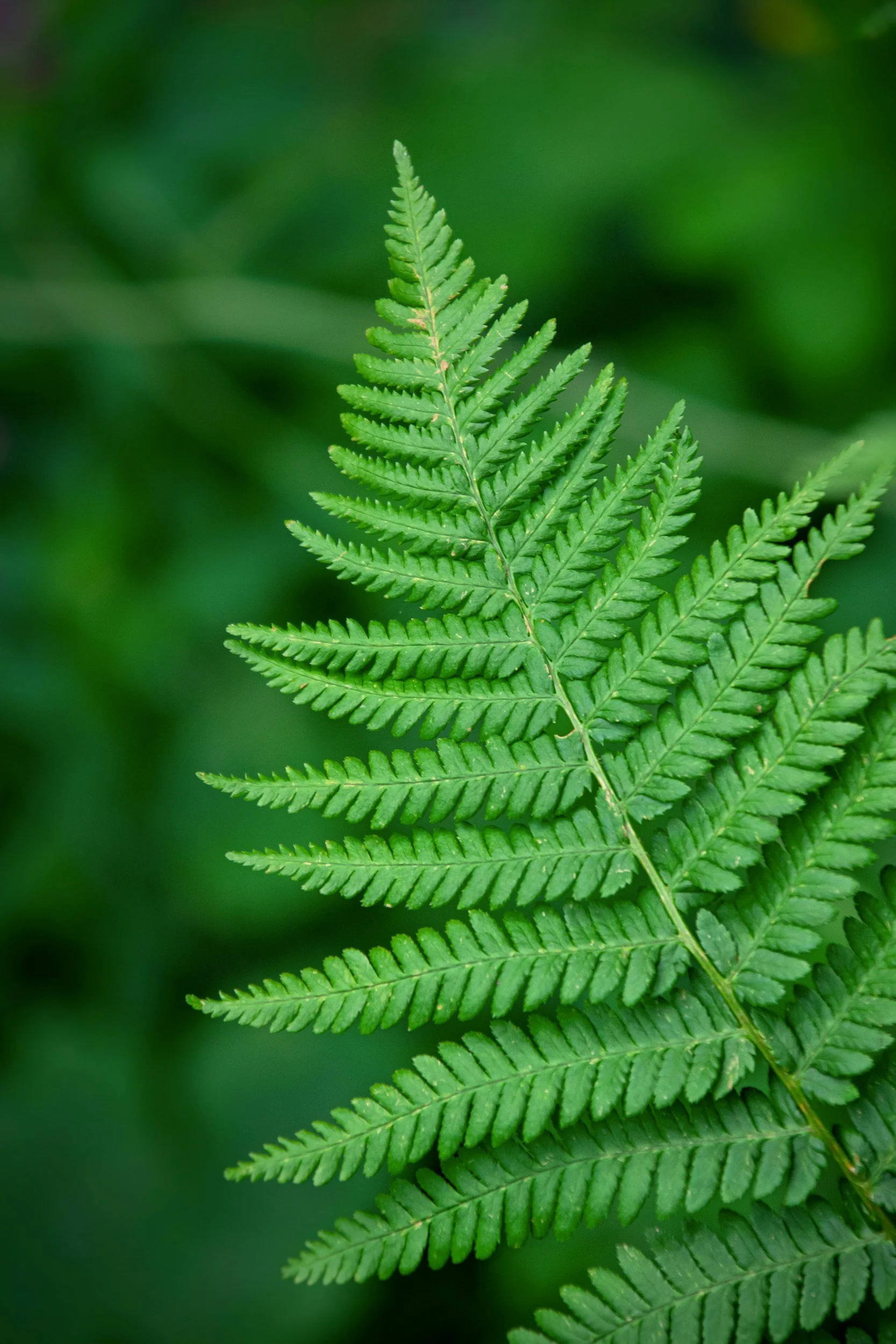
Consider a fern frond — each leaf has miniature copies of the overall shape. Many woodland scenes share this self-similar quality. Our visual system can absorb these patterns easily, unlike the jarring right angles of a city block. Researchers have even begun applying fractal designs in architecture (like “fractal forests” of patterns on walls or floors) with the goal of stress reduction. In an Oregon study, physicist Richard Taylor notes that urban environments lack the fractal complexity that nature provides, and that this may explain why patients with a natural view “could heal faster” and feel less fatigued.
In practical terms, this means that taking in a forest scene – the branching of trees, the pattern of leaves, the layout of sunlight through canopy – is inherently soothing. It lowers visual strain on our brains and allows a gentle focus. The brain doesn’t work overtime trying to process unnatural geometry; instead, it relaxes in the comfortable rhythms of woodlands. This aligns with classic theories — the same research that formed the foundations of Attention Restoration Theory also found that images of natural, fractal-rich scenes improve recovery from fatigue and stress.
To illustrate, an informal study had participants view fractal art and measured EEG. Those looking at medium-complexity fractal images showed significant increases in alpha-wave activity – the same brain signature of rest and a positive feeling. Similarly, surveys of people walking in forests show enhanced focus and mental clarity compared to walks in built settings. Even placing fractal patterns in built environments can help: one series of experiments found that interior designs made of “composite fractal forest” motifs balanced engagement and relaxation, ultimately aiming to “lower occupant stress”.
In summary, fractals help bridge the forest’s effect on mind and body. Because fractal patterns are so prevalent in nature, our sensory and neural systems have evolved to recognise and enjoy them. When we see fractals, our brain waves shift into a calm mode, blood pressure drops, and attention flows freely. That is one scientific reason forests feel like medicine — they surround us with comforting geometry.
Lessons from Trees: Metaphors and Resilience
Beyond the biology, trees and forests offer metaphors that can positively influence our emotional lives. For centuries, people have looked to nature for lessons. One powerful metaphor involves the seasonal cycle of deciduous trees. In Autumn, trees shed leaves they no longer need – a process that conserves energy for winter and enables new growth in spring. Nature and Forest Therapists and nature writers point out that this teaches us about letting go. Letting go is a natural part of life — just as trees instinctively release their leaves before Winter, we too can consciously release burdens, attachments or old habits that no longer serve us. The tree doesn’t mourn its fallen leaves – it trusts that shedding is essential for survival and later renewal. In our lives, recognising when something (a job, a fear, a grudge) has “passed its season” and letting it go can free up energy for what truly matters.
This leaf-shedding wisdom goes hand-in-hand with embracing impermanence. Watching leaves change color and drift away reminds us that nothing stays the same. The vibrant burst of Autumn colours is actually a beautiful ending, not just a loss. Trees “let go with grace”, and in doing so reveal underlying strengths and cycles. Winter dormancy teaches us that rest and patience are part of growth. We may feel “bare” at times, but like a tree storing energy in its roots during Winter, we too are preparing beneath the surface.
Another lesson is balance and discernment. When a tree sheds leaves it doesn’t do so indiscriminately – it keeps its trunk and roots strong. Likewise, when we let go of certain things, we retain our core values and identity. In nature we see that letting go isn’t weakness but a strength, and holding on doesn’t mean we must carry all excess indefinitely. This balance — knowing what to hold and what to release — is a delicate art that trees model simply by surviving through all seasons.
In therapy and coaching, these metaphors can be powerful. Forest therapists often encourage people to reflect on how a tree responds to wind, seasons, drought or pruning. A sturdy oak teaches resilience and deep roots; a willow teaches flexibility; a fir tree shows year-round persistence. Forests remind us of patience (trees grow slowly, enduring storms) and renewal (every Spring brings new leaves). By observing a tree’s life cycle, people find inspiration — when we feel stuck or afraid, nature suggests that change is natural and new chapters will come. In this way, forests literally help heal our emotional scars by giving us new perspectives and symbols for healing.
Shinrin-Yoku and Forest Medicine Research

The concept of forest healing has been rigorously studied, particularly in Japan and South Korea. Forest medicine is a recognized field there, combining research from environmental science, psychology and public health. The Japanese term “Shinrin-yoku” (forest bathing) was coined in the 1980s and launched a wave of scientific inquiry. One major figure is Professor Qing Li (often called the “father of forest medicine”), who has edited books and written reviews on the topic. In a 2023 review he even defines “Forest Medicine” as a new preventive medical science based on forest effects. Li’s team and collaborators (including Yoshifumi Miyazaki at Chiba University) have published dozens of experiments on physiological and psychological responses to forests.
Their collective evidence is convincing. As we saw, Li’s group has repeatedly shown that forest bathing lowers sympathetic nerve activity, raises parasympathetic activity, reduces stress hormones, and enhances NK cell function. They emphasise that forest medicine works through a psycho-neuro-endocrine-immune network – meaning mental relaxation leads to nervous system changes, which then produce hormonal and immune changes. In effect, stress is “extracted” from the body and immune function is amplified. Li’s team sums it up — forest bathing makes us “more active, more relaxed, healthier, and happier”.
Similarly, numerous Korean studies have backed these findings. The Korean Forest Service officially promotes forest therapy programs for stress relief and health promotion. For example, a 2020 Korean trial gave healthy volunteers a weeklong forest therapy program and found significant reductions in blood cortisol and increases in HDL cholesterol. Another Korean RCT on middle-aged women showed significant increases in serotonin after forest therapy. These parallel Japan’s results on mood and physiology.
In Japan, the government and industry have also embraced forest bathing. There are about 60 official “therapy forests” where doctors can prescribe walks. The research community (much of it following Miyazaki’s leadership) has even established guidelines and “forest therapy bases” similar to medical practice. Korean forest medicine, too, is rapidly growing— South Korea now runs hundreds of forest healing programs and uses hospitals to study forest time for patients with stress-related issues.
For nature therapists and professionals, these findings mean forest-based interventions have a solid scientific foundation. The work of Li, Miyazaki and others is frequently published in journals like International Journal of Environmental Research and Public Health, Journal of Biological Regulators, and Urban Forestry & Urban Greening. When you bring people into a forest setting, you’re tapping into a validated health intervention. Indeed, Forest Therapy is even being considered as part of rehabilitation for conditions like hypertension, depression and anxiety.
In practical terms, forest medicine research tells us how to design forest experiences. Many studies compare forest walks to urban walks, or measure before-and-after biomarkers in controlled “forest bathing” sessions. The consistent result is that forests elicit measurable shifts in body and mind that cities do not. Key metrics include blood pressure, heart rate variability, stress hormones (cortisol, adrenaline), immune cell counts, and psychological surveys (e.g. the Profile of Mood States). These data-driven approaches give professionals benchmarks — for example, a typical two-hour forest walk might be expected to lower systolic BP by several points and cut cortisol by 20–30%.
Practical Tips and Ideas
Given all the evidence, how can we use forests in our daily lives or practice? Here are some key takeaways:
Get outside regularly
Even short forest walks or sitting under trees for a few minutes can yield benefits. Aim for natural settings when possible — if you live in a city, visit a park or greenway.Breathe deeply
Consciously inhale the forest air. The phytoncides are most abundant in coniferous or broadleaf woods; breathing slowly can deliver their effects into your lungs and bloodstream.Engage your senses
Walk mindfully among trees: listen to the rustle of leaves, notice the fractal patterns on bark, the smell of soil and foliage. This sensory engagement reinforces the attention restoration effect – it’s not just passive viewing, but active connection.Let go
Use the environment as a cue. For example, when you see leaves falling, remind yourself of something you can release in your own life (stress, worry). Journaling or group sharing about tree metaphors can deepen the emotional benefit. Forest therapists often use storytelling or reflection exercises tied to tree cycles.Use group or guided programs
If you are a nature professional, consider formal forest therapy programs (some are based on Miyazaki’s protocols) that blend gentle exercise, breathing exercises, and mindfulness in the forest. These are proven to amplify benefits.Advocate for nature contact
In schools, hospitals or offices, push for green spaces and views. Research suggests hospitals, workplaces and schools can all gain if designers incorporate vegetation and fractal shapes. For instance, even looking at photos of nature yields a milder effect; real trees work best, but images of forests still help reduce stress by altering brain-wave patterns.
Final Thoughts
Our modern-day research backs up what many cultures and traditions have long known: forests heal. They do so through a combination of biochemistry (phytoncides and hormones), neurobiology (fractals and brain waves), and psychology (metaphors and mindfulness). By spending time in woods and forests we can tap into an ancient source of wellbeing. As researchers like Qing Li summarise, forest bathing is an “evidence-based preventive medicine” that makes us healthier and happier. Next time you feel stressed or tired, consider taking a walk in the forest. Your mind and body may thank you.
If you have enjoyed this article and would like to support what we do by donating £2 or more to buy saplings to plant, please follow the link below:






















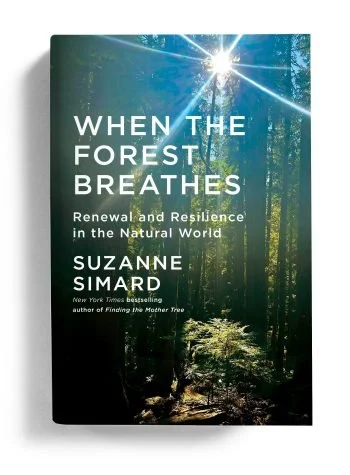



A small collection designed to gently open the door into deeper relationship with the natural world.
This complete set of four Forest Healing booklets brings together practical guidance, reflective ideas, and simple nature connection practices that can be used anywhere — from ancient woodland to a nearby park, garden, or even a single Sit Spot outdoors.
Written to be accessible, grounding, and easy to follow, these booklets offer a pathway into the core practices of Forest Bathing (Shinrin-yoku), Silvotherapy, and everyday nature connection. Rather than asking you to achieve anything, they simply invite you to slow down, notice more deeply, and allow nature to become an active presence in your wellbeing.
Across the four booklets you will explore:
• What Forest Bathing, Silvotherapy, and Nature Connection actually are
• The key benefits of spending mindful time in natural environments
• The practice of the “Sit Spot” and how to develop your own relationship with a chosen place
• Simple, practical Forest Bathing invitations you can try alone or with others
• Ways to bring nature connection into everyday life, even in small moments
Together, they form a gentle introduction to practices that have been shown to support reduced stress, improved mood, greater clarity of thought, and a deeper sense of belonging within the natural world.
These are not academic texts or rigid instruction manuals. They are invitations — encouraging you to step outside, slow your pace, and rediscover the quiet intelligence of trees, weather, and landscape.
Whether you are completely new to nature connection or looking to deepen an existing practice, this collection offers a simple, supportive starting point for building a more intentional and restorative relationship with the living world around you.
A small set of booklets that can change the way you experience even the most familiar patch of nature.
Buy all Four Forest Bathing and Nature-Connection Booklets for £11.00 including FREE P&P within the UK.
Postage to the Rest of the World is £4.