

The Eudaimonia Project
Friday 12th May 2023

I quite often get the ‘Winter Blues’, but this year was much worse than usual and I was experiencing quite bad anxiety and depression by February this year. Much of the therapeutic work that I do with other people takes a ‘strengths-based’ or ‘solution-focused’ approach. The fundamental principle of these approaches is that people will become more mentally, psychologically and emotionally healthy and their wellbeing will benefit the most in the long run if they are helped to identify, recognise, and use the strengths that make them resourceful and resilient (including their personal skills and strengths, and their social and community networks), rather than focusing on their deficits. It is about exploring ‘what is strong, not what is wrong’ and utilising the solution-focused principle that ‘there is nothing that’s wrong with you that what’s right with you cannot fix’.
Both approaches draw on ‘Positive Psychology’, focusing on maximising wellbeing and happiness through building personal strengths, and promoting self-development, self-efficacy, resilience, optimism, self-esteem and gratitude, rather than by focusing on the negative aspects of the human mind such as mental illness, negative thinking and maladaptive behaviours. It struck me that I was used to helping people who were in my position, so why was I unable to help myself? This also gave me a large and unhealthy dose of ‘imposter syndrome’ too. I decided that enough was enough and that I was going to set myself a programme of intense (daily) nature-connection activities and nature journalling starting in April, and to monitor some of the effects that it had on me. ‘Project Eudaimonia’ was born!
Project Eudaimonia
It’s a bit of a mouthful, and in many ways, not something that people are immediately familiar with, but I had come across the concept of ‘Eudaimonic Wellbeing’ in a journal article entitled ‘The Relationship Between Nature Connectedness and Eudaimonic Well‑Being’ written by the University of Derby Nature Connectedness Research Group.

What is Eudaimonic (and Hedonic) Wellbeing?
Psychological wellbeing is a central feature of good mental health, and is often seen as including Hedonic Wellbeing and Eudaimonic Wellbeing, as well as Evaluative Wellbeing (life satisfaction and how you thinks and feels about your life and how well you think your life is going overall and Resilience (including feeling able to cope, emotional regulation, and healthy problem solving).
Eudaimonic Wellbeing
Eudaimonic wellbeing is usually defined as having a feeling of meaning and purpose in life and a sense of continued personal growth and social contribution that all contribute to optimal psychosocial functioning - Eudaimonic Wellbeing is primarily about functioning well and how meaningful and worthwhile life is.
Hedonic Wellbeing
Hedonic wellbeing is usually seen as the presence of positive emotions, the absence of negative emotions, and life satisfaction and is achieved through the experience of pleasure and enjoyment - Hedonic Wellbeing is primarily about feeling good.
It has been suggested by members of the University of Derby Nature Connection Research Group that the link between nature connection and Eudaimonic Wellbeing may be stronger than the link between nature connection and Hedonic Wellbeing and that ‘feeling good’ aspects of wellbeing are less reliably associated with nature connection than the ‘functioning well’ aspects of wellbeing are.
Both Hedonic Wellbeing and Eudaimonic Wellbeing are seen as important in contributing to overall wellbeing, and people with high levels of both types of wellbeing are usually considered to be flourishing, however psychologists, philosophers and researchers often disagree as to which is the most important.
Supporters of the theory that Eudaimonic Wellbeing is the more important of the two argue that many desired outcomes that are pleasurable are not necessarily good for us and do not promote overall ‘wellness’. So, for example, eating a burger at a restaurant or completing an online course may provide people with similar amounts of enjoyment and pleasure (hedonic qualities). However, taking an online course is more likely to lead to personal growth, self-development and increased self-confidence in a way that eating a burger may not and as such is more likely to lead to longer term wellbeing. Eudaimonic approaches to wellbeing more often involve activities that are good for us and so are more likely to be associated with long-term and enduring well-being, whereas Hedonic Wellbeing is more likely to dissipate in the short-term – something known as Hedonic Adaptation. The theory of Hedonic Adaptation (or the Hedonic Treadmill) proposes that people return to their baseline of happiness relatively quickly, regardless of what happens to them. This is why people often fantasise about how happy they will be when they get that new car, move to a new house or get a different job, but then find that the happiness boost doesn’t last long, and they find themselves back at the same level of happiness that they were at before.
Eudaimonia Project Month One Approach
Project Eudaimonia started on the 1st April 2023 and the first four weeks of the project mainly comprised daily Sit Spot and Nature Connection activities, roughly following the timetable and invitations as outlines our free online 28 Day Sit Spot and Nature Connection Practice Programme. I also committed to regular daily Nature Journaling and a focus on expressing Gratitude for Nature.
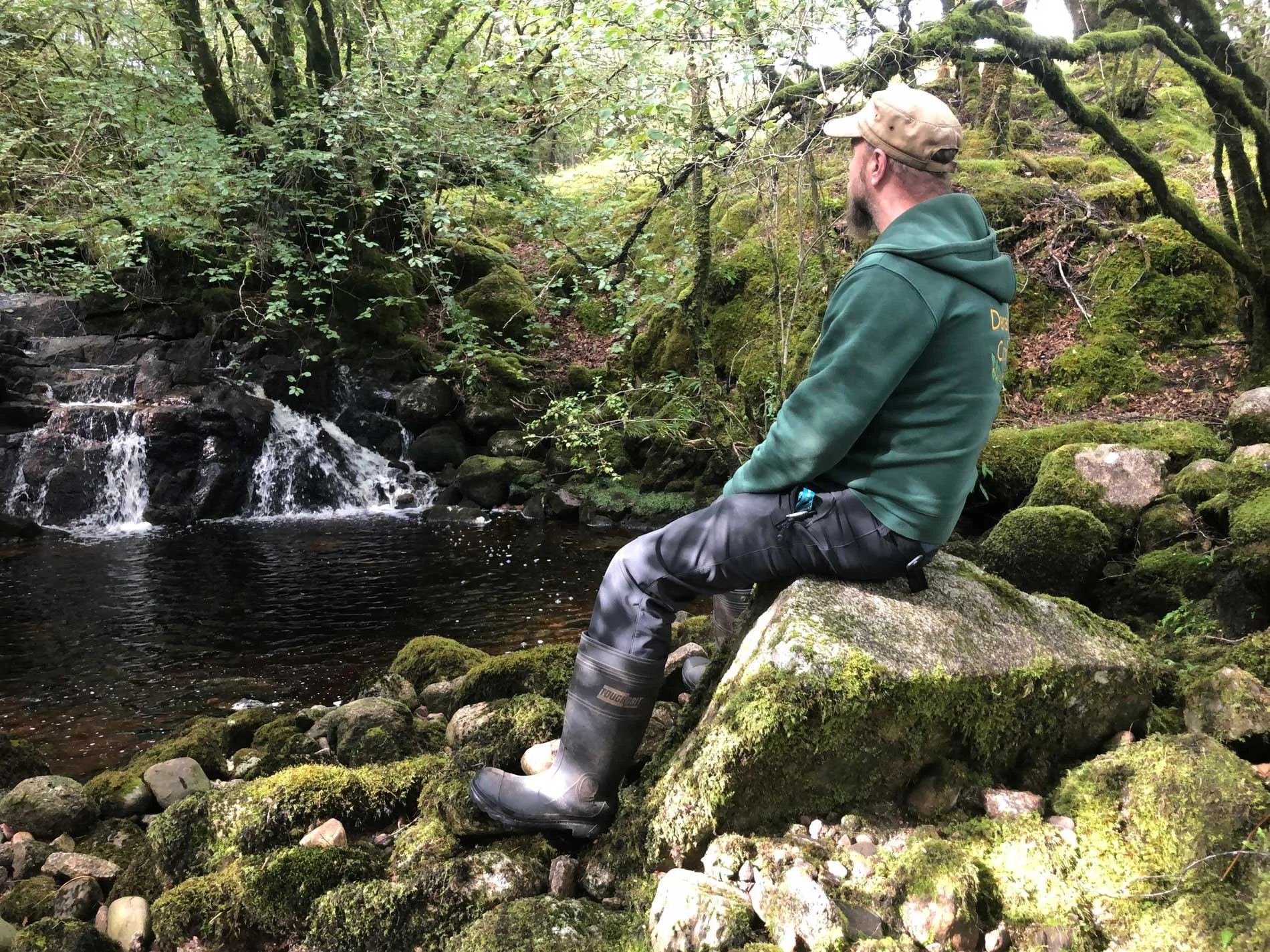
Sit Spot
Sit Spot is a mindfulness practice in which a person selects a specific location in nature and spends time sitting, observing and connecting with their natural surroundings in a mindful and intentional way.
Sit Spot can be a simple and effective way to find relaxation and improve well-being through mindfulness and connection with nature, and the more that you practice Sit Spot, the more benefit you will get. Nature connection is like a muscle - the more you use it the better developed it becomes.
The Benefits of Practicing Sit Spot
The practice of Sit Spot can have a number of benefits, including:
Stress reduction
Sitting quietly in nature can help reduce stress and promote relaxation.Improved focus and attention
Taking the time to focus on a specific task or activity, such as observing your surroundings, can improve your ability to pay attention and stay present in the moment.Connection with nature
Spending time in nature and observing the environment can increase your appreciation and connection to the natural world.Increased awareness
Observing your surroundings can help increase your awareness of your surroundings and the world around you.Improved mental and emotional health
Studies have shown that spending time in nature can have a positive impact on mental health and well-being.
Key Concepts
Nature Connection
‘Nature connection’, ‘nature affinity’ or ‘connection with nature’ is a phrase often used as a term to several concepts:
Nature connection can be viewed as an individual’s sense of their relationship with the natural world going beyond just contact or exposure to nature and involving a sense of meaningful involvement in something larger than oneself.
Nature connection can be viewed in terms of engaging with nature through our different senses and immersing ourselves in our natural surroundings.
Nature connection can also be seen as the mental, physical and emotional benefits that we can feel as a consequence of spending time in nature.
Three Key Elements of Nature-Connection Activities
Nature-connection activities can take many forms and involve various components, although they almost always incorporate three key elements: noticing; feeling; and reflecting.
Noticing Nature
Connection with nature is about much more than just being in nature or exposed to nature. You can be hiking outside and trying to reach the top of a mountain or jogging through the woods whilst listening to your MP3 player, focusing on a geographic goal or thinking about what you’re going to make your post-run smoothie from without connecting with nature.
Connection with nature is about really tuning in to your surroundings and noticing what is happening around you through all your senses - sight, sound, smell, touch and even taste. And you don’t necessarily need to move at all, in fact the slower you go, the better you tend to connect. This is why the Forest Bathing practice of Sit Spot is seen as such an effective way to increase your nature connectedness.
Feeling Connected with Nature
Nature-connection activities should help you to feel more in tune with nature and a part of nature rather than apart from nature. It is all about appreciating the wonder and beauty in nature and the natural environment, rather than about ‘knowledge’. Nature connection is not about wildlife or tree identification, it involves shifting your attention and focus from learning about what something in nature is to how things in nature make you feel.
Reflecting on Nature Connection
Nature-connection activities usually involve some reflection on what you have experienced. This might be talking about what you have experienced with others, either in online groups (such as our Sit Spot and Nature-Connection Practice group on Facebook) or in ‘Sharing Circles’ following Forest Bathing activities or invitations, or it might be in the form of writing and keeping a nature journal.
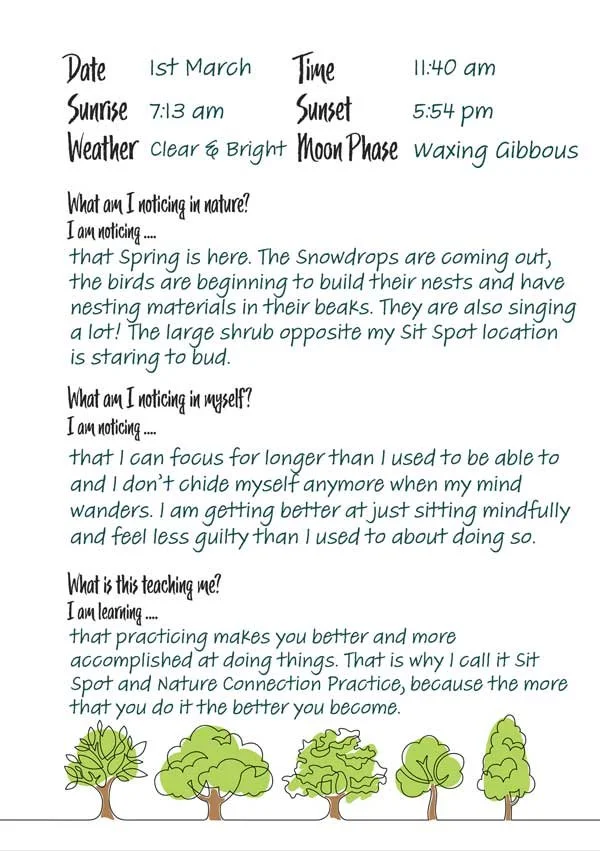
Nature Journaling
Nature journaling involves recording what you notice in nature, and what you notice about the effect that being in nature has on you. It can help you to fine-tune your observation skills and can also be a way to practice mindfulness as well as helping you to recognise things in nature that you are grateful for. Nature Journal entries can include notes, descriptions, thoughts, drawings, poems or anything else that you want to record, but you don’t have to be an author, an artist, a philosopher or a poet to start one, or to experience the benefits.
Practicing Gratitude for Nature
Practicing gratitude involves recognising and being thankful for the things we see, hear, feel and experience all around us. Noticing beauty in nature and identifying the positive things that happen each day, however small, and being grateful for them, can help us to focus less on the negative things that happen and the negative emotions that we feel. Increasing nature connection through practicing gratitude for nature, can also bring environmental benefits, as people with higher levels of nature connectedness often do more for nature, both in terms of reducing their impact on the environment through using fewer resources and through taking positive actions to help the environment and reduce their contribution to climate change. As humans we have a reciprocal and symbiotic relationship with nature, and recognising, feeling and showing gratitude to nature for what it provides us and how it supports us often results in us wanting to protect nature in return. Practicing gratitude for nature reminds us that we are a part of nature rather than separate from it.
Measuring the Project Outcomes
I wanted to measure the project outcomes and see what the effects were (if this seems a strange approach I do have a PhD in Social Science!). I decided to use the following measures in this initial part of the project:
Ryff’s Psychological Wellbeing Scale (PWS)
Profile of Mood Scale (POMS)
Blood Pressure measurements pre and post Sit Spot
Ryff’s Psychological Wellbeing Scale
Eudaimonic Wellbeing is often measured with Ryff’s scale of psychological well-being (Ryff, 1989). Developed by psychologist Carol D. Ryff, the 42-item Psychological Wellbeing (PWB) Scale measures six aspects of wellbeing and happiness: autonomy, environmental mastery, personal growth, positive relations with others, purpose in life, and self-acceptance.
Profile of Mood Scale
The Profile of Mood Scale is a standard validated psychological test formulated by McNair et al. (1971). The questionnaire contains 65 words and statements that describe the feelings people have, and the test asks you to indicate for each word or statement how you have been feeling in the past week, including today. The POMS or adapted versions of the POMS are often used to measure wellbeing and mood before and after people access Japanese Forest Therapy Trails. It has sub scales for Anxiety, Depression, Anger, Vigour, Fatigue and Confusion.
Blood Pressure Measurements
(When I remembered to) I measured my Systolic and Diastolic Blood Pressure, as well as my pulse, before and after my Sit Spot practice using a digital blood pressure monitor.
Salivary Cortisol Measurements
I had hoped to take measurements of my salivary cortisol levels. Salivary cortisol is a hormone that is produced and secreted into saliva when people are under stress. I had hoped to measure it before and after a more intensive Forest Bathing walk, but the price of doing so was a little high for the initial project plan, so I might well look at doing this at a later date.
The Results
At the start of the Project my baseline score on Ryff’s Psychological Wellbeing Scale was 162 out of a possible 294 where a higher score is better than a lower score. At the end of the 28 day Project (OK it was actually about day 31 as a missed a few days!) it was 203 out of 294. This was actually a far bigger change than I had expected.
I used the POMS to measure mood before and after three longer Forest Bathing walks (over 2 hours) and found improvements each time, especially in relation to measures of anxiety and depression.
My average blood pressure change was a drop of 6 mm Hg in my Systolic Blood Pressure and 12 mm Hg in my Diastolic blood pressure, often taking my blood pressure reading from Elevated or Hypertension Stage 1 into the band below (into either Normal or Elevated). I tried measuring my blood pressure at the same time day, and then doing my Sit Spot later and there was usually little if any change other than when measured either side of my mindfulness practice. I knew at the start of the project that my blood pressure was quite high. There was rarely more than a 1 or 2 bpm change in my pulse rate.
What Next?
I seem to have started May with a busy month, so I am going to aim to start Phase Two of the Eudaimonia Project on 1st June 2023. During Phase One I sent my Smart Phone away to be fixed and had to rely on an old phone that had fewer apps and no work email on it. I quite enjoyed it and so EP Phase Two is going to include a ‘Digital Detox’ of sorts including less social media reading on my phone and operating a ‘Smart Email Inbox’ where emails are only read and responded to twice a day. I am going to have a focus on learning (or relearning) how to ‘Sit with Myself’.
Sitting with Yourself
Sitting with yourself is about being able to sit or lie down without using external stimuli to combat negative feelings. When we are used to using technology or being busy to distract ourselves from negative thought patterns, such as rumination, sitting with ourselves can be uncomfortable. During my most anxious period earlier this year I couldn’t go to bed without listening to an audiobook and couldn't stay in bed after I had woken up without one, otherwise I would just lie there with negative thoughts going round and round in my head. Likewise, If I found myself with a few minutes to spare, I would look at Facebook or Instagram, or read the news. Phase two of the EP will involve consciously trying to mindfully take in my surroundings and derive entertainment from nature more, and from technology less.

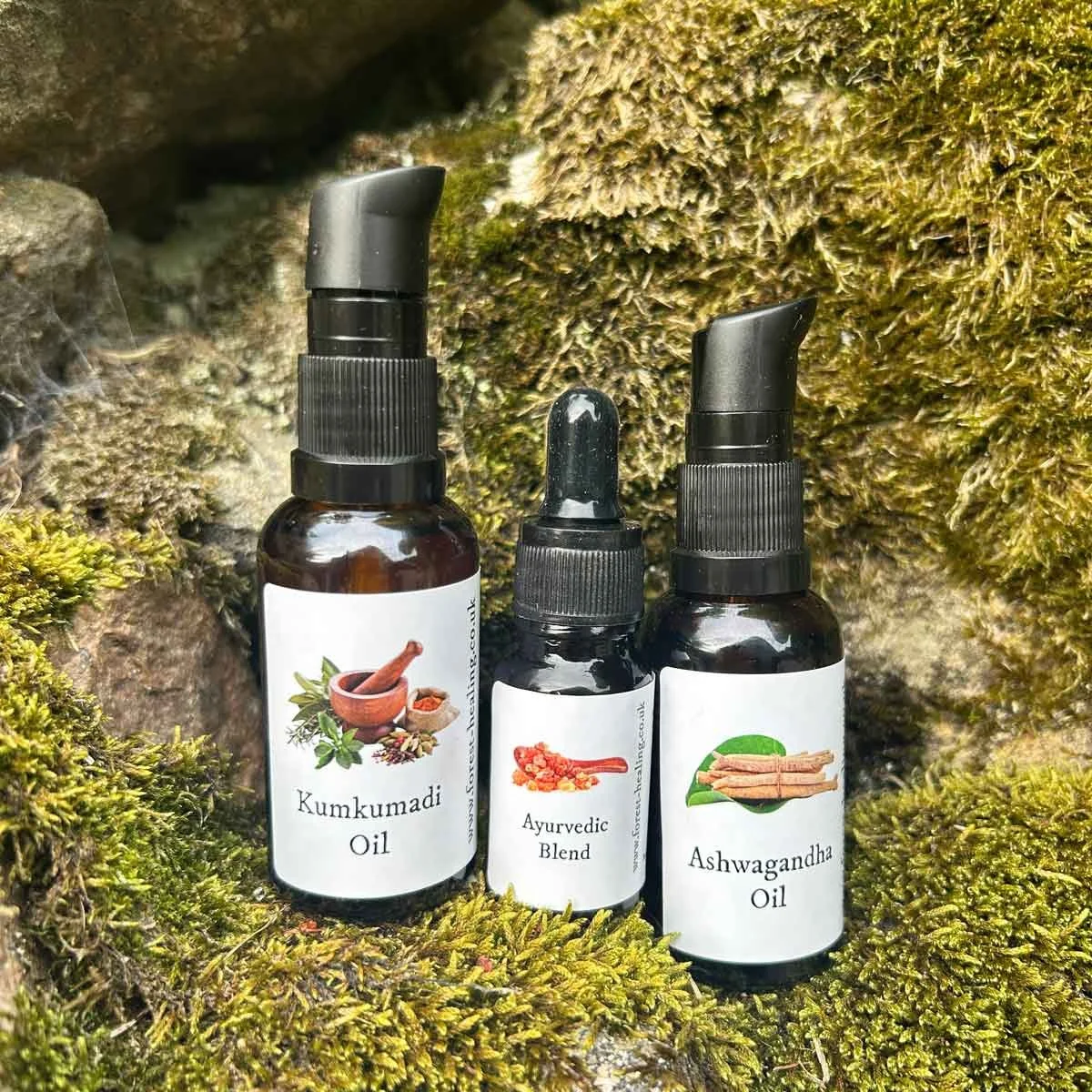



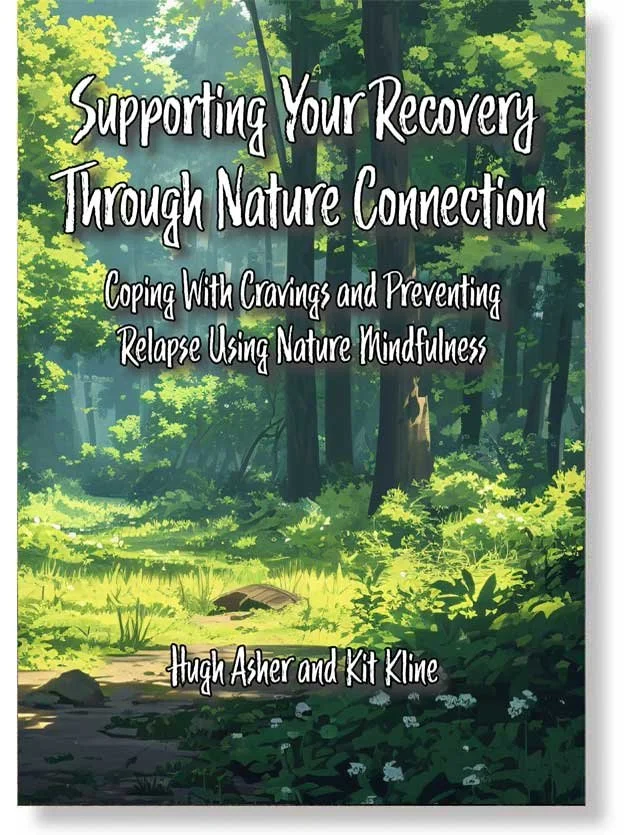



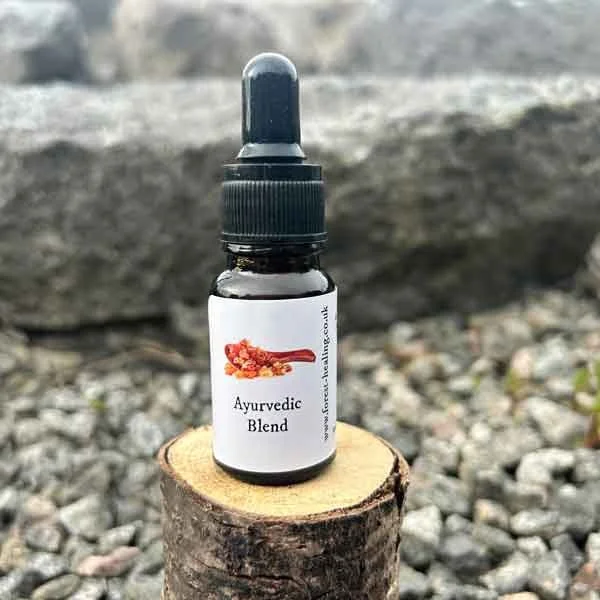

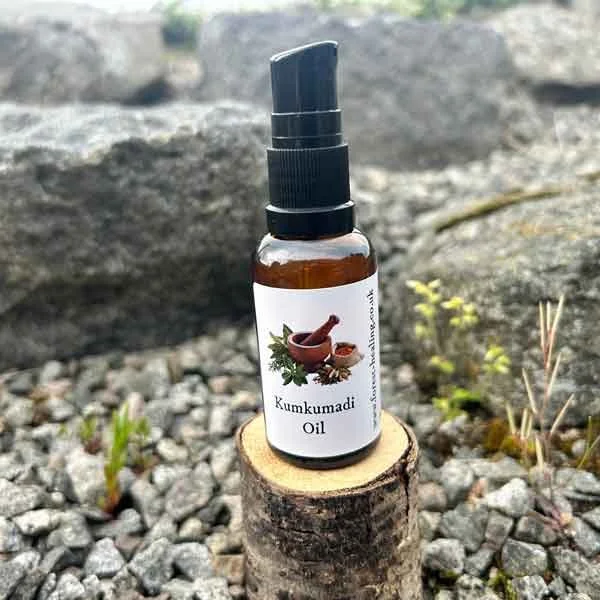
































A small collection designed to gently open the door into deeper relationship with the natural world.
This complete set of four Forest Healing booklets brings together practical guidance, reflective ideas, and simple nature connection practices that can be used anywhere — from ancient woodland to a nearby park, garden, or even a single Sit Spot outdoors.
Written to be accessible, grounding, and easy to follow, these booklets offer a pathway into the core practices of Forest Bathing (Shinrin-yoku), Silvotherapy, and everyday nature connection. Rather than asking you to achieve anything, they simply invite you to slow down, notice more deeply, and allow nature to become an active presence in your wellbeing.
Across the four booklets you will explore:
• What Forest Bathing, Silvotherapy, and Nature Connection actually are
• The key benefits of spending mindful time in natural environments
• The practice of the “Sit Spot” and how to develop your own relationship with a chosen place
• Simple, practical Forest Bathing invitations you can try alone or with others
• Ways to bring nature connection into everyday life, even in small moments
Together, they form a gentle introduction to practices that have been shown to support reduced stress, improved mood, greater clarity of thought, and a deeper sense of belonging within the natural world.
These are not academic texts or rigid instruction manuals. They are invitations — encouraging you to step outside, slow your pace, and rediscover the quiet intelligence of trees, weather, and landscape.
Whether you are completely new to nature connection or looking to deepen an existing practice, this collection offers a simple, supportive starting point for building a more intentional and restorative relationship with the living world around you.
A small set of booklets that can change the way you experience even the most familiar patch of nature.
Buy all Four Forest Bathing and Nature-Connection Booklets for £11.00 including FREE P&P within the UK.
Postage to the Rest of the World is £4.